

Keeping on top of the cleaning can sometimes feel like a never-ending job, particularly in a busy family home. As soon as you have finished the washing, someone has filled the laundry basket again; the kitchen you cleaned after breakfast needs doing after dinner, and somehow there are always shoes, bags and random belongings appearing where you have just tidied.
Over the years, I have realised that the secret isn’t spending hours cleaning or trying to keep the house perfect. It is finding ways to organise the housework so that everyday jobs take up less of your time.
If you’re wondering how to spend less time cleaning, the answer isn’t necessarily to clean faster. Small habits, tackling jobs at the right time, having the things you need close at hand and sharing the workload can all reduce the amount of time you spend tidying and cleaning each week.
Below, I have shared the time-saving cleaning tips that work well in a busy family home, from quick 10-minute resets and cleaning as you go to dividing household jobs between family members and knowing when it makes sense to ask for help.
Work out where your cleaning time is going
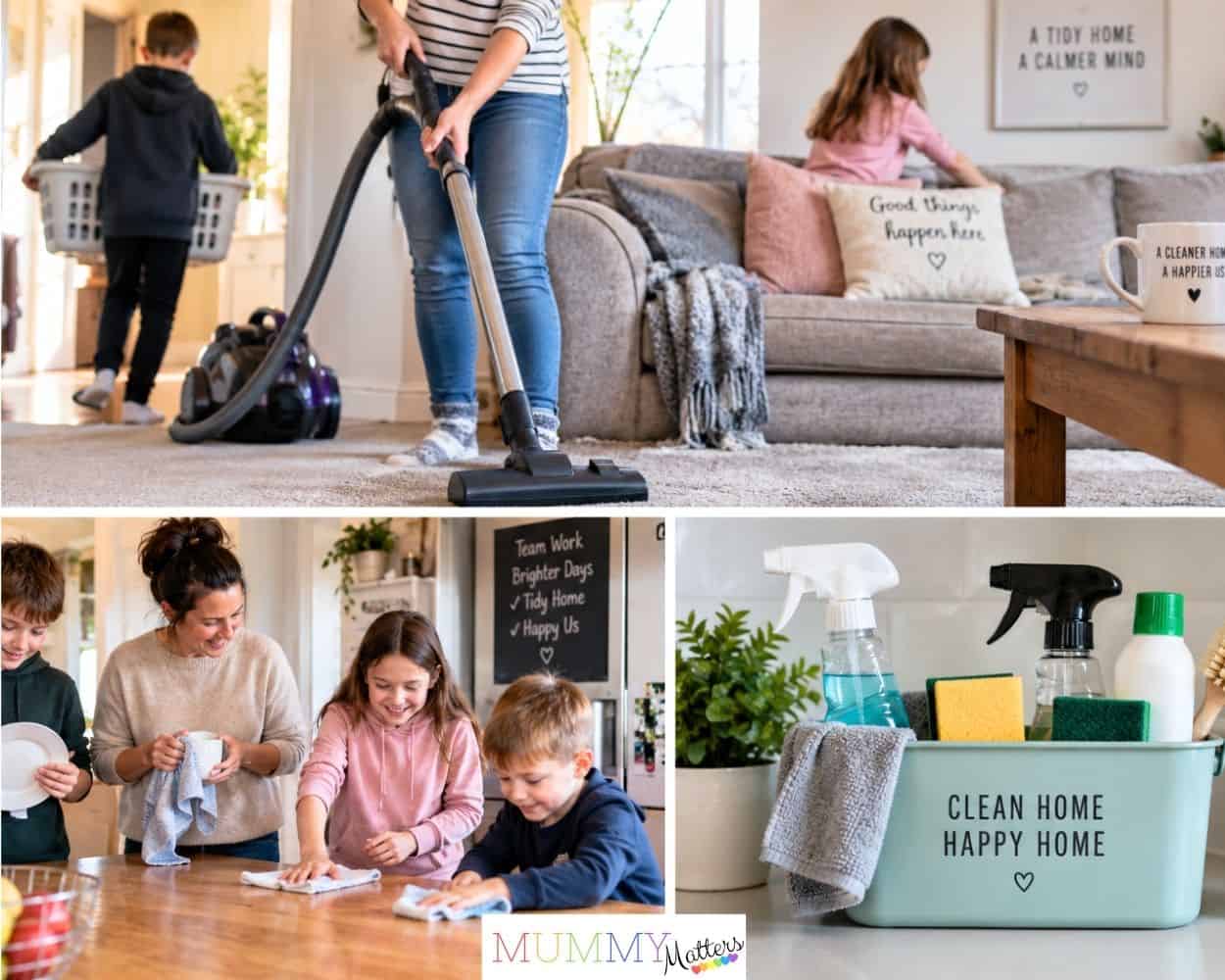
Before trying to save time on housework, it helps to work out which jobs are taking up most of your time. Is it the constant laundry, clearing up after meals, putting away everyone’s belongings or spending hours catching up with cleaning at the weekend?
You may also find that some of your cleaning time is actually tidying time. If you have to spend 20 minutes clearing surfaces and picking things up before you can vacuum or clean a room, reducing everyday clutter could save more time than finding a quicker way to clean.
I have found that this changes as family life changes. What took up my time when the children were younger isn’t necessarily what takes up my time now. As children get older, it also becomes much more reasonable for them to take responsibility for some of the everyday jobs around the home.
For a week, simply notice which household tasks seem to keep coming around and which ones you tend to put off until they become a much bigger job. Once you know where your time is disappearing, it becomes easier to decide which jobs could be simplified, shared, done less frequently or organised differently.
Stop treating every cleaning job as a daily job
One way to spend less time cleaning is to stop treating every household job as though it needs doing constantly. Some tasks genuinely need attention every day, others might need doing once a week, and plenty can wait until they actually need doing.
Kitchen worktops, dishes and everyday spills are obvious jobs to keep on top of regularly. Vacuuming, bathrooms, bedding and dusting may be weekly jobs in your home, while cleaning the oven, washing windows, wiping skirting boards or thoroughly cleaning cupboards can usually be tackled much less frequently.
It is also worth questioning routines you follow simply because you have always done them. Does every room need vacuuming equally often? Does the spare bedroom need cleaning as frequently as the kitchen? If a particular area is still clean, you don’t earn extra points for cleaning it again.
A simple daily, weekly and occasional checklist can still be useful, but think of it as a reminder rather than a list that must be completed regardless of whether a job actually needs doing. Concentrating your time where it will make the biggest difference is much more efficient.
Use a cleaning schedule if it saves you time
For some people, having set days for particular household jobs removes the mental load of deciding what needs doing next. You might always clean the bathrooms on Tuesday, change bedding at the weekend or use Friday for a quick downstairs reset.
For others, a detailed timetable becomes another list they feel guilty about falling behind with. If that’s you, a much simpler routine may work better. Choose a handful of jobs that keep your home functioning and fit the rest in when they genuinely need doing.
The important thing is that a routine should save you time and mental energy rather than create more work. If you prefer having a more structured plan, I have put together a separate guide to creating a cleaning schedule for a busy lifestyle, including ways to fit household jobs around everything else you have going on.
Whichever approach you choose, allow it to be flexible. If Tuesday’s bathroom clean doesn’t happen because life gets in the way, move it to another day or leave it until next week if it can wait. Your cleaning routine works for you, not the other way around.
Clean as you go
One of the most effective time-saving cleaning habits is dealing with small jobs before they have the chance to become much bigger ones. I don’t mean following everyone around the house with a cloth in your hand, but spending 30 seconds dealing with something now can sometimes save you ten minutes of cleaning later.
Wipe down the kitchen worktops while you are waiting for the kettle to boil, load the dishwasher while dinner is cooking or give the bathroom sink a quick wipe after you have finished getting ready. If you are heading upstairs, take something with you that belongs there rather than leaving it at the bottom of the stairs for later.
Laundry is another good example. Putting a load on is only one part of the job; it still needs drying, folding and putting away. Building those stages into your normal routine helps prevent the familiar mountain of clean washing that seems to live permanently in a basket.
The same principle works for everyone in the household. Putting shoes away when you take them off, taking plates to the kitchen and returning belongings to the room they came from might only take a few seconds, but those small habits mean there is much less to tidy later.
Small routines like these can also contribute to a calmer household overall. If that is something you’re working towards, I have shared more ideas on how to create a calm home rhythm that works with everyday family life.
Think of it as reducing the amount of cleaning you have to do rather than constantly doing more cleaning.
Try a 10 or 15-minute cleaning session
You don’t always need to set aside an hour to make a noticeable difference to your home. Short cleaning sessions can help you deal with jobs before they turn into a much bigger weekend catch-up. Set a timer for 10 or 15 minutes, choose one area or type of task and stop when the timer finishes if you want to.
You might spend 15 minutes putting away everything that doesn’t belong in the living room, clearing and wiping the kitchen surfaces, vacuuming downstairs or sorting a pile of laundry. When the timer finishes, you can stop. Quite often, getting started is the hardest part, and you may decide to carry on for a little longer.
Short cleaning sessions can also work well as a family. Give everyone a job, put on some music and see how much you can get done together in 10 minutes. Four people tidying for 10 minutes gives you 40 minutes of combined effort without one person having to spend the best part of an hour doing everything.
This approach is particularly useful before visitors arrive or when the house needs a quick reset. If you need to tackle more in a short space of time, my guide to [how to speed clean your home] can help you decide which jobs to prioritise first.
The aim isn’t to finish every cleaning job in one session. It is to make enough progress that keeping on top of the house feels manageable rather than overwhelming.
Use the right cleaning tools and keep them handy
Having the right cleaning products and tools within easy reach can save a surprising amount of time. If you have to search through three cupboards for a cloth, find the right cleaner and then dig the vacuum out from behind everything else before you can even start, a five-minute cleaning job can quickly become something you keep putting off.
A simple cleaning caddy containing the products you use most often can be carried from room to room. Microfibre cloths, an all-purpose cleaner and any specialist products you regularly use are usually enough for everyday cleaning. Keep your vacuum cleaner, mop and other larger tools somewhere that is easy to access rather than buried behind things you rarely use.
It is also worth regularly cleaning the tools that do the cleaning. Wash reusable cloths and mop heads, remove hair from vacuum brushes and check filters according to the manufacturer’s instructions. A dirty cloth or poorly maintained vacuum is unlikely to make the job any easier.
If you have children or pets at home, remember that convenient storage still needs to be safe storage. Cleaning products should always be kept securely and according to the instructions on their packaging.
You don’t need a cupboard full of specialist products for every possible surface. A smaller collection of cleaning products that you actually use is easier to organise, cheaper to replace and takes up far less space.
If you’re trying to spend less time cleaning, one of the biggest changes you can make is to stop automatically doing every household job yourself. Keeping a family home clean shouldn’t fall to one person, and as children get older, they can gradually take responsibility for age-appropriate household jobs while the adults continue to handle anything that isn’t suitable or safe for them.
One thing I have learnt is that saying “everyone helps with the cleaning” doesn’t necessarily create a system that works. If everybody is responsible for a job, it can sometimes mean that nobody feels particularly responsible for it. Giving people specific tasks makes it much clearer who is expected to do what.
Start with everyday jobs that are easy to understand, such as loading or unloading the dishwasher, putting away laundry, vacuuming a particular room, emptying bins, feeding pets or keeping bedrooms tidy. Older children and teenagers can gradually take on more responsibility as their confidence and ability grow.
If you’re introducing household chores when your children are younger, I have also shared some practical ideas for teaching children to clean up after themselves, including how to break bigger jobs into smaller, more manageable tasks.
It also helps to be specific about what “done” means. “Clean the kitchen” can sound like a huge and rather vague instruction, whereas “load the dishwasher, wipe the worktops and sweep the floor” gives someone three clear jobs they can complete.
We have recently revisited how we divide household chores in our own family, and one of the things it highlighted was how easy it is for jobs to become unevenly distributed without anyone deliberately choosing that. Having a visible chore chart or household routine makes the workload much easier to see and gives everyone a clearer idea of what they are responsible for.
The aim isn’t to create a military cleaning operation or expect children to do everything perfectly. It is to make looking after the home something the family contributes to together, rather than something one person quietly carries for everyone else.
Know when to ask for help

Sometimes the most effective way to spend less time cleaning is to accept that you don’t have to do every job yourself. Busy periods at work, a new baby, family commitments, moving house, or simply wanting more of your free time back can all be perfectly reasonable reasons to get some help if your budget allows.
If your budget allows, paying for some help can be a practical way to take the pressure off. That might mean having a cleaner come in regularly, arranging a one-off deep clean or bringing in professionals for particular jobs that you don’t have the time, equipment or inclination to tackle yourself.
Cleaning services vary depending on where you live and what you need, so it is worth looking at what is available locally. Companies such as Maids In Pink offer residential cleaning services, while other providers may specialise in one-off deep cleans, end-of-tenancy cleaning or particular areas of the home. Before booking, check exactly what is included, whether cleaning products and equipment are provided, and any terms around cancellations or access to your home.
Outsourcing a cleaning job isn’t an admission that you can’t manage your home. Sometimes organising your time effectively means recognising which jobs genuinely need your attention and which ones you are happy to hand over to somebody else.
What to do when you’ve fallen behind with the cleaning
Even with a good cleaning schedule, there will be weeks when the house gets away from you. Trying to catch up on every missed job at once can make the whole thing feel even more overwhelming, so concentrate on getting the household functioning again first.
Start with the jobs that will make the biggest immediate difference. Clear rubbish and recycling, deal with dirty dishes, put a load of laundry on and clear the main surfaces. Next, tackle the bathroom and kitchen, followed by a quick vacuum of the areas you use most.
Don’t worry about deep-cleaning the oven, washing windows or dusting every skirting board while you are trying to get back on top of things. Those jobs can wait.
If the whole family is available, this is another good time for a short household reset. Give everyone one or two specific jobs and work for 15 or 20 minutes. You may be surprised by how different the house feels afterwards.
Most importantly, don’t try to “repay” every cleaning job you missed. Once the essentials are under control, go back to your usual household routine and concentrate on what actually needs doing next. Catching up shouldn’t mean sacrificing an entire weekend because you feel you owe the house several hours of cleaning.
FAQs: Cleaning Tips
How can I spend less time cleaning my house?
Focus on preventing small jobs from becoming bigger ones, clean the areas that genuinely need attention rather than automatically cleaning every room, and share household chores between everyone who is capable of helping. Keeping frequently used cleaning supplies easy to access and tackling some jobs in short 10 or 15-minute sessions can also save time.
How do I keep my house clean when I’m busy?
Prioritise the jobs that keep your home comfortable and functioning, such as dishes, kitchen surfaces, laundry, bathrooms and the areas you use most. Cleaning as you go and encouraging everyone to put their belongings away can prevent you from needing a much longer tidy-up later.
What is the fastest way to clean a house?
If you need to clean quickly, start by removing rubbish and clutter, deal with dishes, clear the main surfaces and then concentrate on the kitchen, bathroom and floors. Work through one area at a time rather than getting distracted by less important jobs. For a more detailed approach, see my guide to how to speed clean your home.
How can I make housework more manageable?
Break larger jobs into smaller tasks and decide what actually needs doing rather than trying to clean everything at once. Sharing age-appropriate chores with other family members can also reduce the amount of housework falling to one person.
How do I stop spending my whole weekend cleaning?
Try moving some small household jobs into the week so they don’t all accumulate by Saturday. Ten minutes spent tidying, putting laundry away or cleaning the bathroom on a weekday can prevent several jobs from turning into one enormous weekend clean. It can also help to lower your expectations of what must be completed every week; some cleaning jobs can simply wait.
A cleaning routine should make life easier
Spending less time cleaning doesn’t have to mean lowering your standards or living with a messy home. Often, it is about being more selective with your time: dealing with small jobs before they become big ones, concentrating on the areas that actually need attention and not automatically doing everything yourself.
Our own approach to household chores has changed many times over the years, and I am sure it will change again. What matters to me now is that our home feels comfortable and looked after while still leaving us time to actually enjoy living in it.
If housework seems to be taking over your evenings or weekends, don’t try to change everything at once. Choose one or two ideas from this guide and see whether they make a difference. Perhaps that’s a 10-minute family reset, getting everyone to take responsibility for their own belongings or simply deciding that a job which doesn’t need doing today can wait.
A clean home is lovely, but so is having the time to enjoy it.
Editor’s note: This article was originally published in June 2019 and has been fully reviewed and updated in September 2026 with new time-saving cleaning tips, practical advice for sharing household chores and ideas for making housework more manageable in a busy family home.