
Editor’s note: Originally published in December 2017, this article was completely updated in August 2026 to reflect current school costs, new school uniform rules in England and the money-saving strategies I use with my own family.
Back-to-school season has a habit of becoming expensive remarkably quickly. One minute, you’re buying a couple of new shirts; the next, the list includes school shoes, football boots, PE kit, trousers, stationery, bags and several school-branded items that seem to cost considerably more than their supermarket equivalents.
I’ve been buying school uniform for years, and one thing I’ve learnt is that saving money doesn’t necessarily mean buying the cheapest version of everything. Sometimes paying a little more for the things that take the biggest battering — particularly school shoes — while saving elsewhere works out much better.
This year, I’ve had school shoes, football boots, school-issued PE hoodies and jogging bottoms, trousers, shirts, stationery and school bags to think about, and the shoes have easily been among the most expensive purchases.
If your own back-to-school list is making you wince, these are some of the school money-saving tricks I’ve found most useful.
1. Check the School Uniform Policy Before Buying Anything
Before you automatically head to the official uniform supplier, check your school’s current uniform policy.
Look specifically at which items must be school-branded and which can be bought elsewhere.
This is particularly important for families in England because the rules surrounding branded school uniform are changing. From September 2026, schools must limit the number of compulsory branded uniform and PE items they require.
That potentially leaves far more scope for buying everyday trousers, skirts, shirts, polo shirts and other basics from supermarkets or high-street retailers instead.
Don’t assume that because you bought something from the school supplier last year, you still have to do so this year.
2. Don’t Replace Everything Every September
There can be a strange pressure to start September with an entirely new uniform.
You really don’t have to.
Before buying anything, get your child to try on everything they already own.
Sort it into:
- still fits and looks good
- fits but needs repairing
- too small but good enough to sell or pass on
- genuinely needs replacing
School bags, pencil cases, coats and PE bags in particular don’t suddenly expire because a new academic year has begun.
If they’re still perfectly usable, keep using them.
If your child is starting Reception for the first time, you might also find my guide to preparing your child for starting primary school helpful, including practical tips for getting them comfortable with their uniform and new routine.
3. Spend More Carefully on School Shoes
School shoes are one area where I don’t automatically look for the absolute cheapest option.
They get worn for hours every day, five days a week, in almost every kind of weather. Children run around the playground in them, kick things they probably shouldn’t and somehow manage to scuff them within days.
A cheap pair that needs replacing halfway through the year isn’t necessarily cheaper than a more durable pair that lasts.
Look for sturdy soles, reinforced toes, comfortable insoles and enough growing room without making the shoes too large.
And always check the returns policy before your child wears them outside. Children have an uncanny ability to declare shoes comfortable in a shop and unbearable approximately 20 minutes later.
4. Buy Generic Uniform Wherever the School Allows It
Supermarket school uniform can save a considerable amount compared with specialist school suppliers.
If the school only specifies something such as:
- white shirt
- black trousers
- grey skirt
- navy jumper
- white polo shirt
there may be no reason to buy it from an official supplier unless the policy specifically says otherwise.
Compare prices, but also compare quality. Features such as adjustable waists, reinforced knees, easy-iron fabric and stain-resistant finishes can make a cheaper uniform last longer.
5. Make Use of Second-Hand School Uniform
Second-hand uniform is one of the easiest ways to reduce costs, particularly for expensive branded items.
Check:
- your school’s preloved uniform scheme
- parent Facebook groups
- local Facebook Marketplace listings
- Vinted
- friends with older children
- local uniform exchanges
Blazers, jumpers, PE tops and school coats can often have plenty of life left in them because children frequently grow out of clothes before they wear them out.
Schools in England should also make second-hand uniform available and publish information telling parents how they can access it, so check your school’s website if you’re not sure whether a scheme exists.
6. Sell What Your Child Has Outgrown
Second-hand uniform works both ways.
Before buying the next size, sell good-quality items your child has outgrown.
Even getting a few pounds back for a blazer, PE hoodie, football boots or coat can go towards buying its replacement.
I find it useful to do this as soon as I know something no longer fits rather than putting it in a cupboard “for later”, where it inevitably sits until nobody wants it anymore.
7. Label Absolutely Everything
This might be one of the least exciting money-saving tips on the list, but it can also be one of the most effective.
Label:
- jumpers
- blazers
- PE kit
- coats
- water bottles
- lunch boxes
- bags
- sports equipment
Basically, if it can be left somewhere, label it.
A name inside a £30 school jumper is considerably cheaper than buying another £30 school jumper.
And teach children to check lost property before you replace something.
8. Don’t Buy Too Much PE Kit
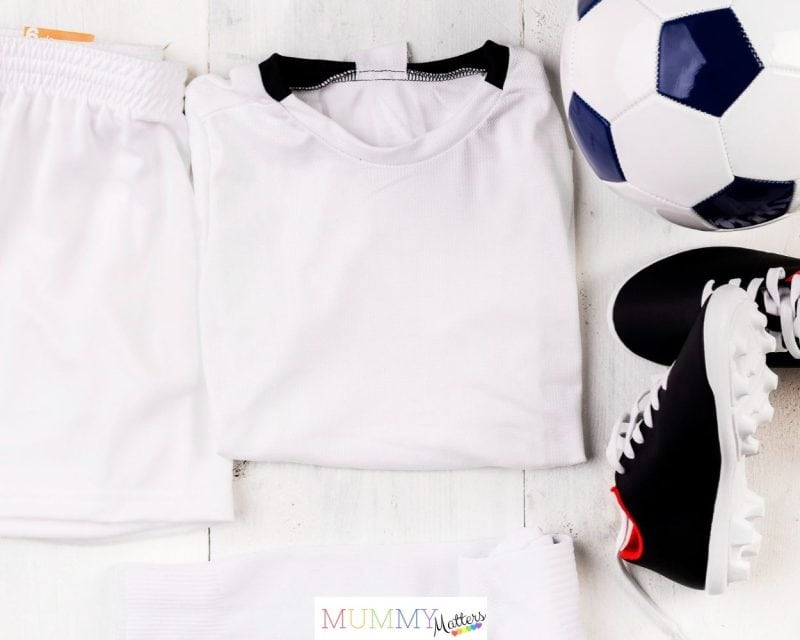
It’s tempting to buy several sets of PE kit, especially when schools recommend quantities on their uniform lists.
But first think realistically about how frequently your child’s kit comes home.
If it comes home every week and you can wash it over the weekend, you may not need multiples of every item.
This becomes particularly important when PE hoodies, jogging bottoms or sports tops have to be purchased through the school supplier.
Start with what you genuinely need. You can always buy another later.
9. Look for Second-Hand Football Boots and Sports Equipment
Children can grow out of football boots remarkably quickly, sometimes before they’ve had enough use to justify the original price.
Vinted, Facebook Marketplace, local sports groups and other parents can all be good places to look for barely worn boots.
The same applies to things such as shin pads, sports bags and equipment required for particular clubs.
Obviously, check the condition carefully and make sure footwear fits correctly before your child uses it.
10. Buy Stationery From a List, Not From Excitement
Back-to-school stationery shopping can get completely out of hand.
New notebooks. Matching highlighters. Twenty-four coloured pens. A pencil case large enough to qualify as hand luggage.
Before shopping, check what your child actually needs.
For secondary school, I normally start with the essentials and replace things throughout the year rather than buying huge quantities in August.
A basic kit might include pens, pencils, ruler, rubber, sharpener, highlighters and any maths equipment specifically requested by the school.
Then check the drawers at home before buying any of it. You may discover you already own enough stationery to supply a small classroom.
11. Create a School Drop Zone at Home
Lost school items don’t just cause morning stress; they can cost money.
Create one place for school bags, shoes, coats and PE kit.
When everyone comes home, things go back there.
This makes it far less likely that you’ll replace something because everyone is convinced it’s been lost, only to discover it three days later under a bed.
It also reduces those frantic journeys back to school with forgotten PE kits and homework.
12. Repair Uniform Before Replacing It
A loose button, fallen hem or small hole doesn’t necessarily mean an item has reached the end of its life.
Keep a small uniform repair kit containing things such as:
- matching thread
- spare buttons
- iron-on repair patches
- fabric glue
- hemming tape
Even if sewing isn’t your strongest skill, many small uniform repairs take only a few minutes.
It’s particularly worthwhile towards the end of the school year when replacing an item your child might only wear for another six weeks makes very little sense.
13. Treat Stains Quickly
School shirts and polo shirts can look decidedly less white as the year progresses.
Treat stains as soon as possible rather than repeatedly washing and drying them, which can make some stains harder to remove.
Follow the garment’s care instructions and use a stain treatment appropriate for the fabric rather than relying on some of the more unusual school-uniform “hacks” you may see online.
Looking after uniform properly means it has a better chance of lasting for younger siblings or being sold afterwards too.
14. Spread Back-to-School Spending Across the Summer
One of the hardest things about back-to-school shopping isn’t necessarily the total cost — it’s having to pay for everything at once.
If you know you’ll need uniform in September, start checking sizes and making a list before the end of the summer term.
You might buy stationery one week, shirts another and leave shoes until nearer the start of term when you have a better idea of your child’s size.
It also gives you time to watch for sales and second-hand bargains rather than panic-buying everything during the final weekend of August.
There is one exception: don’t buy growing children expensive shoes months in advance unless you’re confident about sizing. That bargain isn’t quite so impressive if their feet have grown before they’ve worn them.
15. Ask for Help If School Uniform Costs Are Becoming Unmanageable
There is no shame in asking what support is available.
Schools in England are expected to consider affordability when setting their uniform requirements, and uniform costs should not become a barrier to a child attending school.
If you’re struggling with the cost, speak to the school. Depending on where you live and your circumstances, support may be available through the school, academy trust, local authority or a school clothing grant.
It’s always worth asking rather than assuming you won’t qualify.
A New Rule for Branded School Uniform in England
There is an important change for parents to be aware of for the 2026/27 school year.
From 1 September 2026, schools in England must limit the number of compulsory branded items of school uniform and PE kit.
Schools can generally require no more than three compulsory branded items. Middle and secondary schools can require four if one of those items is a tie.
A “branded” item doesn’t only mean something with the school logo on it. It can also include an item with a particular design, colour, fabric or other feature that means it can only realistically be bought from the school’s chosen supplier.
So if you’re about to spend a small fortune at an official school uniform shop, check the school’s latest policy first.
Small Savings Really Do Add Up
There isn’t one magic trick that suddenly makes sending children to school cheap.
For me, it’s about being selective.
I’ll spend where I think quality matters — school shoes being the obvious example — but I don’t see the point in replacing perfectly good bags or buying expensive branded items when a generic alternative is allowed.
I buy second-hand when it makes sense, sell things we’ve outgrown, repair what can be repaired and try not to get swept up in the idea that everything needs to be brand new for September.
Because once you’ve bought the shoes, uniform, PE kit, football boots, stationery and bags, those “little” back-to-school purchases aren’t little at all.
And if I can save money on the things that don’t matter, there’s a little more left in the family budget for the things that do.
Frequently Asked Questions About Saving Money on School Uniform
How can I save money on school uniform?
Start by checking exactly which items your child’s school requires to be branded. Buy generic trousers, shirts, skirts and other basics from supermarkets or high-street retailers where the school policy allows it. Second-hand uniform, school swap schemes and preloved marketplaces can also make a big difference, particularly for blazers, jumpers and PE kit. It’s also worth checking what still fits from last year before buying anything new.
How many branded school uniform items can schools require?
From 1 September 2026, schools in England must limit compulsory branded school uniform and PE kit to three items or fewer. Middle and secondary schools can require up to four branded items if one of those items is a tie.
The limit covers compulsory uniform and PE kit together rather than allowing schools separate allowances for each.
Does school uniform have to have the school logo on it?
Not necessarily. Your child’s school uniform policy should explain which items must be branded and which can be generic.
It’s also worth knowing that a branded item doesn’t necessarily need to display a school logo. If an item has distinctive characteristics or has to be bought from a particular supplier rather than being widely available from different retailers, it may be considered branded.
Do schools have to provide second-hand uniform?
Schools in England should ensure that opportunities to acquire second-hand uniform are available to parents. Information about how to access second-hand uniform should also be clearly published on the school’s website.
It’s worth checking there before buying new uniform, particularly for expensive branded items.
What should I buy second-hand for school?
Blazers, school jumpers, branded PE tops, PE hoodies, coats and sports equipment can all be particularly good second-hand buys because children often grow out of them before they wear them out.
Shoes and football boots can also sometimes be bought preloved, although I would check the condition, fit and wear carefully before buying footwear.
Is supermarket school uniform worth buying?
It certainly can be. For everyday basics such as shirts, polo shirts, trousers, skirts and plain jumpers, supermarket uniform can offer excellent value.
Don’t look at price alone, though. Adjustable waists, reinforced knees and durable fabrics can be worth paying slightly more for if they help an item survive the school year
What should I do if I can’t afford my child’s school uniform?
Speak to your child’s school rather than struggling in silence. Schools should consider affordability when setting their uniform requirements, and uniform costs should not prevent a child from attending school or taking part in activities.
Depending on where you live and your circumstances, help may be available through your school, academy trust or local authority. Some areas also have uniform banks, swap shops and community schemes providing preloved uniform for free or at very low cost.
When is the best time to buy school uniform?
I prefer to spread purchases across the summer rather than buying everything at once. However, I leave school shoes and other size-sensitive purchases until fairly close to the start of term because children can grow surprisingly quickly over the summer.
For items where sizing is less critical, keeping an eye on sales throughout the year can help you avoid the expensive last-minute August rush.