
Try saying this after a night on the tiles — Pruritic Urticarial Papules and Plaques of Pregnancy! Often shortened to PUPPP rash, this common skin condition during pregnancy is also medically known as polymorphic eruption of pregnancy. It may sound complicated, but if you’ve experienced it, you know it’s much more than just a mouthful — it’s an incredibly uncomfortable pregnancy rash.
My Experience With PUPPP Rash During Pregnancy
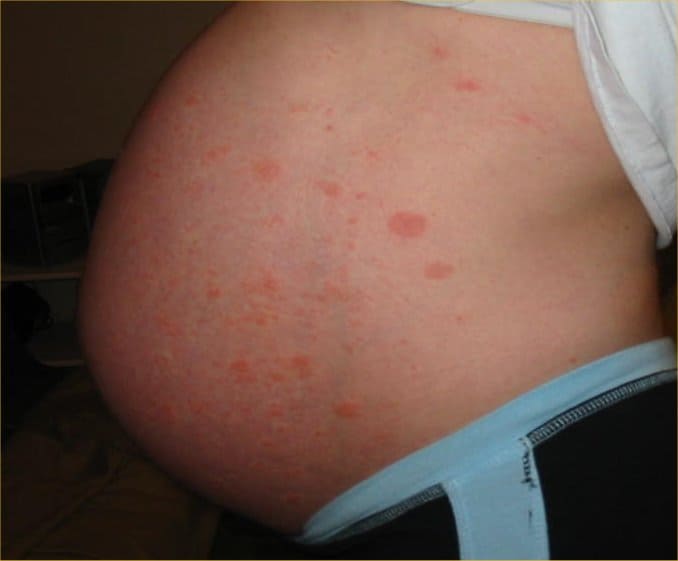
Hand on heart, I had never even heard of PUPPP before my first pregnancy with Little Bean. But around 35 weeks into the third trimester of pregnancy, I suddenly developed what I thought was a heat rash. It quickly became clear that this was something else entirely — something itchier, hotter, and much more persistent.
Like many pregnant women, I assumed it was just one of those things. But the symptoms escalated fast. PUPPP rash symptoms usually begin in the stretch marks on your abdomen, but in my case, the rash appeared as small red bumps that became so itchy they kept me up at night. I later learned that one sign of PUPPP rash is that it tends to spare the belly button, which matched my experience exactly.
Symptoms of PUPPP Rash
The PUPPP rash typically:
- Starts in the stretch marks on your belly (without affecting your belly button)
- Appears as hive-like or bumpy rash patches
- Spreads to thighs, buttocks, breasts, and arms
- Causes intense itching, often worse at night
It’s one of the more common pregnancy skin conditions, and although the itchy rash is uncomfortable, the rash usually goes away after childbirth and is harmless to both mother and baby.
According to the American Academy of Dermatology, PUPPP occurs in about 1 in 150 pregnancies, often in a woman’s first pregnancy. The condition during pregnancy is not contagious and is considered benign, although the discomfort can be extreme [source].
Causes of PUPPP Rash
The cause of PUPPP is still unknown, though it’s often linked to rapid skin stretching in late pregnancy. Some believe that PUPPP rash may occur due to an inflammatory response caused by abdominal wall distension.
Interestingly, it’s been suggested that women pregnant with boys are more prone to PUPPP rash, possibly due to a clash of fetal DNA with the mother’s system. But I was carrying a girl, so clearly, this isn’t a hard and fast rule. If you’re unsure what causes PUPPP, you’re not alone. Even doctors are still researching the risk factors for PUPPP.
Managing PUPPP Rash and Finding Relief
At first, I tried everything from cold showers to calamine lotion, convinced it was just a heat rash. But the itching grew so intense that I would shower 3–4 times daily just for temporary relief. At night, I slept with a wet flannel on my bump and a fan blowing directly at me. I even played my Nintendo DS in bed just to distract my hands from scratching!
Eventually, my doctor referred me to a dermatologist who diagnosed PUPPP rash. They prescribed a high-strength steroid cream — clobetasol (Temovate) or betamethasone (Diprolene) — which I applied up to six times a day. This proved effective and safe during the final stages of pregnancy, helping me manage the rash until delivery.
As explained by the NHS, mild topical corticosteroids are typically the first-line treatment option for PUPPP rash during pregnancy, although stronger steroids may be prescribed when symptoms are severe [source].
Home Remedies and Postpartum Healing
If you’re looking for home remedies or natural support for PUPPP rash, here are a few things that helped me:
- Wearing loose, breathable cotton clothing
- Applying cold compresses
- Using fragrance-free moisturisers and stretch mark oils
- Taking oatmeal or baking soda baths to soothe the skin rash
Postpartum, the PUPPP rash usually fades within four to six weeks. In my case, the worst itching only lasted about 10 days, but it felt like a lifetime. Once my pregnancy continued until delivery, I was finally able to start healing my pregnancy skin. Regular use of oils and hydration helped my skin bounce back over time.
If you’re still struggling postpartum, it’s important to note that PUPPP rash postpartum cases can persist briefly, but the rash typically does not return in future pregnancies.
Foods to Avoid With PUPPP
There’s limited scientific evidence linking diet to PUPPP rash, but some women find relief by avoiding inflammatory foods such as:
- Highly processed snacks
- Sugar-rich treats
- Fried or greasy foods
- Excessive dairy
While not a proven cure, reducing inflammation in your body may ease the itchy rash. Always speak to your midwife or GP before making any major dietary changes during pregnancy.
Final Thoughts: You’re Not Alone
If you’ve developed a PUPPP pregnancy rash, please know you’re not alone. It’s one of the more uncomfortable but harmless skin conditions during pregnancy, and though the rash may feel unbearable at times, symptoms can be controlled using the right treatment options and support.
Whether it’s your first pregnancy or not, dealing with PUPPP rash in pregnancy can take a toll on your comfort and confidence. I hope my experience helps you recognise the rash symptoms and seek timely care.
If you’ve experienced this yourself, please share your story in the comments — together we can support other pregnant women going through it and offer insights into what helped. Let’s make the journey through PUPPP rash during pregnancy a little easier for others.
Further Reading: