

Facial liposuction is a cosmetic surgical procedure designed to remove small, localised deposits of fat from areas such as beneath the chin and around the jawline. While maintaining a balanced diet and exercising regularly can help with overall weight management, some areas of fat may remain resistant to these lifestyle changes.
For people concerned about fullness beneath the chin or a lack of definition around the jawline, facial liposuction may be one option worth exploring. However, it is important to understand that the procedure is not suitable for everyone, and its effectiveness depends on factors including skin elasticity, facial anatomy and individual expectations.
Unlike traditional liposuction, which is commonly associated with areas such as the abdomen, thighs and hips, facial liposuction targets smaller areas and requires particular care because of the delicate structures of the face and neck.
In this guide, we’ll explore nine important considerations surrounding facial liposuction, including its potential benefits, limitations, recovery process and risks, to help you make a more informed decision before speaking with a qualified cosmetic surgeon.
The Procedure
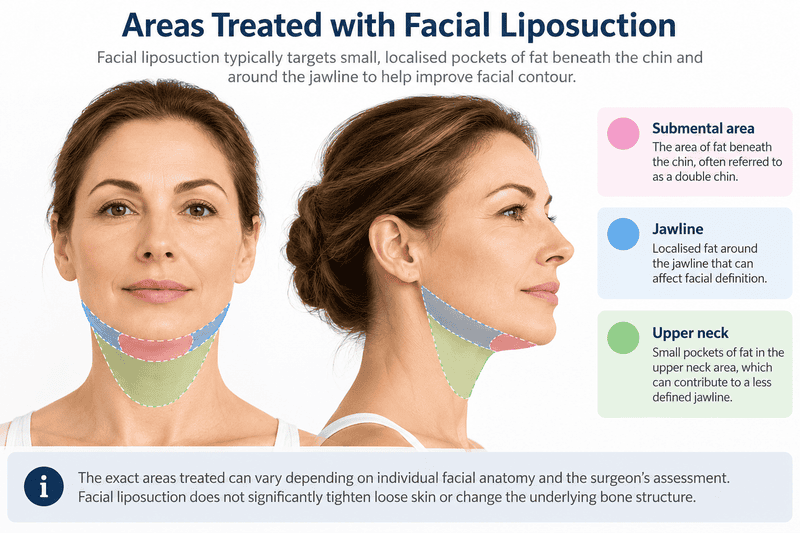
Facial liposuction is a cosmetic surgical procedure that removes small amounts of excess fat from targeted areas of the face and neck, most commonly beneath the chin and around the jawline.
During the procedure, a qualified surgeon makes one or more small incisions, usually in discreet locations beneath the chin or near the ears. A thin, hollow tube called a cannula is then inserted to loosen and remove unwanted fat using gentle suction.
Depending on the technique and the patient’s individual circumstances, facial liposuction may be performed under local anaesthesia, sometimes with sedation, or under general anaesthesia.
Some surgeons use additional technologies, such as ultrasound-assisted or laser-assisted liposuction, although these are not necessary for every procedure.
The treatment itself may take approximately 30 minutes to an hour for a small area, although this varies depending on the extent of the surgery and whether other procedures are performed at the same time.
Patients can expect some swelling, bruising and tenderness afterwards. Many people can return to light daily activities within one to two weeks, although complete healing and the final cosmetic results may take several months.
Importantly, facial liposuction removes fat but does not directly address loose skin, wrinkles or the underlying facial bone structure. A consultation with an appropriately qualified surgeon is essential to determine whether the procedure is suitable.
Benefits of Facial Liposuction
Facial liposuction can help create a more defined appearance by removing localised fat deposits, particularly beneath the chin and around the jawline. For suitable candidates, the procedure may improve facial proportions and provide results that are difficult to achieve through diet and exercise alone.
One potential benefit is that the fat cells removed during liposuction do not typically regenerate. However, the remaining fat cells can increase in size if a person gains weight, meaning the appearance of the treated area may change over time.
It is also important to recognise that facial liposuction cannot prevent the natural ageing process, tighten significantly loose skin or alter the underlying bone structure.
Before considering surgery, it is worth understanding both the potential benefits and the limitations of the procedure.
1. A More Contoured Appearance
Facial proportions are influenced by several factors, including genetics, fat distribution, skin elasticity and the underlying bone structure. Some people naturally carry additional fat beneath their chin or around their jawline, regardless of their overall body weight.
Facial liposuction can help remove localised fat deposits, potentially creating a more defined jawline and improving the appearance of a double chin. However, the results depend on individual facial anatomy, skin elasticity and the amount of fat removed.
It is also important to understand that not every concern about facial shape can be addressed through liposuction.
The underlying jawbone and cheekbones contribute significantly to facial proportions, meaning liposuction and surgical facial bone contouring address different concerns.
For Indonesian-speaking patients researching surgical alternatives in South Korea, kontur wajah di Banobagi provides information about procedures focused on reshaping facial bone structures rather than simply removing excess fat.
Understanding these differences can help patients discuss suitable treatment options, potential risks and recovery expectations with an appropriately qualified surgeon.
2. Minimal Scarring
One potential advantage of facial liposuction is that the procedure generally requires only small incisions, which can result in relatively discreet scarring.
During surgery, a thin tube called a cannula is inserted through small incisions, often positioned beneath the chin or near the ears. Surgeons aim to place these incisions in less noticeable areas to minimise the appearance of scars.
Although scars are usually small, they are not necessarily invisible. Their appearance can vary depending on individual healing, skin type, surgical technique and aftercare.
Facial liposuction may be performed under local anaesthesia, sometimes combined with sedation, or under general anaesthesia, depending on the procedure and the patient’s circumstances.
While anaesthesia helps manage discomfort during surgery, patients should expect some tenderness, swelling and bruising afterwards. Following the surgeon’s aftercare instructions can support healing and help reduce the risk of complications.
Anyone considering facial liposuction should discuss the likely appearance of scars, potential complications and expected recovery with their surgeon before proceeding.
3. Relatively Short Procedure and Recovery Time
Facial liposuction is generally a shorter procedure than liposuction involving larger areas of the body. When treating a small area, such as beneath the chin, the surgery may take approximately 30 minutes to an hour, although this varies depending on the technique used and the individual’s requirements.
Some patients can return home on the same day, provided their surgeon is satisfied with their recovery and they have appropriate support in place.
However, facial liposuction is still a surgical procedure and requires a period of healing.
Swelling, bruising, tenderness and temporary numbness are common during the initial recovery period. Many patients can resume light daily activities within one to two weeks, although strenuous exercise and certain activities may need to be avoided for longer.
Surgeons may recommend wearing a compression garment around the chin and neck to support the treated area during the early stages of recovery.
While initial swelling often improves within the first few weeks, residual swelling can take several months to settle completely. The final appearance of the treated area may therefore take time to become apparent.
Recovery experiences vary, and patients should follow their surgeon’s individual aftercare instructions rather than expecting a fixed recovery timeline.
4. Targeted Removal of Stubborn Facial Fat
One of the main reasons people consider facial liposuction is to address small, localised fat deposits that may remain despite maintaining a healthy weight.
Fat distribution is influenced by several factors, including genetics, age and individual facial anatomy. As a result, some people naturally have additional fullness beneath their chin or around their jawline, even when they are otherwise slim.
Facial liposuction allows a surgeon to target these specific areas, removing a controlled amount of fat to potentially create a more defined facial profile.
However, it is important to understand that facial liposuction is a body-contouring procedure rather than a weight-loss treatment. The amount of fat removed is relatively small, and the procedure should not be expected to produce meaningful changes in overall body weight, cholesterol levels or cardiovascular health.
Maintaining a stable weight after surgery can help preserve the cosmetic results, although natural ageing and changes in skin elasticity will continue to influence facial appearance.
For people considering treatment, a qualified surgeon can assess whether facial fullness is caused by excess fat, skin laxity or underlying anatomical features and explain which options may be appropriate.
5. Understanding the Limitations of Facial Liposuction
Although facial liposuction can help reduce localised fat deposits, it is important to understand what the procedure can and cannot achieve before deciding whether it is suitable.
Facial liposuction primarily targets excess fat beneath the skin. It does not significantly tighten loose skin, remove wrinkles or change the underlying structure of the jawbone and cheekbones. Other cosmetic treatments address different concerns. For example, Botox is primarily used to soften certain facial lines caused by muscle movement, rather than remove fat or reshape facial bones. Our guide to Botox benefits, uses and safety explains how the treatment works, its limitations and what patients should consider before choosing a practitioner.
For example, someone concerned about a double chin may discover that their appearance is influenced by a combination of excess fat, reduced skin elasticity and natural facial anatomy. Removing fat alone may not produce the result they are hoping for.
Age can also influence the outcome. As we get older, our skin gradually loses collagen and elasticity, which can affect how well it adapts to changes in facial volume. In some cases, removing fat may make existing loose skin more noticeable.
Facial liposuction is not a treatment for obesity or a substitute for maintaining a healthy lifestyle. It should also not be expected to improve cholesterol levels, cardiovascular health or overall physical fitness.
A consultation with an appropriately qualified cosmetic surgeon can help patients understand whether liposuction is likely to address their concerns or whether alternative approaches may be more suitable.
Having realistic expectations is an important part of making an informed decision about any cosmetic procedure.
6. Improved Confidence
For some people, feeling unhappy with a particular aspect of their appearance can affect their self-confidence. Concerns about fullness beneath the chin or a less defined jawline may lead individuals to explore cosmetic treatments such as facial liposuction.
When the procedure produces results that align with a patient’s expectations, they may feel more comfortable and confident in their appearance. However, the emotional benefits of cosmetic surgery vary considerably from person to person.
It is important to recognise that facial liposuction cannot guarantee improved self-esteem, happiness or overall emotional wellbeing. Cosmetic surgery changes physical features, but it does not necessarily address deeper concerns about body image.
Anyone considering facial liposuction should take time to reflect on their motivations and ensure they are making the decision for themselves rather than feeling pressured by others or influenced by unrealistic beauty standards.
Discussing expectations openly with a qualified surgeon can help patients understand what is realistically achievable. If concerns about appearance are causing significant distress, speaking with a GP or mental health professional may also be helpful before making a decision about surgery.
Ultimately, choosing whether to undergo a cosmetic procedure is a personal decision, and feeling confident in your appearance does not have to depend on surgical intervention.
7. Skin Elasticity and Collagen Production
Skin elasticity is an important factor in determining how the face and neck respond to liposuction. When fat is removed from beneath the skin, the surrounding tissues need to adapt to the change in volume to achieve a smooth, natural-looking result.
Collagen and elastin are proteins that help maintain the skin’s structure, firmness and flexibility. As we age, changes in these proteins contribute to a gradual loss of skin elasticity, making it more difficult for the skin to contract after fat removal.
Understanding how our skin changes with age can also help us make more informed decisions about cosmetic treatments. Although no skincare routine can completely prevent ageing, protecting the skin from excessive sun exposure and maintaining healthy habits can support its overall condition. You can explore this further in our guide to slowing down the skin’s ageing process.
People with good skin elasticity may experience a smoother contour following facial liposuction. However, those with significant skin laxity may find that removing fat makes existing loose skin more noticeable.
Some surgeons offer laser-assisted or radiofrequency-assisted procedures alongside fat removal. These technologies use controlled energy to heat tissues and may encourage some skin contraction or collagen remodelling. However, the available evidence varies between techniques, and improvements in skin tightness cannot be guaranteed.
Traditional facial liposuction does not directly stimulate significant collagen production and should not be considered a treatment for wrinkles or skin ageing.
Before undergoing treatment, patients should discuss their skin quality, expectations and the potential limitations of different techniques with an appropriately qualified surgeon.
8. Choosing a Qualified Cosmetic Surgeon
Choosing an appropriately qualified and experienced surgeon is one of the most important considerations when researching facial liposuction.
Although facial liposuction typically involves smaller treatment areas than traditional body liposuction, the face and neck contain delicate nerves, blood vessels and other structures that require careful surgical planning.
In the UK, doctors performing cosmetic surgery should be registered with the General Medical Council (GMC) and hold an appropriate licence to practise. Patients should also check their surgeon’s specialist qualifications, relevant experience and the registration of the clinic or hospital where the procedure will take place.
Before agreeing to surgery, it is sensible to ask how frequently the surgeon performs facial liposuction, what complications may occur and what arrangements are available if further treatment is needed.
Before committing to any cosmetic treatment, it is worth researching the available options and considering which approach, if any, is appropriate for your individual concerns. Different procedures address different aspects of appearance, and understanding their benefits, limitations and potential risks is an important part of making an informed decision. Our guide to choosing the right body enhancement procedure for your goals explores some of the factors worth considering before undergoing cosmetic treatment.
Some patients also consider cosmetic surgery abroad, where procedures and treatment packages may differ from those available in the UK. However, travelling overseas for surgery requires additional research.
Patients should investigate the surgeon’s qualifications, the clinic’s safety standards, language barriers, follow-up arrangements and how complications would be managed after returning home.
Flying soon after surgery may also increase certain health risks, including blood clots, so travel plans should be discussed with the treating surgeon.
Regardless of where treatment takes place, patients should receive clear information about the procedure, potential risks, realistic outcomes and recovery requirements before giving informed consent.
Taking time to research these details can help patients make a more informed decision without feeling pressured into undergoing surgery.
9. Weighing Up the Benefits and Risks
Like any surgical procedure, facial liposuction involves potential risks that should be carefully considered alongside the possible cosmetic benefits.
Although the procedure typically involves removing relatively small amounts of fat, complications can still occur. These may include infection, bleeding, prolonged swelling, changes in skin sensation and uneven facial contours.
In some cases, patients may experience asymmetry, visible irregularities beneath the skin or results that differ from their expectations. There is also a risk of injury to nearby nerves and other delicate structures.
The likelihood of complications depends on several factors, including the patient’s general health, the surgical technique used and the experience of the surgeon.
It is equally important to consider whether the potential improvement in appearance justifies the financial cost, recovery time and possible need for further treatment.
Facial liposuction is an elective cosmetic procedure rather than a medical necessity for most patients. Taking time to understand the benefits, limitations and potential complications can help individuals make decisions based on realistic expectations rather than pressure or promotional claims.
A thorough consultation with an appropriately qualified surgeon should include a discussion of the risks specific to the patient, the expected recovery process and what options are available if the desired results are not achieved.
After The Surgery
Recovery following facial liposuction varies depending on the extent of the procedure, the surgical technique used and the individual’s general health.
During the first few days, patients commonly experience swelling, bruising, tenderness and a feeling of tightness around the treated area. Temporary numbness or changes in skin sensation may also occur as the tissues begin to heal.
A surgeon may recommend wearing a compression garment around the chin and neck to help manage swelling and support the treated tissues during recovery. The length of time this needs to be worn will depend on the procedure and the surgeon’s instructions.
Pain relief may be prescribed or recommended to manage discomfort. Antibiotics are sometimes used when clinically appropriate, but they are not necessarily required for every patient.
Patients are generally advised to avoid strenuous exercise, heavy lifting and activities that could put pressure on the treated area during the initial recovery period. Keeping the head slightly elevated when resting may also help reduce swelling.
Although many people can return to light everyday activities within one to two weeks, residual swelling, firmness and changes in sensation may take considerably longer to resolve.
It is important to attend any recommended follow-up appointments so the surgeon can monitor healing and address potential complications.
Patients should seek prompt medical advice if they experience increasing redness, worsening pain, fever, unusual discharge or swelling that becomes progressively worse rather than improving.
Sudden breathing difficulties, chest pain or other symptoms suggesting a serious complication require emergency medical attention.
Following personalised aftercare instructions and allowing sufficient time for recovery can help support healing and reduce avoidable complications.
Facial Liposuction Results: What to Expect
The results of facial liposuction are not always immediately visible because swelling and bruising can temporarily obscure changes to the treated area.
As the initial swelling subsides over the following weeks, patients may begin to notice improved definition around the chin and jawline. However, residual swelling can take several months to resolve, meaning the final appearance may not become apparent until the tissues have fully settled.
The outcome depends on several factors, including the amount of fat removed, skin elasticity, facial anatomy and the surgical technique used.
Are Facial Liposuction Results Permanent?
Fat cells removed during liposuction do not typically grow back, meaning the reduction in fat cells within the treated area can be long-lasting.
However, this does not mean that facial appearance will remain unchanged indefinitely.
Significant weight gain can cause the remaining fat cells to enlarge, potentially affecting the definition achieved through surgery. Natural ageing, changes in skin elasticity and fluctuations in body weight can also influence facial contours over time.
Maintaining a relatively stable weight may help preserve the cosmetic results, although it cannot prevent age-related changes.
What If the Results Are Uneven?
Some temporary unevenness or firmness may occur as swelling subsides and the tissues heal.
However, persistent asymmetry, contour irregularities or loose skin can sometimes affect the final appearance.
Patients who are concerned about their results should discuss these issues with their surgeon rather than assuming further treatment is immediately necessary.
Because healing takes time, surgeons will generally want to assess the final outcome after swelling has settled before discussing whether any additional treatment is appropriate.
Having realistic expectations before surgery is essential, as facial liposuction can improve certain contours but cannot guarantee a particular facial shape or appearance.
Risks of Facial Liposuction
Like any surgical procedure, facial liposuction carries potential risks and complications. Although many patients recover without serious problems, it is important to understand what could happen before deciding whether to undergo treatment.
The likelihood of complications varies depending on factors such as the patient’s medical history, the extent of the procedure, the surgical technique and the experience of the surgeon.
Common Side Effects
Some side effects are expected during the initial healing period and usually improve as the tissues recover. These may include:
- Swelling and bruising: Common after surgery and may take several weeks to improve.
- Tenderness and discomfort: The treated area may feel sore, particularly during the first few days.
- Temporary numbness: Changes in skin sensation can occur and may take weeks or months to resolve.
- Firmness or lumpiness: The tissues may initially feel uneven as swelling settles and healing progresses.
- Small scars: Incisions generally leave small scars, although their visibility varies between individuals.
Potential Surgical Complications
Less common but potentially more serious complications can include:
- Infection: Bacteria may enter the surgical site, sometimes requiring antibiotics or further treatment.
- Bleeding or haematoma: Blood can collect beneath the skin and may occasionally require medical intervention.
- Seroma: Fluid may accumulate beneath the skin following surgery.
- Contour irregularities: Uneven fat removal or changes in skin elasticity may produce asymmetry, indentations or an irregular appearance.
- Nerve injury: Damage to nearby nerves can cause altered sensation or, in some cases, problems with facial movement.
- Skin damage: Reduced blood supply or other complications can occasionally affect the health of the surrounding skin.
- Anaesthetic complications: Local or general anaesthesia can cause adverse reactions, including rare but serious complications.
- Blood clots and fat embolism: These are rare but potentially life-threatening complications associated with liposuction.
When to Seek Medical Attention
Patients should contact their surgical team promptly if they experience increasing pain, spreading redness, fever, unusual discharge or swelling that becomes significantly worse.
Sudden chest pain, difficulty breathing, fainting or other symptoms suggesting a serious complication require emergency medical attention. In the UK, call 999.
Reducing the Risk of Complications
Although no surgical procedure is entirely risk-free, patients can take steps to make informed decisions and support their recovery.
These include choosing an appropriately qualified and experienced surgeon, providing an accurate medical history, following pre-operative and post-operative instructions, and attending recommended follow-up appointments.
Patients should also discuss any existing medical conditions, medications and previous surgical complications with their surgeon before treatment.
Understanding the potential risks is an essential part of informed consent and helps ensure that decisions about cosmetic surgery are based on realistic expectations.
Conclusion
Facial liposuction may be an option for people who want to reduce localised fat deposits beneath the chin or around the jawline. For suitable candidates, it can help create a more defined facial contour, although results vary depending on individual anatomy, skin elasticity and expectations.
As we’ve explored, there are several factors to consider before deciding whether facial liposuction is right for you. Understanding the procedure, recovery process, potential benefits and possible complications is essential when making an informed decision.
It is also important to remember that facial liposuction cannot address every concern about facial appearance. Loose skin, natural ageing and underlying bone structure can all influence facial proportions, and alternative treatments may be more appropriate in some circumstances.
If you’re considering facial liposuction, take time to research your options, check your surgeon’s qualifications and ask questions about the expected results, risks and aftercare.
Ultimately, cosmetic surgery is a personal choice, and there is no single approach that suits everyone. Making a decision based on reliable information, realistic expectations and professional medical advice is far more important than achieving any particular beauty ideal.
Medical disclaimer: This article is provided for general information only and should not be considered medical advice. Facial liposuction is a surgical procedure that carries potential risks and complications. Anyone considering cosmetic surgery should consult an appropriately qualified medical professional for personalised advice about treatment options, suitability, potential risks and recovery.
Updated: October 2026