

Have you ever watched your child come home from school completely deflated, only to discover it all started because a teacher corrected their work or a friend didn’t sit next to them at lunch?
Perhaps they burst into tears because you reminded them to tidy their bedroom, convinced themselves everyone was cross with them after a simple misunderstanding, or spent hours replaying a conversation in their head because they worried they’d said the wrong thing.
To everyone else, it might seem like a small moment that should be easy to move on from. But for your child, it can feel enormous.
If you’ve ever found yourself saying, “Everything seems to upset them,” you’re certainly not alone. As parents, it’s heartbreaking to watch our children carry around the weight of every disappointment, criticism or awkward interaction. It can leave us wondering whether we’re being too soft, whether we should encourage them to be more resilient, or whether we’re missing something more significant altogether.
Over the years, as a mum of three very different children, I’ve learned that emotional sensitivity doesn’t look the same in every child. One might shrug off a disagreement and carry on with their day, while another replays the same conversation for hours, convinced they’ve upset someone or done something wrong. Neither response is a choice, and neither child is trying to make life difficult.
It’s easy for emotionally sensitive children to be labelled as dramatic, overreacting or needing to “toughen up”. In reality, many of them are working incredibly hard just to process feelings that seem to arrive with much greater intensity than they do for other children.
The good news is that taking things personally doesn’t mean there’s something wrong with your child—or with your parenting. Once you understand what’s happening beneath the surface, you can begin to respond in ways that help your child feel safe, understood and gradually more confident in handling life’s inevitable ups and downs.
In this guide, we’ll explore why some children take things so personally, what it can look like in everyday life, and the practical ways you can support them with compassion while building emotional resilience that lasts far beyond childhood.
What Does It Mean When a Child Takes Everything Personally?

Children who take things personally aren’t choosing to be “too sensitive”. They’re often experiencing everyday situations through a much more emotional lens than the people around them.
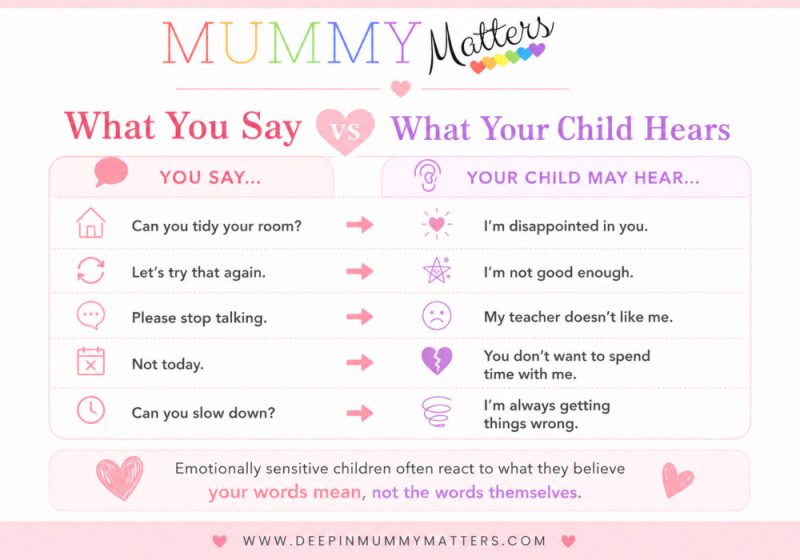
That means a comment, correction or misunderstanding that another child might brush off can feel deeply personal to them. Instead of hearing, “You need to slow down with your handwriting,” they hear, “I’m not good enough.” Instead of thinking, “My friend sat somewhere else today,” they wonder, “They don’t like me anymore.”
These thoughts can happen so quickly that your child may not even realise they’re making those connections. Their emotional brain fills in the gaps before logic has a chance to catch up.
As parents, we often notice the reactions before we understand what’s causing them.
Your child might:
- Come home from school convinced a teacher doesn’t like them because they were asked to stop talking.
- Become upset after losing a game, insisting they’re “rubbish” and never wanting to play again.
- Assume a friend is angry with them if they don’t reply to a message straight away.
- Burst into tears when they’re corrected, even if the correction was kind and gentle.
- Worry for hours after a conversation because they think they said something wrong.
- Take a sibling’s joke as a personal attack rather than playful teasing.
- Constantly ask, “Are you cross with me?” even when you’re perfectly calm.
- Apologise over and over again for tiny mistakes.
- Give up on something they enjoy because they’re afraid of getting it wrong again.
- Expect the worst after even the smallest setback.
To the outside world, these reactions can seem out of proportion. Family members, teachers or friends may wonder why your child “can’t just let it go.”
But children who take things personally aren’t usually trying to be dramatic or difficult. In many cases, they’re working incredibly hard to make sense of feelings that arrive quickly and intensely. Their brains are trying to protect them from rejection, embarrassment or disappointment, even when no real threat exists.
That’s why reassurance alone doesn’t always work. You can tell them, “I’m not angry,” or “I’m sure your friend didn’t mean it like that,” but if their brain has already decided they’re being rejected or criticised, those fears can take time to settle.
Understanding this difference is important because it shifts the question from:
“Why are they overreacting?”
to:
“What are they experiencing that I’m not seeing?”
That small change in perspective can transform the way we support our children.
Why Do Some Children Take Things More Personally Than Others?
There isn’t one simple answer. Every child is unique, and the way they respond to criticism, disappointment or perceived rejection is shaped by a combination of their personality, experiences and the way their brain processes emotions.
Some children seem to be born feeling everything more deeply. From a young age, they may react strongly to loud noises, changes in routine, unexpected criticism or conflict between family members. Others develop greater emotional sensitivity after difficult experiences, such as bullying, friendship problems or periods of heightened stress.
Neither response is a sign of weakness. It’s simply a reminder that children don’t all experience the world in the same way.
Temperament plays a bigger role than many people realise
Even within the same family, children can have completely different temperaments. One child may shrug off disappointment and move on quickly, while another needs time to process every emotion before they can let it go.
Research has shown that aspects of temperament are present from early childhood and influence how children respond to new situations and emotions. Some children are naturally more cautious, observant or emotionally responsive than others. These differences aren’t something that parents create, and they aren’t personality flaws that need to be fixed.
When emotionally sensitive children feel understood rather than criticised, they often learn healthy ways to manage those big feelings over time.
Anxiety can make ordinary situations feel much bigger
Children who experience anxiety are often constantly scanning for signs that something is wrong.
They may worry that someone is upset with them, assume they’ve made a mistake when they haven’t, or expect the worst after even a small misunderstanding. Their brain is trying to protect them by spotting possible problems early, but this can lead them to misinterpret neutral situations as personal rejection or criticism.
For example, a teacher who seems distracted, a friend who forgets to wave, or a parent who sounds tired after a long day can all be interpreted as evidence that they’ve done something wrong.
Perfectionism often hides underneath emotional sensitivity
Some children set incredibly high standards for themselves.
They don’t just want to do well—they feel they have to get everything right.
When they make a mistake or receive constructive feedback, it can feel less like an opportunity to learn and more like proof that they’ve failed.
Over time, this fear of getting things wrong can lead children to avoid trying new activities, give up on hobbies they once loved or become overwhelmed by even small setbacks.
Sometimes emotional sensitivity is linked to neurodivergence
For some children, intense emotional reactions may also be connected to conditions such as ADHD or autism.
Many parents of neurodivergent children describe their child experiencing emotions with extraordinary intensity. A minor disagreement, an unexpected change of plans or a perceived criticism can feel overwhelming in ways that are difficult for others to understand.
Some children with ADHD also experience traits associated with Rejection Sensitive Dysphoria (RSD). Although RSD isn’t an official medical diagnosis, it’s a term commonly used to describe an extreme emotional response to real or perceived rejection, criticism or failure. Children with these traits may genuinely feel devastated by situations that others experience as minor disappointments.
It’s important to remember that not every emotionally sensitive child is neurodivergent, and not every neurodivergent child takes things personally. Emotional sensitivity exists on a spectrum, and every child’s experience is different.
Rather than focusing on finding a label, it can be more helpful to ask, “What is my child trying to tell me through their behaviour?” That question often leads to greater understanding and more compassionate support.
How This Can Show Up in Everyday Life
One of the hardest parts of raising an emotionally sensitive child is that their reactions don’t always seem to match what happened.
As parents, we can often see that a situation was relatively minor, but our child’s feelings are anything but. That’s because they’re reacting to what the situation means to them, not necessarily what actually happened.
Over the years, I’ve learned that these moments often have one thing in common: my child wasn’t trying to be difficult. They were trying to make sense of emotions that felt far bigger than the situation itself.
Friendships
Friendships can feel wonderfully exciting for emotionally sensitive children, but they can also be exhausting.
A friend choosing to sit somewhere different at lunchtime, forgetting to invite them to something or taking longer than usual to reply to a message can quickly spiral into thoughts like:
“Have I done something wrong?”
“They don’t want to be my friend anymore.”
Many children will move on from these moments quite quickly. Emotionally sensitive children often replay them over and over again, searching for clues that explain what went wrong.
School and teachers

School can be especially challenging because children spend so much of their day receiving instructions, corrections and feedback.
Being reminded to stop talking, asked to redo a piece of work or encouraged to improve something can feel much bigger than the teacher ever intended.
Instead of hearing helpful guidance, some children hear criticism.
Instead of seeing a teacher correcting behaviour, they believe the teacher doesn’t like them.
I remember one of my own children coming home from school utterly convinced that a teacher didn’t like them. Nothing dramatic had happened. They’d simply been asked to stop talking during a lesson. But by the time they walked through the front door, they had transformed a perfectly ordinary classroom reminder into proof that the teacher was disappointed in them.
As I listened, I realised they weren’t reacting to what had been said. They were reacting to what they believed it meant. It took time—and many calm conversations—for them to understand that being corrected wasn’t the same as being rejected. Looking back, that was an important lesson for both of us.
As parents, this can be difficult to untangle because we weren’t there to witness the interaction. Sometimes our child has genuinely misunderstood the situation. Sometimes a teacher’s tone or choice of words has had a bigger impact than they realised. Often, it’s a combination of both.
I’ve found it’s important not to dismiss these feelings while also gently helping children explore whether there might be another explanation. Feeling understood doesn’t always mean the first conclusion is the only one.
Brothers and sisters
Life with siblings is full of teasing, competition and misunderstandings, and for most children those little disagreements are forgotten almost as quickly as they happen. But emotionally sensitive children can find these interactions particularly difficult.
A joke that was intended to be playful may feel deeply hurtful, while a disagreement over whose turn it is can quickly become, “Nobody likes me.” Rather than seeing these moments as isolated incidents, they often connect them to much bigger fears about belonging, fairness or being loved
Sport, hobbies and trying new things
Taking part in sport or learning a new skill means making mistakes, and that’s not easy for every child. Some children become so worried about getting something wrong that they’d rather stop altogether than risk feeling embarrassed.
Missing a goal, forgetting a line in the school play or struggling with a new skill can become evidence that they’re “no good” rather than simply part of learning. These children often need reminding that progress doesn’t come from getting everything right the first time—it comes from being brave enough to keep going.
At home
Home is usually where children feel safest, which means it’s often where the biggest emotions appear.
Have you ever asked your child to put their shoes away, brush their teeth or tidy their bedroom, only for them to burst into tears? You’re left wondering what just happened because, in your mind, it was a simple reminder. But your child may have heard something completely different.
Instead of hearing, “Can you put your shoes away, please?” they may be hearing, “I’m disappointed in you.” Or even, “I can never get anything right.” Emotionally sensitive children often aren’t reacting to the words themselves—they’re reacting to what they believe those words mean.
I remember one of my own children asking me, “Are you cross with me?” far more often than I ever expected. Sometimes I’d simply been concentrating on cooking dinner or trying to get everyone out of the door on time. I wasn’t angry at all, but they’d noticed my tired expression or hurried tone and assumed they’d done something wrong. It was a reminder that children don’t just listen to what we say; they pay close attention to how we say it too.
As parents, we’re often juggling a hundred different things at once, and it’s impossible to sound calm and cheerful every minute of every day. Emotionally sensitive children can be particularly tuned in to subtle changes in our voice, facial expressions and body language. If they’re already worried about disappointing us, they may interpret those small changes as confirmation that we’re upset with them.
That doesn’t mean we have to walk on eggshells or avoid setting boundaries. Children still need reminders, routines and guidance. The difference is that when we understand how they might be interpreting our words, we can slow down where possible, offer reassurance when it’s needed and help them separate correction from rejection.
When we respond with curiosity instead of assuming they’re overreacting, we create opportunities to understand what’s happening beneath the surface—and that’s often where the real progress begins.
How Parents Can Help an Emotionally Sensitive Child
The good news is that emotional sensitivity isn’t something you need to “fix”.
Your child doesn’t need to become someone who never feels hurt or disappointed. Instead, they need to learn that difficult emotions are manageable and that one awkward conversation, one mistake or one piece of constructive feedback doesn’t define who they are.
As parents, we can’t protect our children from every disappointment, but we can help them build the confidence to cope with life’s ups and downs.
Start by listening before trying to solve the problem
When our children are hurting, our first instinct is usually to make the pain disappear.
We want to reassure them, help them see the bigger picture or convince them that everything will be okay. It comes from love, because seeing our children upset is incredibly difficult.
We might find ourselves saying:
- “I’m sure they didn’t mean it.”
- “Don’t worry about it.”
- “You’re overthinking it.”
The problem is that emotionally sensitive children often aren’t ready to hear solutions yet. If they still feel misunderstood, even the kindest reassurance can sound as though we’re dismissing what they’re experiencing.
I’ve learned that it’s often more helpful to slow down and listen first. You don’t have to agree with your child’s interpretation of what happened to acknowledge how they’re feeling.
Simple responses like:
- “That sounds like it really hurt.”
- “I can see why you’re upset.”
- “Thank you for telling me.”
can help your child feel safe enough to keep talking.
Feeling heard doesn’t mean we agree with every conclusion they’ve reached. It simply tells our child, “I’m here with you, and we’ll work through this together.” Once they feel understood, they’re usually much more open to exploring what happened and considering other ways of looking at the situation.
Help them explore other possibilities

Once the biggest emotions have settled, gently encourage your child to consider that there may be more than one explanation for what happened.
This isn’t about telling them they’re wrong. It’s about helping them discover that our first interpretation isn’t always the only one.
You might ask gentle questions such as:
- “Can we think of another reason your friend didn’t reply?”
- “Is it possible your teacher was reminding everyone, not just you?”
- “What would you say if this had happened to one of your friends?”
I’ve found that asking questions works far better than offering immediate answers. When children come up with an alternative explanation themselves, they’re much more likely to believe it than if we simply tell them not to worry.
Over time, these conversations can help children become more flexible in their thinking. They begin to realise that one difficult moment doesn’t always mean someone is angry with them, they’ve done something wrong or a friendship is over.
It’s a skill that won’t develop overnight, but with patience and practice, many children become better at pausing before jumping to the worst conclusion.
Separate the mistake from the child
One thing I’ve noticed about emotionally sensitive children is that they often don’t just see a mistake as something they did—they see it as something they are.
A forgotten homework book becomes, “I’m so stupid.”
A missed goal becomes, “I’m useless at football.”
Being reminded to slow down or try again becomes, “I’m never good enough.”
That’s why the words we choose matter.
Instead of focusing on the child, try focusing on the behaviour or the situation.
Rather than saying:
- “You’re being careless.”
You might say:
- “Everyone makes mistakes. Let’s work out what happened together.”
Or instead of:
- “You’re always so forgetful.”
Try:
- “I wonder what would help you remember next time?”
It’s a small shift in language, but it sends a powerful message. Mistakes are something we all experience—they’re not something that defines who we are.
The more children hear that message, the more they begin to understand that getting something wrong doesn’t make them a failure. It simply means they’re still learning, just like everyone else.
Praise courage, not just success
Children who are afraid of criticism often begin to avoid anything that carries the risk of getting it wrong.
They might stop putting their hand up in class, give up on a hobby they once enjoyed or refuse to try something new because failing feels far more painful than it does for other children.
I’ve found it helps to change what we celebrate. Instead of focusing only on results, notice the courage it took just to have a go.
You might say:
- “I know that wasn’t easy, but I’m really proud that you kept going.”
- “It took courage to try something new today.”
- “I’m proud of the effort you put in, whatever the result.”
When children hear those messages consistently, they begin to understand that success isn’t just about getting everything right. Sometimes success is being brave enough to try, even when something feels scary.
That doesn’t mean they’ll stop worrying about mistakes overnight, but it does help them build the confidence to keep trying—and that’s where real resilience begins.
Remember that your calm becomes their calm
This is probably one of the hardest parts of parenting an emotionally sensitive child.
When the same worries come up day after day, or you’ve spent twenty minutes reassuring your child only for them to ask the same question again five minutes later, it’s completely understandable to feel frustrated.
I’ve certainly had moments where I’ve wanted to say, “We’ve already talked about this!” Sometimes I probably have.
But over the years, I’ve realised that emotionally sensitive children usually aren’t looking for attention—they’re looking for reassurance and safety. They’re trying to make sense of feelings that still feel very real to them, even if we’ve already explained the situation several times.
That doesn’t mean we have to have endless conversations or provide constant reassurance. Boundaries are still important. But when we can stay calm, speak gently and help our children feel safe, we’re showing them that difficult emotions don’t have to take over.
The calmer we can remain, the easier it becomes for their nervous system to settle too.
Of course, none of us manages this every time, and that’s okay. Parenting isn’t about being endlessly patient or getting every conversation right. It’s about repairing those moments when things don’t go as we’d hoped and showing our children that relationships are strong enough to recover after difficult days.
Build confidence outside the difficult moments
Children are often most receptive when they’re calm, not when they’re overwhelmed.
When emotions are running high, it’s difficult for anyone to learn something new. That’s why some of the most important confidence-building happens during the ordinary moments in between—the car journey home, while baking together, walking the dog or chatting before bedtime.
Look for opportunities to celebrate small achievements, not just the big milestones. Notice when your child shows kindness, keeps trying after something feels difficult or solves a problem on their own.
I’ve also found it helps to talk openly about our own mistakes. When our children hear us say, “I got that wrong,” or “That didn’t go to plan, but I’ll try again tomorrow,” they learn that making mistakes is simply part of being human, not something to be ashamed of.
Most importantly, remind your child that qualities like kindness, empathy, determination and thoughtfulness matter just as much as winning, getting top marks or being the best at something.
Children who feel deeply often grow into adults who notice when others are struggling, show compassion and build meaningful relationships. Emotional sensitivity isn’t something that needs to disappear—it simply needs understanding, guidance and the confidence to know that big feelings can be managed.
When Might Your Child Need Some Extra Support?

Every child has moments when they take things personally. Feeling hurt after an argument with a friend, being upset by criticism or worrying about making mistakes is a normal part of growing up.
The difference is how often these situations happen and how much they affect your child’s everyday life.
If your child regularly becomes overwhelmed by perceived criticism or rejection, avoids school or activities because they’re afraid of getting things wrong, struggles to make or keep friendships, or seems anxious for long periods of time, it may be worth speaking to someone who can offer additional support.
Your first step might be a conversation with your child’s class teacher or pastoral team to find out whether they’re seeing similar behaviours at school. You could also speak to your GP or health visitor (for younger children), who can discuss whether further support or assessment might be appropriate.
Remember, asking for help doesn’t mean you’ve failed as a parent. In fact, recognising that your child might benefit from extra support is one of the most caring things you can do.
Whether your child is naturally sensitive, experiencing anxiety, is neurodivergent, or simply going through a difficult stage of life, they deserve to feel understood rather than judged.
Final Thoughts
If you’ve been reading this article while thinking, “That’s my child,” I hope you’ll remember one thing.
Your child isn’t trying to make life difficult.
They aren’t choosing to overreact, seek attention or make every situation about themselves. More often than not, they’re simply trying to make sense of emotions that feel much bigger to them than they do to everyone else.
As parents, it’s easy to fall into the trap of wondering whether we’re doing something wrong. We question ourselves when our child comes home in tears again, worries endlessly about a friendship or asks for reassurance for what feels like the hundredth time.
I’ve been there too.
What I’ve learned is that emotionally sensitive children don’t need perfect parents. They don’t need us to have all the answers or say exactly the right thing every time. They need to know that home is a place where they are loved, accepted and understood—even on the days when emotions run high.
Some of the most powerful moments in parenting aren’t the ones where we solve the problem. They’re the moments when our child realises they don’t have to face those big feelings on their own.
With time, patience and gentle guidance, many emotionally sensitive children learn that mistakes are part of learning, criticism isn’t the same as rejection and one difficult day doesn’t define who they are.
They begin to see themselves through a kinder lens.
And perhaps that’s one of the greatest gifts we can give them—not a life without disappointment, but the confidence to believe they are strong enough to face it.
Because children who feel deeply don’t need us to change who they are.
They don’t need perfect parents. They just need parents who keep showing up with love, curiosity and hope.