
When you’re thinking about trying for a baby, it’s natural to start looking at the things you can do to prepare your body for pregnancy. Taking folic acid is probably one of the first things that comes to mind, but what you eat in the weeks and months before conception matters too.
And preconception nutrition isn’t just something for women to think about.
Both egg and sperm health form part of the picture, which is why preparing for pregnancy can be something you approach together as a couple. That doesn’t mean following a restrictive “fertility diet”, buying expensive supplements or filling your kitchen with so-called superfoods. Instead, it’s about making sure you’re eating a varied, balanced diet and getting the nutrients your body needs.
When we were preparing to start our family, nutrition was one area I already felt fairly confident about. I exercised regularly, didn’t smoke or drink alcohol, ate a generally healthy diet and took Pregnacare. Looking back, though, I thought far more about preparing my body for pregnancy than I did about preconception health being something both partners could consider together.
If you’re starting to think about having a baby, this guide looks at what to eat before pregnancy, the nutrients women and men need, foods worth including regularly and some of the things you may want to limit. I’ve also included a simple preconception meal plan to show how it can all fit into normal everyday life.
A quick note: Nutrition can support your general and reproductive health, but there isn’t a particular food or diet that can guarantee conception. If you have a medical condition, take regular medication, have specific dietary requirements or have previously experienced fertility problems, speak to your GP or another healthcare professional for individual advice.
Why Does Diet Before Pregnancy Matter?
The earliest weeks of pregnancy are incredibly important, and you may not even know you’re pregnant during some of them. Building healthy habits before you start trying means you’re not suddenly attempting to overhaul your diet after seeing a positive pregnancy test.
Good preconception nutrition can also help make sure your body has adequate stores of important nutrients as you enter pregnancy.
For women, nutrients such as folate, iron, iodine, vitamin D, calcium and omega-3 fats all have important roles in health and development. Some nutrients become particularly important once pregnancy begins, which is why preparation beforehand can be useful.
Nutrition matters for men too. Sperm production is an ongoing process, and overall health, lifestyle and diet can all form part of looking after male reproductive health. That doesn’t mean eating a handful of walnuts or taking a particular supplement will suddenly improve fertility, but it does give couples another reason to approach preconception health together rather than placing all the responsibility on the woman.
Even with a healthy, balanced diet, certain supplements are recommended when planning a pregnancy. My guide to vitamins before pregnancy explains which nutrients matter most, including folic acid and vitamin D.
The aim isn’t perfection. Think of it as creating a good nutritional foundation for both of you.
Is There Really Such a Thing as a Fertility Diet?
You’ll find plenty of “fertility diets” online, along with lists of foods claiming to improve egg quality, increase sperm count or help you get pregnant faster.
It’s sensible to be cautious about those claims.
Research has looked at dietary patterns, including Mediterranean-style diets rich in vegetables, fruit, wholegrains, pulses, fish, nuts and unsaturated fats. There are some encouraging associations with reproductive health, but there isn’t currently enough evidence to say that following one particular diet will increase your chances of conceiving.
That doesn’t make healthy eating unimportant. It simply means it’s better to concentrate on good nutrition rather than trying to find a magic fertility food.
When Should You Start Eating Differently Before Pregnancy?
If possible, give yourself a few months.
The NHS recommends taking folic acid when you start trying for a baby, ideally beginning around three months before conception. That makes the three months before you start trying a useful point at which to look at your diet and wider lifestyle too.
For men, thinking ahead also makes sense because sperm don’t develop overnight. The process of producing and maturing sperm takes several weeks, so changes to diet and lifestyle are better viewed as longer-term habits rather than something to start a few days before trying to conceive.
Three months isn’t a deadline, though.
If you’ve already started trying for a baby, don’t worry that you’ve somehow missed your opportunity. You can make positive changes at any stage.
And you don’t need to completely transform the way you eat.
If your diet is already reasonably balanced, preconception nutrition might simply mean making sure you’re eating enough vegetables and fruit, choosing wholegrains more often, including good sources of protein and healthy fats, checking that you’re getting key micronutrients and taking the recommended supplements.
For someone whose diet relies more heavily on highly processed foods, it might mean making gradual swaps rather than trying to change everything overnight.
The goal is to build eating habits that you could realistically continue through pregnancy and beyond — not to follow a temporary diet simply because you’re trying for a baby.
What Should Women Eat Before Pregnancy?
Rather than concentrating on individual “fertility foods”, it can be more helpful to look at the nutrients your body needs as you prepare for pregnancy.
Most can be obtained from a varied, balanced diet, although there are some important exceptions. Folic acid is the obvious one, as women who are trying for a baby are advised to take a supplement rather than relying on food alone.
Folate and Folic Acid
Folate is a B vitamin (vitamin B9) found naturally in foods including:
- Green leafy vegetables
- Broccoli
- Brussels sprouts
- Peas
- Chickpeas and kidney beans
- Some fortified breakfast cereals
Folic acid is the form used in supplements and fortified foods.
If you’re trying for a baby, the NHS recommends taking 400 micrograms (mcg) of folic acid every day, ideally starting around three months before conception and continuing until you’re 12 weeks pregnant.
This is particularly important because folic acid reduces the risk of neural tube defects, such as spina bifida, during a baby’s early development.
Eating plenty of folate-rich foods is still worthwhile, but food shouldn’t be used as a replacement for your folic acid supplement.
Some women are advised to take a higher dose of folic acid because they have an increased risk of a pregnancy being affected by a neural tube defect. This should be discussed with a GP or other healthcare professional rather than simply taking a higher-dose supplement yourself.
Iron
Iron helps your body make haemoglobin, which carries oxygen in the blood. Your iron requirements increase during pregnancy, so including good sources of iron beforehand can help establish healthy eating habits before those demands increase.
Sources include:
- Lean red meat
- Beans and lentils
- Chickpeas
- Nuts
- Dried fruit
- Fortified breakfast cereals
- Dark green leafy vegetables
Iron from plant foods isn’t absorbed as readily as iron from animal sources. Eating foods containing vitamin C alongside plant sources of iron can help your body absorb it.
For example, you might add berries to fortified cereal, peppers to a lentil salad or have broccoli alongside a bean-based meal.
If you think you may be iron deficient — perhaps because you have very heavy periods or have previously had low iron levels — speak to your GP rather than starting a high-dose iron supplement without advice.
Iodine
Iodine doesn’t receive quite as much attention as folic acid, but it’s another nutrient worth thinking about when planning a pregnancy.
Your body needs iodine to make thyroid hormones, which are important for normal growth and development.
UK food sources include:
- Milk and dairy products
- Eggs
- Fish and seafood
If you don’t eat dairy products or fish, getting enough iodine may require a little more thought. Plant-based milk alternatives aren’t automatically equivalent to cow’s milk in terms of iodine, so check whether the product you buy has been fortified.
Seaweed can contain extremely variable and sometimes very high amounts of iodine, so it isn’t a good idea to rely on large quantities of seaweed or kelp supplements as your main source.
If you follow a vegan diet or are concerned about your iodine intake, it’s worth discussing this with a dietitian or healthcare professional when planning a pregnancy.
Vitamin D
Vitamin D helps regulate calcium and phosphate in the body and is important for healthy bones, teeth and muscles.
Although our bodies can make vitamin D when our skin is exposed to sunlight, this becomes more difficult in the UK during autumn and winter.
The NHS advises everyone in the UK to consider taking a daily 10 microgram vitamin D supplement during autumn and winter. People at higher risk of vitamin D deficiency may be advised to take one throughout the year.
If you’re choosing a pregnancy or preconception multivitamin, check the label before adding another vitamin D supplement so that you know how much you’re already taking.
Calcium
Calcium is important for healthy bones and teeth as well as normal muscle and nerve function.
Good sources include:
- Milk
- Yoghurt
- Cheese
- Calcium-fortified plant drinks
- Tofu made with calcium
- Some green vegetables
- Tinned fish where the soft bones are eaten, such as sardines
If you don’t eat dairy products, check the labels on alternatives. Choosing products fortified with calcium — and ideally iodine too — can make a significant difference to their nutritional value.
Omega-3 Fats
Omega-3 fatty acids are another useful part of a balanced preconception diet.
Oily fish is one of the best dietary sources and includes fish such as:
- Salmon
- Sardines
- Mackerel
- Trout
- Herring
There are specific recommendations about fish during pregnancy, including limits on oily fish and certain species because of pollutants and mercury. If you’re actively trying to conceive, it’s sensible to familiarise yourself with the NHS pregnancy guidance so that you’re already making appropriate choices if you become pregnant.
Plant sources of omega-3 include walnuts, chia seeds, flaxseed and rapeseed oil, although these provide a different form of omega-3 from the long-chain fatty acids found in oily fish.
Protein
Protein doesn’t need to come from enormous portions of meat or protein shakes.
A varied diet can provide protein from:
- Fish
- Eggs
- Lean meat and poultry
- Beans
- Lentils
- Chickpeas
- Tofu and other soya foods
- Nuts and seeds
- Yoghurt and other dairy products
Including different sources across the week also helps provide a broader range of nutrients.
Wholegrains, Fruit and Vegetables
Finally, don’t overlook the basics.
Fruit and vegetables provide fibre alongside a wide variety of vitamins, minerals and plant compounds. Wholegrain carbohydrates such as oats, wholemeal bread, brown rice and wholewheat pasta provide fibre and nutrients too.
Rather than searching for exotic foods said to improve fertility, filling your meals with plenty of different plant foods is a much more practical place to start.
Think about variety and colour rather than perfection. Berries don’t need to be organic, vegetables don’t need to be fresh rather than frozen, and you certainly don’t need a cupboard full of expensive powders and supplements.
A bowl of porridge topped with yoghurt, berries and seeds; eggs on wholemeal toast; or a jacket potato with beans and salad can all fit perfectly well into a healthy preconception diet.
What Should Men Eat Before Trying for a Baby?
Preconception nutrition isn’t only about preparing a woman’s body for pregnancy. What men eat matters to their general health too, and research has explored links between diet, particular nutrients and different measures of sperm health.
It’s important not to overstate this. There isn’t one food, supplement or “male fertility diet” that’s been proven to make a man fertile or guarantee conception.
Instead, the same basic principles apply to both partners: eat a varied, balanced diet containing plenty of vegetables and fruit, wholegrains, good sources of protein and healthy fats.
There are also several nutrients that frequently come up in research into male reproductive health.
Zinc
Zinc is involved in numerous processes throughout the body, including normal reproductive function.
Good food sources include:
- Meat
- Shellfish
- Dairy products
- Bread and wholegrain cereals
- Beans
- Nuts and seeds
There’s no need to assume that more zinc is automatically better. A balanced diet can provide zinc without relying on high-dose supplements.
Selenium
Selenium is an essential mineral that contributes to normal sperm production.
Dietary sources include:
- Fish
- Meat
- Eggs
- Some nuts and seeds
Brazil nuts are often promoted online as a fertility food because they can contain high levels of selenium. However, their selenium content can vary considerably, and eating large quantities isn’t necessary or advisable.
This is a good example of why taking a “more is better” approach to individual nutrients isn’t always helpful.
Omega-3 Fats
Oily fish such as salmon, sardines, mackerel, herring and trout provides long-chain omega-3 fatty acids.
Rather than eating fish specifically to “boost sperm”, think of oily fish as one component of a varied diet that provides healthy fats alongside protein and other nutrients.
Walnuts, flaxseed and chia seeds can also contribute plant-based omega-3 fats.
Folate
Folate isn’t just relevant to women.
Men also need folate for normal cell function. Food sources include green leafy vegetables, broccoli, peas, beans, chickpeas and fortified cereals.
This doesn’t mean men need to start taking women’s pregnancy supplements or high-dose folic acid in an attempt to improve fertility. A food-first approach is generally a more sensible starting point unless a healthcare professional has recommended supplementation for a particular reason.
Antioxidant-Rich Foods
You’ll often see antioxidants mentioned in relation to sperm health.
Antioxidants help protect cells from oxidative stress, and researchers have investigated whether antioxidant nutrients could influence male fertility. However, evidence around antioxidant supplements and fertility outcomes is mixed, so it’s worth distinguishing between eating antioxidant-rich foods and taking large doses in supplement form.
A varied diet naturally provides numerous antioxidant nutrients and plant compounds through foods such as:
- Berries
- Citrus fruits
- Tomatoes
- Peppers
- Broccoli
- Leafy vegetables
- Nuts and seeds
There’s no need to find one particular “superfood”. Eating plenty of different coloured fruit and vegetables is a much easier approach.
Think About the Whole Diet, Not Individual Fertility Foods
One of the problems with searching for foods to improve fertility is that it can make nutrition unnecessarily complicated.
A man could eat Brazil nuts every day because he’s read about selenium, for example, while the rest of his diet remains low in vegetables, fibre and whole foods.
Looking at the overall pattern of eating makes much more sense.
Meals built around vegetables, wholegrains or other fibre-rich carbohydrates, protein sources such as fish, eggs, lean meat, beans or lentils, and sources of unsaturated fats provide a much broader range of nutrients.
And because sperm development takes place over a period of weeks rather than days, this is better viewed as a longer-term lifestyle change than a quick fix immediately before trying for a baby.
Want to look beyond diet? Nutrition is only one part of male preconception health. I’ve covered exercise, smoking, alcohol, heat, sleep and other lifestyle factors in my guide to How to Improve Sperm Health Before Trying for a Baby.
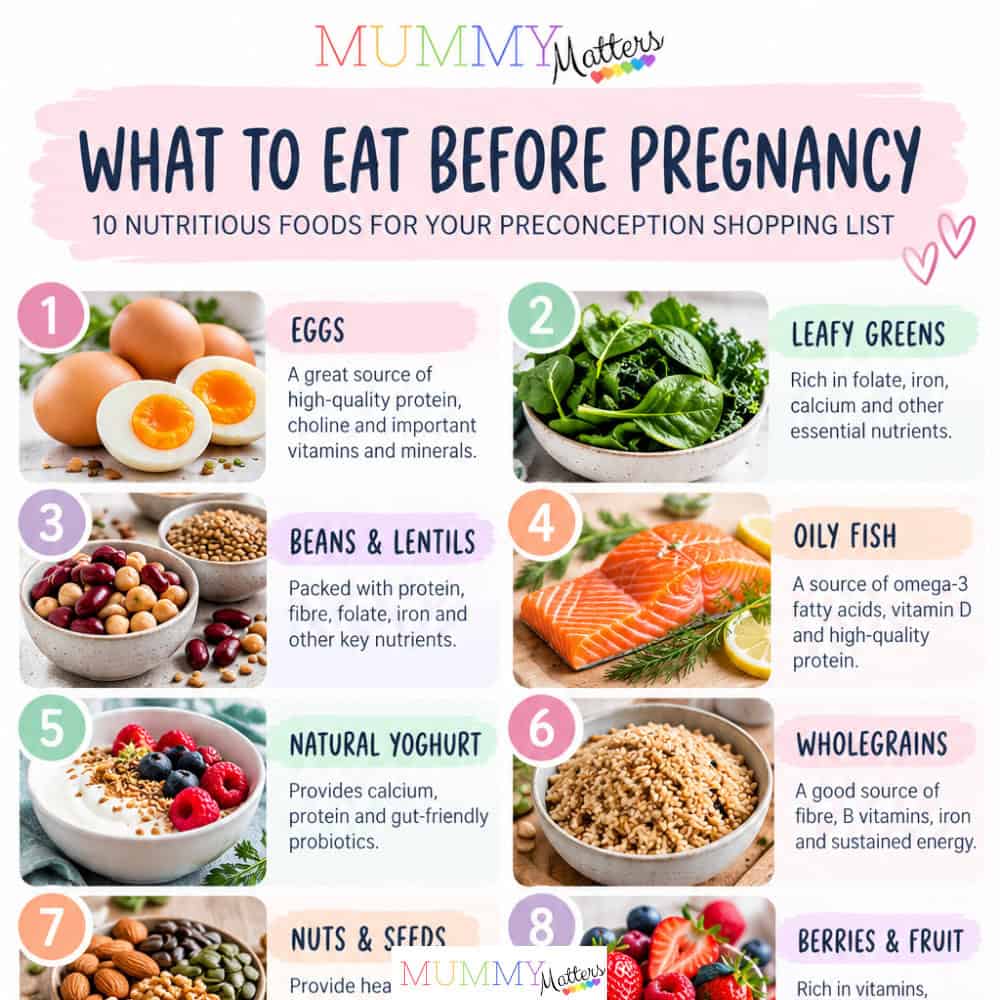
10 Nutritious Foods to Eat Before Pregnancy
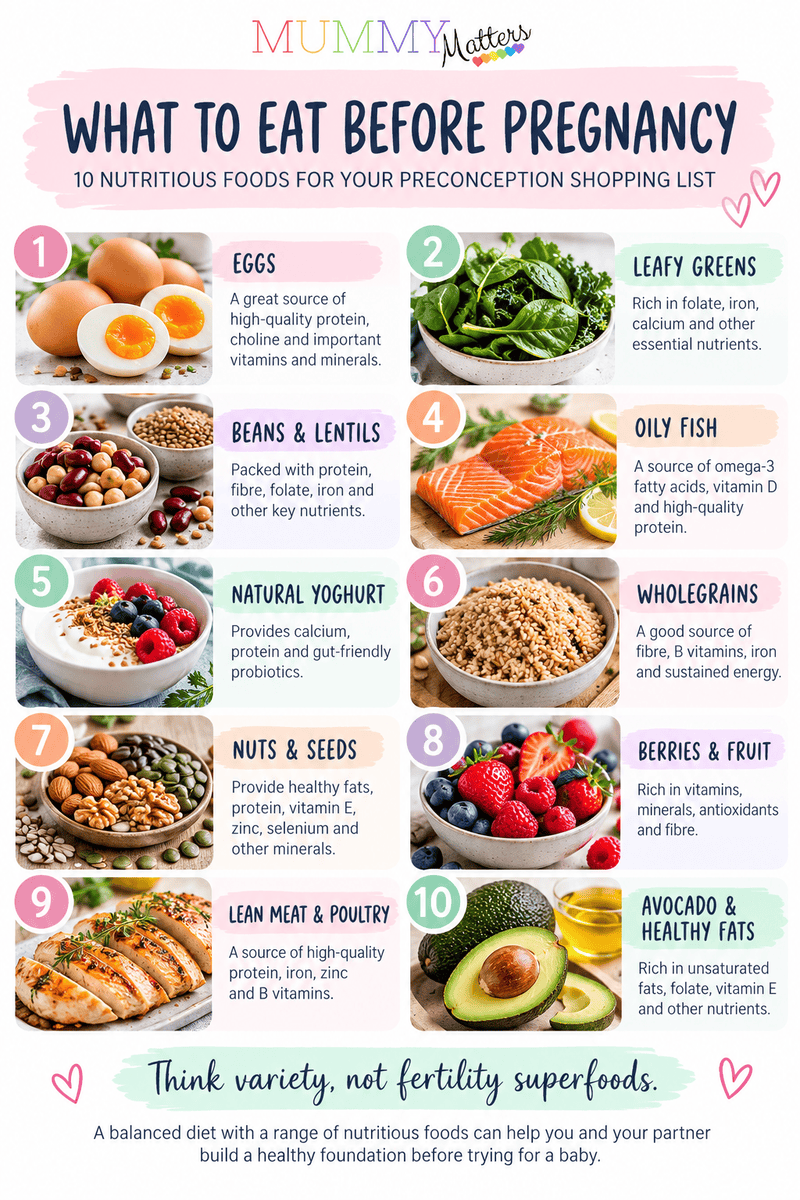
So, what should actually go on your shopping list when you’re preparing for pregnancy?
There isn’t a single food that will make you more fertile, and you certainly don’t need to eat all of these every day. Instead, these are useful everyday foods that provide nutrients worth including as part of a varied preconception diet.
1. Eggs
Eggs are an easy source of protein and provide several useful nutrients, including vitamin B12, iodine and choline.
Choline is particularly interesting during pregnancy because it has an important role in normal growth and development, yet it doesn’t always receive the same attention as nutrients such as folate.
Try eggs scrambled on wholemeal toast, boiled with a salad or added to a vegetable omelette.
2. Leafy Green Vegetables
Spinach, kale, spring greens and other leafy vegetables provide folate alongside fibre and a range of vitamins and minerals.
You don’t need enormous portions of kale every day. Adding spinach to an omelette, putting some leaves into a sandwich or serving green vegetables alongside dinner all count.
3. Beans, Chickpeas and Lentils
Pulses are inexpensive, versatile and packed with useful nutrients.
They provide plant protein, fibre, folate and iron and can easily be added to soups, curries, salads, chilli and pasta dishes.
Even if you eat meat, including some plant-based protein sources during the week is an easy way to add more variety to your diet.
4. Oily Fish
Salmon, sardines, trout, mackerel and herring provide protein as well as long-chain omega-3 fatty acids.
If you’re trying for a baby, it’s worth becoming familiar with NHS advice about eating fish during pregnancy, as there are recommendations around the amount of oily fish eaten and certain fish that should be limited or avoided.
That doesn’t mean fish needs to disappear from your diet. It’s about choosing appropriate types and portions.
5. Natural or Greek Yoghurt
Yoghurt can provide protein, calcium and iodine and makes a convenient breakfast or snack.
Try natural yoghurt with berries, oats and seeds rather than assuming you need a specialist “fertility” yoghurt or expensive functional food.
If you choose a plant-based alternative, check the nutritional information. Look for products fortified with nutrients such as calcium and iodine rather than assuming all yoghurt alternatives provide the same nutrition as dairy.
6. Wholegrains
Oats, wholemeal bread, brown rice, wholewheat pasta and other wholegrain foods provide fibre along with vitamins and minerals.
You don’t need to remove carbohydrates when preparing for pregnancy. Choosing higher-fibre versions more often is usually a much more sustainable approach than cutting out an entire food group.
7. Nuts and Seeds
Nuts and seeds provide unsaturated fats, protein, fibre and a variety of micronutrients.
Walnuts, almonds, pumpkin seeds, chia seeds and flaxseed can all add variety to your diet.
Sprinkle seeds over porridge or yoghurt, add nuts to a salad or simply have a small handful as a snack.
Again, variety is more useful than concentrating on one particular nut because you’ve read that it can “boost fertility”.
8. Berries and Other Fruit
Berries are often singled out because they contain vitamin C and various plant compounds, but there’s no need to restrict yourself to expensive blueberries and raspberries.
Oranges, apples, pears, bananas, kiwi fruit and frozen fruit all have a place in a balanced diet.
Frozen berries can also be considerably cheaper than fresh ones and are useful for porridge, yoghurt and smoothies.
9. Lean Meat and Poultry
If you eat meat, lean meat and poultry can provide high-quality protein alongside nutrients such as iron, zinc and vitamin B12.
Red meat can be a particularly useful source of readily absorbed iron, but that doesn’t mean you need large portions every day.
Think about variety across the week, alternating meat with fish, eggs, beans, lentils and other protein sources.
10. Avocado and Other Sources of Unsaturated Fat
Avocado provides unsaturated fat, fibre, folate and other nutrients, which makes it a useful addition to meals — but it isn’t a fertility superfood.
Olive oil, rapeseed oil, nuts, seeds and oily fish are other useful sources of unsaturated fats.
This is another area where looking at your whole diet is more useful than focusing on a single fashionable ingredient.
What Should a Preconception Plate Look Like?
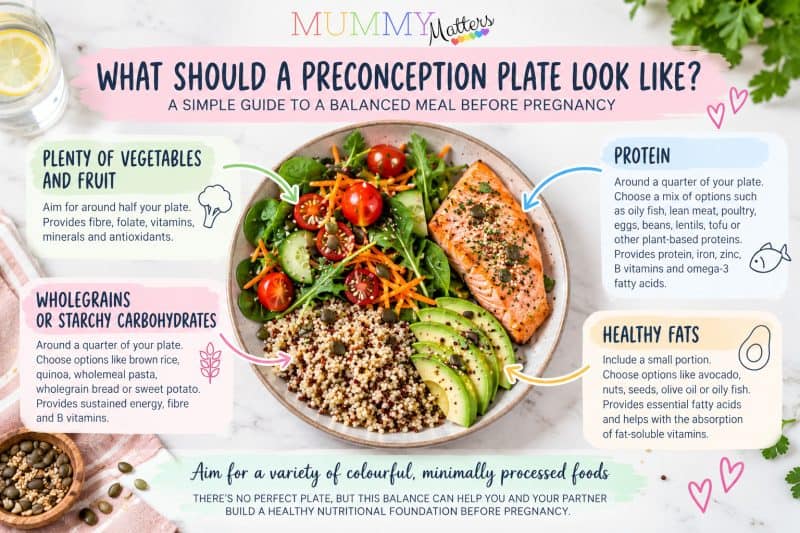
You don’t need to weigh every ingredient or calculate the nutritional content of every meal.
A much simpler approach is to build meals around a mixture of food groups.
As a general guide, think about including:
- Plenty of vegetables or salad
- A source of protein, such as fish, eggs, lean meat, beans, lentils or tofu
- A higher-fibre carbohydrate, such as potatoes with their skins, oats, wholegrain bread, brown rice or wholewheat pasta
- A source of healthy unsaturated fat, such as olive or rapeseed oil, nuts, seeds or avocado
- Fruit and calcium-rich foods across the day
Not every meal has to look perfect. Your nutritional intake is determined by what you eat over time, not whether Tuesday night’s dinner contained exactly the right proportion of broccoli.
If you’re making changes as a couple, this can actually make preconception eating easier. Instead of preparing a special diet for the person hoping to become pregnant, you can both eat broadly the same balanced meals and adjust portions to suit your individual needs.
What Foods and Drinks Should You Limit When Trying to Conceive?
Preparing for pregnancy doesn’t mean you need to follow a perfect diet or immediately ban everything you enjoy.
It’s more useful to look at your overall eating pattern and identify anything you’re consuming regularly that might be worth reducing or replacing.
There is also an important distinction between trying to conceive and already being pregnant. Some food-safety recommendations specifically apply during pregnancy. However, because you may be pregnant for a short time before you realise it, becoming familiar with the guidance while you’re trying can make things much simpler.
Alcohol
If you’re trying to become pregnant, the safest approach is not to drink alcohol.
NHS guidance recommends that if you’re pregnant or planning to become pregnant, you should not drink alcohol. This keeps the risk to your baby as low as possible.
This is something couples can think about together too. Heavy alcohol consumption can affect general health and may also negatively affect male reproductive health, so reducing alcohol shouldn’t automatically become another lifestyle change that only the woman makes.
If giving up alcohol completely feels like a big change, experimenting with alcohol-free alternatives before you start trying can make social occasions easier.
Caffeine
You don’t necessarily need to give up your morning coffee because you’re trying for a baby.
However, once you’re pregnant, the NHS recommends limiting caffeine to no more than 200mg a day.
Caffeine isn’t only found in coffee. It can also be present in:
- Tea
- Green tea
- Cola
- Energy drinks
- Chocolate
- Some medicines
The amount in coffee can vary considerably depending on the type, serving size and how it’s prepared.
If you currently drink a lot of caffeine, gradually cutting down before pregnancy can be easier than suddenly reducing it after a positive pregnancy test. You could switch some drinks to decaffeinated versions, alternate coffee with water or gradually reduce the number of caffeinated drinks you have each day.
Fish High in Mercury
Fish can be a valuable part of a healthy diet, providing protein and, in the case of oily fish, omega-3 fatty acids.
But not every fish is treated equally during pregnancy.
NHS pregnancy guidance advises avoiding shark, swordfish and marlin because they can contain higher levels of mercury. Tuna is also limited during pregnancy.
If you’re actively trying to conceive, learning which fish are suitable during pregnancy means you won’t have to rethink your choices once you discover you’re pregnant.
Don’t interpret this as a reason to stop eating fish altogether. The aim is to choose the right varieties and follow current NHS recommendations.
Highly Processed Foods
There’s room for biscuits, crisps, chocolate, takeaways and convenience foods in real life. Preparing for pregnancy doesn’t require you to eat perfectly every day.
However, if foods high in salt, free sugars or saturated fat make up a large proportion of your diet, gradually replacing some of them with more nutrient-dense choices can improve the overall quality of what you’re eating.
For example:
- Swap some sugary breakfast cereals for porridge or a higher-fibre cereal
- Add fruit to snacks rather than automatically reaching for biscuits
- Include vegetables with convenience meals
- Choose wholegrain bread more often
- Keep nuts, yoghurt or fruit available for easy snacks
- Cook a larger portion of chilli, curry or pasta sauce and freeze some for busy days
Small changes you can maintain are far more useful than following a strict “fertility diet” for a few weeks and then abandoning it.
Foods High in Added Sugar
Sugar itself doesn’t need to become something you’re frightened of when trying for a baby.
Instead, consider how frequently you’re consuming foods and drinks that contain lots of free sugars but relatively few useful nutrients.
Sugary drinks are an obvious place to start. Replacing some with water, sparkling water or sugar-free alternatives can be a straightforward change.
Again, the goal isn’t to remove every treat. It’s about what makes up the majority of your diet.
Do You Need to Follow Pregnancy Food Rules While Trying to Conceive?
Not necessarily.
There are foods that the NHS advises avoiding or limiting during pregnancy because of risks such as certain infections, vitamin A exposure or mercury. These include specific cheeses, raw or undercooked foods, liver and some types of fish.
If you’re not yet pregnant, you don’t automatically need to behave as though you are for months while trying to conceive.
However, there’s a practical middle ground.
If you’re actively trying, particularly during the part of your cycle when pregnancy is possible, you may feel more comfortable following pregnancy food-safety guidance because conception and the earliest stages of pregnancy happen before a positive pregnancy test.
At the very least, it’s worth reading the current NHS guidance so you know what needs to change once you become pregnant.
What About Alcohol and Caffeine for Men?
Women understandably receive most of the advice about alcohol and caffeine because anything consumed during pregnancy can potentially affect the developing baby.
For men, the question is slightly different.
Very high alcohol intake is associated with poorer general health and can also affect reproductive health, so regularly drinking heavily isn’t a good foundation when preparing to conceive.
Men don’t generally need to follow the pregnancy caffeine limit simply because their partner is trying to conceive. However, extremely high caffeine intake isn’t necessary for good health either.
This is another reason I prefer thinking about preconception health as something you do together.
You don’t necessarily need identical rules, but both partners can look at their diet, alcohol intake, sleep, exercise and other lifestyle habits and decide whether there are sensible changes they could make before trying for a baby.
Do You Need Supplements Before Pregnancy?
Walk into a pharmacy or search online for preconception supplements and it’s easy to come away thinking you need an entire collection of vitamins before trying for a baby.
For most people, that’s not the case.
A varied diet should provide most of the vitamins and minerals you need. However, there are a couple of important supplements to think about when you’re planning a pregnancy.
Folic Acid Before Pregnancy
Folic acid is the supplement that should be at the top of your preconception list.
The NHS recommends taking 400 micrograms (mcg) of folic acid every day when you start trying for a baby, ideally beginning around three months before conception.
Continue taking it throughout the first 12 weeks of pregnancy.
This recommendation applies even if you eat plenty of foods naturally rich in folate. It’s difficult to reliably get the recommended amount from food alone, and taking folic acid before conception and during early pregnancy reduces the risk of neural tube defects such as spina bifida.
Some people have an increased risk of having a baby affected by a neural tube defect or certain other congenital conditions and may be advised to take a higher 5mg dose of folic acid.
This includes some people with particular medical conditions, medications, previous pregnancies or family histories. The higher dose should be discussed with and prescribed by a healthcare professional rather than simply buying a high-dose supplement yourself.
Vitamin D
Vitamin D is another supplement worth checking.
In the UK, the NHS recommends that adults consider taking 10 micrograms (mcg) of vitamin D each day during autumn and winter, when we can’t make enough vitamin D from sunlight.
Some people may need to take vitamin D throughout the year, including those who have little exposure to sunlight or who are at greater risk of vitamin D deficiency.
Once you’re pregnant, the NHS recommends considering a daily 10mcg vitamin D supplement between October and March.
If you’re already taking a preconception multivitamin, check the label before adding a separate vitamin D supplement. You may already be getting the recommended amount.
Do You Need a Preconception Multivitamin?
Not necessarily.
A preconception or pregnancy multivitamin can be a convenient way of getting folic acid and vitamin D together, but buying an expensive supplement doesn’t automatically make it better.
Check the label to see what it actually contains.
If you’re choosing a multivitamin while trying for a baby, it’s sensible to select one specifically formulated for pregnancy or preconception rather than an ordinary general multivitamin.
This is particularly important because supplements containing vitamin A in the form of retinol should be avoided during pregnancy, as too much vitamin A can harm a developing baby.
Pregnancy-specific products are formulated with this in mind.
What About Fertility Supplements?
This is where I’d be much more cautious.
There is a huge market for supplements claiming to support egg quality, ovarian health, sperm quality or fertility.
You may see ingredients such as:
- Coenzyme Q10 (CoQ10)
- Selenium
- Zinc
- Vitamins C and E
- Omega-3
- Myo-inositol
- Various herbal ingredients
Some of these nutrients and compounds have been studied in relation to reproductive health, but that doesn’t mean everyone trying for a baby needs to supplement them.
There’s also an important difference between correcting a nutritional deficiency, using a supplement for a particular medical reason and taking large amounts of nutrients because they’re marketed as “fertility boosting”.
More isn’t always better when it comes to vitamins and minerals.
If you’re considering additional supplements — particularly if you take medication, have a medical condition, follow a restrictive diet or are receiving fertility treatment — speak to your GP, pharmacist, dietitian or fertility team first.
Do Men Need Preconception Supplements?
Men don’t routinely need to start taking a collection of fertility supplements simply because they’re trying for a baby.
A balanced diet should be the starting point.
Although nutrients such as zinc, selenium, folate and antioxidant vitamins are involved in normal body and reproductive functions, taking large supplemental doses hasn’t been proven to guarantee better fertility or a pregnancy.
If a man’s diet is restricted or there’s reason to suspect a nutritional deficiency, that’s different and is worth discussing with a healthcare professional.
Otherwise, concentrate first on the bigger picture: a varied diet, regular activity, adequate sleep, avoiding smoking and recreational drugs, and keeping alcohol within sensible limits.
A Simple Rule for Preconception Supplements
If all the different advice feels confusing, keep it simple:
Food first, folic acid definitely, vitamin D according to current NHS guidance, and get professional advice before adding high-dose or specialist fertility supplements.
You don’t need the most expensive supplement on the shelf to give your future pregnancy a good nutritional foundation.
A Simple 7-Day Preconception Meal Plan for Women and Men
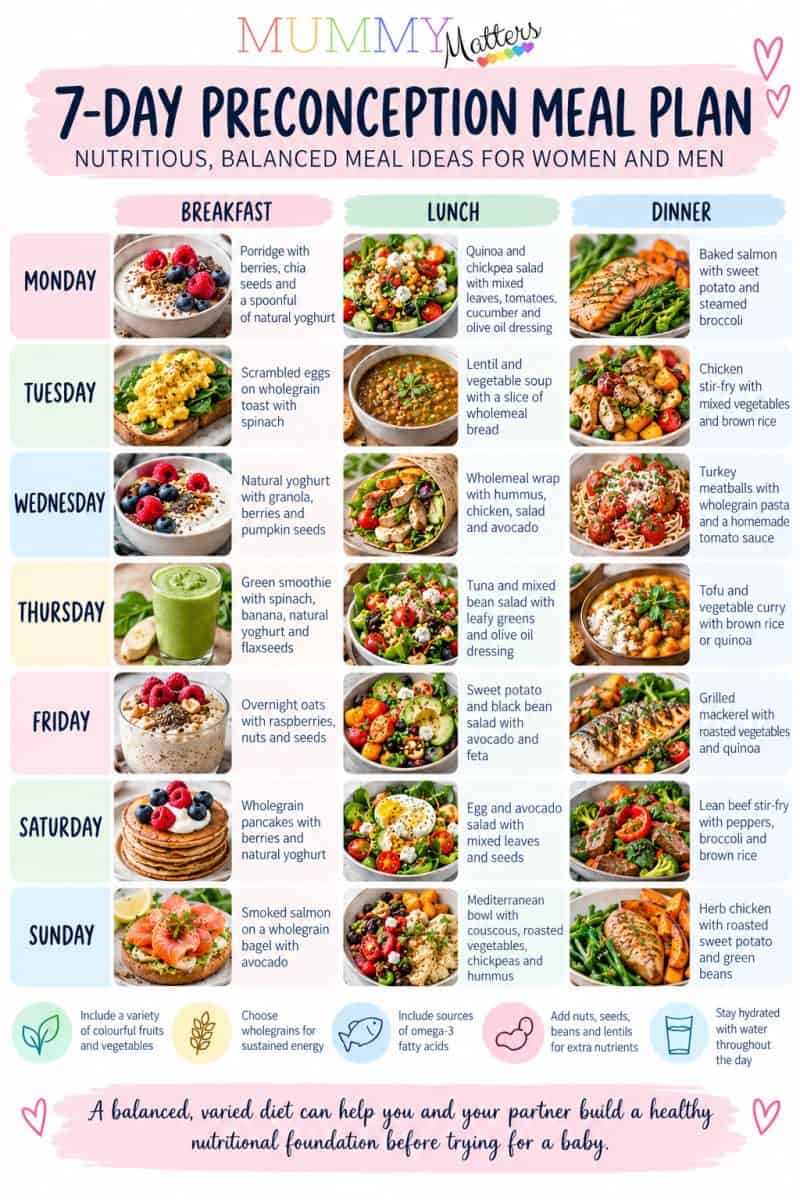
Knowing which nutrients matter is one thing, but turning that information into actual meals can feel much harder.
This example week isn’t a strict fertility meal plan and there’s no need to follow it exactly. It’s simply an illustration of how you can combine vegetables, fruit, wholegrains, protein, healthy fats and calcium-rich foods throughout the week without making your diet complicated or expensive.
It’s also designed for both partners. You don’t need separate “his and hers” preconception diets. You can eat the same meals and adjust portion sizes according to your individual appetite and energy needs.
Day 1
Breakfast: Porridge made with milk or a fortified alternative, topped with berries, chopped walnuts and chia seeds.
Lunch: Wholemeal wrap filled with chicken or hummus, spinach, peppers and cucumber, with a piece of fruit.
Dinner: Baked salmon with baby potatoes, broccoli and peas.
Snack ideas: Natural yoghurt, fruit or a small handful of nuts.
Day 2
Breakfast: Scrambled eggs on wholemeal toast with grilled tomatoes.
Lunch: Lentil and vegetable soup with wholegrain bread and natural yoghurt.
Dinner: Chicken and vegetable stir-fry with brown rice, using plenty of colourful vegetables such as peppers, broccoli, carrots and mangetout.
Snack ideas: Apple with peanut butter, yoghurt or vegetable sticks with hummus.
Day 3
Breakfast: Natural or Greek yoghurt topped with oats, banana, berries and pumpkin seeds.
Lunch: Jacket potato with baked beans and a mixed salad.
Dinner: Beef and bean chilli with brown rice, avocado and plenty of vegetables.
Snack ideas: Fruit, a boiled egg or a handful of unsalted nuts.
Day 4
Breakfast: Wholegrain toast topped with avocado and poached or boiled eggs.
Lunch: Chickpea, feta and mixed vegetable salad with wholemeal pitta bread.
Dinner: Wholewheat pasta with tomato and vegetable sauce, lean turkey mince or lentils, served with a green salad.
Snack ideas: Yoghurt with fruit, oatcakes with hummus or a handful of nuts.
Day 5
Breakfast: Overnight oats made with milk or a fortified plant drink, chia seeds and berries.
Lunch: Egg and salad wholemeal sandwich with vegetable sticks and fruit.
Dinner: Homemade fishcakes with peas, green beans and roasted sweet potato.
Snack ideas: Banana, natural yoghurt or wholegrain toast with nut butter.
Day 6
Breakfast: Vegetable omelette with mushrooms, spinach and tomatoes, served with wholemeal toast.
Lunch: Leftover chilli or lentil curry with salad.
Dinner: Chicken or tofu curry made with tomatoes and plenty of vegetables, served with brown or basmati rice.
Snack ideas: Fruit, yoghurt, nuts or hummus with peppers and cucumber.
Day 7
Breakfast: Porridge topped with sliced banana, berries and mixed seeds.
Lunch: Tuna and sweetcorn jacket potato with a large mixed salad. If you’re already following pregnancy food guidance while trying to conceive, remember to include tuna within the recommended limits.
Dinner: Roast chicken, or a bean and lentil alternative, with potatoes and a selection of vegetables such as carrots, broccoli, peas and cabbage.
Snack ideas: Fruit, yoghurt or a small handful of nuts and seeds.
Making a Preconception Diet Work in Real Life
You absolutely don’t need seven completely different breakfasts, lunches and dinners every week.
In real life, you’re much more likely to make this sustainable by repeating meals, eating leftovers and keeping a few easy options available for busy days.
You could cook a large chilli and eat it for dinner one evening and lunch the following day. Make extra curry and freeze a couple of portions. Keep frozen vegetables and berries in the freezer so you don’t have to worry about fresh produce going off.
A simple preconception shopping list might include:
- Eggs
- Milk, yoghurt or fortified alternatives
- Wholemeal bread
- Oats
- Brown rice and wholewheat pasta
- Potatoes and sweet potatoes
- Salmon or another suitable oily fish
- Chicken or other lean meat
- Beans, lentils and chickpeas
- Nuts and seeds
- Olive or rapeseed oil
- Plenty of vegetables
- Several different fruits
- Frozen berries and vegetables for convenience
You don’t need to buy everything organic, make every meal from scratch or spend a fortune in the health-food aisle.
Frozen vegetables count. Tinned beans count. Tinned tomatoes count. Wholemeal toast with eggs counts.
The best preconception diet isn’t the one that looks impressive on Instagram. It’s one that provides plenty of nutritious foods and that you can realistically continue eating week after week.
Should You Lose Weight Before Trying for a Baby?
If you’re searching for a “preconception diet”, you may actually be wondering whether you should lose weight before trying for a baby.
Weight can be one part of preconception health. Being significantly underweight or overweight can affect health and, for some people, fertility and pregnancy risks. But that doesn’t mean everyone needs to reach a particular number on the scales before they’re “ready” to try for a baby.
It’s much more helpful to look at your overall health.
Are you eating a varied diet? Are you moving your body regularly? Are you getting enough sleep? Do you smoke? How much alcohol do you drink? Do you have any existing medical conditions that would benefit from being reviewed before pregnancy?
These are all useful parts of preparing for conception.
Avoid Crash Dieting Before Pregnancy
If you would like to lose weight before trying for a baby, give yourself time rather than turning to an extreme diet.
Very restrictive diets can make it harder to obtain all the nutrients your body needs and aren’t usually a good foundation for the eating habits you’ll need during pregnancy.
Instead, concentrate on sustainable changes such as:
- Eating more vegetables and fruit
- Choosing higher-fibre carbohydrates
- Including protein with meals
- Reducing foods and drinks that provide lots of calories but few useful nutrients
- Watching portion sizes where appropriate
- Being regularly physically active
- Getting enough sleep
You don’t need to eliminate carbohydrates, fast for long periods, live on shakes or follow a detox programme to prepare your body for pregnancy.
If you’re significantly above or below a healthy weight, have struggled with your weight for a long time or have a condition such as PCOS or diabetes, getting individual advice from your GP or a registered dietitian can be particularly helpful.
What About Weight and Male Fertility?
Preconception weight isn’t solely a women’s issue either.
Men’s general metabolic health can also be associated with reproductive health, which is another reason for both partners to look at their lifestyle before trying to conceive.
Again, the answer isn’t a crash diet.
Eating well, exercising regularly, getting adequate sleep, avoiding smoking and keeping alcohol intake under control are sensible foundations for overall health as well as preconception health.
Think About Health, Not a ‘Perfect’ Pre-Pregnancy Body
One thing I don’t want this guide to do is leave anyone feeling that their body has to look a certain way before they’re allowed to start trying for a family.
Preparing for pregnancy is about supporting your health, not achieving a particular dress size.
If changing your weight would benefit your health, work towards that gradually and get professional support where necessary. But don’t let the pursuit of a supposedly perfect pre-pregnancy body distract you from all the other positive things you can do for your health.
A nourishing diet, regular movement and sustainable habits will serve you far better than a few weeks of restriction.
Preconception Diet FAQs
What should I eat when trying to get pregnant?
You don’t need a special fertility diet when trying to conceive. Aim for a varied, balanced diet containing plenty of vegetables and fruit, wholegrains and other higher-fibre carbohydrates, protein from foods such as fish, eggs, lean meat, beans and lentils, calcium-rich foods and sources of unsaturated fats.
For women, it’s also important to take the recommended folic acid supplement rather than relying on food alone.
What foods improve egg quality?
There isn’t a particular food that’s been proven to improve egg quality or guarantee that you’ll become pregnant.
You’ll see plenty of claims online about foods such as avocados, berries, eggs and nuts being able to “boost egg quality”, but fertility is far more complicated than eating individual foods.
Instead, concentrate on an overall nutritious diet that provides the vitamins, minerals, protein, healthy fats and energy your body needs.
What should men eat when trying for a baby?
Men can follow the same basic healthy eating pattern as women: plenty of vegetables and fruit, wholegrains, fish, eggs, lean meat or plant proteins, nuts, seeds and sources of unsaturated fats.
Nutrients including zinc, selenium, folate and omega-3 fats are involved in normal body and reproductive functions, but taking large amounts of individual nutrients isn’t a shortcut to better fertility.
For more detail, read my guide to How to Improve Sperm Health Before Trying for a Baby.
How long before pregnancy should I change my diet?
If possible, start thinking about your nutrition around three months before trying to conceive.
This gives you time to establish sustainable habits rather than changing everything as soon as you get a positive pregnancy test.
However, three months isn’t a deadline. If you’re already trying for a baby, making positive changes now is still worthwhile.
Should I take folic acid before I’m pregnant?
Yes. The NHS recommends taking 400 micrograms of folic acid every day when you’re trying for a baby, ideally starting around three months before conception, and continuing through the first 12 weeks of pregnancy.
Some people need a higher prescribed dose because of particular medical circumstances, so speak to your GP if you’re unsure which dose is appropriate for you.
Do I need prenatal vitamins before pregnancy?
You don’t necessarily need a comprehensive prenatal multivitamin before pregnancy, but you do need to think about folic acid and vitamin D in line with current NHS recommendations.
A preconception or pregnancy multivitamin can be a convenient way to obtain these, but check the label carefully. Avoid supplements containing vitamin A in the form of retinol when pregnant.
If you have a restricted diet, nutritional deficiency or medical condition, ask your GP, pharmacist or dietitian whether you need additional supplementation.
Can I drink coffee when trying to conceive?
You don’t necessarily have to stop drinking coffee when you’re trying for a baby.
Once pregnant, NHS guidance recommends keeping caffeine intake below 200mg per day. If you currently consume considerably more than this, gradually reducing your intake while trying to conceive can make the transition easier.
Remember that caffeine can also come from tea, cola, energy drinks, chocolate and some medicines.
Should I stop drinking alcohol when trying for a baby?
NHS advice is that if you’re pregnant or planning to become pregnant, the safest approach is not to drink alcohol.
For men, regularly drinking heavily can also affect general and reproductive health, so preconception can be a good opportunity for both partners to look at their alcohol consumption.
Is a Mediterranean diet good for fertility?
A Mediterranean-style diet typically includes plenty of vegetables, fruit, pulses, wholegrains, nuts, fish and unsaturated fats, so it contains many of the foods that form part of a nutritious diet.
Research has explored possible associations between Mediterranean-style dietary patterns and fertility, but there isn’t enough evidence to promise that following a particular diet will help you conceive.
It’s better to think about adopting the healthy principles of this way of eating than treating it as a fertility treatment.
Giving Your Baby the Best Start Begins Before Pregnancy
It’s easy to become overwhelmed by everything you’re supposedly meant to do before trying for a baby.
Nutrition doesn’t need to be another source of pressure.
You don’t need expensive fertility foods, an immaculate diet or a cupboard full of supplements. For most couples, a much more sensible starting point is to eat a varied, balanced diet, include plenty of nutrient-rich foods and make sustainable improvements to your lifestyle together.
For women, taking folic acid before conception is particularly important, alongside following current NHS advice on vitamin D and preparing for the dietary recommendations that apply once you’re pregnant.
And for men, this is a good opportunity to think about nutrition and wider lifestyle habits too. Preconception health shouldn’t automatically become the woman’s responsibility simply because she’ll be carrying the baby.
When I look back at preparing for my own pregnancies, I realise that I thought mainly about what I needed to do. Today, I think there’s something really positive about approaching this stage as a team.
You don’t have to do everything perfectly.
Start with the basics, make changes you can realistically maintain and remember that preparing for pregnancy isn’t about controlling every possible outcome. It’s about giving yourselves a healthy foundation as you take the next step towards growing your family.
Continue Your Preconception Journey
If you’re preparing to try for a baby, you may also find these guides useful:
- How to Prepare for Pregnancy: A Preconception Health Guide for Women and Men
- How to Improve Sperm Health Before Trying for a Baby
Together, these articles cover nutrition, lifestyle and some of the practical steps both partners can take before conception as part of my Best Start in Life series.
Disclaimer: This article is for general information only and is not a substitute for personalised medical or nutritional advice. If you are planning a pregnancy, have a medical condition, take medication, follow a restricted diet or have concerns about fertility or nutrition, speak to your GP, midwife, pharmacist or a registered dietitian for advice appropriate to you. NHS and NICE recommendations can change, so always check current guidance.