
AD: Aquaphor gifted us the RO-101S reverse osmosis system to try in our home. Mummy Matters readers can currently save 15% on the RO-101S using my code MummyMatters. I may receive a bonus based on qualifying sales generated during this campaign. All experiences and opinions in this review are my own.
If you live in a hard water area, you’ll know just how quickly the signs start to show around your home. Our taps scale up incredibly quickly, the kettle is forever needing to be descaled and, perhaps most noticeably for me, our tap water has always had a slightly metallic taste.
Over the years, we’ve tried using water filter jugs, but they have never really worked for us as a family. Either we haven’t had enough space to keep a large jug in the fridge, we haven’t wanted another thing taking up room on the kitchen worktop, or we’ve simply forgotten to refill it. Going to the kitchen sink and turning on the tap is such an ingrained habit that remembering to use a filter jug instead just never seemed to stick.
So when Aquaphor got in touch and offered me the opportunity to try either its J.SHMIDT 500 filtered-water jug or the RO-101S under-sink reverse osmosis system, I knew immediately which one I wanted to try.
The Aquaphor RO-101S gives us a separate tap at the kitchen sink with filtered water available whenever we want it. There’s no jug to fill, nothing taking up space in the fridge and, most importantly for us, nothing new to remember.
We’ve now had the system installed and have started using the filtered water for drinking, filling our water bottles, making hot drinks and cooking. In this review, I’ll share our experience of installing and living with the Aquaphor RO-101S, including how much space it actually takes up beneath the sink, what the water tastes like compared with our usual hard tap water and whether I think an under-sink reverse osmosis system is worth considering for a family home.
Why We Chose an Under-Sink Water Filter Instead of Another Filter Jug
We already knew from experience that a water filter jug wasn’t the best solution for our family. There is nothing particularly difficult about using one, but it does require you to remember to keep it filled, and that was always where we fell down.
Fridge space is precious in a family of five, especially after a big food shop, so keeping a large water jug chilled isn’t always practical. Leaving one on the worktop solves that problem, but then it becomes another item taking up kitchen space. More often than not, we would simply forget about it altogether and go back to filling our glasses from the kitchen tap.
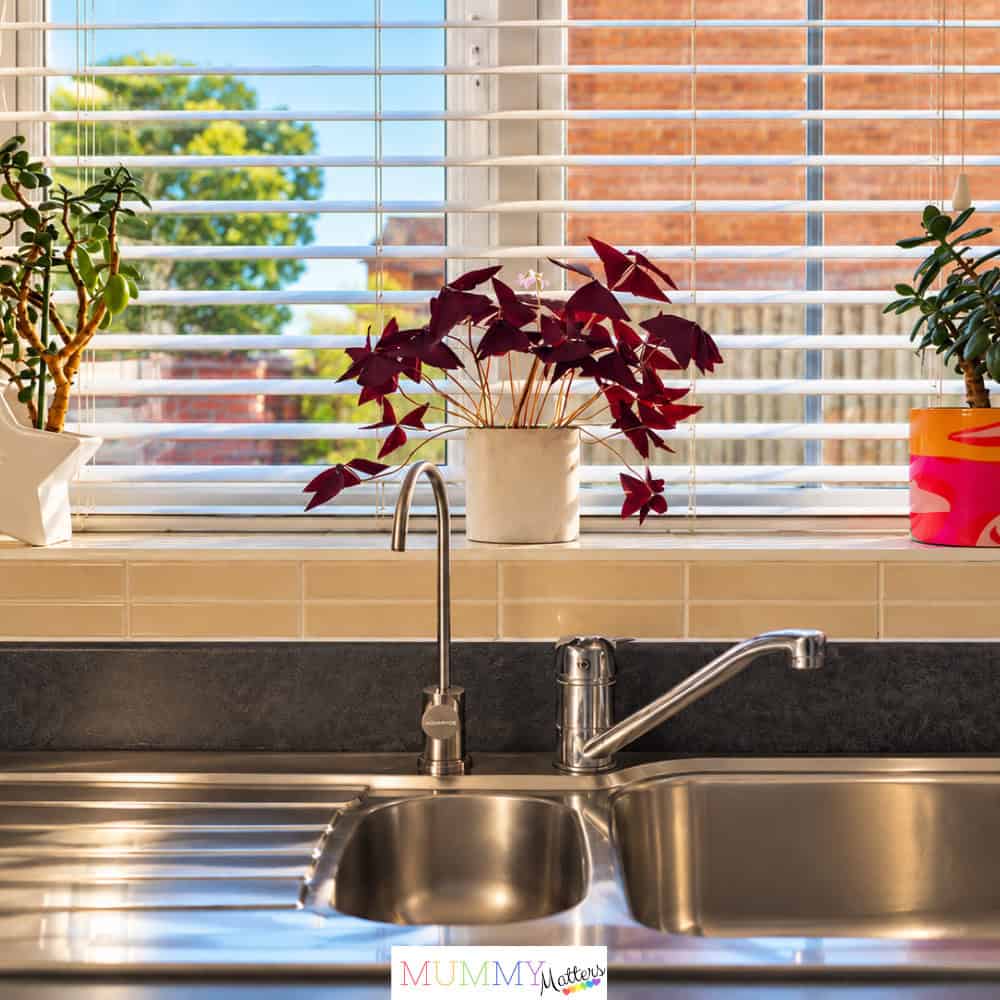
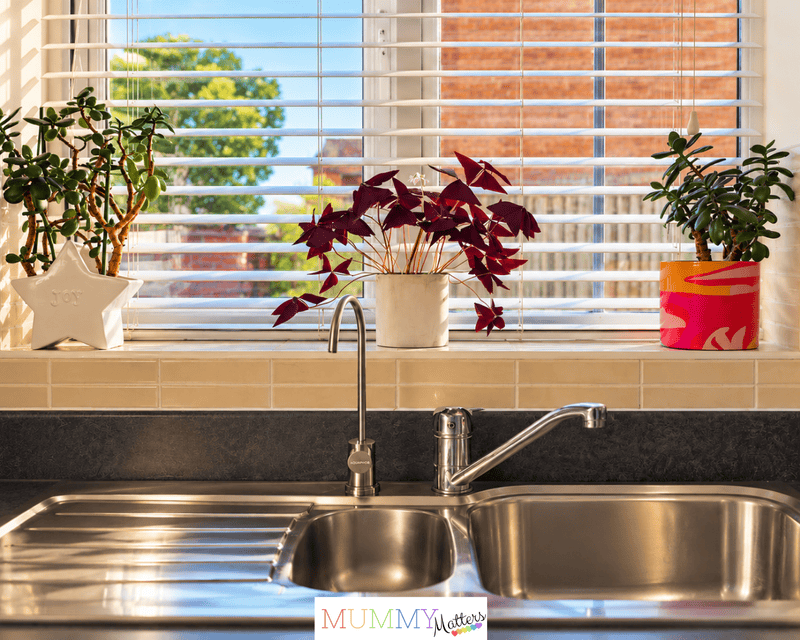
That was the main reason the Aquaphor RO-101S appealed to me. Rather than asking us to create a new habit, it fits into one we already have. When I want a glass of water, fill my water bottle or put the kettle on, I still go to the kitchen sink as I always have. The only difference is that I now turn on the smaller Aquaphor tap instead.
There is obviously a bigger commitment involved with an under-sink system. It needs to be installed, it takes up cupboard space, and there are replacement filters to consider. A filter jug may therefore make more sense for someone who rents, has limited cupboard space or already finds using a jug convenient.
For us, however, convenience was the deciding factor. Having filtered water permanently available at the sink means we’re far more likely to actually use it, which ultimately matters more to me than owning a filtration system that spends half its life empty in the fridge.
What Is the Aquaphor RO-101S?
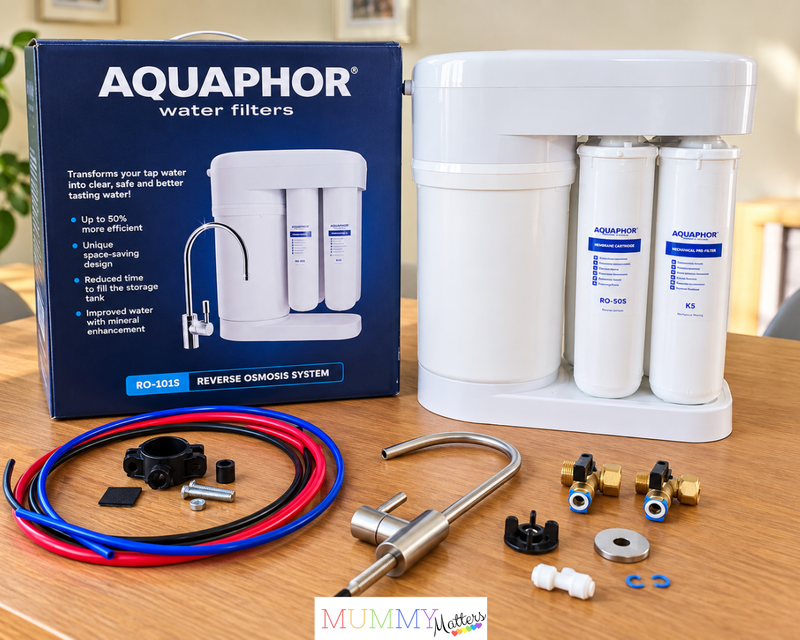
The Aquaphor RO-101S is an under-sink reverse osmosis water filtration system designed to provide filtered water through a separate drinking water tap. Rather than filtering water as and when you need it, as you would with a filter jug, the system sits beneath the kitchen sink with an integral 5-litre storage tank so that filtered water is ready to use from the dedicated tap.
It uses four stages of filtration, including a reverse osmosis membrane and a final remineralisation stage. According to Aquaphor, the system is designed to reduce a wide range of substances found in tap water, including chlorine, hard water minerals, heavy metals, pesticides, microplastics and PFAS. The final stage then balances calcium and magnesium in the filtered water.
One feature I particularly liked is that the RO-101S doesn’t require an electrical supply beneath the sink. It works using the pressure from the mains water supply, provided there is sufficient water pressure, so we didn’t need to find another plug socket or have any additional electrical work carried out.
Aquaphor RO-101S at a Glance
- Type: Under-sink reverse osmosis system
- Filtration: Four-stage filtration with remineralisation
- Storage tank: 5 litres, integrated into the unit
- Maximum membrane capacity: 190 litres per day
- Minimum water pressure: 2 bar
- Electricity required: No
- Drinking water tap: Included
- Dimensions: Approximately 37.1 × 42 × 19 cm
- Recommended filter replacement: Approximately every nine months, depending on use and water quality
Installing the Aquaphor RO-101S: Our Experience
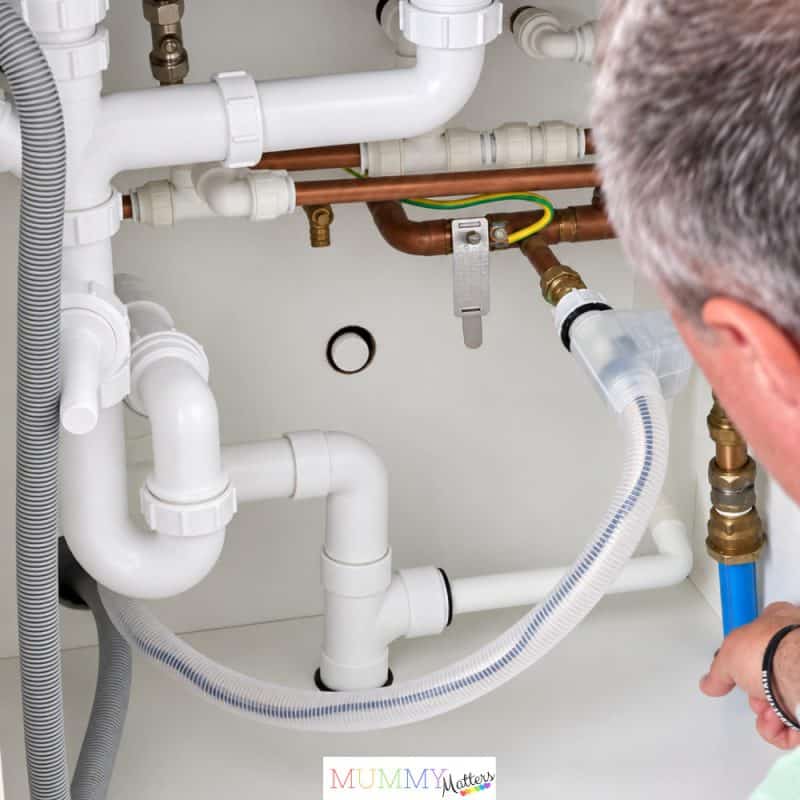
I’ll admit that when we first opened everything up and looked underneath our kitchen sink, installing the Aquaphor RO-101S felt a little daunting. For reasons we’ve never quite understood, the cupboard beneath our sink seems to contain an extraordinary number of pipes, and our first thought was that there was no chance we were going to fit the system in there.
Thankfully, the installation itself turned out to be much more straightforward than the cupboard suggested.
Simon watched an installation video online before getting started and then fitted the system himself. From beginning the installation to having everything connected took him around 40 minutes. Obviously, that is only our experience – how straightforward installation will be in another home will depend on the existing plumbing, available space and how confident you are with this sort of DIY.
We did, however, have one rather memorable installation mishap that is worth mentioning! Simon hadn’t fully checked everything in the box and didn’t realise that he’d missed one of the small clips used to secure the pipe connections. He wondered whether perhaps we had a newer version that didn’t require it, so he went ahead and connected everything before turning the water on.
Unfortunately, I happened to be standing directly behind the system when he did.
The pressure promptly sent the pipe flying off and, for a few seconds, we had our very own kitchen water feature – complete with water spraying over me and reaching the ceiling! Thankfully, no harm was done, and once we’d worked out what had happened, Simon found the missing clip, fitted it correctly, and everything worked as it should.
If nothing else, our little mishap provides a useful installation tip: check the contents of the box carefully and make sure every pipe connection and retaining clip shown in the instructions is securely in place before turning the water supply back on. I can confirm that standing behind it while you test this is also best avoided! We did find the missing clip when we checked the box – thank goodness it hadn’t been bin collection day.
We chose to use the standard separate drinking water tap supplied with the RO-101S. This sits alongside our normal kitchen tap, so our regular tap continues to work exactly as before while the smaller Aquaphor tap provides the filtered reverse osmosis water.
For us, finding a suitable home for the system actually required more thought than connecting it. Our under-sink cupboard had previously been home to cleaning products as well as all those mysterious pipes, and fitting the RO-101S into the same space was going to make an already crowded cupboard even more difficult to use.
That prompted a kitchen cupboard reshuffle which, unexpectedly, has turned out to be one of the added benefits of installing the system.
How Much Space Does the Aquaphor RO-101S Need Under the Sink?
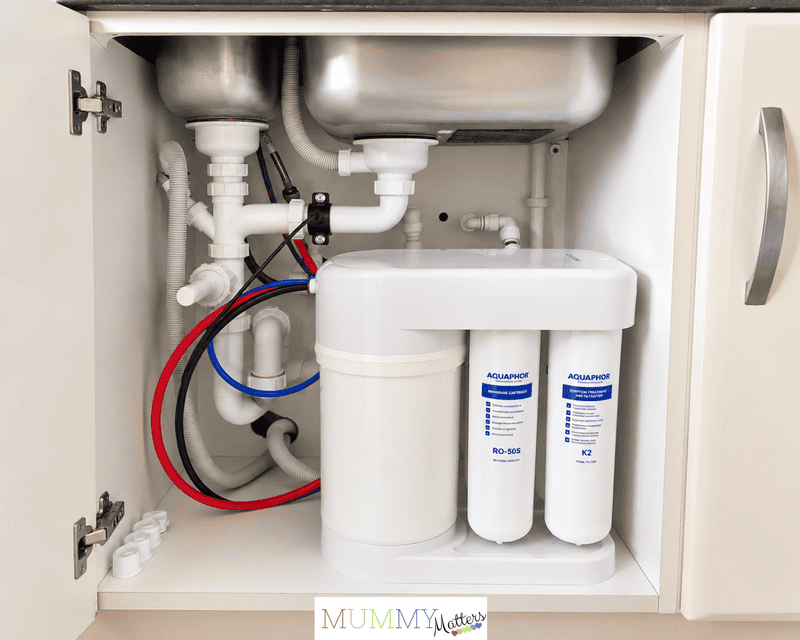
This was probably our biggest concern before installation. The Aquaphor RO-101S is relatively compact for a reverse osmosis system because the storage tank is integrated into the unit, but you still need to think realistically about what else you currently keep beneath your sink.
In our case, the answer was quite a lot.
As well as having far more pipework under there than we would ideally like, we’d always used the cupboard for our household cleaning products. We could probably have squeezed everything back in around the RO-101S, but it would have made accessing both the filtration system and our plumbing unnecessarily awkward.
Instead, we decided that installing the Aquaphor was a good excuse to rethink how we were using our kitchen storage. We reorganised another cupboard to create a dedicated space for our cleaning products and left the under-sink cupboard for the RO-101S and the existing pipework.
It has actually worked out far better than I expected. The cupboard underneath the sink now feels much less cluttered, the Aquaphor system is easy to access when we eventually need to change the filters, and our plumber will probably thank us the next time he needs to get anywhere near the pipes!
If you’re considering an under-sink reverse osmosis system, I would definitely recommend measuring your available space and looking at what you currently store there before ordering. Don’t just consider whether the RO-101S itself will physically fit; think about whether you’ll still be able to access the unit, filters and your existing plumbing comfortably afterwards.
What Does Reverse Osmosis Water Taste Like?
This was one of the things I was most interested to discover once the Aquaphor RO-101S was installed. I drink a lot of plain water, so unlike the rest of my family, there is nothing in my glass to disguise the taste of our tap water.
Living in such a hard water area, I’ve always found that our water has a slightly metallic taste. It’s one of those things you become accustomed to when you drink it every day, but I noticed the difference as soon as I tried the water from the Aquaphor tap.
The best way I can describe the filtered water is that it tastes much more neutral. It isn’t a dramatic flavour in itself – if anything, it’s the absence of the taste I was used to that I noticed. The metallic edge I normally associate with our tap water wasn’t there, and I much preferred drinking it.
Interestingly, Simon and the kids haven’t noticed the difference anywhere near as much as I have, but they generally drink their water with squash. I’m the one in our house who predominantly drinks plain water, so it makes sense that the change would be more obvious to me.
We’ve quickly got into the habit of using the Aquaphor tap for more than just filling a glass, too. We now use the filtered water for our reusable water bottles, filling the kettle and cooking. Because it’s available directly from the sink, using it has very quickly become part of our normal kitchen routine rather than something we have to remember to do.
Does Reverse Osmosis Help With Hard Water and Limescale?
One of the biggest reasons I was interested in trying a reverse osmosis system was the hardness of our water. We live in a particularly hard water area and the evidence is everywhere – our taps scale up incredibly quickly and our kettle seems to need descaling constantly.
Hard water contains higher levels of dissolved minerals, particularly calcium and magnesium. When water is heated, these minerals can form the familiar chalky deposits we know as limescale.
The Aquaphor RO-101S uses reverse osmosis to remove the hardness minerals from the water before it reaches the dedicated drinking water tap. The system then has a remineralisation stage which adds a balanced amount of minerals back into the filtered water.
It is important to understand that this doesn’t mean the RO-101S is a whole-house water softener. Our normal kitchen tap, bathroom taps and shower are still supplied with our usual hard mains water, so unfortunately I haven’t discovered a magical solution to constantly cleaning limescale from the shower!
Where I am particularly interested to see a difference is our kettle. We now fill it using water from the Aquaphor tap rather than our normal kitchen tap, so I’m going to monitor how quickly limescale builds up over the coming weeks and months.
I’ll update this review once we’ve been using the system for longer because I’m curious to see how noticeable the difference is in everyday use. Given how frequently we’ve previously had to descale our kettle, it shouldn’t take us too long to find out.
How We’re Using the Aquaphor RO-101S Day to Day
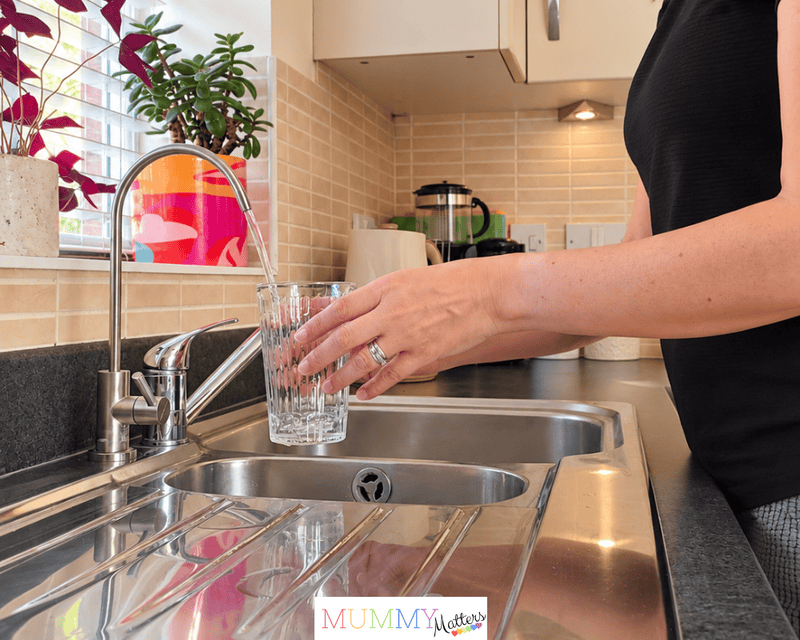
One thing I wondered before having the Aquaphor RO-101S installed was whether we would remember to use the separate tap or automatically continue reaching for our normal kitchen tap. As it turns out, it has been surprisingly easy to make the switch.
I use the Aquaphor tap whenever I want a glass of water and we use it to fill our reusable water bottles before heading out. We’ve also started filling the kettle with filtered water and using it for cooking where we would normally add tap water.
For me, this is where choosing the under-sink system rather than another filter jug has really paid off. It hasn’t added another job to our routine. There is nothing to refill, nowhere to find space for a jug and no waiting for water to work its way through a filter. We simply turn on the smaller tap whenever we want filtered water.
It sounds like a very small difference, but convenience was the main reason our previous attempts at using filtered water never lasted. Having it available on demand means that, so far, using filtered water has fitted into everyday family life without us really having to think about it.
What I Like About the Aquaphor RO-101S – and Things to Consider
Now that we’ve started living with the Aquaphor RO-101S, there are several things that stand out to me. The biggest is still convenience. Filtered water is simply there whenever we want it, without having to plan ahead or remember to refill anything.
What I Like About It
Filtered water on demand: This is easily the biggest benefit for our family. Turning on a tap fits naturally into our existing routine in a way that using a filter jug never did.
The difference in taste: As someone who predominantly drinks plain water, I’ve noticed that the water from the Aquaphor tap has a much more neutral taste than our normal tap water. I don’t get the same metallic taste that I associate with our very hard water.
Nothing taking up fridge or worktop space: This was one of our frustrations with filter jugs, particularly when fridge space was limited after a big food shop.
We can use it for more than drinking: We’re using the filtered water for glasses of water, reusable bottles, the kettle and cooking, so it isn’t a system that only gets used occasionally.
It doesn’t require electricity: We didn’t need to find a spare socket underneath the sink or have additional electrical work carried out.
The system itself is neatly hidden away: Apart from the additional small tap beside our normal kitchen tap, you wouldn’t know we had a reverse osmosis system installed.
Things to Consider Before Buying
There are, however, a few practical considerations that I think are important to understand before choosing an under-sink reverse osmosis system.
You need sufficient cupboard space. The RO-101S is designed to sit beneath the sink, and although we managed to accommodate ours, doing so prompted us to reorganise our kitchen storage. Measure your available space rather than assuming it will fit alongside everything you already keep there.
Installation is more involved than buying a filter jug. Simon was able to install ours himself after watching an installation video, but not everyone will feel comfortable altering plumbing or drilling for an additional tap. Depending on your kitchen and DIY experience, you may prefer to have it professionally fitted.
There are ongoing filter costs. This isn’t a one-off purchase that can be forgotten about indefinitely. The cartridges need replacing periodically, so I would factor the cost of replacement filters into the overall cost of ownership rather than looking only at the initial purchase price.
Reverse osmosis produces wastewater. This is something I think potential buyers should be aware of. As part of the reverse osmosis process, some water is sent to the drain while purified water is produced. Aquaphor currently specifies a purified-water-to-drainage-water ratio of approximately 1:4 to 1:6 for the RO-101S, although the actual ratio can vary depending on operating conditions.
For me, none of these points would outweigh the convenience we’re getting from the system, but they are things I would want to know before spending my own money on one. In particular, I think anyone considering reverse osmosis should understand both the ongoing maintenance costs and the wastewater involved rather than choosing a system based purely on the quality of the filtered water.
Aquaphor RO-101S vs Water Filter Jug
If you’re trying to decide between an under-sink reverse osmosis system and a traditional water filter jug, I don’t think there is one answer that will suit every household. A jug is considerably simpler and requires no installation, while an under-sink system offers a level of convenience that we’ve personally found much easier to live with.
Here’s how the two options compare from our experience:
| Aquaphor RO-101S | Water Filter Jug | |
|---|---|---|
| Installation | Requires under-sink installation and a drinking water tap | None |
| Kitchen space | Uses cupboard space beneath the sink | Uses fridge or worktop space |
| Water availability | Filtered water available directly from the tap | Jug needs to be filled and filtered |
| Remembering to use it | Becomes part of using the kitchen sink | Requires remembering to fill/use the jug |
| Electricity | None required | Usually none for a standard filter jug |
| Maintenance | Replacement filters/cartridges required | Replacement filter cartridges required |
| Initial cost | Higher | Considerably lower |
| Best suited to | Households wanting filtered water readily available at the sink | Households happy to fill and store a filter jug |
For us, the deciding factor wasn’t that using a filter jug was difficult. It was that we simply didn’t use one consistently.
A jug could be the more sensible choice if you rent your home, don’t want to make changes to your kitchen, have very limited under-sink space or only want filtered drinking water occasionally. The initial cost is also substantially lower.
Our priorities were different. We’d already tried filter jugs and knew that the combination of limited fridge space, worktop clutter and forgetting to refill them meant we eventually stopped using them. Having a dedicated filtered water tap removes all three of those barriers.
Ultimately, the best water filtration system is the one that fits naturally enough into your household that you’ll actually use it. For our family, that’s proving to be the under-sink system.
Is the Aquaphor RO-101S Worth It?
Based on our experience so far, I think the Aquaphor RO-101S makes a lot of sense for our family, particularly because we already knew that water filter jugs didn’t fit naturally into the way we use our kitchen.
The biggest difference for me isn’t actually having another gadget or filtration system in the house – it’s removing the need to think about filtering our water at all. I don’t need to remember to fill a jug, find room for it in the fridge or wait for water to filter. I go to the sink, turn on the smaller tap and fill my glass, bottle or kettle.
Living in a very hard water area also means I’ve noticed a genuine difference in the taste of the water. As the main plain-water drinker in our house, the more neutral taste has probably been more noticeable to me than it has to the rest of the family, who tend to drink squash.
Would I recommend an under-sink reverse osmosis system to everybody? Not necessarily. If you’re perfectly happy using a filter jug, only use filtered water occasionally or don’t have suitable cupboard space, the additional cost and installation may be difficult to justify. There is also the ongoing cost of replacement filters and the wastewater produced by the reverse osmosis process to consider.
For our household, though, convenience is what makes the RO-101S worthwhile. We’re already using the filtered water throughout the day for drinking, water bottles, the kettle and cooking, and it has slotted into our normal routine incredibly easily.
It’s still early days, so I want this to be a review that develops as we continue using the system rather than something I write immediately after installation and never revisit. I’ll be updating this article once we’ve lived with the Aquaphor RO-101S for longer, particularly to share how our kettle fares with limescale and how we get on with maintenance and filter changes.
So far, though, the biggest compliment I can give it is probably the simplest: unlike every filter jug we’ve owned, we’re actually using it.
Save 15% on the Aquaphor RO-101S
If you’ve decided the RO-101S could be a good fit for your home, Aquaphor has given Mummy Matters readers 15% off the RO-101S.
Promo code: MummyMatters
The code is valid until 4 December 2026 and applies specifically to the RO-101S. It cannot be combined with other Aquaphor UK discounts or offers.
Aquaphor RO-101S FAQs
Does the Aquaphor RO-101S need electricity?
No. The Aquaphor RO-101S works using mains water pressure and doesn’t require an electrical connection. This was useful for us because we didn’t need to find a spare socket underneath the kitchen sink.
Can you install the Aquaphor RO-101S yourself?
It is possible to install the system yourself if you’re confident with the plumbing involved. Simon watched an installation video beforehand and fitted ours in around 40 minutes. Your experience may be different depending on your existing plumbing and kitchen layout, so professional installation may be preferable if you’re unsure.
One lesson from our experience is to check all of the components carefully before turning the water supply back on – particularly those little retaining clips!
Does reverse osmosis remove limescale?
Reverse osmosis removes the hardness minerals responsible for limescale from the water being filtered. The RO-101S also has a remineralisation stage before the water reaches the drinking water tap.
It is important to remember that this only affects water supplied through the Aquaphor tap. It doesn’t soften the water throughout your home, so your shower, bathroom taps and normal kitchen tap will still receive your usual mains water.
Can I use reverse osmosis water in my kettle?
Yes, and this is one of the main ways we’re using ours. We now fill our kettle from the Aquaphor tap rather than our normal kitchen tap. Because we live in such a hard water area, I’m monitoring the kettle to see how its limescale build-up compares over the coming months and will update this review with our experience.
Does reverse osmosis water taste different?
The Aquaphor RO-101S is designed to reduce hardness and prevent limescale deposits in the water it filters. After the reverse osmosis stage, the system has a remineralisation stage which balances calcium and magnesium before the water reaches the drinking water tap.
It’s important to remember that this only affects water supplied through the Aquaphor tap. The RO-101S isn’t a whole-house water softener, so our shower, bathroom taps and normal kitchen tap still receive our usual hard mains water.
How much space does the Aquaphor RO-101S need?
The unit measures approximately 37.1 × 42 × 19 cm and is designed to fit beneath the kitchen sink. Don’t measure the unit alone, though. Consider your existing plumbing, access for future filter changes and anything else you currently store in the cupboard.
We ended up moving our cleaning products into another kitchen cupboard, which has actually made our under-sink area much easier to access.
How often do Aquaphor RO-101S filters need changing?
Aquaphor UK currently recommends installing new filters approximately every nine months, although replacement requirements can vary depending on water quality and usage. Individual cartridges also have their own recommended replacement schedules, so it’s worth following the maintenance instructions supplied with the system.
I’ll update this review with our own experience of changing the filters once we’ve been using the RO-101S long enough to do so.
Does the Aquaphor RO-101S waste water?
Yes. Reverse osmosis systems produce wastewater as part of the filtration process. Aquaphor currently specifies a purified-water-to-drainage-water ratio of approximately 1:4 to 1:6 for the RO-101S, although operating conditions can affect this.
It’s something worth considering when deciding whether reverse osmosis is the right filtration method for your household.
Is the Aquaphor RO-101S better than a water filter jug?
That depends on what matters most to you. A filter jug is cheaper, doesn’t require installation and may be perfectly adequate if you’re happy to keep it filled.
For us, an under-sink system has proved much more convenient because previous filter jugs eventually stopped being used. With the RO-101S, filtered water is available whenever we turn on the dedicated tap, so there is nothing to remember to refill.
Reader offer: Save 15% on the Aquaphor RO-101S with code MummyMatters until 4 December 2026.