
If you’re planning to start trying for a baby, it’s completely natural to wonder whether there’s anything you can do beforehand to give your body the best possible start. One of the things you may find yourself searching for is how to improve egg health or egg quality before pregnancy – and you’ll quickly discover plenty of supplements, foods and fertility “hacks” claiming to help.
If you’re at the beginning of this journey, I’ve also put together a complete guide to preparing for pregnancy, covering preconception health for both women and men.
The reality is a little more complicated. We can’t control every factor that affects fertility or egg quality, and age remains one of the biggest influences. However, there are things you can do in the months before trying to conceive to support your overall reproductive health and make sure your body is as well prepared for pregnancy as possible.
All of my pregnancies were planned, so preparing my body before trying to conceive was something I took seriously. I exercised regularly, ate well, took Pregnacare, didn’t drink alcohol and have never smoked or used recreational drugs. Even with all that preparation, my own journey wasn’t completely straightforward. After having Lillie, I experienced an ectopic pregnancy followed by a missed miscarriage before later becoming pregnant with my boys.
That’s one of the reasons I think it’s important to talk about preconception health without suggesting that pregnancy outcomes are something we can completely control. Looking after yourself before trying for a baby isn’t a guarantee of becoming pregnant quickly or having an uncomplicated pregnancy. It’s about focusing on the things that are within your control while recognising that fertility and pregnancy can be unpredictable.
If you’re hoping to start trying in the next few months, this guide looks at the evidence-based steps you can take to support your health before conception, what we really mean when we talk about “egg health”, and why starting around three months before trying can be a useful timeframe.
What Does Egg Quality Actually Mean?
When people talk about improving “egg quality”, they are usually referring to whether an egg has the right number of chromosomes and is capable of being fertilised, developing into a healthy embryo and potentially resulting in a successful pregnancy.
Unlike sperm, which are continually produced, women are born with the eggs they will have throughout their lifetime. Both the number and quality of those eggs generally decline with age, particularly as we move through our 30s and towards our 40s. This is one reason why age has such an important influence on female fertility.
Unfortunately, there isn’t a food, supplement or lifestyle change that can reverse the natural ageing of our eggs. Claims that a particular diet, vitamin or fertility product can dramatically “improve egg quality” should therefore be treated with caution.
That doesn’t mean there’s nothing you can do.
Your general health, nutrition and lifestyle before conception can help create a healthier environment for ovulation, fertilisation and the earliest stages of pregnancy. Addressing nutritional deficiencies, taking recommended supplements such as folic acid, avoiding smoking and excessive alcohol, managing existing health conditions and maintaining a healthy lifestyle are all sensible steps when preparing for pregnancy.
Rather than trying to create the “perfect egg”, I think it’s much more helpful to look at preconception health as giving your body the support it needs for the journey ahead.
Why Start Preparing Three Months Before Trying to Conceive?
If you’ve been researching egg health online, you’ve probably come across the idea that you should start making changes around 90 days before trying to conceive. You’ll sometimes see this explained by saying that an egg takes exactly three months to mature, but the biology isn’t quite that simple.
Egg-containing follicles actually develop over a much longer period, going through several stages before one becomes the dominant follicle that releases an egg during ovulation. So I wouldn’t think of the three-month mark as a magic window in which you can completely transform the quality of your eggs.
It is, however, a really useful time to start preparing for pregnancy.
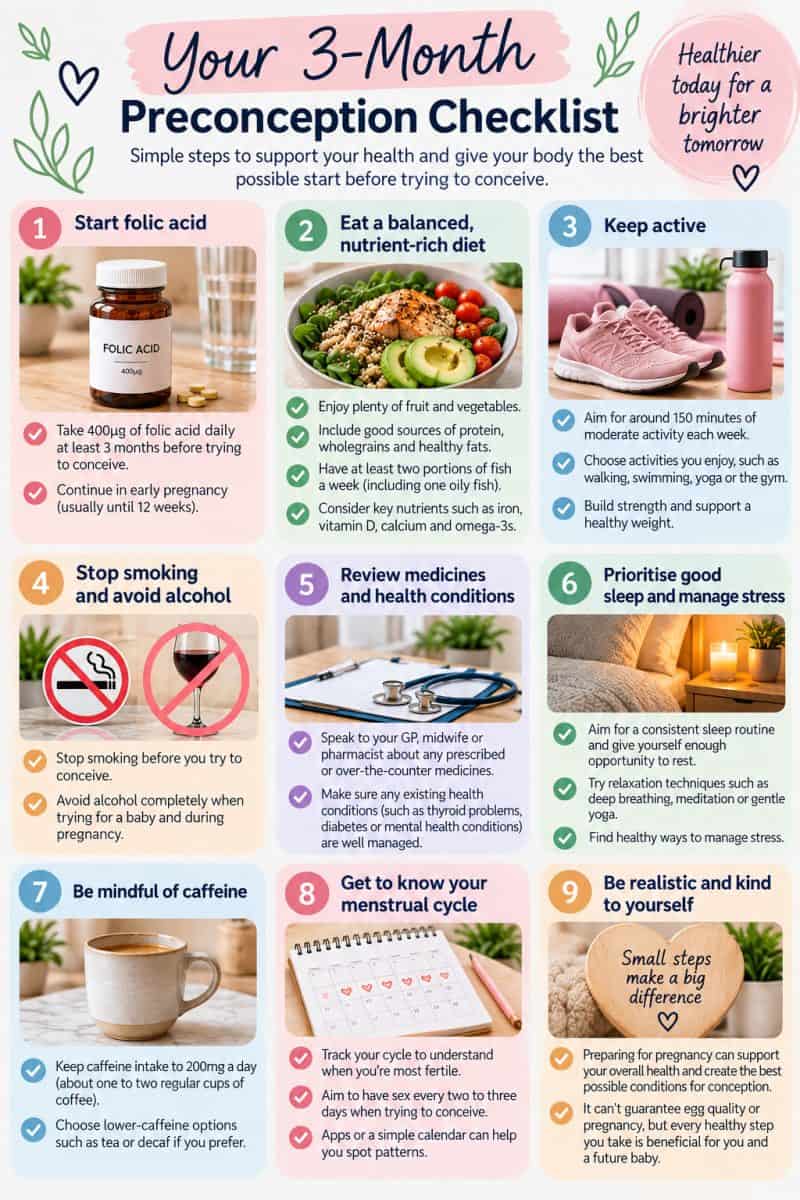
Beginning a few months beforehand gives you time to establish healthier habits, look at your diet, stop smoking if necessary, avoid alcohol, review any medicines you’re taking and speak to your GP about existing health conditions before you become pregnant.
It’s also a good opportunity to start taking folic acid. NHS guidance recommends taking 400 micrograms of folic acid every day before pregnancy and continuing until you’re 12 weeks pregnant. Ideally, you should start around three months before you become pregnant.
I like to think of those three months less as an “egg quality countdown” and more as a preconception preparation period. You aren’t trying to achieve perfection or completely overhaul your life overnight. You’re simply giving yourself enough time to put some good foundations in place before you start trying for your baby.
What Preconception Preparation Looked Like for Me
When we decided to try for our children, I didn’t follow a complicated fertility programme or fill the kitchen cupboard with supplements. For me, preparation was much more straightforward. I was already going to the gym regularly, I ate a fairly clean diet, didn’t drink or smoke, and started taking Pregnacare before trying to conceive.
At the time, I wasn’t thinking in terms of “optimising egg quality”. I was simply trying to make sure I was looking after myself and giving my body what it needed before pregnancy.
Having subsequently experienced an ectopic pregnancy and a missed miscarriage also changed how I view this subject. I know first-hand that doing all the “right” things doesn’t give us complete control over conception or pregnancy. That’s why I’d much rather concentrate on sensible preconception health than make women feel they need to achieve the perfect lifestyle before they’re allowed to start trying.
1. Start Taking Folic Acid Before You Try to Conceive
One of the most important things you can do before trying for a baby is also one of the simplest: start taking folic acid.
Folic acid is the synthetic form of folate (vitamin B9), and having enough of it around the time of conception and during early pregnancy helps reduce the risk of neural tube defects, including spina bifida.
When I was trying for my babies, Pregnacare was essentially my starting point rather than lots of individual fertility supplements. There are far more products marketed around “egg quality” now than I remember seeing then, which is partly why I think it’s important to distinguish between supplements that are actually recommended before pregnancy and products with much bigger marketing claims.
In the UK, the NHS recommends taking 400 micrograms of folic acid every day before becoming pregnant and continuing until you are 12 weeks pregnant. Ideally, you should start taking it around three months before you begin trying to conceive.
This is particularly important because your baby’s neural tube develops very early in pregnancy, potentially before you even realise that you’re pregnant. Starting folic acid beforehand means you’re not waiting for a positive pregnancy test before thinking about it.
Some people have a higher risk of a pregnancy affected by a neural tube defect and may be advised to take a higher 5mg dose of folic acid instead. This is a prescription-strength dose, so if you have an existing health condition, take regular medication, have previously had a pregnancy affected by a neural tube defect, or think you may fall into a higher-risk group, speak to your GP, midwife or pharmacist about the dose that’s right for you.
When I was preparing for my own pregnancies, I took Pregnacare as my preconception supplement. If you’re choosing a pregnancy or preconception multivitamin rather than taking folic acid on its own, check the label so you know how much folic acid it contains and avoid doubling up unnecessarily.
It’s also worth remembering that supplements are there to complement a healthy diet rather than replace one. Foods including leafy green vegetables, broccoli, peas, chickpeas and fortified breakfast cereals can provide folate, but the NHS still recommends taking a folic acid supplement when you’re trying for a baby.
2. Build Your Diet Around Nutrient-Dense Foods
Search online for foods that improve egg quality and you’ll find plenty of lists promising that everything from avocados and berries to Brazil nuts and pomegranate juice can boost your fertility.
While many of these foods are nutritious, there isn’t one particular “fertility food” that can transform your eggs. A much better approach is to concentrate on eating a varied, balanced diet that provides your body with the nutrients it needs before pregnancy.
Try to build your meals around plenty of fruit and vegetables, wholegrain or higher-fibre carbohydrates, good sources of protein and healthy fats. Protein can come from foods such as eggs, fish, lean meat, beans, lentils, chickpeas, nuts and seeds, while dairy products or fortified alternatives can provide important nutrients including calcium.
Fish can also be a useful part of a preconception diet. NHS guidance recommends eating at least two portions of fish a week during pregnancy, including one portion of oily fish, while also advising that some types of fish should be avoided when you’re pregnant or trying to conceive.
Rather than worrying about eating perfectly, aim for variety across the week. Different foods provide different combinations of vitamins, minerals, fibre, protein and healthy fats, so a varied diet is generally more useful than concentrating heavily on one supposed fertility superfood.
What About Supplements for Egg Quality?
This is another area where it’s easy to spend a lot of money.
You’ll find fertility supplements containing ingredients such as CoQ10, antioxidants and numerous vitamins and minerals, often accompanied by claims about improving egg quality. That doesn’t mean everyone trying to conceive needs them.
Folic acid is specifically recommended when you’re trying for a baby, and vitamin D is also important around pregnancy. Beyond this, your individual needs can depend on your diet, health and whether you have any nutritional deficiencies.
If you’re taking a preconception multivitamin, check what’s actually in it rather than assuming that more vitamins must be better. In particular, once you’re pregnant you should avoid supplements containing vitamin A in the form of retinol, including cod liver oil, because too much vitamin A can harm a developing baby.
If you follow a restricted diet, are vegan or vegetarian, have a medical condition, or are concerned that you may be deficient in something such as iron, vitamin B12 or vitamin D, speak to your GP, pharmacist or another healthcare professional about whether you need additional supplementation.
Preparing for pregnancy shouldn’t require a cupboard full of expensive fertility products. For most of us, the foundations are much less exciting: eat a varied diet, take the supplements that are actually recommended and concentrate on your overall health.
3. Stop Smoking and Avoid Alcohol
If you’re preparing for pregnancy, smoking and alcohol are two lifestyle factors worth addressing before you start trying rather than waiting until you see a positive pregnancy test.
Smoking can affect fertility in both women and men, as well as increasing the risk of complications during pregnancy. Preconception health isn’t only about women, either. If you’re preparing for pregnancy as a couple, I’ve also looked specifically at how men can improve sperm health before trying for a baby. If you smoke, stopping before trying to conceive is one of the most positive changes you can make for both your own health and a future pregnancy. It’s also worth trying to minimise your exposure to second-hand smoke.
When it comes to alcohol, UK guidance recommends that if you’re pregnant or planning to become pregnant, the safest approach is not to drink alcohol at all. This avoids the possibility of drinking during the very early stages of pregnancy before you realise that you’ve conceived.
For me, this part of preparing for pregnancy didn’t require any changes because I didn’t drink alcohol, smoke or use recreational drugs. But if these are currently part of your lifestyle, don’t feel that you have to change everything overnight without support.
If you’re finding it difficult to stop smoking, your GP, pharmacist or local stop smoking service can help. Similarly, if you’re concerned about how much you’re drinking or think you may struggle to stop, speak to a healthcare professional rather than feeling that you have to manage it alone.
The aim isn’t to create a perfectly “clean” lifestyle in order to produce better eggs. It’s about reducing known risks where you realistically can and creating a healthier environment for conception and pregnancy.
4. Aim for Regular, Moderate Exercise
Being physically active before pregnancy is another way to support your general health while preparing your body for the demands of pregnancy.
You don’t need to suddenly start an intense training programme because you’re trying for a baby. Instead, concentrate on building a level of activity that feels sustainable. Walking, swimming, cycling, strength training, yoga and gym workouts can all form part of an active lifestyle.
For me, regular exercise was already part of my routine before trying to conceive. I went to the gym regularly, so it wasn’t something I suddenly introduced because we had decided to try for a baby. Looking back, I think that’s a much healthier way to approach preconception fitness: establish habits that make you feel strong and well rather than exercising because you think you need to achieve a particular body shape or weight before you’re “ready” for pregnancy.
The NHS recommends that adults aim for at least 150 minutes of moderate-intensity activity each week, alongside strengthening activities on at least two days. If you’re currently doing very little exercise, however, you don’t need to reach that target immediately. Starting with something as simple as a daily walk and gradually increasing your activity still counts.
Don’t Assume More Exercise Is Always Better
At the other end of the scale, extremely high levels of exercise combined with not eating enough to meet your body’s energy needs can interfere with menstrual cycles and ovulation in some women.
If your periods have become irregular
5. Think About Weight as Part of Your Overall Health
Weight often comes up when you start researching fertility, but it’s important to approach the subject with some perspective. Your weight is only one part of your overall health, and being above or below a particular number doesn’t automatically tell you whether you’ll be able to conceive or have a healthy pregnancy.
That said, being significantly underweight or overweight can affect fertility for some women. Changes in body weight and energy availability can influence hormones, menstrual cycles and ovulation, while a higher BMI is also associated with an increased risk of some complications during pregnancy.
If you know that you’d like to make changes to your weight, the months before trying for a baby can be a useful opportunity to concentrate on sustainable habits rather than crash dieting. Regular movement, balanced meals, adequate protein and fibre, good sleep and gradually changing the habits that aren’t serving you well are much more realistic foundations than attempting to lose a large amount of weight quickly.
Equally, if you’re underweight, have lost weight unintentionally, have very irregular periods or aren’t menstruating at all, it’s worth speaking to your GP before trying to conceive.
Try not to let the number on the scales become another source of pressure. The aim isn’t to reach a supposedly perfect fertility weight. It’s to identify anything that may be affecting your health or menstrual cycle and make sensible changes where they’re appropriate for you.
If you’re unsure whether your weight could affect your fertility or pregnancy, particularly if you have an existing health condition, your GP can give you advice based on your individual circumstances rather than a generic number on a BMI chart.
6. Review Your Medicines and Health Conditions Before Pregnancy
Preparing for pregnancy isn’t only about diet, supplements and lifestyle. If you take regular medication or live with a long-term health condition, one of the most useful things you can do is review this with a healthcare professional before you start trying to conceive.
Some medicines aren’t recommended during pregnancy, while others may need a different dose or an alternative treatment. This applies to prescription medicines, but it’s also worth mentioning anything you buy over the counter, herbal remedies and supplements.
Importantly, don’t stop taking prescribed medication simply because you’re planning a pregnancy. Suddenly stopping some medicines can be harmful to you and, depending on the condition being treated, potentially to a pregnancy too. Speak to your GP, specialist or pharmacist first so they can help you decide what’s appropriate.
It’s also a good time to make sure any existing health conditions are being managed as well as possible. Conditions such as diabetes, epilepsy, thyroid disorders and some mental health conditions may need additional planning or monitoring before and during pregnancy.
Book a Preconception Appointment If You Need One
You don’t necessarily need a GP appointment simply because you’ve decided you’d like a baby. However, arranging one before you start trying can be particularly useful if you:
- take regular prescription medication;
- have a long-term physical or mental health condition;
- have previously experienced pregnancy complications;
- are concerned about your periods or fertility;
- have a family history or genetic condition you’re worried about; or
- simply aren’t sure whether a medicine, supplement or health condition could affect pregnancy.
This gives you the opportunity to ask questions and make any necessary changes before you’re dealing with a positive pregnancy test.
Preconception care isn’t about finding everything that could possibly go wrong. It’s about going into pregnancy with the information and support you need for your own circumstances.
7. Prioritise Sleep and Look After Your Stress Levels
Sleep and stress are often included in conversations about fertility, sometimes with rather sweeping claims about lowering cortisol or “balancing your hormones”. The reality is much more complicated, and I don’t think women need another reason to worry that they’re somehow damaging their fertility by having a stressful week.
You don’t need to be completely relaxed to become pregnant, and struggling with stress does not mean that you’ve caused fertility problems.
However, looking after your sleep and emotional wellbeing is still worthwhile when you’re preparing for pregnancy. Good-quality sleep supports your overall physical and mental health, while finding ways to manage ongoing stress can simply help you feel better during what can become an emotionally demanding time.
Try to establish a reasonably consistent sleep routine and give yourself enough opportunity to rest. Regular exercise, spending time outdoors, reducing late-night screen time and creating a relaxing bedtime routine may all help if your sleep has slipped into unhealthy habits.
The same applies to stress. Rather than worrying about eliminating it completely, think about what genuinely helps you switch off. That might be walking, reading, spending time outside, meditation, yoga, breathing exercises, journalling, or simply protecting some time in your week when you
8. Get to Know Your Menstrual Cycle
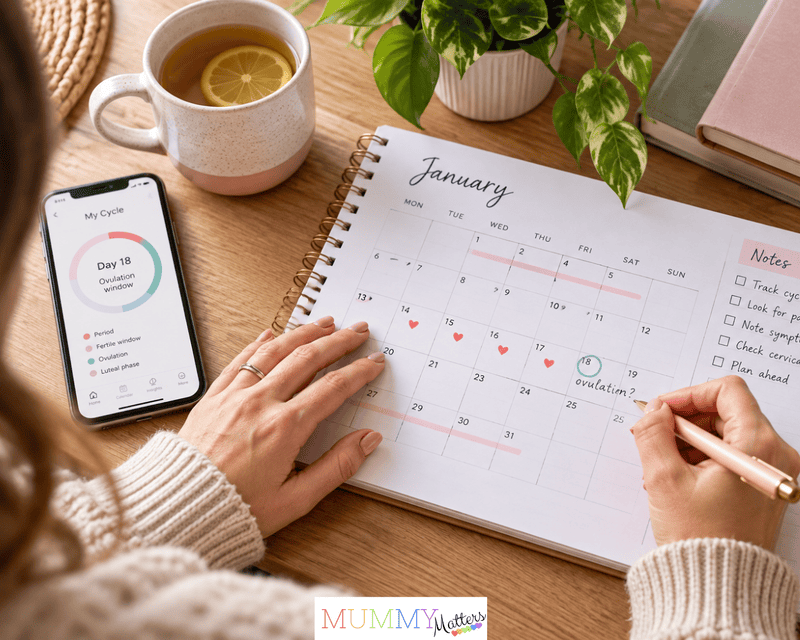
Before you start trying for a baby, it can be useful to spend a couple of months getting to know your menstrual cycle. You don’t need to become obsessed with tracking every symptom or buy lots of fertility gadgets, but having a general idea of when your periods arrive and whether your cycles are fairly regular can give you useful information.
The first day of your period is counted as day one of your menstrual cycle. Ovulation usually happens around 10 to 16 days before your next period begins, which is why the often-quoted idea that everyone ovulates on day 14 isn’t accurate. Women’s cycle lengths vary, and your own cycle can vary from month to month too.
You might decide simply to record the first day of each period in your phone or calendar. If you want to understand your cycle in more detail, you can also look for signs associated with ovulation, such as changes in cervical mucus, or use ovulation predictor kits that detect the rise in luteinising hormone (LH) that happens before ovulation.
You Don’t Have to Pinpoint the Exact Moment You Ovulate
It’s easy for trying to conceive to start feeling like a science experiment, particularly once apps, ovulation tests and fertile-window calculations enter the picture.
The good news is that you don’t necessarily need to identify the exact day you ovulate. NHS advice for people trying to conceive is to have sex every two to three days without using contraception. This means you’re likely to have sex during your fertile time without having to perfectly predict ovulation.
Understanding your cycle can still be helpful, though. If your periods are very irregular, have stopped altogether, are unusually heavy or painful, or something about your cycle concerns you, speak to your GP. It’s much better to raise those questions than assume an app can tell you what’s happening inside your body.
For now, think of cycle tracking as information rather than another thing you have to get right. The aim is simply to understand your body a little better before you start trying.
9. Be Sensible About Caffeine
If coffee is part of your morning routine, preparing for pregnancy doesn’t necessarily mean you need to give it up completely.
During pregnancy, NHS guidance recommends limiting caffeine to no more than 200mg a day. Caffeine isn’t only found in coffee either; tea, green tea, cola, energy drinks and chocolate can all contribute to your daily intake.
If you currently consume quite a lot of caffeine, the months before trying to conceive can be a good opportunity to gradually reduce it rather than suddenly cutting it out when you discover you’re pregnant. You could switch some drinks to decaffeinated versions, alternate coffee with water or simply become more aware of how much caffeine you’re consuming across the day.
Be particularly careful with energy drinks and large coffees, where the caffeine content can sometimes be much higher than you might expect.
There’s no need to panic about the occasional cup of coffee or start viewing caffeine as something that is “damaging your eggs”. As with so much preconception advice, this is really about establishing sensible habits that you can comfortably continue once you’re pregnant.
You Don’t Need to Prepare for Pregnancy Perfectly
When you start researching how to improve egg health before pregnancy, it’s very easy to come away with a shopping list of supplements, foods to eat, things to avoid and lifestyle changes you’re supposed to make before you’re apparently “ready” to have a baby.
Try not to put that pressure on yourself.
There are sensible things you can do before conception: take folic acid, eat a varied diet, stay active, avoid smoking and alcohol, review your medication if necessary and generally look after your physical and emotional health. Starting a few months before you plan to try gives you time to make those changes gradually.
But none of these things can guarantee that you’ll become pregnant quickly or determine the outcome of a pregnancy.
I know from my own experience that you can plan your pregnancies and do everything you believe you’re supposed to do and still face unexpected difficulties along the way. My ectopic pregnancy and subsequent miscarriage weren’t evidence that I hadn’t prepared well enough or looked after myself properly.
That’s something I think is particularly important to remember when we’re talking about “egg quality”. Preconception health should be about supporting your body, not finding another way to blame yourself when conception or pregnancy doesn’t go according to plan.
So, if you’re hoping to start trying in the next three months, concentrate on the basics. Take your folic acid, make the changes that genuinely benefit your health and speak to your GP if there’s anything you’re concerned about.
You don’t need the perfect diet, the perfect supplement routine or the perfect lifestyle before you start trying for your baby.
Frequently Asked Questions About Egg Health Before Pregnancy
Can you actually improve egg quality?
There isn’t a proven way to reverse the effects of ageing on your eggs or guarantee that an egg will result in a healthy pregnancy. However, looking after your overall health before conception can support your reproductive health and help prepare your body for pregnancy. Be wary of supplements, diets or programmes promising to dramatically improve egg quality.
How long does it take to improve egg quality?
You’ll often see claims that it takes exactly 90 days to improve an egg, but this oversimplifies how ovarian follicles develop. Rather than viewing three months as a deadline for changing your eggs, think of it as a useful period for preparing for pregnancy. It gives you time to start folic acid, review medication if necessary and establish healthier habits before you begin trying.
What foods are good for egg health?
There isn’t one particular food proven to improve egg quality. Aim instead for a varied, balanced diet containing plenty of fruit and vegetables, higher-fibre carbohydrates, sources of protein and healthy fats. Foods such as fish, eggs, beans, lentils, nuts, seeds and leafy green vegetables can all form part of a nutritious preconception diet.
What supplements should I take before trying to conceive?
In the UK, the NHS recommends taking 400 micrograms of folic acid every day before becoming pregnant and until 12 weeks of pregnancy, with some people advised to take a higher prescribed dose. Vitamin D is also recommended during pregnancy. Your individual needs may differ depending on your health, diet and medications, so speak to a GP or pharmacist if you’re unsure which supplements are appropriate for you.
Does CoQ10 improve egg quality?
Coenzyme Q10 (CoQ10) is frequently marketed as an egg-quality or fertility supplement, and it has been studied particularly in fertility treatment settings. However, that doesn’t mean every woman trying naturally needs to take it or that it can guarantee improved egg quality or pregnancy.
If you’re considering CoQ10 or another fertility supplement, particularly alongside medication or fertility treatment, discuss it with your GP, pharmacist or fertility specialist rather than assuming that a supplement marketed for fertility is automatically necessary or suitable.
At what age does egg quality start to decline?
Female fertility generally declines with age, with the decline becoming more noticeable from the mid-30s. This is partly because both the number of available eggs and their likelihood of having the correct number of chromosomes decrease as we get older.
Lifestyle changes can support your general and reproductive health, but they cannot reverse this age-related change. If you’re concerned about your age and fertility, getting individual advice from your GP or a fertility specialist is more useful than relying on an online “egg quality” test or supplement.
A Note About This Article
This article combines my own experience of preparing for planned pregnancies, including my experiences of ectopic pregnancy and miscarriage, with current UK preconception health guidance. Medical recommendations have been checked against NHS and NICE guidance available at the time of writing.
I’m sharing my experience to help other women feel more informed when preparing for pregnancy, but everyone’s health and fertility journey is different. If you have concerns about your fertility, menstrual cycle, medication or an existing health condition, speak to your GP or another appropriate healthcare professional for advice that’s specific to you.