
When children share a bedroom, designing a space that feels enchanting rather than cramped becomes essential for family harmony. In many homes, siblings share sleeping quarters because of limited space or intentional family choices. For families with only a few bedrooms, children may need to share to fit everyone comfortably.
The shared environment encourages children to communicate, share their belongings, and solve problems together, which can help establish respectful routines and foster empathy between siblings. This supportive setting may result in stronger family bonds as children grow, since they learn teamwork and mutual understanding.
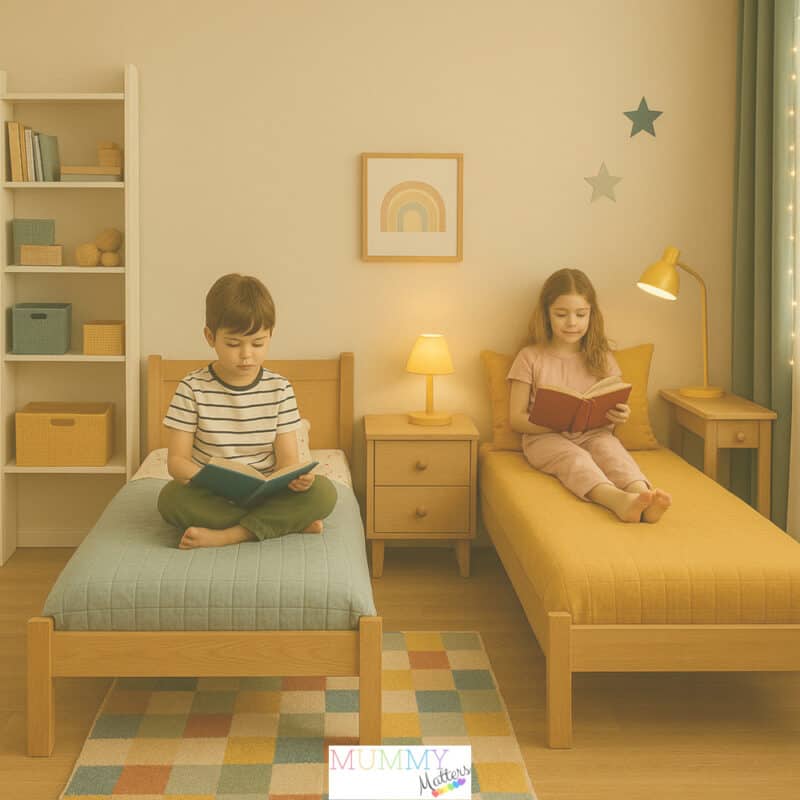
Finding the right beds forms the foundation of a successful shared bedroom. From practical bunk beds that maximise floor space to twin singles that can be separated or pushed together as needed, the bed arrangement sets the tone for the entire room.
Children who share bedrooms may develop strong bonds and important life skills. Shared spaces can encourage children to learn cooperation, compromise, and respect for others’ possessions at a young age. These skills may remain helpful throughout life in various social situations.
Each child’s need for privacy changes as they grow. Toddlers may enjoy constant companionship, while school-aged children begin to appreciate personal space. As children get older, many start to desire some privacy, making thoughtful room design especially important.
The most effective shared bedroom arrangements involve children in the planning process. Even young children can express colour preferences or choose bedding. Older children might help arrange furniture or select storage solutions.
Common challenges in shared bedrooms include different sleep schedules, homework needs, and personal space concerns. These issues can often be solved through smart design choices rather than separate rooms. Many families find that well-arranged shared spaces strengthen sibling relationships over time.
Vertical storage makes use of every centimetre in shared bedrooms. Wall-mounted shelves, tall bookcases, and hanging organisers turn unused wall space into practical storage. This system keeps floor areas clear for play while giving each child dedicated spots for special items. Parents can shop beds online at Bed-Store.co.uk to find options that support these benefits.
Under-bed storage provides hidden space for seasonal clothing, toys, and extra bedding. Beds with built-in drawers offer easy access to daily essentials without cluttering the room. Some parents use colour-coded containers under each child’s bed to simplify organisation.
Dual-purpose furniture works well in tight spaces. Desks that convert to dressing tables, ottomans that store toys while providing seating, and bedside tables with charging stations all serve multiple functions. This versatility allows the room to be suited for different activities throughout the day.
Personalised storage zones can help prevent disagreements over belongings. Labelled bins, individual wardrobes, and dedicated shelves clearly establish what belongs to whom. Even young children may quickly learn to respect these boundaries when they’re clearly marked.
Creating Distinct Zones in One Room
Room dividers offer visual separation without permanent walls. Bookshelf dividers serve double duty by creating boundaries while storing books and treasures. Ceiling-mounted curtains can be drawn for privacy during changing or pulled back to open the space.
Colour coding helps children identify their personal territories. This can be subtle, with coordinated colour schemes, or more defined with contrasting colours. Each child’s bedding, storage bins, and wall decorations can feature their chosen colour, creating visual ownership.
Lighting plays an important role in establishing separate areas. Individual reading lamps allow one child to read while another sleeps. String lights can outline personal areas, while night lights provide comfort without disturbing siblings.
Floor planning requires careful attention in shared rooms. Placing beds on opposite walls creates natural divisions, while corner arrangements make better use of open floor space. The aim is balanced allocation, where each child has similar amounts of space.
Bed Configurations That Maximise Space and Comfort
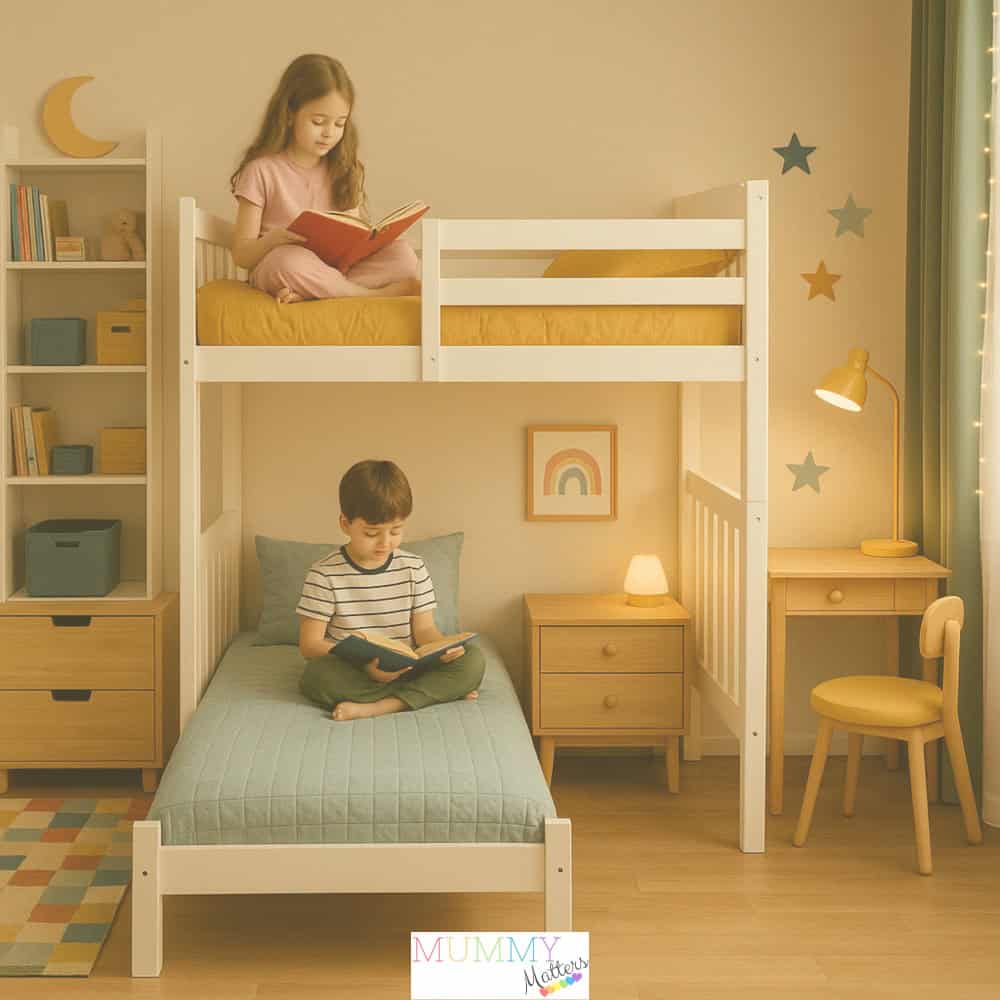
Bunk Bed Considerations
Safety comes first with bunk beds. Bunk beds are best suited for children old enough to climb safely and follow bedtime routines. Guardrails and secure ladders are important features to look for when choosing a bunk bed for siblings.
Space-saving features make bunk beds even more practical. Look for models with built-in desks, shelving, or storage drawers. Some creative designs include pull-out trundles for sleepovers or stairs with drawers instead of traditional ladders.
Accessibility matters, especially for younger children. The child who needs night-time toilet trips should take the bottom bunk. Consider a bunk with wider, stair-like steps rather than ladder rungs for easier climbing.
Personal touches help each child feel a sense of belonging in their sleeping space. Bed tents, curtains, or canopies can transform bunks into private retreats. Wall pockets attached to each level provide personal storage for books and small toys.
Alternative Bed Arrangements
Trundle beds offer flexibility for different needs. During the day, they appear as single beds with extra floor space. At night, the hidden bed rolls out for sleeping. This arrangement works well for rooms that serve as play areas during daytime hours.
L-shaped configurations fit neatly into corners, making the most of central floor space. This arrangement creates natural divisions between sleeping areas while maintaining an open feel. The corner junction often becomes a shared nightstand area.
Back-to-back twin beds with a shared nightstand create symmetry and fairness. This layout works well in rectangular rooms and provides each child with equal access to windows, doors, and shared furniture. The central nightstand can include storage for both children.
Loft beds raise sleeping areas to create multi-use spaces below. The area underneath can become a desk, reading nook, play zone, or extra storage. This setup works particularly well for older children who need study space or for rooms with high ceilings.
Designing for Different Ages and Genders
Large age gaps present unique challenges in shared bedrooms. Younger children often need more floor space for play, while older ones require study areas. Adjustable furniture that grows with children helps bridge these differences. Desks with height-adjustable legs work well.
Neutral colour schemes provide lasting appeal across ages and genders. Soft greys, warm beiges, and gentle blues create peaceful backgrounds that complement any accent colours. These neutrals can be brought to life with colourful accessories that reflect each child’s interests.
Flexible spaces shift as children grow. Removable wall decals, interchangeable artwork frames, and easily updated bedding allow the room to change without major renovations. Furniture on castors can be rearranged as requirements shift.
Privacy becomes increasingly important as children approach adolescence. Older children sharing with younger siblings may need designated quiet zones for homework or private conversations. Room dividers, headphones, and agreed-upon “do not disturb” signals can help meet these needs.
When planning a shared bedroom, certain items can prove key for a smooth experience. Visiting local bed stores helps parents assess mattress firmness and support suited for children as they grow. Quality storage solutions help prevent clutter and arguments. Proper lighting allows for different activities without disturbing others.
Room dividers provide personal space when needed. Noise-reducing elements can help with different sleep schedules. Personalised decor gives each child ownership of their space. Parents can shop beds online at Bed-Store.co.uk to find complete bedroom solutions that grow with their children.