
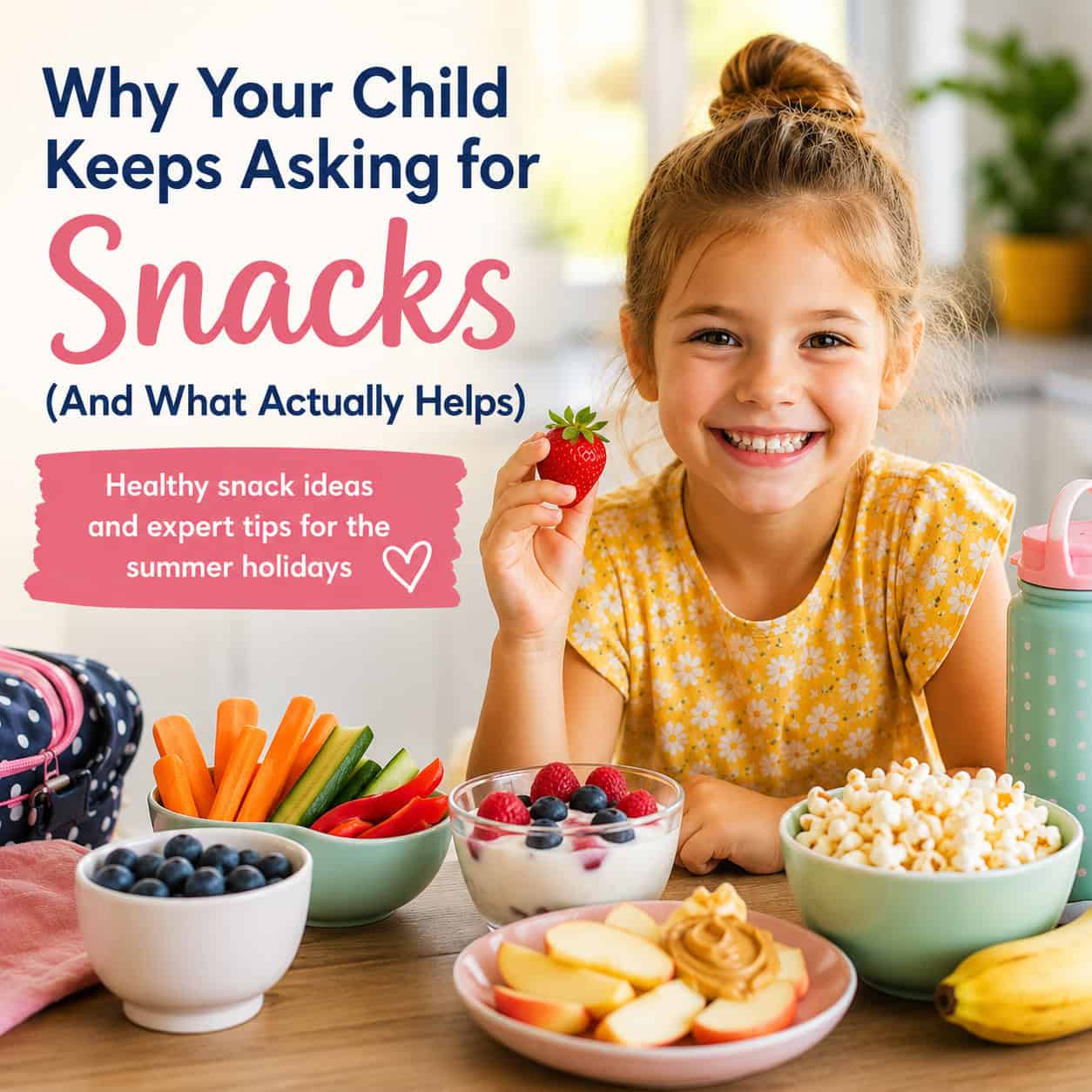
If you’ve ever felt like your kitchen becomes the most popular room in the house during the summer holidays, you’re certainly not alone. No sooner have breakfast dishes been cleared away than you hear those familiar words:
“Can I have a snack?”
As a mum of three, I’ve lost count of the number of times I’ve answered that question over the years. During term time, the school day naturally provides structure around meals and snacks. But once the holidays arrive, routines change completely. Children are more active, they’re often bored between activities, and with cupboards and fridges within easy reach, it’s easy for snack requests to become an almost constant part of the day.
New research from healthy snack brand Imaginakery suggests that parents receive an average of almost four snack requests every day during the six-week summer holidays. That works out at around 168 requests per child before school starts again. While the number might sound surprising, many parents will probably feel the real figure in their own home is even higher.

The challenge isn’t simply how often children ask for food—it’s what they’re asking for. Convenience, busy schedules and the rising cost of groceries can make it tempting to reach for crisps, biscuits or chocolate, especially when you’re juggling work, household jobs and entertaining children at the same time.
The good news is that constant snack requests don’t have to lead to constant sugar highs. With a little planning, realistic expectations and a few simple strategies, it’s possible to satisfy hungry children while encouraging healthier eating habits that can last long after the school holidays have ended.
The NHS provides practical guidance on healthy eating for children, including balanced meals and healthy snack ideas for growing families.
Why Do Children Ask for More Snacks During the Summer Holidays?
If it feels as though your children spend the entire summer saying they’re hungry, there are actually several reasons why this happens. Understanding what’s driving those endless snack requests can make them much easier to manage.
Their daily routine disappears
During the school term, children follow a fairly predictable pattern. Breakfast happens before school, lunch is at roughly the same time every day, and break times are structured. Their bodies quickly become accustomed to eating at regular intervals.
Once the holidays begin, those routines often disappear. Lie-ins, day trips, sleepovers and relaxed mornings mean meal times can shift dramatically, making children feel hungry at different times throughout the day.
Boredom often feels like hunger
One of the biggest reasons children ask for snacks isn’t physical hunger at all.
When children are bored, food becomes something interesting to do. Opening the fridge, searching the cupboards or asking for a snack provides entertainment and can even become part of their holiday routine.
If your child asks for food shortly after saying, “There’s nothing to do,” they may simply be looking for stimulation rather than something to eat.
They’re often much more active
Summer holidays usually involve far more physical activity than a typical school day.
Whether they’re riding bikes, swimming, walking, playing football in the garden, visiting parks or spending hours at the beach, many children burn considerably more energy during the holidays. Genuine hunger after lots of activity is completely normal and should be expected.
Offering snacks that combine protein, fibre and healthy fats can help keep children satisfied for longer than sugary treats alone.
Growth spurts can increase appetite
Children don’t grow at a steady pace throughout the year. Many experience periods where they seem constantly hungry as their bodies prepare for or go through a growth spurt.
If your child suddenly seems to be eating much more than usual, it isn’t necessarily something to worry about, provided they’re eating a balanced diet overall.
Food is easy to access at home
At school, children can’t simply help themselves whenever they fancy a biscuit.
At home, however, the kitchen is only a few steps away. Seeing food throughout the day naturally creates more opportunities to think about eating, particularly if snacks are stored where children can easily spot them.
This is why many nutrition experts recommend making healthier choices the easiest choices. Keeping washed fruit, chopped vegetables, yoghurt or cheese portions within easy reach can gently encourage better habits without turning snack time into a battle.
Ultimately, children asking for snacks during the holidays is completely normal. Rather than trying to eliminate snacking altogether, the aim is to build a routine that helps children recognise genuine hunger while making nourishing choices most of the time.
The Great British Snacking Crisis: What the Research Reveals

If you feel like you’re constantly fielding requests for “just one more snack”, you’re far from alone.
A recent survey commissioned by healthy snack brand Imaginakery found that the average parent receives 3.9 snack requests every day during the summer holidays. Across the six-week break, that’s around 168 requests per child.
Some families experience far more. Around 2% of parents said their children ask for more than 14 snacks a day – almost one request every waking hour.
Perhaps even more relatable is when those requests happen. One in five parents said their child asks for a snack before 8am, while over a quarter reported that snack requests often arrive just before a main meal. Another 17% said their children regularly ask for food at bedtime, just when they thought the kitchen was finally closed for the day.
Why parents give in
Most parents know that saying “no” isn’t always as straightforward as it sounds.
When you’re juggling work, trying to keep the house running or simply attempting to enjoy a cup of tea while it’s still hot, handing over a quick snack can feel like the easiest option.
The research reflects this reality:
- Nearly eight in ten parents (79%) admitted they’ve served a sweet treat for breakfast at least once.
- One in five (21%) have used snacks as a bargaining tool to encourage good behaviour or help get through a busy day.
- Some parents also admitted giving in simply because they were too tired to argue.
Rather than judging parents, these findings highlight just how challenging the long summer holidays can be. Most families are simply doing their best to balance nutrition with the realities of everyday life.
The snacks children are choosing
The survey also looked at the foods children eat most often between meals.
The top five were:
- Biscuits
- Chocolate
- Crisps
- Fresh fruit
- Yoghurts
It’s encouraging to see fresh fruit and yoghurt featuring alongside more traditional treats, showing that many families are already offering healthier options. The challenge is finding snacks that children genuinely enjoy while also helping them stay fuller for longer and avoiding the cycle of constant grazing.
Parents want healthier choices
One of the most interesting findings wasn’t about children’s eating habits at all—it was about parents.
More than four in five (81%) parents said they’d like to see more lower-sugar snacks available in supermarkets, and almost two-thirds said they would happily switch if suitable alternatives were easier to find.
The research also highlighted that some families find nutrition labels confusing, with many unsure about children’s recommended daily sugar intake or how to interpret traffic light food labelling.
It’s a useful reminder that healthier snacking isn’t simply about willpower. Parents also need clear information, realistic choices and products that fit both family budgets and busy lifestyles.
Why Children Crave Sugary Snacks (It’s Science, Not Bad Parenting)

If your child would happily choose a biscuit over an apple every single time, you’re not alone—and it’s certainly not because you’ve failed as a parent.
Children are naturally drawn to sweet foods. This preference is well recognised in child nutrition research, although taste preferences continue to develop as children are exposed to a wider variety of foods throughout childhood.
In fact, research suggests that humans are born with a preference for sweet tastes. From an evolutionary perspective, sweetness signalled energy-rich foods that were safe to eat, while bitter flavours could indicate something harmful.
That instinct hasn’t disappeared, even though today’s supermarket shelves are filled with highly processed snacks that are far sweeter than anything our ancestors would have eaten.
Sugar gives a quick burst of energy
Sugary foods are digested quickly, causing blood sugar levels to rise rapidly. Children often experience a short-lived burst of energy, followed by a dip that can leave them feeling hungry again sooner than they otherwise would.
This can create a cycle that many parents will recognise:
- Child asks for a biscuit.
- They feel satisfied for a little while.
- Blood sugar drops.
- They’re asking for another snack not long afterwards.
It’s one reason why snacks that combine protein, fibre and healthy fats—such as yoghurt with berries, cheese and wholegrain crackers, or apple slices with peanut butter (where appropriate)—can help children stay fuller for longer.
Holidays are all about treats
Summer holidays naturally involve more opportunities for special foods.
Ice creams at the seaside, picnics in the park, cinema trips, camping adventures and family days out are all part of making happy memories. There’s absolutely nothing wrong with enjoying these treats as part of a balanced lifestyle.
Rather than aiming to eliminate sugary foods altogether, many nutrition experts encourage families to focus on balance. Most meals and snacks can be nourishing and filling, while still leaving room for the occasional ice cream, slice of cake or favourite chocolate bar.
Teaching children that all foods can have a place helps them develop a healthier relationship with food than labelling certain foods as completely off limits.
Hunger isn’t always physical
It’s also worth remembering that children don’t always ask for food because they’re genuinely hungry.
Sometimes they’re thirsty. Sometimes they’re bored. Sometimes they simply want a break from whatever they’re doing.
Before automatically reaching for the snack cupboard, it can be worth asking a few gentle questions:
- Have you had a drink recently?
- Shall we play a game first?
- Would you like to help me make lunch?
- Are you actually hungry, or just looking for something to do?
Younger children, in particular, are still learning to recognise the difference between hunger, boredom and tiredness. Helping them identify those feelings is an important life skill that takes time to develop.
It’s about progress, not perfection
Few parents manage to offer perfectly balanced snacks every single day—and that’s completely normal.
Children don’t need perfect diets to grow into healthy adults. What matters most is the overall pattern of eating across weeks and months, not whether they had an extra biscuit on a rainy Tuesday afternoon.
By focusing on variety, offering nutritious foods regularly and modelling healthy habits yourself, you’re already laying the foundations for a positive relationship with food that can last a lifetime.
10 Healthy Snack Ideas That Actually Keep Children Fuller for Longer

One of the easiest ways to reduce constant snack requests is to make the snacks you do offer work a little harder.
Foods that contain a combination of protein, fibre and healthy fats tend to keep children feeling satisfied for longer than sugary snacks alone. That doesn’t mean every snack has to be homemade or Instagram-worthy – simple is often best.
Planning snacks alongside your weekly meals can also help reduce food waste and unnecessary supermarket spending. Our guide to healthy family meal planning on a budget shares practical ideas for organising family meals without overspending.
Here are some family-friendly ideas that are quick to prepare and easy to keep on hand throughout the holidays.
1. Apple slices with peanut butter
The natural sweetness of apples paired with the protein and healthy fats in peanut butter creates a satisfying snack that can help keep hunger at bay.
Always choose a nut butter without added sugar where possible and avoid whole nuts for younger children because of the choking risk.
2. Greek yoghurt with fresh berries
Greek yoghurt is naturally high in protein, while berries add fibre, vitamins and antioxidants. If your children prefer a sweeter taste, try adding a drizzle of honey for children over one year old or mash in a ripe banana instead.
3. Vegetable sticks with hummus
Carrot, cucumber, pepper and celery sticks become much more appealing when there’s something to dip them into. Hummus provides protein and fibre, making it far more filling than vegetables on their own.
4. Cheese with wholegrain crackers
Cheese is an excellent source of calcium and protein, while wholegrain crackers release energy more slowly than refined alternatives. It’s a simple snack that’s easy to pack for days out too.
5. Homemade popcorn
Plain popcorn is a wholegrain and can be a healthier alternative to crisps when prepared without lots of butter or sugar. Try sprinkling with a little paprika or cinnamon for a change.
6. Boiled eggs
Boiled eggs are one of the most filling snacks you can offer and are packed with protein and essential nutrients. Preparing a few in advance makes them an easy grab-and-go option during busy weeks.
7. Frozen grapes or banana slices
Frozen fruit can feel like a real treat on hot summer days. Frozen banana slices become wonderfully creamy, while frozen grapes are refreshing and naturally sweet.
Whole grapes can pose a choking hazard for younger children, so always cut them lengthways where appropriate.
8. Wholemeal toast with mashed avocado
Avocado provides healthy fats that help children feel fuller for longer, while wholemeal bread offers fibre and slow-release energy.
9. Mini wraps
Spread a wholemeal wrap with cream cheese or hummus, add slices of ham, chicken or grated cheese, roll it up and slice into pinwheels. They’re perfect for picnics, camping trips and afternoons in the garden.
10. Fresh fruit made fun
Sometimes presentation really does make a difference.
Fruit kebabs, colourful fruit platters or letting children build their own fruit bowls can make healthier choices feel much more exciting than simply handing over an apple.
Remember: Balance Is Better Than Perfection
It’s completely normal for children to enjoy biscuits, cakes and crisps from time to time, especially during birthdays, holidays and family celebrations.
Rather than banning favourite treats, aim to make nutritious snacks the everyday choice while allowing room for occasional indulgences without guilt. This balanced approach helps children build a healthier relationship with food and takes some of the pressure off parents too.
The goal isn’t to create perfect eaters. It’s to help children learn that food can be both nourishing and enjoyable, and that healthy habits are built over time rather than in a single afternoon.
Simple Ways to Encourage Healthier Snacking Without the Battles
If getting your children to choose healthier snacks feels like an uphill struggle, you’re certainly not alone. The good news is that small changes can make a big difference over time.
Nutritionist Dr Emma Derbyshire, who contributed to The Great British Snacking Crisis report, shares several practical strategies that align with advice many health professionals give to families. The aim isn’t to make snack time restrictive—it’s to make healthier choices easier and more appealing.
Keep healthy snacks where children can see them
Children are naturally drawn to what’s in front of them.
If biscuits are the first thing they see when they open the cupboard, they’re likely to ask for biscuits. But if there’s a bowl of bananas on the worktop, a container of washed grapes in the fridge or carrot sticks already prepared, those options become far more tempting.
Making healthy choices visible doesn’t mean banning treats—it simply makes the nutritious option the easiest one to reach for.
Get children involved in preparing snacks
Children are often much more willing to try foods they’ve helped prepare.
Even young children can wash strawberries, peel bananas, stir yoghurt or arrange fruit onto a plate. Older children might enjoy making smoothie bowls, assembling mini wraps or creating colourful snack boxes for family days out.
Preparing food together also creates an opportunity to chat about nutrition in a relaxed, positive way, without turning it into a lecture.
Avoid calling foods “good” or “bad”
Many experts now encourage parents to move away from labelling foods as either “healthy” or “unhealthy”, or “good” and “bad”.
Instead, explain how different foods help our bodies in different ways.
For example, you might say:
- “These strawberries help our bodies grow strong.”
- “Cheese gives us calcium for healthy bones.”
- “Chocolate is a lovely treat to enjoy sometimes.”
This approach helps children develop a balanced relationship with food, rather than feeling guilty about enjoying occasional treats.
Be the example they copy
Children learn far more from what we do than what we say.
If they regularly see you reaching for fruit, drinking water and enjoying balanced meals, they’re more likely to copy those habits over time.
That’s not to say parents can never enjoy chocolate or crisps—far from it! Showing children that all foods can fit into a balanced diet is often more powerful than trying to appear “perfect.”
Plan ahead for hungry moments
One of the biggest challenges during the school holidays is convenience.
When children suddenly announce they’re starving, it’s easy to reach for the quickest option. Spending just ten minutes each week washing grapes, chopping vegetables, portioning crackers or preparing snack boxes can make healthy choices just as convenient as opening a packet of biscuits.
A little preparation can save a lot of stress later in the week.
Buying fruit and yoghurt in larger tubs, preparing snacks at home and reducing impulse purchases can all help cut your family food bill without compromising on nutrition.
Remember that healthy habits take time
Children rarely change their eating habits overnight.
Some days they’ll happily munch their way through fruit and vegetables. Other days they’ll insist they only want toast or biscuits. That’s perfectly normal.
Try not to focus on individual meals or snacks. Instead, look at the bigger picture. If your child is gradually becoming more confident trying different foods and learning that healthy snacks can taste good too, you’re already making excellent progress.
Like so much of parenting, consistency matters far more than perfection.
Should You Say Yes Every Time? Setting Healthy Snack Boundaries During the Holidays
If your child asks for snacks dozens of times a day, it’s easy to feel like you’re constantly saying either “yes” or “no”.
The truth is, neither response is wrong all of the time.
Some days your child genuinely is hungry because they’ve spent hours running around the garden, swimming or exploring outdoors. Other days, they’re simply bored, thirsty or hoping you’ll give in because asking has worked before.
The key isn’t to refuse every request or agree to every one. It’s to create gentle boundaries that help children understand when snack time is, while still listening to their bodies when they’re genuinely hungry.
Create predictable snack times

Children thrive on routine, even during the relaxed pace of the summer holidays.
Rather than allowing grazing throughout the day, try introducing one or two planned snack times between meals. For example:
- Mid-morning after breakfast
- Mid-afternoon between lunch and dinner
Knowing another snack is coming soon can reduce the constant cycle of asking, as children begin to trust that they won’t have to wait all day if they’re hungry.
Of course, flexibility is important too. If you’ve been out on a long bike ride or spent the afternoon at the beach, an extra snack is perfectly reasonable.
Check whether they’re actually thirsty
It’s surprisingly easy to mistake thirst for hunger, especially in warm weather.
Before reaching for the snack cupboard, encourage children to have a drink of water first. After ten minutes, they’ll often realise they weren’t as hungry as they first thought.
Keeping water bottles topped up throughout the day is a simple habit that benefits the whole family.
Encourage children to listen to their bodies
As children grow, they’re learning how to recognise their own hunger and fullness cues.
Instead of automatically saying yes or no, try asking gentle questions such as:
- “What does your tummy feel like?”
- “Do you think you’re hungry, or are you feeling a bit bored?”
- “Would an apple fill you up, or are you hoping for something sweet?”
These conversations help children become more aware of why they’re asking for food without making them feel criticised.
Avoid using snacks as rewards
Many of us grew up hearing phrases like, “If you’re good, you can have chocolate.”
It’s completely understandable—sometimes it’s the quickest way to get everyone out of the door or through a difficult moment.
However, when treats become rewards, children can start placing even greater value on sugary foods, making them seem more exciting than everyday snacks.
Instead, try rewarding positive behaviour with experiences whenever possible:
- Choosing the next family game
- Staying up 15 minutes later for a movie night
- Visiting the park
- Reading an extra bedtime story
- Earning stickers towards a special family activity
Food can still absolutely be part of celebrations and family traditions, but it doesn’t have to become the prize for good behaviour.
Give yourself permission to be realistic
Let’s be honest—there will be days when your child has an ice cream at the seaside, popcorn at the cinema and a biscuit when you finally sit down with a cup of tea.
That’s real life.
Healthy eating isn’t about achieving perfection every single day. It’s about creating habits that work most of the time while still leaving room for spontaneity, celebrations and making happy family memories.
If you’re providing balanced meals, offering nutritious snacks regularly and teaching your children that all foods can have a place in a healthy lifestyle, you’re doing a wonderful job.
The school holidays are meant to be enjoyed, not spent worrying over every snack request that comes your way.
Choosing Healthier Packaged Snacks
Fresh fruit, vegetables and homemade snacks are often the first choice when it comes to healthy eating, but let’s be realistic—most families also rely on packaged snacks from time to time.
Whether you’re packing a lunchbox, heading off on a family day out or trying to keep everyone fed while you’re out and about, having convenient options can make life much easier.
When comparing packaged snacks, it can help to look beyond the marketing on the front of the packet and check the nutrition label instead. Consider:
- The amount of added sugar per serving.
- Whether the snack contains protein or fibre to help keep children fuller for longer.
- Portion size.
- Whether it’s likely to satisfy your child or simply leave them asking for another snack half an hour later.
The research behind The Great British Snacking Crisis found that 81% of parents would like to see more lower-sugar snack options available. Brands are beginning to respond, with products such as Jungle Squad aiming to provide a lower-sugar alternative to traditional cake bars.
Like any packaged snack, these products are best enjoyed as part of a balanced diet rather than replacing fresh, whole foods. The goal isn’t to eliminate treats altogether, but to make choosing a healthier option a little easier when convenience is important.
If you’re unsure how to compare packaged foods, the Food Standards Agency explains how traffic light nutrition labels can help you make informed choices while shopping.
At the end of the day, no single snack will make or break a child’s diet. It’s the overall pattern of eating over weeks and months that matters most.
Frequently Asked Questions
How many snacks should children have each day?
Most children benefit from one or two healthy snacks between meals, depending on their age, activity levels and appetite. Children who are particularly active during the summer holidays may naturally need an extra snack to keep their energy levels up.
Why do children seem hungrier during the school holidays?
A combination of increased physical activity, disrupted routines, boredom and growth spurts can all contribute to children asking for food more often during the holidays.
Are sugary snacks always bad?
Not at all. Foods such as biscuits, chocolate and ice cream can absolutely be enjoyed as part of a balanced diet. Rather than banning these foods, it’s usually more helpful to encourage moderation while making nutritious choices the everyday option.
How can I reduce constant snack requests?
Creating predictable snack times, offering filling foods that contain protein and fibre, encouraging children to drink water regularly and keeping healthy snacks within easy reach can all help reduce constant grazing.
What are some healthy snacks for children?
Simple ideas include:
Fresh fruit
Greek yoghurt
Cheese and wholegrain crackers
Vegetable sticks with hummus
Boiled eggs
Homemade popcorn
Wholemeal toast with nut butter or avocado
Mini wraps
Smoothies made with fruit and yoghurt
Lower-sugar packaged snacks when you’re out and about
Final Thoughts
If it sometimes feels like you’re running a 24-hour snack café during the summer holidays, take comfort in knowing you’re far from alone.
Children naturally eat differently when school is out. Their routines change, they’re often more active, and having easy access to the kitchen means they’re far more aware of what’s available to eat.
Rather than striving for perfect eating habits, focus on creating an environment where nutritious foods are easy to choose, family meals remain enjoyable and treats can still be enjoyed without guilt.
The occasional ice cream at the beach, a packet of crisps on a picnic or a slice of birthday cake won’t undo the healthy habits you build the rest of the time. What really matters is helping children develop a positive relationship with food that they can carry with them into adulthood.
Small, consistent choices will always have a greater impact than aiming for perfection.