

As a parent, I’ve never believed screens are the enemy. Like most families, we’ve had days where a favourite programme or educational app has been a lifesaver while I’ve cooked dinner, answered emails or simply needed five minutes to myself.
But over the years, I’ve also noticed something else. The moments my children became completely absorbed in imaginative, hands-on play were often the moments that sparked the greatest creativity. A cardboard box became a spaceship, toy animals created their own adventures, and simple building toys turned into elaborate worlds that stayed set up for days.
With children spending more time than ever surrounded by technology, many parents are looking for ways to encourage independent play without constantly reaching for another screen. The good news is that it doesn’t require a playroom full of expensive toys. Often, it’s about choosing open-ended activities that allow children to explore, create and solve problems in their own way.
One option that’s growing in popularity is magnetic play. Products such as magnetic wall decals, educational magnetic games and reusable magnetic scenes can encourage children to engage their imagination while developing important skills through everyday play.
In this guide, I’ll explore why independent play matters, how magnetic play supports children’s development, and simple ways to create engaging learning opportunities at home.
Why Independent Play Is So Important
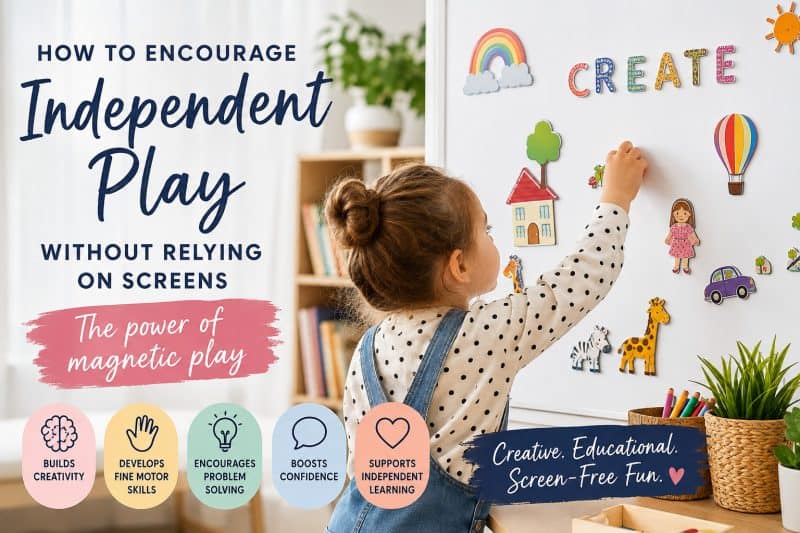
Independent play can support several interconnected areas of child development, including physical coordination, problem-solving, communication and emotional confidence.
When children direct their own play, they make decisions without an adult telling them what to do next. They experiment, solve problems, make mistakes and try again. These experiences help build confidence and resilience while encouraging creativity.
Some of the benefits include:
- Developing imagination and creative thinking
- Improving concentration and attention span
- Encouraging problem-solving skills
- Building confidence through self-directed achievements
- Supporting emotional regulation
- Developing independence
- Strengthening communication and storytelling skills
As a parent of three, I’ve found that children often surprise you when they’re given the freedom to play without too much adult direction. Activities that seem wonderfully simple from our perspective often become the most memorable adventures in their eyes.
Why Open-Ended Toys Hold Children’s Attention Longer
One thing I’ve learnt over the years is that the toys children return to again and again aren’t always the ones with flashing lights, batteries or complicated instructions.
Instead, they’re often the toys that don’t have a single “correct” way to play.
Open-ended toys are particularly valuable because they encourage learning through play without requiring children to follow one predetermined outcome.
Every play session becomes different.
This kind of flexible play naturally keeps children engaged for longer because they’re creating the experience themselves rather than simply following instructions.
Magnetic play fits perfectly into this style of learning because children can move pieces around, experiment with layouts, invent stories and redesign their creations as often as they like.
Unlike activities that are completed once and forgotten, magnetic play evolves alongside a child’s imagination.
Why Magnetic Play Works So Well
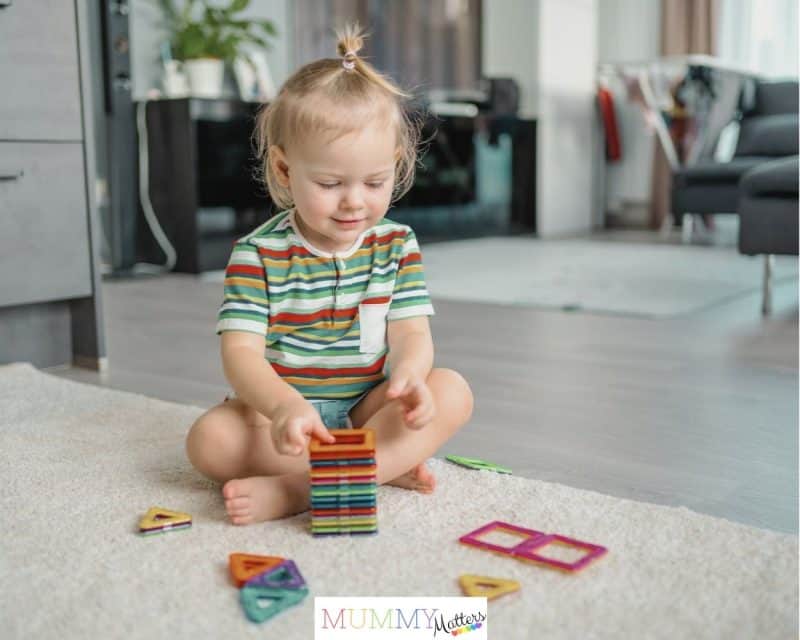
Magnetic play combines creativity with hands-on learning in a way that’s both engaging and educational.
Whether children are arranging letters on a magnetic wall, matching animals, building scenes or creating colourful patterns, they’re learning through exploration rather than feeling as though they’re completing schoolwork.
Some of the developmental benefits include:
Fine Motor Skills
Picking up, positioning and moving magnetic pieces helps strengthen the small muscles in children’s hands and fingers that are essential for handwriting, drawing and everyday tasks.
Hand-Eye Coordination
Aligning magnetic pieces encourages precision and coordination as children learn how objects fit together.
Language Development
Alphabet magnets, storytelling scenes and imaginative play naturally encourage children to build vocabulary, practise communication and create their own stories.
Early Maths Skills
Numbers, counting activities, patterns and shapes can all be introduced naturally through magnetic games.
Creativity
Perhaps the greatest benefit is that children become the creators rather than simply the audience.
Instead of watching someone else’s story unfold on a screen, they’re inventing their own.
Creating Spaces That Encourage Independent Play
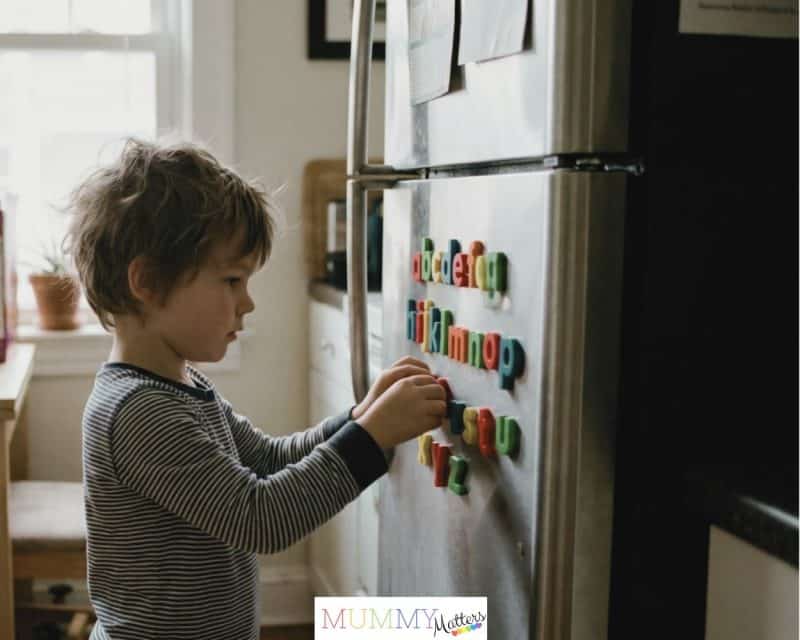
You don’t need a dedicated playroom to encourage imaginative play.
Sometimes, simply making activities easy to access is enough.
A magnetic board can also be used to create visual routines for children, helping them follow morning or bedtime tasks more independently.
Some ideas include:
A Magnetic Learning Wall
A magnetic wall or magnetic board can become a flexible learning space that changes as your child grows.
You might use it for:
- alphabet practice
- number recognition
- weather charts
- reward charts
- family routines
- imaginative scenes
- world maps
- seasonal activities
Because everything can be moved and rearranged, children are encouraged to revisit it again and again.
Kitchen Play
While you’re preparing meals, children can play nearby with magnetic scenes or educational magnetic activities instead of relying on tablets.
Bedrooms
A magnetic wall decal in a bedroom can become a calming evening activity before bedtime.
Homework Areas
Older children can use magnetic planners, revision aids or educational magnets to support independent learning.
Simple Ways to Use Magnetic Play Every Day
One of the reasons magnetic play appeals to so many families is its versatility. The same magnetic board can support learning, creativity and everyday routines without taking up lots of space.
Here are a few ideas you could easily weave into daily life:
- Invite younger children to create a new story using magnetic characters each morning.
- Practise spelling by building simple words with magnetic letters.
- Turn maths into a game by using magnetic numbers for counting challenges.
- Create weather or calendar boards that children can update independently.
- Encourage children to recreate favourite books or invent entirely new adventures using themed magnetic scenes.
- Use magnetic routine charts to help children take ownership of getting ready for school or bedtime.
Because the activities can be changed so easily, children are less likely to lose interest, and you can adapt them as their confidence and abilities grow.
Why Tix&Mix Fits Naturally Into This Style of Play
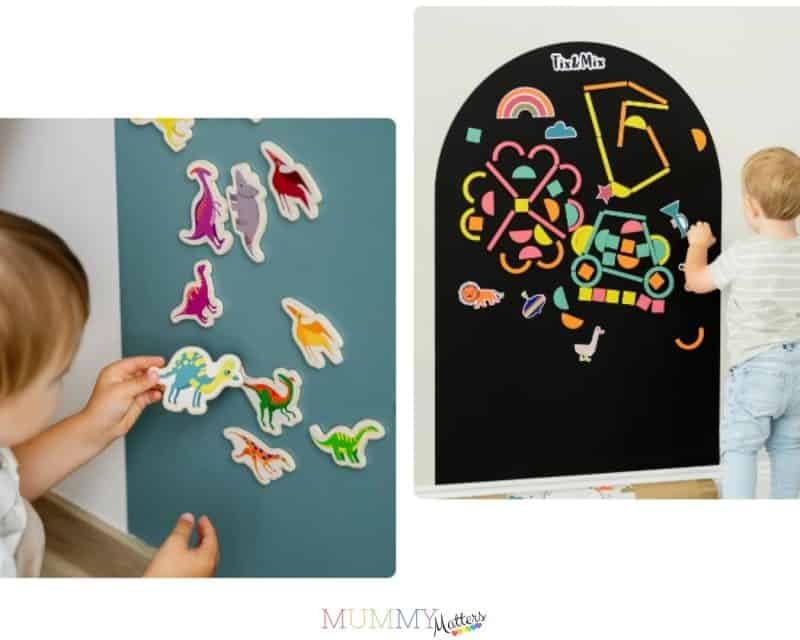
One brand embracing the benefits of magnetic learning is Tix&Mix, whose range has been designed to make educational play both accessible and enjoyable.
From magnetic wall decals to reusable educational play products, the collection encourages children to explore ideas independently while supporting creativity, fine motor development and imaginative thinking.
What stands out is the focus on open-ended play. Rather than directing children towards one specific outcome, the products invite them to experiment, rearrange and create in their own unique way. That flexibility helps keep activities fresh and engaging, whether your child is practising letters, telling stories or inventing entirely new games.
For parents looking to reduce screen time without sacrificing fun, magnetic play offers an activity children can return to time and again, discovering something different each time they play.
Magnetic Play Ideas for Different Ages
One of the things I love about open-ended toys is that they often grow alongside your child. The same magnetic play surface can be used in completely different ways depending on their age, interests and stage of development.
Toddlers (Ages 2–4)
At this age, children are discovering how the world works through touch, movement and repetition. Magnetic play gives them the opportunity to explore safely while developing coordination and confidence.
Simple activities could include:
- Matching colours
- Identifying shapes
- Naming animals
- Learning first words
- Creating funny faces
- Sorting objects into groups
There’s no pressure to get things “right”. The learning happens naturally through exploration, which is often when young children are most engaged.
Preschool & Early Primary (Ages 4–7)
As children begin recognising letters, numbers and simple words, magnetic activities become an enjoyable way to reinforce what they’re learning at school without making it feel like homework.
Ideas include:
- Building CVC words with magnetic letters
- Counting and number games
- Creating simple addition and subtraction challenges
- Making weather charts
- Practising the days of the week
- Story sequencing
- Creating scenes inspired by favourite books
Because everything can be moved around so easily, children are encouraged to experiment without worrying about making mistakes.
Older Children (Ages 8+)
Even older children can enjoy magnetic play when it’s adapted to their interests.
You might encourage them to create:
- Mind maps
- Revision boards
- Geography challenges
- Family holiday planners
- Meal planners
- Comic strips
- Storyboarding for creative writing
- Goal trackers
- Weekly schedules
It’s a great reminder that educational resources don’t have to feel childish—they can become genuinely useful tools that support organisation, creativity and independent thinking.
How Magnetic Play Supports Child Development

As parents, we often focus on whether a toy is fun, but the best activities quietly support learning at the same time.
Evidence reviewed by the Education Endowment Foundation indicates a positive relationship between play-based approaches and early literacy, language and numeracy outcomes, although it also notes that the evidence varies between approaches.
Magnetic play naturally encourages development across several important areas.
Fine Motor Skills
Every time children pick up, position and remove magnetic pieces, they’re strengthening the small muscles in their hands and fingers.
These muscles are essential for:
- handwriting
- using scissors
- fastening buttons
- tying shoelaces
- drawing
- everyday independence
The Department for Education explains that activities involving small, accurate hand movements help children develop the control needed for drawing, mark-making and eventually writing.
Problem Solving
Children constantly ask themselves questions while they play.
“Where should this go?”
“What happens if I move this?”
“Can I build something different?”
This type of independent thinking develops resilience because children discover solutions on their own rather than relying on adults to tell them the answer.
Communication Skills
Many magnetic activities naturally encourage conversation.
Children often narrate stories, invent characters and explain what they’re creating.
Even when playing alone, they’re building language skills as they organise their thoughts and develop imaginative storylines.
Creativity
Unlike many electronic toys that lead children through a set sequence of events, magnetic play places them firmly in control.
One day they may build a dinosaur world.
The next day it’s a pirate island.
The day after that it becomes outer space.
There are no rules limiting what their imagination can create.
Encouraging Independent Play Without Pressure
If your child isn’t used to playing independently, it’s perfectly normal if they don’t immediately spend an hour entertaining themselves.
Like any new skill, independence develops gradually.
Some simple ways to encourage it include:
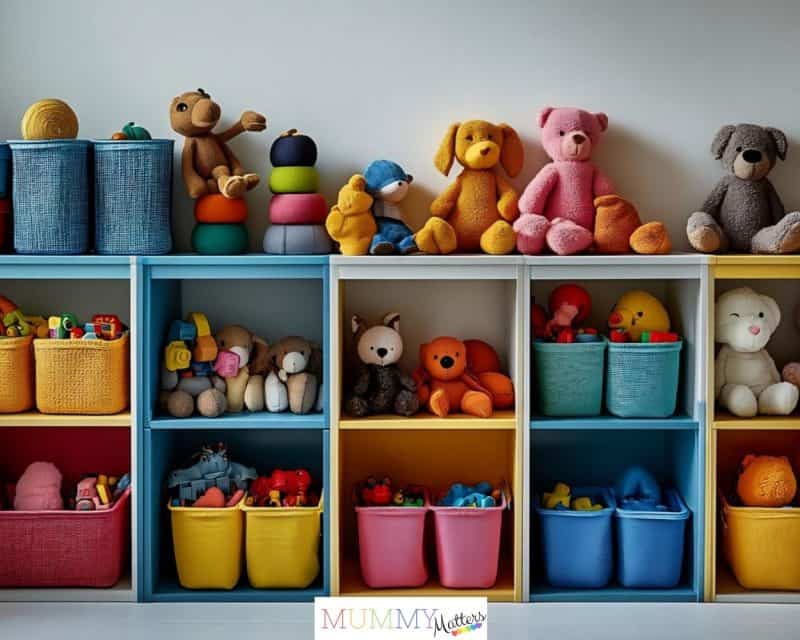
- Keep toys accessible rather than packed away.
- Rotate activities every few weeks to maintain interest.
- Resist the urge to direct every game.
- Allow children to become bored occasionally—boredom often sparks creativity.
- Praise effort rather than the finished result.
- Avoid interrupting when they’re deeply engaged.
One thing I found with my own children was that independent play often started with just ten or fifteen minutes before gradually stretching into much longer periods as they became immersed in their own ideas.
What to Look for When Choosing Magnetic Play Products
Not all magnetic toys are created equal.
When choosing magnetic activities for your family, it’s worth looking for products that encourage creativity rather than limiting children to one fixed outcome.
Some things to consider include:
✔ Age-appropriate designs
✔ Strong, durable magnets
✔ High-quality materials
✔ Open-ended activities
✔ Educational value
✔ Easy storage
✔ Opportunities for imaginative play
✔ Products that can grow with your child
The Tix&Mix range has been developed with these principles in mind, offering magnetic wall decals, educational magnetic activities and creative play products designed to encourage children to learn through exploration. Their focus on imaginative, screen-free play makes the range a natural addition to homes, classrooms and play spaces where creativity is encouraged every day.
Making Screen-Free Time Something Children Look Forward To
One of the biggest misconceptions about reducing screen time is that children need constant entertainment in its place.
In reality, many children simply need opportunities to discover activities that capture their imagination.
Open-ended play gives them permission to slow down, experiment, create and become fully immersed in their own ideas. Magnetic play is just one example of how everyday learning can become fun without feeling structured or overly educational.
Whether it’s building stories, practising early literacy skills, creating colourful scenes or simply exploring new ideas, magnetic activities offer endless opportunities for children to learn through play at their own pace.
As parents, we don’t have to eliminate screens entirely. Instead, we can focus on creating a healthy balance by providing engaging alternatives that encourage curiosity, creativity and confidence.
For families looking to inspire more independent, imaginative play, the Tix&Mix range of magnetic wall decals and educational play products offers a flexible way to support learning while making screen-free time something children genuinely enjoy.
Magnetic play can also be combined with other screen-free activities for children to create more variety throughout the week.
Frequently Asked Questions
What is independent play?
Independent play is when children choose and direct their own activities without constant guidance from an adult. It helps build confidence, creativity, problem-solving skills and resilience.
At what age can children start playing independently?
Even toddlers can enjoy short periods of independent play with safe, age-appropriate toys. As children grow, these periods often become longer as their concentration and imagination develop.
Why is magnetic play good for children?
Magnetic play encourages creativity, fine motor development, hand-eye coordination, early literacy and numeracy skills, as well as imaginative storytelling. Because activities are open-ended, children can explore and learn at their own pace.
Are magnetic wall decals suitable for learning at home?
Yes. Magnetic wall decals can be used for everything from alphabet and number games to routine charts, storytelling, geography, weather tracking and creative art activities, making them a versatile addition to a home learning space.
How can I reduce my child’s screen time without arguments?
Rather than focusing on removing screens, introduce engaging alternatives that your child genuinely enjoys. Open-ended activities such as magnetic play, arts and crafts, building toys and imaginative games often encourage children to choose screen-free play naturally.