
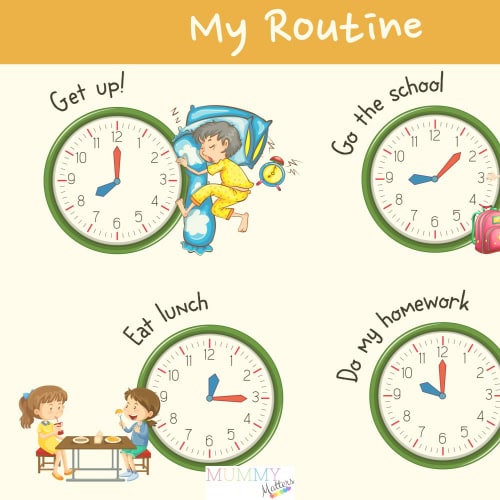
If you’ve ever found yourself saying “Get dressed”, “Brush your teeth” or “Where are your shoes?” several times in the space of one morning, you’ll know how exhausting everyday routines can sometimes become.
Visual routines for children can take some of that pressure away. Instead of relying on us to keep reminding them what they need to do next, a simple visual schedule or daily routine chart gives children something they can refer to themselves.
They can be particularly helpful for younger children and children who find transitions, organisation or verbal instructions difficult, but you certainly don’t need to have a child with additional needs to use one. Sometimes simply being able to see what comes next makes a busy morning or bedtime feel much more manageable.
And they don’t need to be elaborate. Over the years, I’ve learnt that the systems which work best for family life are usually the ones that are simple enough to keep using when you’re tired, running late or having one of those days when nothing quite goes to plan.
In this guide, I’ll explain the different types of visual routines and daily routine charts you can use, what to include and how to create one that works for your child and your family.
What Are Visual Routines for Children?
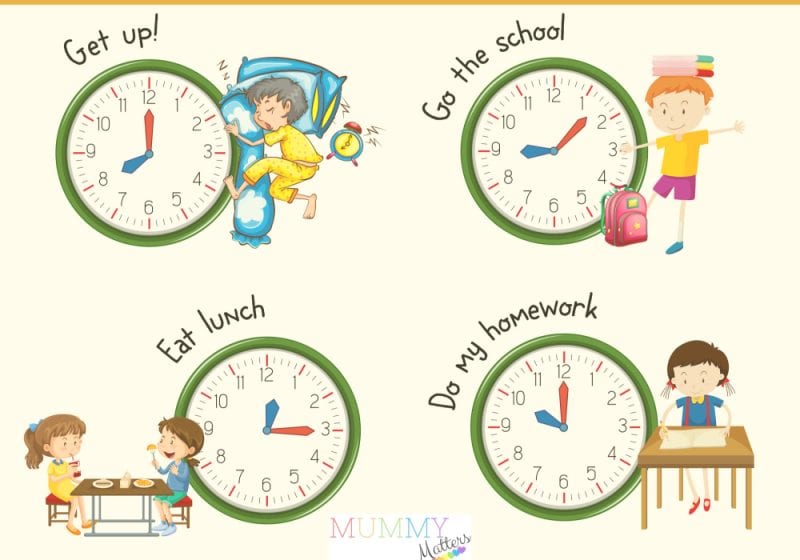
A visual routine is a way of showing a child what they need to do, and in what order, using pictures, symbols, photographs, words or a combination of these.
Instead of us repeatedly telling a child what comes next, they have something they can look at and follow for themselves. Depending on their age and needs, this could be as simple as a row of pictures showing the steps for getting ready for school or a written daily routine chart that they tick off as they go.
You might also hear them called:
- Visual schedules
- Daily routine charts
- Visual timetables
- Routine checklists
- First-then boards
- Visual routine cards
Although they look slightly different, they all have a similar purpose: helping a child understand what they are doing now, what happens next and when a task or routine is finished.
For example, a younger child might have pictures showing get dressed → eat breakfast → brush teeth → shoes on, while an older child may prefer a checklist on the fridge that they can work through independently.
The format matters far less than whether your child understands it and can actually use it. A handwritten checklist that works every morning is far more useful than a beautifully designed routine chart that nobody remembers to look at.
Why Visual Schedules Help Children
Children often process information differently from adults. Some learners respond far better to visual processing than spoken instructions, especially during busy or Why Visual Schedules Help Children
As adults, we can usually keep a rough plan of the day in our heads. For children, particularly when they’re tired, distracted or already feeling overwhelmed, a string of verbal instructions can be much harder to process.
A visual schedule gives them something concrete to refer back to. Rather than having to remember everything we’ve said, they can look at the chart, see where they are in their routine and work out what comes next.
Used consistently, visual routines can help children:
- Become more independent with everyday tasks
- Understand what is expected of them
- Feel more prepared for transitions
- Stay organised without as many verbal reminders
- Develop an understanding of sequencing and time
- Build confidence as they complete tasks for themselves
- Feel more secure when they know what is happening next
This can be particularly useful for children with autism, ADHD, sensory processing differences, speech and language difficulties or other additional needs. For some children, spoken instructions can disappear almost as quickly as we’ve said them, whereas a visual reminder remains there for them to refer to when they need it.
But visual routines aren’t only for children with additional needs. They can be useful for any child who benefits from knowing what their day looks like and what they need to do next.
The aim isn’t to schedule every minute or make family life rigid. It’s to give children enough structure to know what’s expected while gradually helping them manage more of their routine for themselves.
According to the NHS Autism guidance, predictable routines and visual supports often help autistic children feel more secure and less overwhelmed.
How Visual Routines Can Work Throughout the Day
You don’t need one enormous chart covering everything your child does from the moment they wake up until bedtime. In fact, breaking the day into smaller routines can make the whole system much easier to follow.
Morning routine
Mornings are often a good place to start because there are several things children need to remember before leaving the house. If this is the part of the day your family finds most hectic, creating a consistent morning routine can make getting everyone out of the door feel much more manageable.
A simple morning routine chart could include:
- Get dressed
- Eat breakfast
- Brush teeth
- Brush hair
- Pack or check school bag
- Put on shoes and coat
For younger children, each step could be represented by a picture. Older children may only need a written checklist they can tick off.
After-school routine
The period immediately after school can look very different from one family to another, so build this around what actually happens in your home rather than what you think the routine should look like.
For example:
- Put school bag away
- Change clothes
- Have a snack and drink
- Have some downtime
- Complete homework or reading
- Prepare anything needed for tomorrow
Some children need a proper break after holding everything together at school all day, so don’t be afraid to include downtime as an actual part of the routine.
Bedtime routine
A consistent bedtime routine can help children wind down at the end of the day, while a visual version gives them a clear way to see what still needs to happen before bed.
- Tidy away toys or belongings
- Bath or shower
- Put on pyjamas
- Brush teeth
- Choose a book
- Story or reading time
- Lights out
The important thing is that the chart reflects your family’s real routine. There’s little point creating an elaborate schedule based on what an ideal morning or bedtime looks like if it doesn’t fit naturally into the way your family lives.
Start with the parts of the day that cause the most friction and build from there. You may find that one or two simple visual routines are all your child needs.
Creating a Visual Schedule That Works for Your Child
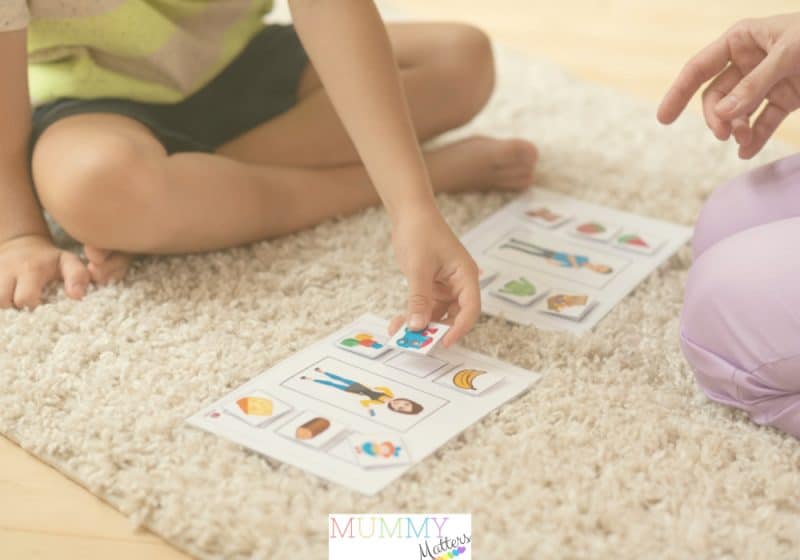
Creating a Visual Schedule That Works for Your Child
A visual schedule doesn’t need to look perfect to be effective. What matters is that your child understands it, knows where to find it and can use it without needing you to explain it every time.
1. Start with one routine
Rather than trying to organise your child’s entire day at once, choose the part that’s currently causing the most difficulty.
If getting out of the house for school involves lots of reminders, start with the morning. If bedtime regularly becomes drawn out, create a bedtime routine first.
Once your child is comfortable using one visual routine, you can introduce another if it would be helpful.
2. Break the routine into clear steps
Walk through the routine in your head and write down what your child actually needs to do.
A morning routine might be:
- Get dressed
- Eat breakfast
- Brush teeth
- Brush hair
- Put shoes on
- Get school bag
How much detail you include will depend on your child. One child may be perfectly happy with “get dressed”, while another may find it easier to have separate prompts for underwear, clothes and socks.
Try to include enough information to be useful without creating such a long list that the chart itself becomes overwhelming.
3. Choose visuals your child understands
There’s no single type of visual schedule that works best for every child. You could use:
- Photographs of your child’s own belongings or activities
- Simple illustrations
- Symbols
- Pictures with words underneath
- Written instructions
- Magnetic cards
- Velcro-backed routine cards
- A wipe-clean checklist
For a young child who isn’t reading yet, photographs or simple pictures may be easiest to understand. Early readers might benefit from pictures accompanied by words, while older children may prefer a straightforward written checklist or planner.
4. Think about how much your child needs to see at once
Some children are happy looking at their entire morning routine in one go. Others can become overwhelmed by seeing a long sequence of tasks ahead of them.
If that’s the case, try displaying fewer steps at a time.
A first-then board can be particularly useful here. Instead of showing the whole routine, it simply shows:
First: brush teeth
Then: choose bedtime story
This can make transitions feel much more manageable for a child who struggles when they’re presented with several instructions at once.
5. Put the routine where it happens
It’s much easier for a child to use a visual routine if it’s somewhere they naturally see it.
A morning chart might work well in the bedroom or kitchen, while tooth-brushing steps make more sense in the bathroom. A school checklist could live by the front door or wherever school bags are kept.
Try to make the visual prompt part of the environment rather than something you have to remember to fetch each time.
6. Involve your child
Where possible, let your child have some input.
They might choose whether they’d prefer photographs or drawings, help decide where the chart should go or enjoy moving completed cards into a “done” section.
Giving them some ownership can help the routine feel like a tool that’s there to help them rather than another set of instructions being imposed on them.
7. Expect to change it
A routine chart isn’t something you have to get right first time.
If your child continually gets stuck at the same point, look at the chart itself. Is that step unclear? Are there too many instructions? Would a photograph work better than a symbol? Does the order actually match what happens in your home?
As children grow and become more independent, they may need fewer pictures, fewer individual steps or a completely different type of planner.
The best visual routine is one that changes with your child rather than becoming another household system everyone has stopped noticing.
Helping Your Child Get Used to a New Routine Chart
Creating the chart is only the first step. Your child may need some help learning how to use it before you can expect them to follow it independently.
When you first introduce a visual routine, go through it together. Point to the next task rather than simply giving the usual verbal instruction. For example, instead of saying “Go and brush your teeth”, you might say, “What’s next on your chart?”
Over time, you can gradually reduce how much prompting you give as your child becomes more familiar with checking the routine for themselves.
Try not to turn the chart into another source of pressure. If your child forgets a step or the routine goes completely out of the window one evening, you haven’t failed and neither has the chart. Family life isn’t predictable enough for any routine to work perfectly every day.
You can also acknowledge when your child manages part of their routine independently. This doesn’t necessarily need to involve stickers, rewards or prizes. Sometimes noticing it is enough: “You checked your chart and got your school bag without me reminding you.”
For children who find parts of the day emotionally difficult, you could also build a simple check-in or break into their visual routine. After school, for example, the first step might be some quiet time rather than immediately moving on to homework or chores.
The eventual goal is for the visual routine to reduce the amount of prompting your child needs from you, not simply turn your spoken instructions into another list they feel they have to complete.
Visual Routines for Children With Autism

Visual Routines for Autistic Children
Visual routines can be particularly helpful for some autistic children because they make parts of the day more predictable and reduce the need to rely solely on spoken instructions.
Of course, every autistic child is different. Some find routines reassuring, while others may need much more flexibility. Likewise, one child might immediately understand a set of illustrated symbols, while another responds much better to photographs of their own belongings and surroundings.
For a child who does benefit from visual information, a routine might help with things such as:
- Understanding what is happening now and what will happen next
- Moving from one activity to another
- Remembering the steps involved in an everyday task
- Preparing for changes or less familiar activities
- Following instructions without having to remember several spoken directions
- Becoming more independent with familiar routines
You can also use visual supports for much smaller parts of the day. A child doesn’t necessarily need a timetable covering everything from waking up to going to bed.
For example, you might use a first-then board for a difficult transition, a short sequence of pictures for getting dressed, a visual timer to show when screen time will finish, or a card that represents a sensory or quiet break.
What if the routine needs to change?
This is worth thinking about too, because real family life doesn’t always follow the plan.
If your child finds unexpected changes difficult, it can help to show the change visually rather than simply announcing it. You might remove or swap a card, add a picture representing the new activity, or use a simple “change” symbol if that’s something your child understands.
The National Autistic Society recommends making routines and changes as predictable as possible and using visual supports where they are helpful for the individual child.
Most importantly, follow your child’s response rather than assuming a particular type of visual routine should work because they’re autistic. If a system is causing more frustration or anxiety, it’s worth changing the format, simplifying it or trying a different approach.
Printable Visual Schedules and Daily Routine Charts
You don’t need to buy a special system to start using visual routines at home. You can make a perfectly useful daily routine chart yourself using paper, photographs, drawings or a simple printable template.
The best format will depend on your child’s age, reading ability and how they prefer to process information.
Picture-based visual schedules
For toddlers, preschoolers and children who find written instructions difficult to follow, use simple pictures or photographs to represent each task.
You could photograph your child’s own toothbrush, school bag, shoes or pyjamas so the pictures are immediately recognisable.
Picture and word routine charts
Adding a short written instruction underneath each picture can work well for children who are beginning to read.
For example, a picture of a toothbrush could have “Brush teeth” underneath it. This keeps the visual cue while gradually making the written instruction familiar too.
Daily checklist charts
Older children may not need pictures at all. A straightforward morning or bedtime checklist can give them enough structure to remember what needs doing without you repeatedly reminding them.
You could laminate the chart and use a wipe-clean pen so they can tick each task off and start again the following day.
Velcro or movable routine cards
Some children enjoy physically removing a card, turning it over or moving it into a “done” section when they’ve completed a task.
This also makes the routine easier to change because you can rearrange individual cards rather than creating a completely new chart.
Weekly visual planners
If your child is comfortable with individual daily routines but finds the wider week difficult to keep track of, a weekly planner can help them see what’s coming up.
This might include school days, clubs, homework, family activities or other regular commitments. Keep it simple enough that your child can quickly understand it rather than filling every available space.
Should you use rewards and stickers?
You certainly can use stickers or reward charts if they work well for your child, but a visual routine doesn’t have to be a reward system.
The chart’s main job is to make the routine clearer and easier to follow. Completing an ordinary task such as brushing teeth doesn’t necessarily need to earn a prize every time.
For many children, ticking a box, moving a card into the finished section or simply knowing what comes next provides enough sense of progress.
If you’re creating your own printable daily routine chart, start with the simplest version you think your child will understand. You can always make it more detailed later if you need to.
What If the Visual Routine Isn’t Working?
If you’ve created a visual routine and your child seems completely uninterested in it, keeps getting stuck or becomes frustrated when you refer them to it, don’t assume that visual routines simply don’t work for them.
Sometimes the routine itself just needs adjusting.
There may be too many steps
Look at how much information your child can see at once. A chart containing 10 or 15 different tasks might feel more overwhelming than helpful.
Try reducing it to a few essential steps or use a first-then board so your child only needs to focus on what’s happening now and what comes immediately afterwards.
The visuals might not mean anything to your child
An illustration that seems obvious to an adult isn’t necessarily obvious to a child.
If your child doesn’t understand a symbol or cartoon image, try using a photograph of the actual object or activity instead. A photo of their own school bag may make far more sense than a generic picture representing “get ready for school”.
The steps might be too vague
Sometimes a task we’ve written as one instruction actually contains several separate steps.
“Tidy your room”, for example, could mean putting toys away, putting dirty clothes in the laundry basket, making the bed and clearing the floor.
If your child repeatedly gets stuck on one task, try breaking it down further.
The routine might not match real life
If you’re constantly changing the order of the chart because that’s not actually how your mornings or evenings happen, change the chart.
Visual routines should fit around family life rather than family life having to fit around the chart.
Your child may need more support at first
A visual schedule isn’t necessarily something you can put on the wall and expect your child to understand immediately.
Use it together at first, show your child how to check what comes next and gradually reduce your involvement as they become more confident.
Your child’s needs may have changed
A routine that worked brilliantly six months ago may suddenly stop being useful.
Children grow, circumstances change and their ability to manage tasks independently develops. Sometimes a visual schedule simply needs updating, simplifying or replacing with something more age-appropriate.
And there will inevitably be days when none of it works. Tiredness, illness, sensory overload, excitement or a change of plans can all affect how easily a child manages their usual routine.
If everyday routines are regularly causing your child significant distress or affecting family life, it may be worth discussing what’s happening with their teacher, SENCO, health visitor, GP or another professional involved in their care.
Will Visual Routines Really Make Family Life Easier?
They can, but I think it’s important to be realistic about what a routine chart can and can’t do.
I’ve parented children with very different personalities and needs, and one thing I’ve learnt is that there’s rarely a single parenting tool that works perfectly for every child. What helps one child organise themselves might feel completely unnecessary to another, and what works brilliantly at one age can be forgotten about a year later.
A visual routine isn’t going to guarantee peaceful mornings or mean you’ll never have to remind your child to put their shoes on again.
What it can do is take some of the information you’re repeatedly holding and communicating as the parent and put it somewhere your child can access for themselves.
Over time, that might mean:
- Fewer repeated reminders
- Smoother transitions between activities
- Less uncertainty about what’s happening next
- More independence with everyday tasks
- Fewer disagreements about what needs to be done
- A little less mental load for parents
For me, that’s the real value of routines. They’re not about creating a perfectly organised family or expecting children to follow a rigid timetable. They’re about making everyday life a little easier to navigate.
Some days the chart may work beautifully. On others, you might abandon the routine altogether because somebody is ill, you’re late for school or family life has simply got in the way.
That’s fine. A useful family routine should support you — not become another thing to feel stressed about.
FAQs About Visual Routines and Daily Routine Charts
What is the difference between a visual routine and a daily routine chart?
There isn’t always a clear distinction. A daily routine chart is one type of visual routine. It might use written tasks, pictures, photographs or symbols to show a child what they need to do during a particular part of their day.
“Visual routine” is a broader term that can also include things like visual timetables, first-then boards, individual task cards and visual prompts.
What age can you start using a visual routine?
You can introduce simple visual routines from toddler age. Young children who can’t yet read can use photographs or pictures, while older children may prefer written checklists or planners.
The format should change as your child’s understanding and independence develop.
Are visual routines only for autistic children?
No. Visual routines are commonly used to support autistic children and children with other additional needs, but they can be useful for any child who benefits from having clear, visible information about what they need to do and what will happen next.
How many steps should a child’s routine chart have?
There’s no ideal number. Include enough steps for your child to understand the routine without making the chart overwhelming.
If your child struggles with a long sequence, try showing only a few steps at once or use a first-then board.
Should I use pictures or words on a routine chart?
That depends on your child. Younger children may understand photographs or simple pictures more easily, while early readers might benefit from pictures with words underneath. Older children may only need a written checklist.
Choose the format your child understands most easily rather than basing it purely on their age.
What should I put on a morning routine chart for kids?
A simple morning routine might include getting dressed, eating breakfast, brushing teeth, brushing hair, putting on shoes and checking that their school bag is ready.
Try to base the chart on what actually happens in your home and put the tasks in the order your child normally completes them.
What if my child refuses to use their visual schedule?
First, consider whether the schedule itself needs changing. There may be too many steps, the pictures may not be clear or your child may need more help learning how to use it.
Try simplifying the routine and using it alongside your child before expecting them to follow it independently. If the visual schedule consistently causes distress, it may simply not be the right approach for your child at that time.
Start Small With Visual Routines
If you think a visual routine could help your child, you don’t need to reorganise their entire day to get started. Choose one part of family life that currently involves lots of reminders or feels more stressful than it needs to be.
That might be getting ready for school, remembering what needs to go in their school bag or working through the steps before bedtime.
Create the simplest routine chart you can, try it together and see how your child responds. You can add to it, change the pictures, remove unnecessary steps or try a completely different format as you learn what works for them.
The goal isn’t a child who follows a perfect schedule. It’s a child who gradually needs a little less help from you to understand what comes next and feels more confident managing the everyday routines they’re ready to handle independently.
And if that means you get to say “Have you brushed your teeth?” a few fewer times each week, I’d count that as progress.