
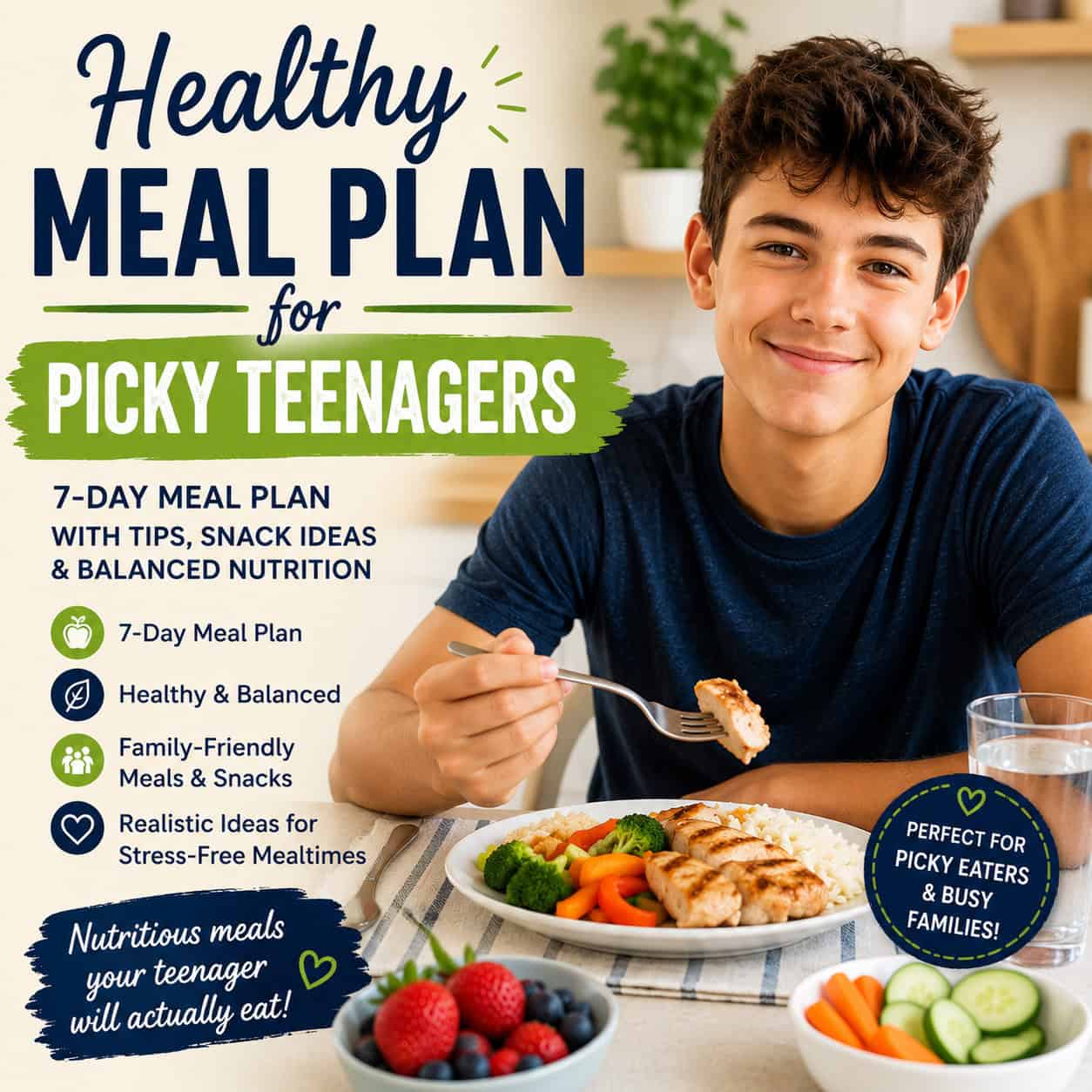
Feeding a teenager can feel like an impossible balancing act, especially if they’re a picky eater. One day they’ll happily eat chicken pasta, and the next they’ll decide they no longer like it because it “looks different.” It can be frustrating trying to provide healthy meals while avoiding wasted food and daily mealtime battles.
The good news is that picky eating doesn’t automatically mean your teenager has an unhealthy diet. Many teenagers go through phases where they prefer familiar foods, dislike certain textures or are hesitant to try anything new. The key isn’t to force them to eat foods they hate but to build balanced meals around the foods they already enjoy while gradually introducing new options over time.
As a parent of three, I’ve experienced just how different children’s eating habits can be. Some will happily try almost anything, while others stick to a small selection of favourite foods for years. I’ve learned that patience, consistency and realistic expectations usually achieve far better results than pressure or persuasion.
In this guide, you’ll find a realistic seven-day healthy meal plan for picky teenagers, along with practical tips to encourage healthier eating habits, nutritious snack ideas and simple ways to make everyday meals more balanced without turning the dinner table into a battleground.
Whether your teenager is a selective eater, has sensory preferences or simply prefers familiar meals, these ideas are designed to help them eat well while keeping family mealtimes as stress-free as possible.
The NHS healthy eating guidance for children and young people recommends eating a balanced diet that includes a variety of foods from all the main food groups.
Contents showHealthy Meal Plan at a Glance
✔ Designed for picky teenagers
✔ Includes breakfasts, lunches, dinners and snacks
✔ Uses familiar family-friendly foods
✔ Focuses on balanced nutrition rather than perfection
✔ Easy to adapt for different tastes
✔ Budget-friendly ingredients
Why Picky Eating Doesn’t Always Mean an Unhealthy Diet

If your teenager only seems willing to eat a handful of foods, you’re certainly not alone. While many people associate picky eating with toddlers, selective eating can continue well into the teenage years. For some teens, it’s simply a preference for familiar foods, while others may dislike certain textures, smells or flavours. Changes during puberty, busy schedules and increasing independence can also influence food choices.
It’s easy to worry that your teenager isn’t getting the nutrients they need, but a limited diet isn’t necessarily an unhealthy one. The goal isn’t to create perfect meals every day – it’s to build a balanced diet over the course of a week using the foods they already enjoy.
Instead of focusing on everything your teen won’t eat, start by looking at what they do eat. Many picky teenagers already consume foods from several important food groups, such as:
- Lean proteins like chicken, eggs or mince beef
- Dairy products such as milk, yoghurt and cheese
- Carbohydrates including pasta, rice, bread and potatoes
- Fruits they enjoy, such as apples, bananas or berries
- A small selection of vegetables, even if it’s only carrots, cucumber or sweetcorn
These foods can provide an excellent foundation for creating nutritious meals. Small improvements, such as choosing wholegrain bread instead of white bread, adding a handful of vegetables to a pasta dish, or swapping sugary yoghurt for Greek yoghurt, can make a meaningful difference over time.
It’s also important to remember that taste preferences often change. A food your teenager refuses today may become a favourite six months from now. Research shows that repeated, pressure-free exposure to new foods can gradually increase acceptance, so don’t be discouraged if progress feels slow.
Most importantly, try to avoid turning mealtimes into a battle. Encouraging healthy eating should feel positive rather than stressful. Offering balanced meals, involving your teenager in meal planning and allowing them some control over their choices can help build confidence around food and encourage healthier habits that last into adulthood.
Why Some Teenagers Are Picky Eaters
Many parents expect picky eating to end once their children reach their teenage years, but that’s not always the case. While some teenagers naturally become more adventurous with food as they grow older, others continue to prefer a limited range of familiar meals.
There are many reasons why a teenager might be a picky eater, and it’s important to remember that it isn’t usually a sign of laziness or stubbornness.
Some common reasons include:
- Sensory sensitivities – Certain textures, smells or even the appearance of foods can feel overwhelming. Some teenagers may happily eat raw carrots but refuse cooked ones because the texture is completely different.
- Neurodivergence – Teenagers with autism, ADHD, or sensory processing differences are more likely to have strong food preferences or to avoid particular textures, temperatures, or flavours.
- Anxiety around trying new foods – Some young people genuinely worry about unfamiliar foods and feel more comfortable sticking to meals they know they enjoy.
- A desire for routine – Familiar meals can provide comfort and predictability during a stage of life that often feels full of change.
- Strong taste preferences – Taste buds continue to develop throughout childhood and adolescence. Some teenagers are naturally more sensitive to bitter or strong flavours than others.
It’s also worth remembering that teenagers have increasing independence over their food choices. School lunches, spending time with friends, and busy schedules all influence what they eat, which can sometimes make healthy eating feel more challenging than it did when they were younger.
The reassuring news is that many picky eaters gradually expand their diets over time, especially when they’re encouraged without pressure. Offering regular opportunities to try new foods, involving your teenager in meal planning and modelling healthy eating at home can all help build confidence around food.
Rather than focusing on what your teenager won’t eat, celebrate the foods they do enjoy and look for small, achievable ways to increase variety. Every new food they accept, no matter how small the portion, is another step towards a more balanced diet.
The Nutrients Every Teenager Needs
The teenage years are a time of rapid growth and development. Between school, sports, hobbies and growing bodies, teenagers need a balanced diet that provides enough energy and essential nutrients to support both their physical and mental wellbeing.
If your teenager is a picky eater, don’t worry about achieving perfection at every meal. Instead, aim to include a variety of nutrient-rich foods across the week.
The British Nutrition Foundation provides evidence-based advice on healthy eating for children and teenagers.
Protein
Protein helps build and repair muscles, supports growth and keeps teenagers feeling fuller for longer. It also plays an important role in maintaining healthy skin, hair and nails.
Good sources of protein include:
- Chicken breast
- Lean beef mince
- Eggs
- Greek yoghurt
- Cheese
- Beans and lentils
- Fish
- Tofu
Calcium
Teenage years are crucial for building strong bones, making calcium especially important. Getting enough calcium now can help support bone health later in life.
Foods rich in calcium include:
- Milk
- Cheese
- Greek yoghurt
- Fortified plant-based alternatives
- Leafy green vegetables (if they’ll eat them!)
Iron
Iron helps carry oxygen around the body and supports energy levels and concentration. Teenage girls, in particular, have increased iron requirements once menstruation begins.
Iron-rich foods include:
- Lean red meat
- Chicken
- Beans
- Lentils
- Fortified breakfast cereals
- Spinach
Serving iron-rich foods alongside vitamin C-rich foods, such as strawberries, oranges, or peppers, can help the body absorb iron more effectively.
Healthy Fats
Healthy fats support brain development, hormone production and overall health. They’re an important part of a balanced diet and shouldn’t be avoided.
Sources include:
- Avocados
- Nuts and seeds
- Nut butters
- Olive oil
- Oily fish such as salmon
Fibre
Fibre supports healthy digestion, helps maintain stable energy levels and can keep teenagers feeling satisfied between meals.
Good sources include:
- Wholegrain bread
- Wholewheat pasta
- Brown rice
- Fruit
- Vegetables
- Beans
- Oats
Fruit and Vegetables
Fruit and vegetables provide vitamins, minerals and antioxidants that support the immune system and overall health. If your teenager only likes a few varieties, that’s perfectly okay—focus on including those regularly and gently encourage new options over time.
Water
Teenagers often become dehydrated without realising it, particularly if they’re active or spend long hours at school. Encourage them to drink water throughout the day and limit sugary drinks where possible.
Remember: Progress Over Perfection
No teenager has a perfect diet every single day, and that’s completely normal. Rather than aiming for flawless meals, focus on creating a balanced eating pattern over the course of the week. Every small improvement—whether it’s adding an extra portion of fruit, swapping to wholegrain pasta or trying a new vegetable—is a positive step towards lifelong healthy eating habits.
Tips for Feeding a Picky Teenager
Helping a picky teenager develop healthier eating habits isn’t about forcing them to clear their plate or introducing lots of unfamiliar foods at once. Small, consistent changes are often far more successful than dramatic overhauls.
Here are some practical strategies that can make mealtimes less stressful while encouraging a more balanced diet.
Build Meals Around Foods They Already Enjoy

Start with foods your teenager already likes and look for simple ways to make them more nutritious. For example:
- Choose wholewheat pasta instead of white pasta.
- Add extra vegetables to a chilli or pasta sauce.
- Swap sugary yoghurt for Greek yoghurt with fresh fruit.
- Serve grilled chicken instead of breaded alternatives when possible.
Making small changes is often much easier than expecting them to embrace completely new meals.
Introduce One New Food at a Time
A plate full of unfamiliar foods can feel overwhelming for a picky eater. Instead, offer one new food alongside meals they already enjoy.
It may take several attempts before they decide to try it, and that’s perfectly normal. Keep the pressure off and let curiosity develop naturally.
Don’t Make Separate Meals
While it’s important to consider your teenager’s preferences, preparing multiple different dinners every evening isn’t realistic for most families.
Try serving one family meal with a few flexible options so everyone can build a plate they’re happy with. For example, a fajita night allows each family member to choose their own fillings and toppings.
Let Them Help Plan the Menu
Teenagers are far more likely to eat meals they’ve had a say in choosing. Sit down together once a week and ask them to pick a few breakfasts, lunches and dinners they’d like to eat.
Giving them some control over the menu can reduce resistance and make them feel more involved.
Encourage Cooking Skills
Learning to cook isn’t just a valuable life skill—it can also increase a teenager’s confidence around food.
Simple tasks such as chopping vegetables, cooking pasta, seasoning chicken or assembling wraps can help them become more interested in trying what they’ve made themselves.
Keep Healthy Snacks Within Easy Reach
After school, many teenagers head straight for the kitchen looking for something to eat. Making healthier options the easiest choice can encourage better habits without constant reminders.
Try keeping these foods ready to grab from the fridge or cupboard:
- Fresh fruit
- Greek yoghurt
- Cheese portions
- Boiled eggs
- Wholegrain crackers
- Vegetable sticks
- Hummus
- Homemade trail mix
Avoid Labelling Foods as “Good” or “Bad”
Instead of banning favourite treats, focus on balance. Teaching teenagers that all foods can fit into a healthy diet in moderation helps foster a positive relationship with food and reduce feelings of guilt about eating.
Celebrate Small Wins
Progress doesn’t have to mean your teenager suddenly starts eating every vegetable on their plate. Trying one new food, eating an extra portion of fruit or choosing water instead of a sugary drink are all positive steps worth celebrating.
Building healthy habits is a gradual process, and patience will almost always produce better long-term results than pressure.
7-Day Healthy Meal Plan for Picky Teenagers
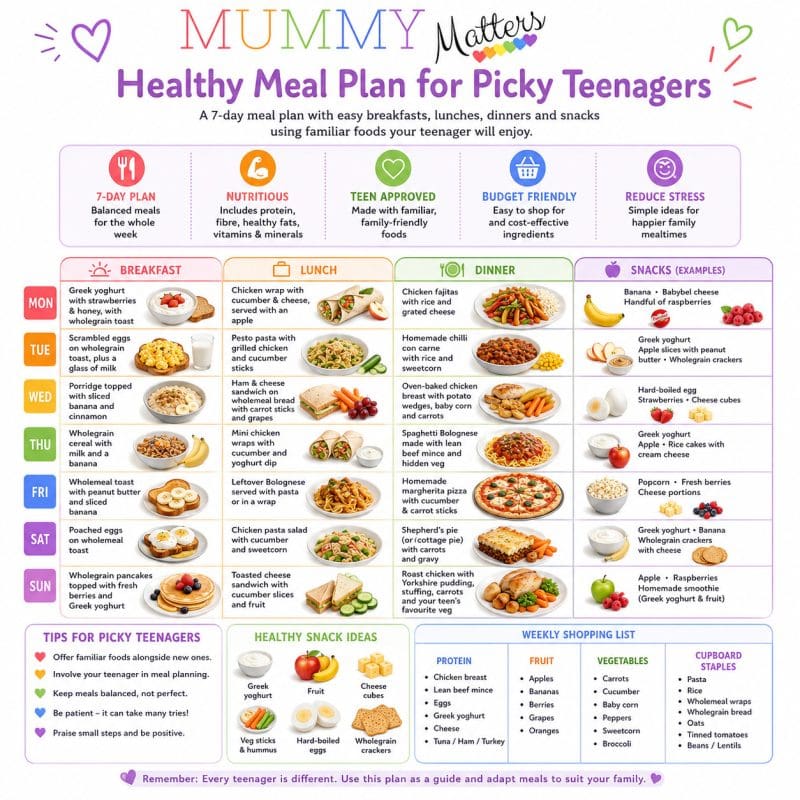
This seven-day meal plan is designed to provide a balance of protein, complex carbohydrates, healthy fats, fruit, and vegetables, using familiar ingredients that many picky teenagers already enjoy. Feel free to swap meals around or repeat favourites—the aim is to build healthy habits, not follow a rigid schedule.
This meal plan is intended as general family nutrition advice and isn’t a substitute for personalised medical or dietary advice. If your teenager has allergies, an eating disorder or specific medical needs, seek advice from a GP or registered dietitian.
Monday
Breakfast
Greek yoghurt topped with fresh strawberries and a drizzle of honey, served with wholegrain toast.
Lunch
Wholemeal chicken wrap filled with grilled chicken, cucumber and grated cheese, served with an apple.
Dinner
Chicken fajitas with peppers (served separately if preferred), rice and grated cheese.
Snacks
- Banana
- Babybel cheese
- Handful of raspberries
Tuesday
Breakfast
Scrambled eggs on wholegrain toast with a glass of milk.
Lunch
Pesto pasta with grilled chicken and cucumber sticks.
Dinner
Homemade chilli con carne served with rice and sweetcorn.
Snacks
- Greek yoghurt
- Apple slices with peanut butter (if appropriate)
- Wholegrain crackers
Wednesday
Breakfast
Porridge topped with sliced banana and cinnamon.
Lunch
Ham and cheese sandwich on wholemeal bread with carrot sticks and grapes.
Dinner
Oven-baked chicken breast with homemade potato wedges, baby corn and carrots.
Snacks
- Hard-boiled egg
- Strawberries
- Cheese cubes
Thursday
Breakfast
Wholegrain cereal with milk and a banana.
Lunch
Mini chicken wraps with cucumber and yoghurt dip.
Dinner
Spaghetti Bolognese made with lean beef mince and extra vegetables blended into the sauce.
Snacks
- Greek yoghurt
- Apple
- Rice cakes with cream cheese
Friday
Breakfast
Wholemeal toast with peanut butter and sliced banana.
Lunch
Leftover Bolognese served with pasta or in a wrap.
Dinner
Homemade margherita pizza topped with mozzarella and served with cucumber and carrot sticks.
Snacks
- Popcorn (air-popped or lightly salted)
- Fresh berries
- Cheese portions
Saturday
Breakfast
Poached eggs on wholemeal toast.
Lunch
Chicken pasta salad with cucumber and sweetcorn.
Dinner
Shepherd’s pie (or cottage pie) served with carrots and gravy.
Snacks
- Greek yoghurt
- Banana
- Wholegrain crackers with cheese
Sunday
Breakfast
Wholegrain pancakes topped with fresh berries and Greek yoghurt.
Lunch
Toasted cheese sandwich with cucumber slices and fruit.
Dinner
Traditional roast chicken with Yorkshire pudding, stuffing, carrots and your teenager’s favourite vegetables.
Snacks
- Apple
- Raspberries
- Homemade smoothie made with Greek yoghurt and fruit
Make the Meal Plan Work for Your Family
Remember that every teenager is different. If they don’t like one of the meals above, simply swap it for another balanced option they enjoy. It’s perfectly fine to repeat favourite meals throughout the week if it means they’re eating a wider range of nutrients overall.
The goal isn’t to create a picture-perfect menu—it’s to build a healthy eating routine that feels realistic, enjoyable and sustainable for your family.
Healthy Snack Ideas for Picky Teenagers
Teenagers often need one or two snacks between meals to keep their energy levels up, particularly if they’re active, play sports or have long school days. Choosing snacks that combine protein, healthy fats or fibre can help keep them feeling fuller for longer than sugary treats alone.
There’s no need to ban crisps or chocolate completely. Instead, aim to make nutritious options easy to grab when hunger strikes.
Here are some healthy snack ideas that many picky teenagers enjoy:
Fruit
- Apples
- Bananas
- Strawberries
- Raspberries
- Grapes
- Pears
- Easy-peel oranges
Dairy
- Greek yoghurt with berries
- Babybel cheese
- Cheese cubes
- Cottage cheese with crackers
- Mozzarella balls
Protein-Packed Snacks
- Hard-boiled eggs
- Scotch eggs
- Chicken breast slices
- Turkey slices
- Tuna with wholegrain crackers (if they enjoy fish)
Crunchy Snacks
- Carrot sticks
- Cucumber sticks
- Baby corn
- Wholegrain crackers
- Rice cakes
- Lightly salted popcorn
Filling Snacks
- Peanut butter on wholegrain toast (if appropriate)
- Hummus with vegetable sticks
- Wholemeal pitta and cream cheese
- Homemade smoothies made with Greek yoghurt and fruit
- Oatcakes with cheese
Sweet Treats with a Healthier Twist
A healthy diet should still include room for treats. Instead of cutting them out completely, try offering more nutritious alternatives alongside favourite foods.
Ideas include:
- Greek yoghurt with honey and fresh fruit
- Frozen banana slices
- Homemade fruit smoothies
- Fruit and yoghurt parfaits
- Homemade oat bars
Keeping a selection of these foods readily available in the fridge or cupboard makes it much easier for teenagers to choose something nutritious without having to think about it.
Foods to Introduce Gradually
If your teenager has a very limited diet, it can be tempting to encourage them to try lots of new foods at once. In reality, introducing one new food at a time is usually far more successful.
Rather than replacing foods they already enjoy, think about making small additions that gradually expand the variety in their diet.
For example, you could try:
| If they already enjoy… | They might also like… |
|---|---|
| Plain pasta | Wholewheat pasta |
| Chicken nuggets | Grilled chicken strips |
| White bread | Wholemeal bread |
| Plain rice | Brown rice mixed with white rice |
| Cheddar cheese | Mozzarella or Red Leicester |
| Plain yoghurt | Greek yoghurt with honey |
| Apples | Pears or grapes |
| Carrots | Baby corn or cucumber |
Remember, it can take many exposures before a new food feels familiar enough to try. Seeing a food on the plate without any pressure to eat it is still progress.
The aim isn’t to transform your teenager’s eating habits overnight. Every new food they accept—even if it’s just one bite—is another step towards a more varied and balanced diet.
Frequently Asked Questions
What should a picky teenager eat?
A picky teenager can still enjoy a healthy diet by building meals around foods they already like while gradually introducing new options. Focus on including a source of protein, wholegrain carbohydrates, fruit or vegetables, and healthy fats where possible. Remember that balance over the course of a week is more important than perfection at every meal.
How can I encourage my teenager to eat more vegetables?
Start by serving vegetables alongside foods your teenager already enjoys without putting pressure on them to eat everything. You could also add finely chopped or blended vegetables to pasta sauces, chilli or soups, or offer raw vegetables such as cucumber, carrots or baby corn if they prefer crunchy textures. It often takes repeated, pressure-free exposure before a new food is accepted.
Can a picky teenager have a healthy diet?
Yes. Many picky teenagers eat a limited range of foods but still meet most of their nutritional needs. The key is to make the most of the foods they do enjoy and gradually increase variety over time. If you’re concerned about your teenager’s growth, weight or overall health, speak to your GP or a registered dietitian for personalised advice.
How much protein does a teenager need?
Protein requirements vary depending on age, sex and activity level, but most teenagers can meet their needs through a balanced diet that includes foods such as chicken, eggs, lean meat, fish, dairy products, beans and lentils. Including a source of protein with each meal and snack can also help keep them feeling fuller for longer.
Should picky teenagers take vitamin supplements?
Most teenagers can get the vitamins and minerals they need from a varied, balanced diet. However, some may benefit from supplements in certain circumstances. For example, all children and teenagers are advised to consider a daily vitamin D supplement during the autumn and winter months in the UK. If you’re worried your teenager isn’t getting enough nutrients because of a very restricted diet, speak to your GP or a healthcare professional before starting supplements.
The NHS recommends that everyone, including children and teenagers, considers taking a daily vitamin D supplement during the autumn and winter months. See the NHS vitamin D guidance.
What are the healthiest snacks for teenagers?
Healthy snacks combine protein, fibre or healthy fats to provide longer-lasting energy. Good options include Greek yoghurt with fruit, cheese and wholegrain crackers, hard-boiled eggs, apples with peanut butter, vegetable sticks with hummus, or a homemade smoothie made with fruit and yoghurt.
What if my teenager refuses to try new foods?
Try not to make mealtimes into a battle. Offer new foods alongside familiar favourites and allow your teenager to decide whether to try them. Continue serving the food occasionally without pressure, as repeated exposure is one of the most effective ways to increase acceptance. Praise curiosity and small steps rather than expecting immediate success.
Final Thoughts
Feeding a picky teenager can sometimes feel frustrating, but it’s important to remember that healthy eating is a journey rather than a destination. Small, consistent changes often have a much bigger impact than trying to completely overhaul your teenager’s diet overnight.
By building meals around the foods they already enjoy, introducing new ingredients gradually and involving them in meal planning, you can help them develop healthier eating habits without creating unnecessary stress at the dinner table.
Every teenager is different, and what works for one family may not work for another. Be patient, celebrate the small wins and focus on progress rather than perfection. Over time, those small improvements can add up to a healthier, more balanced relationship with food that will benefit your teenager well into adulthood.