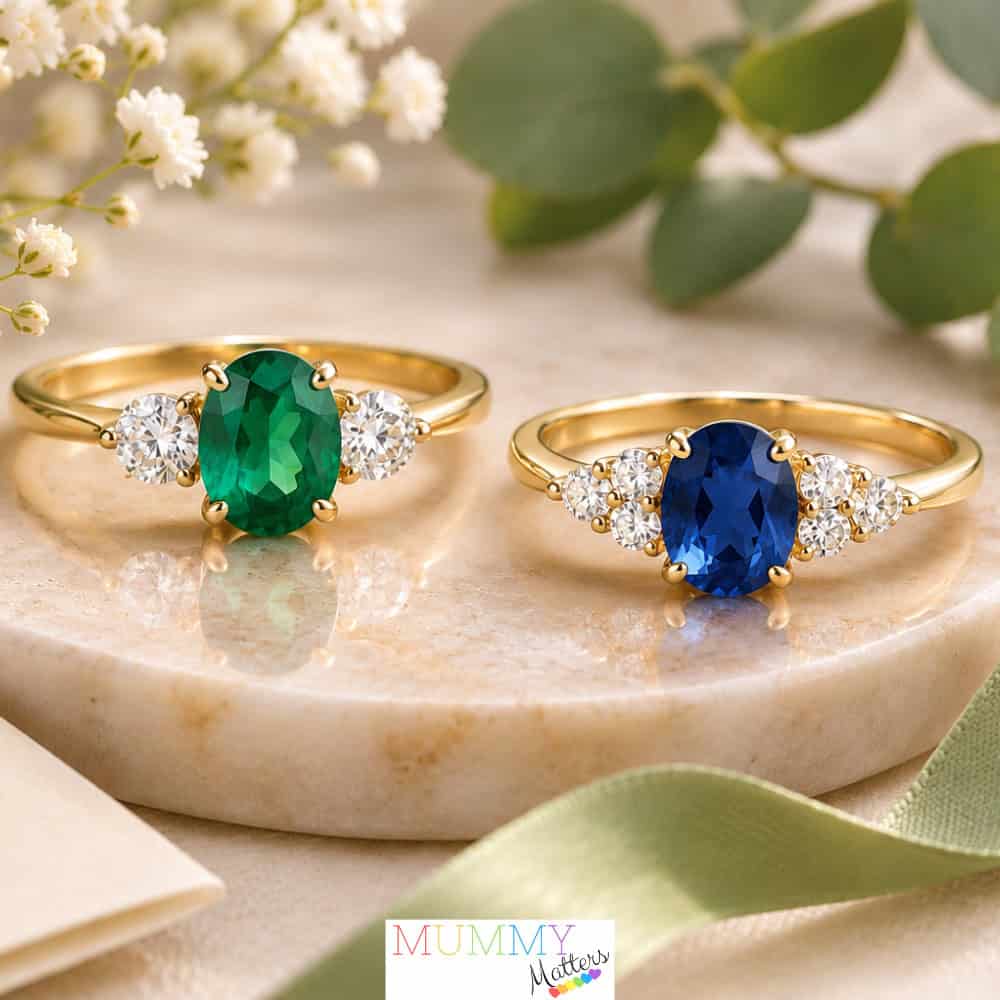
The ring in your head is green. Then you look up the children’s birthstones, and the design starts turning into something else.
Perhaps you’re choosing a birthday present from the family, or buying yourself something to mark this stage of life. Birthstones can be a lovely starting point. But if you want a ring to remind you of your family, you’re allowed to choose one you like looking at. The colour doesn’t have to account for everybody’s birthday.
A stone doesn’t have to stand for a person
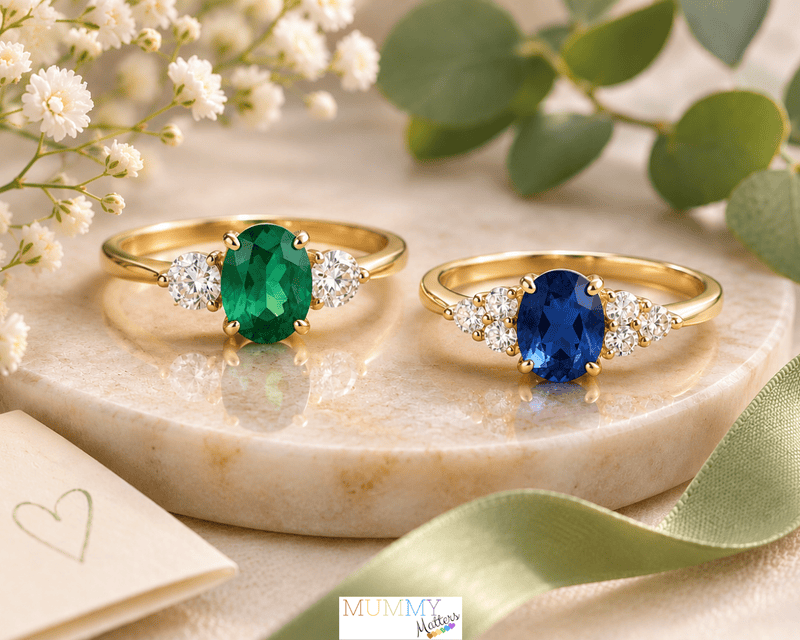
The whole ring can represent the whole family. You don’t have to assign the largest stone to anyone, explain why one person has a diamond or find a way to fit another birthday colour into a design that already feels finished.
That can be especially helpful if your first idea starts becoming a puzzle. Perhaps the two colours you hoped to combine just don’t appeal to you together. Keep the connection in another detail: a date, a phrase, or the card that comes with the ring. Ask about engraving before relying on it; the wording and space available will depend on the actual band.
One stone for each child might be exactly what you want. If so, GIA’s birthstone guide can help you explore the monthly associations before talking to a jeweller about a suitable design.
Start with a colour you actually want to wear
Look at the rings you reach for already. You might love a clear green stone against yellow gold, or prefer a small patch of blue beside the silver jewellery you wear most days. Keep that preference in view before you start attaching meanings to individual stones.
Lily Arkwright’s multi-stone collection shows how gemstone and accent stone arrangements change a ring’s outline. In 18ct yellow gold, Louella has an oval lab-grown emerald and two diamond side stones; Alya groups smaller diamonds beside its oval lab-grown emerald.
Both offer a 7 × 5 mm centre option, so you can compare the three-stone shape with the fuller cluster around a similar-sized green centre. Check which size each photograph shows. The spaces between the stones are worth noticing too.
Make choosing it part of the gift
If your partner or adult children are buying the ring, tell them which part you’d enjoy choosing yourself. They can still give you a surprise without guessing your taste or size.
A card over birthday breakfast could say, “We’d love to take you to choose your ring.” Set a comfortable spending limit beforehand, then enjoy looking together. The gift can include the afternoon out and the conversation over lunch, as well as whatever eventually goes in the box.
Younger children can draw a picture for the card or tell you which colour they think you’ll choose. Their predictions might be wildly different from your shortlist. You can enjoy that without making the final ring a family vote.
Try it as something you’ll wear
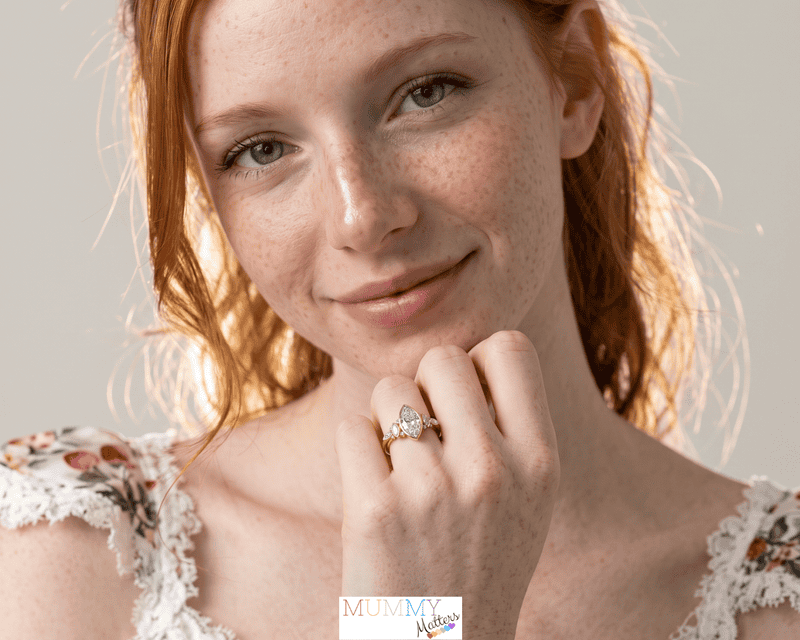
Once a design appeals, try it on the hand and finger where you intend to wear it. Close your fingers, hold your phone and notice whether the decoration presses against the fingers beside it. If you plan to wear another ring alongside, try the combination too.
Think about when you’ll put it on. A ring you wear for lunch with friends can be just as meaningful as one you reach for most mornings. Ask about care for every gemstone in the setting, since the centre and smaller stones may need different attention.
The National Association of Jewellers recommends taking jewellery off for cooking, cleaning and washing up, and storing pieces separately in a soft-lined box or case. Give the ring a proper place before it comes home; the ledge beside the washing-up bowl is rather too convenient.
Keep the story with the ring
Make a little time for recording family memories on the day you choose the ring. Ask the children what they remember, too. A few lines on the back of the birthday card are enough.
Write down who came with you, what made everyone laugh and why you kept returning to that colour. If someone has drawn the ring, keep the drawing too, even if it looks nothing like the one you chose.
Years later, “We chose this together after your birthday lunch” may tell you far more than a list of birth months. And you still get to wear the green ring you wanted in the first place.