
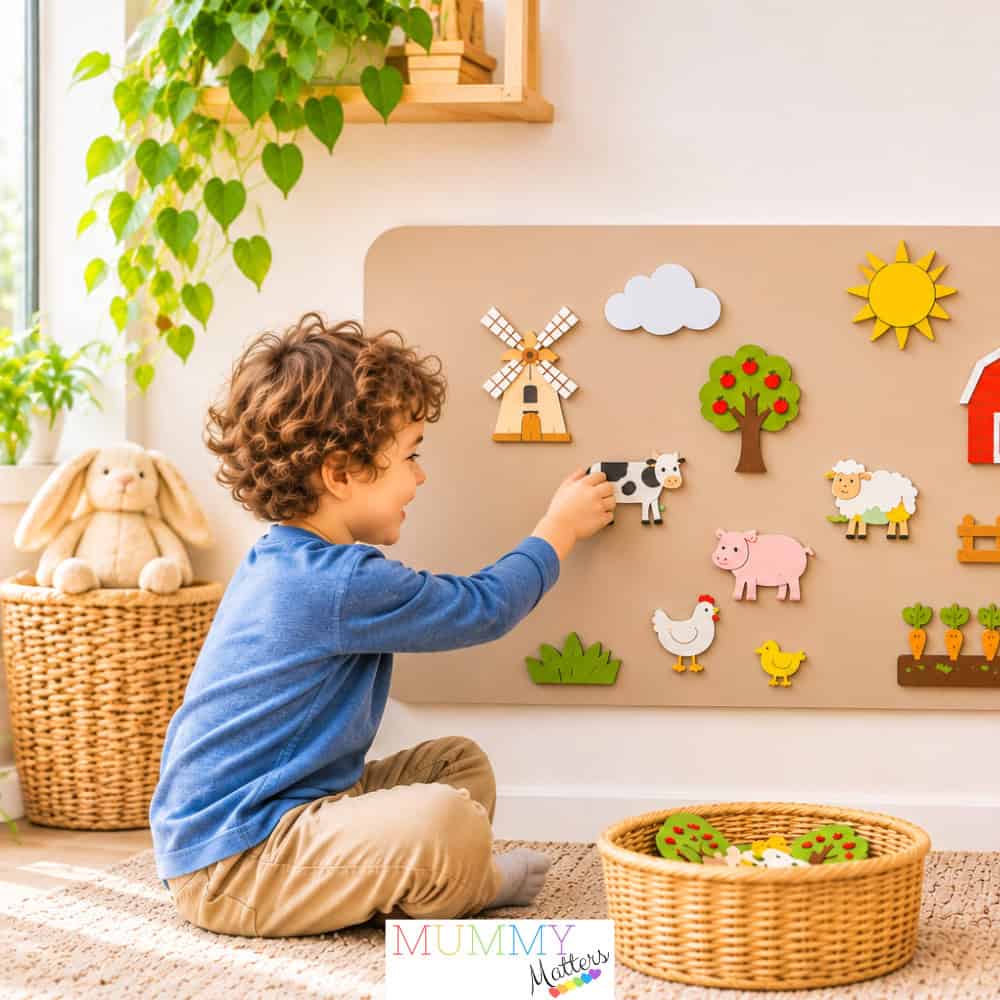
Every parent knows the moment. You tidy the playroom in the morning, and by dinnertime the floor has disappeared under blocks, figures and half-finished games. Yet your child announces they’re bored. If you’ve been searching for creative play ideas for kids, the most useful answer may be surprisingly simple: offer less, and make it count.
The short answer: Children usually play more creatively when they have a small selection of open-ended toys, a space they can reach on their own, and plenty of uninterrupted time. Choose versatile materials, rotate them every so often, add a few everyday objects, and let your child lead the way.
Below are seven practical ideas you can try this week.
1. Why More Toys Don’t Always Mean Better Play
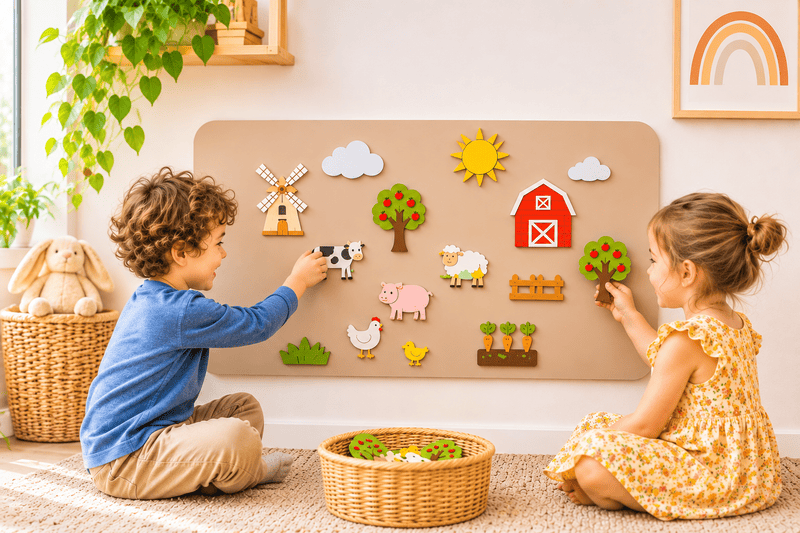
It seems logical that more choice would mean more fun. Research suggests it can work the other way. In a University of Toledo study, 36 toddlers aged 18 to 30 months played in a room with either four toys or sixteen. With fewer toys, the children stayed with each one longer and played with it in more varied ways, such as feeding it, hiding it or hammering with it, instead of stacking it once and moving on.
It’s worth reading this finding with some care. The group was small, the children were toddlers, and the sessions took place in a lab rather than a busy family home. Still, it matches what many parents notice: a crowded shelf can invite grabbing and dropping rather than exploring.
The takeaway isn’t that your child needs an empty room. It’s that quality, versatility and your child’s own interests matter more than the number of items on offer. A handful of toys that can be used in many ways will usually outlast a mountain of single-purpose ones.
If choosing feels hard, ask one question of each toy: how many different ways has my child used this? Anything that has only ever done one thing is a good candidate for the storage box.
2. Choose Toys That Offer More Than One Way to Play
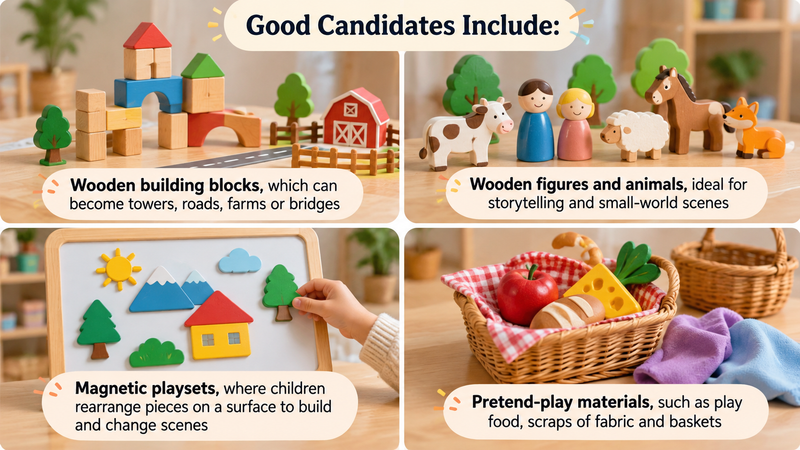
Open-ended toys have no single “right” way to be used. Children can combine them, rearrange them and give them new jobs from one day to the next. Penn State Extension notes that open-ended materials encourage problem-solving and keep play child-centered, with adults supporting by preparing the space and observing rather than directing.
Imagine a set of animal figures. On Monday, your child sorts them by size or colour. On Wednesday, they’re characters in a rescue story. By the weekend, they’re matched to habitats or lined up for a parade. The same toys support sorting, matching, storytelling and imaginative scenes, and they stay interesting as your child’s preferences change.
This kind of play supports several areas of children’s development, from problem-solving and communication to social and emotional skills. If you’re interested in how these abilities develop together, my guide to the six areas of child development explains the SPICES framework in more detail.
Parents can also explore versatile play materials from brands such as Tix&Mix, which offers magnetic play boards and wooden magnetic toys that children can use to create different scenes, stories and hands-on activities. Whatever you choose, check the age label on the box.
3. Creative Play Ideas for Kids That Start With Imagination
Imaginative play doesn’t need a script or special equipment. Simple materials can become a whole world once a child decides what they are. Try these starting points:
- A pretend shop: Baskets become shelves, paper scraps become money, and your child becomes the shopkeeper.
- An animal adventure: Figures travel across the sofa-cushion mountains to find a hidden cave.
- A story in pieces: Lay out a few objects and invite your child to build a story around them.
The key is to let children lead. The American Academy of Pediatrics has described unstructured play as “brain-building”, linked to executive function and a buffer against stress, according to a Mayo Clinic summary of its report. If your child decides the shop sells rocks and the customer is a dinosaur, that’s the play working. Resist the urge to correct the rules or steer toward a “proper” ending.
4. Create a Play Space That Encourages Independence
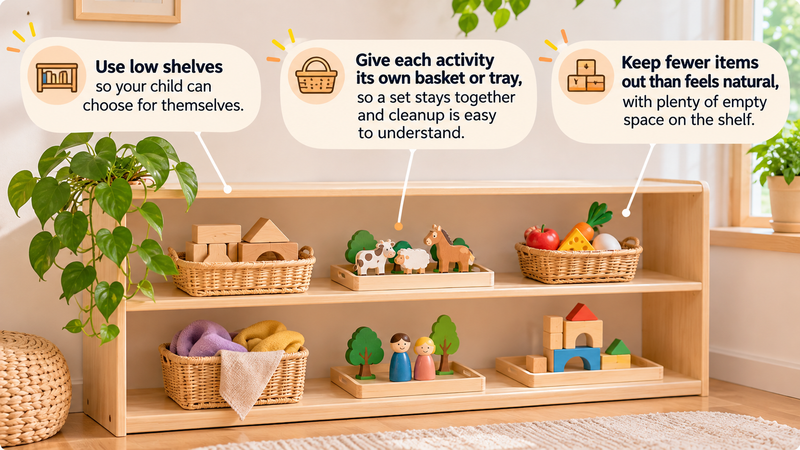
A play space doesn’t have to be a whole room. A small, accessible corner works well, and what matters most is that your child can see and reach everything without asking for help.
When toys are visible and reachable, children can make their own choices, and putting things away becomes a manageable task instead of a battle. A child who can fetch the blocks and return them to the same basket is practising independence every single day.
If space is tight, a corner of the living room is plenty. A small mat, one low shelf and two or three baskets create a clear signal: this is where play happens. Keeping the area visually calm also makes it easier for your child to settle into one activity instead of drifting between many.
5. Rotate Toys to Keep Playtime Interesting
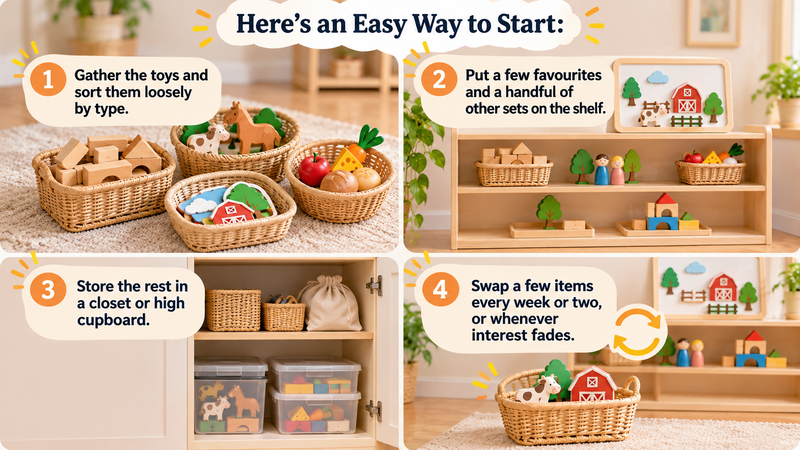
Toy rotation is a simple alternative to buying something new. It means keeping a small selection of toys available while the rest are stored out of sight, then swapping them periodically. A Staffordshire University psychologist points to rotation as a way of supporting sustained attention and creativity while still offering novelty, though she also notes that more research is needed on play in the home.
Try rotating while your child is out of the room, and leave their favourites in place so the change feels gentle. Toys that have been away for a while often feel brand new, and children frequently invent fresh ways to use them.
6. Turn Everyday Objects Into Creative Play Materials
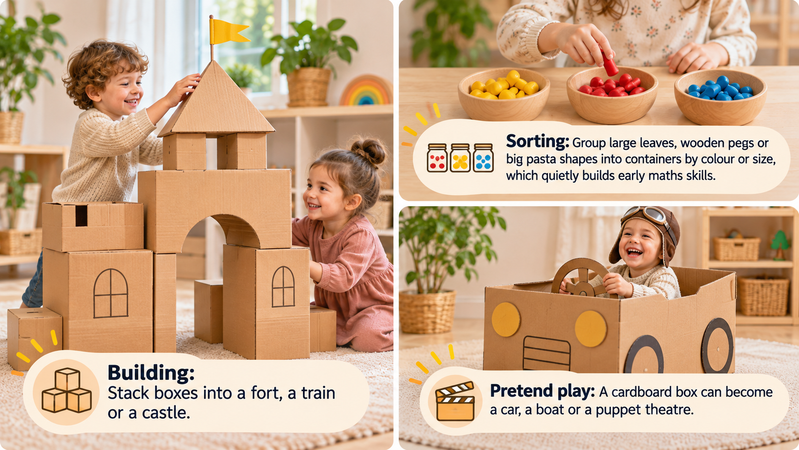
Some of the best play materials are already in your home. Cardboard boxes, fabric pieces, sheets of paper and clean household containers can be used in endless ways:
A few safety reminders apply. Choose materials that suit your child’s age, avoid anything small enough to be swallowed if your child is under three, and stay close while they play. Check cardboard and containers for sharp edges, and skip anything that has held chemicals.
7. Give Children Time to Explore at Their Own Pace
Children often need time to settle into an idea. A block tower might be built, knocked down and rebuilt ten times, and each round teaches something new. Constant adult direction can interrupt that process, so try stepping back and watching first.
Giving children the freedom to explore while knowing we’re nearby to offer reassurance is one of those parenting balances that takes practice. It’s something that connects with the wider ideas of supporting independence and confidence that I explore in my comprehensive guide to parenting.
Let your child repeat activities and invent new uses for familiar toys. When you do join in, open-ended questions work better than instructions:
- “What’s happening in your story?”
- “How could we make that taller?”
- “What do you think the animals will do next?”
These questions show interest without taking over, and they keep the idea in your child’s hands.
It also helps to protect a block of time, even twenty or thirty minutes, with no screens on and no agenda. Boredom at the start of that window is normal. Often the best ideas arrive just after your child has run out of obvious things to do.
Final Thoughts: Make Room for More Play, Not More Toys
Meaningful play doesn’t depend on an overflowing toy collection. Choosing a few versatile toys, organising a small play area and giving children room to explore can do more than another box of new things. Start small this week: pick one shelf, rotate a handful of toys and watch what your child does with the space. Small changes often create the most room for imagination.
Frequently Asked Questions: Creative Play Ideas for Kids
How many toys should be out at once?
There’s no magic number. The Toledo study compared four toys with sixteen, and the smaller group played longer and more creatively. A good starting point is a small, manageable selection on a low shelf, adjusted to your child’s age and interests.
How often should I rotate toys?
Many families swap a few items every week or two, but the right rhythm depends on your child. If they’ve stopped touching something, it’s probably time for a change.
Are open-ended toys suitable for toddlers?
They can be, as long as they match your child’s age. Check the label, keep small parts away from children under three, and supervise play.