
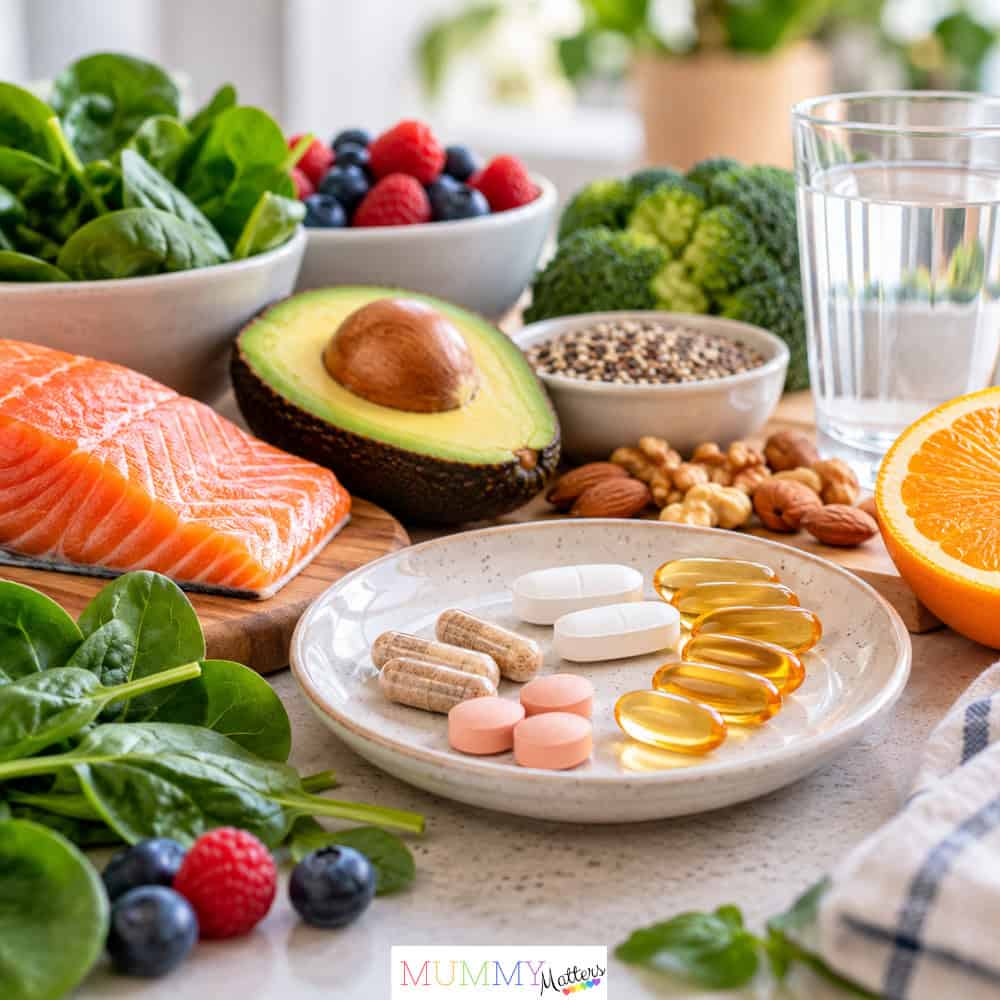
If you’re thinking about trying for a baby, you may already be looking at your diet, lifestyle and general health. But what about vitamins before pregnancy? Do you need a special preconception multivitamin? Should your partner be taking supplements too? And do you really need all those fertility supplements you see advertised online?
When we planned our pregnancies, I was already quite conscious of looking after myself. I exercised regularly, didn’t smoke or drink alcohol and tried to eat a healthy, balanced diet. I also took a pregnancy multivitamin because, for me, it felt like one simple thing I could do to make sure I was covering the basics.
However, there’s a big difference between taking the nutrients recommended when you’re trying to conceive and feeling as though you need an expensive cupboard full of supplements.
The good news is that UK guidance is actually quite straightforward.
When should you start taking vitamins before pregnancy?

Ideally, it is worth thinking about your preconception nutrition before you actually start trying for a baby.
The NHS recommends taking folic acid as soon as you start trying to conceive, ideally around three months beforehand, and continuing during the first 12 weeks of pregnancy.
This is one reason I think preparing for pregnancy can be helpful. We often think pregnancy health begins when we see those two lines on a pregnancy test, but some of the most important early development has already started by then.
If you’re planning to start trying in the next few months, now is a sensible time to look at your diet and supplements.
Folic acid is the key vitamin before pregnancy
If you only remember one thing from this article, make it this one: folic acid matters.
The NHS and NICE recommend that anyone planning a pregnancy takes 400 micrograms (mcg) of folic acid every day.
Ideally, you should begin around three months before trying to conceive and continue until you are 12 weeks pregnant.
Folic acid helps reduce the risk of neural tube defects, including spina bifida, which affect the development of a baby’s brain and spine.
You can get folate, the natural form of folic acid, through foods such as:
- broccoli and other green leafy vegetables
- Brussels sprouts
- peas
- lentils
- beans and chickpeas
- oranges
- wholegrain foods
- some fortified breakfast cereals
However, this isn’t a case where simply eating lots of leafy greens means you can skip the supplement. It is difficult to obtain the recommended amount reliably from food alone, which is why a daily folic acid supplement is advised.
Do some women need more folic acid?
Yes, but this is something to discuss with your GP rather than increasing the dose yourself.
NICE recommends a higher 5mg daily dose for some people at increased risk of having a baby with a neural tube defect or another congenital malformation.
This can include situations where you or your partner have a neural tube defect or relevant family history, you’ve previously had a pregnancy affected by one, you have type 1 or type 2 diabetes, certain blood conditions, or you take particular medications that interfere with folic acid.
It’s worth mentioning an important change to older advice you might still find online. Current NICE guidance says that having a BMI of 25 or above does not, by itself, mean you need more than the standard 400mcg dose unless you have another recognised risk factor.
If you’re unsure which dose applies to you, speak to your GP or pharmacist.

What if I become pregnant before taking folic acid?
Don’t panic.
Not every pregnancy is planned months in advance, and plenty of women discover they’re pregnant without having taken a preconception vitamin.
The NHS advice is simply to start taking folic acid as soon as you discover you’re pregnant and continue until the end of the first 12 weeks.
Pregnancy can already bring enough worries without beating yourself up about what you did or didn’t do before you saw a positive test.
What about vitamin D when trying to conceive?
Vitamin D is another nutrient worth thinking about, particularly here in the UK.
Our bodies make vitamin D when our skin is exposed to sunlight, but between October and March there isn’t enough sunlight in the UK for most people to make sufficient amounts this way.
The NHS advises everyone to consider taking a daily supplement containing 10 micrograms (400 IU) of vitamin D during autumn and winter. Some people may need to take it throughout the year, including those who spend much of their time indoors, cover most of their skin when outside or have black or brown skin.
Vitamin D is also important during pregnancy, when it supports healthy bone development. NHS pregnancy guidance recommends considering a daily 10mcg supplement during October to March, with year-round supplementation advised for some people.
If you’re already taking a pregnancy or preconception multivitamin, check the label before buying a separate vitamin D supplement. It may already contain the recommended amount.
Do you need a special preconception multivitamin?
Not necessarily.
This is where supplement shopping can become confusing because there are countless products labelled “fertility”, “conception” and “pre-pregnancy”, often containing long lists of vitamins, minerals and other ingredients.
A good preconception or pregnancy multivitamin can certainly be a convenient way to get folic acid and vitamin D in one tablet. That’s the approach I chose when preparing for my pregnancies because it was simple and easy to remember.
But a more expensive product isn’t automatically better.
Look at what is actually in the supplement rather than being persuaded by the claims on the front of the box.
For most women eating a varied diet, the aim isn’t to replace food with supplements. It is to make sure you’re getting the nutrients that are particularly important around conception and early pregnancy.
Do you need iron before pregnancy?
Iron is important because your body needs it to make healthy red blood cells, which carry oxygen around the body.
Foods containing iron include red meat, beans, pulses, nuts, dried fruit and fortified breakfast cereals.
However, iron isn’t a supplement that every woman needs to start taking simply because she is trying for a baby.
During pregnancy, iron levels are routinely checked and your GP or midwife may recommend an iron supplement if your levels are low or you develop anaemia.
If you already know that you have low iron levels, have very heavy periods, follow a diet that makes obtaining sufficient iron more difficult or have concerns about your iron status, it’s worth discussing this with your GP before pregnancy.
What about vitamin B12?
Vitamin B12 plays an important role in healthy red blood cells and the nervous system.
Most people eating animal products can obtain B12 through foods such as meat, fish, eggs, milk, and other dairy products.
However, B12 deserves particular attention if you’re vegetarian or vegan because plant foods don’t naturally provide reliable amounts unless they’re fortified.
If you follow a vegan diet and you’re planning a pregnancy, it would be sensible to discuss your nutritional needs with a GP, pharmacist or dietitian rather than guessing which supplements you need.
Do you need iodine when trying for a baby?
Iodine is needed to make thyroid hormones and is important for normal growth and brain development.
In the UK, foods such as milk, dairy products, eggs and fish can contribute iodine to the diet.
However, requirements and dietary intake vary, particularly if you avoid dairy and fish.
Rather than automatically adding a high-dose iodine supplement, look at your overall diet and seek professional advice if you think your intake may be low, particularly if you have an existing thyroid condition.
What about omega-3?
Omega-3 fatty acids are another nutrient you’ll frequently see mentioned when researching fertility and pregnancy.
Oily fish such as salmon, sardines and mackerel are useful dietary sources of long-chain omega-3 fatty acids.
If you don’t eat fish, you may want to discuss suitable alternatives with a health professional, especially once pregnant.
One important point to remember is that cod liver oil isn’t an appropriate pregnancy supplement because it can contain high levels of vitamin A in the form of retinol.
Can you get everything you need from food?
A healthy, varied diet should provide most of the vitamins and minerals you need.
That’s why I see supplements as exactly that: supplements to your diet rather than substitutes for it.
Before trying for a baby, concentrate on building meals around plenty of vegetables and fruit, wholegrains, good-quality protein, healthy fats and a varied range of foods.
I’ve covered this in much more detail in my guide to what to eat before pregnancy, including foods and nutrients that can support both female and male preconception health.
Even with an excellent diet, however, folic acid supplementation is still recommended when trying for a baby because it is difficult to obtain the amount needed from food alone.
Be careful with vitamin A
This is one of the most important things to check when choosing vitamins for pregnancy.
The NHS advises against taking supplements containing vitamin A in the form of retinol during pregnancy, because too much can harm your baby’s development.
You should also avoid cod liver oil during pregnancy for the same reason.
If you’re choosing a multivitamin specifically designed for pregnancy, it should have been formulated with pregnancy requirements in mind, but I would still get into the habit of reading the label.
If you’re taking an ordinary multivitamin rather than a pregnancy-specific product, check particularly carefully for vitamin A/retinol.
Do fertility supplements actually improve your chances of conceiving?
This is where I’d be wary of some of the marketing surrounding preconception health.
There is an enormous market for products promising to support egg quality, fertility, hormone balance and conception.
Some nutrients certainly play important roles in reproductive health, and there are circumstances where a doctor or dietitian might recommend particular supplements based on your individual needs.
But a product having the word fertility written across the bottle doesn’t mean it has been proven to help you become pregnant.
More isn’t necessarily better with vitamins either. Some nutrients can be harmful at excessive doses and supplements can interact with medications.
If you’re considering taking individual high-dose vitamins, herbal products or several different fertility supplements together, I’d speak to your GP or pharmacist first.
What vitamins should men take before trying for a baby?
Preconception health isn’t solely the woman’s responsibility.
Sperm takes time to develop, so the months before trying for a baby are a useful opportunity for men to look at their diet and lifestyle too.
Rather than automatically buying a male fertility supplement, I’d start with the foundations: eating a balanced diet, exercising, maintaining a healthy weight, not smoking and keeping alcohol within recommended limits.
I’ve gone into this in much more detail in my guide on how to improve sperm health, including the lifestyle factors worth looking at before trying to conceive.
Ideally, preparing for pregnancy should be something you do together.
My simple preconception vitamin checklist
If all the information about supplements is starting to feel overwhelming, bring it back to basics.
Before trying for a baby:
- Start taking 400mcg folic acid every day, ideally around three months before trying to conceive.
- Check whether you should be taking 10mcg vitamin D, particularly between October and March.
- Eat a healthy, varied diet rather than relying on supplements.
- Check the label of any multivitamin you’re taking.
- Avoid assuming that expensive “fertility” supplements are essential.
- Speak to your GP if you think you may need high-dose folic acid.
- Ask for professional advice if you have a medical condition, take regular medication, have had bariatric surgery or follow a restrictive diet.
- Once pregnant, avoid supplements containing vitamin A/retinol and cod liver oil.
- Encourage your partner to think about his preconception health too.
It really doesn’t need to be more complicated than that for most couples.
Preparing your body for pregnancy is about more than vitamins
Taking the right vitamins before pregnancy is worthwhile, but it’s only one small part of preparing for a baby.
Sleep, nutrition, exercise, smoking, alcohol, stress, medications and both partners’ general health can all be worth looking at during the months before you start trying.
If you’re at the beginning of this journey, my preconception health guide for women and men is a good place to start. From there, you can look more closely at your diet, supplements and lifestyle without feeling as though you have to change everything overnight.
For me, that is what preconception health should really be about: not trying to create the “perfect” body for pregnancy, but giving yourself the best foundations you reasonably can.
Frequently Asked Questions
What vitamins should I take before trying for a baby?
The key supplement recommended in the UK is folic acid. Take 400mcg every day when trying to conceive, ideally beginning around three months beforehand. Vitamin D is also recommended at 10mcg daily between October and March, with some people advised to take it throughout the year.
How long before pregnancy should I start folic acid?
Ideally, start folic acid around three months before you begin trying for a baby. If you’re already trying, start now rather than waiting.
Can I take folic acid and vitamin D together?
Yes. Many pregnancy and preconception multivitamins contain both. Check the label so that you know how much you’re already taking before adding separate supplements.
Do I need a pregnancy multivitamin before I’m pregnant?
You don’t necessarily need a pregnancy multivitamin. It can be a convenient way of obtaining recommended nutrients such as folic acid and vitamin D, but eating a varied diet remains important.
What if I didn’t take folic acid before becoming pregnant?
Start taking it as soon as you discover you’re pregnant and continue through the first 12 weeks. If you have concerns or think you may need a higher dose, speak to your GP or midwife.
Can you take too many vitamins when trying to conceive?
Yes. More isn’t automatically better, and very high doses of some vitamins can be harmful. Avoid combining multiple supplements without checking their ingredients and ask a GP or pharmacist for advice if you’re unsure.
Medical disclaimer: This article is for general information only and isn’t a substitute for individual medical advice. If you’re planning a pregnancy and have an existing medical condition, take prescription medication, have specific dietary needs or are unsure which supplements are suitable for you, speak to your GP, pharmacist or another qualified healthcare professional.
Sources and further reading: NHS guidance on pregnancy vitamins and supplements; NHS Best Start in Life guidance on vitamins and supplements in pregnancy; NICE guideline NG247, Maternal and child nutrition: nutrition and weight management in pregnancy, and nutrition in children up to 5 years.