Wondering when you’ll get your first period? Perhaps you’ve started noticing changes in your body, or maybe some of your friends have already begun theirs and you’re wondering when it will be your turn. It’s a question lots of girls have as they approach puberty, and it’s completely normal to feel curious, excited or even a little nervous.
Most girls in the UK start their periods at around 12 years old, although some begin earlier and others later. Your first period is an important part of growing up, but it doesn’t happen at exactly the same age for everyone. You might notice changes such as developing breasts, growing body hair or finding a little white discharge in your underwear before your period starts.
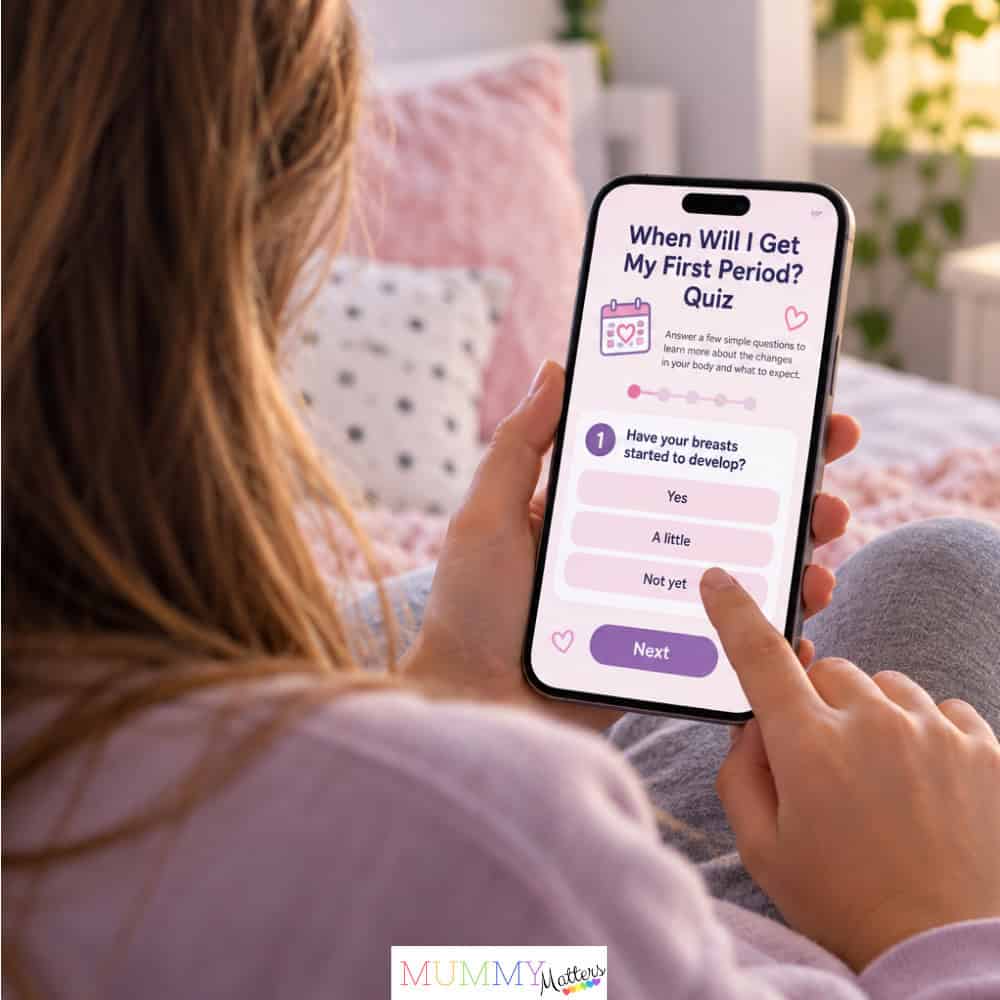
So, can you tell when your first period is coming? Although there are signs that your body is going through puberty, there’s no reliable way to predict the exact date. That’s where our When Will I Get My First Period? quiz can help.
By answering six simple questions, you’ll learn more about the changes happening to your body, what they might mean and how to prepare for your first period. We’ll also explain what your first period might be like, which products you may find helpful and when it’s worth asking for medical advice.
Ready to learn more about your body? Read on to understand the signs of puberty and take our free first period quiz.
Please note: This quiz is for educational purposes only. It cannot predict when your period will start or replace advice from a healthcare professional.

What Is a First Period, and When Does It Typically Start?
Your first period is also known as menarche (pronounced men-ar-kee). It’s the first time you experience menstrual bleeding, and it’s a normal part of puberty as your reproductive system develops.
During your menstrual cycle, hormones cause the lining of your womb (uterus) to become thicker. If a pregnancy doesn’t occur, this lining breaks down and leaves your body through your vagina as a mixture of blood and tissue. This is what we call a period.
Most girls start their periods at around 12 years old, although it’s possible to begin earlier or later. The age you start can be influenced by several factors, including genetics, general health and how your body develops during puberty.
What Does Your First Period Look Like?
You might imagine your first period will involve lots of bright red blood, but that’s not always the case. For some girls, it begins with just a few reddish-brown spots in their underwear, while others notice a more obvious flow. Period blood can be pink, red, dark red or brown, and these colours are generally normal.
Your first period might last only a couple of days, although periods commonly last between two and seven days. It’s also normal for your periods to be irregular when they first begin, as your body adjusts to the hormonal changes of puberty.
You may experience some mild tummy cramps, tiredness or changes in your mood, but not everyone notices symptoms. If you have severe pain or bleeding that seems unusually heavy, speak to a trusted adult or healthcare professional.
The most important thing to remember is that your first period doesn’t have to look or feel exactly like anyone else’s.
How Long After Puberty Starts Will My First Period Arrive?
Your first period doesn’t usually happen as soon as puberty begins. Your body goes through several stages of development first, and these changes can take a few years.
For many girls, one of the earliest signs of puberty is breast development. You might notice small, slightly tender bumps beneath your nipples, known as breast buds. Your first period typically arrives around two to three years after breast development begins, although some girls start sooner and others take longer.
During this time, you may also notice pubic and underarm hair beginning to grow, changes in your body shape and a growth spurt. Some girls develop clear or white vaginal discharge before their first period, too. These are all normal changes, but they don’t happen in exactly the same order for everyone.
Does this mean your period is about to start? Not necessarily. Even if you’ve noticed several signs of puberty, there’s no reliable way to work out whether your first period is days, weeks or months away.
The good news is that you don’t need to know the exact date to be prepared. Understanding how your body is changing and keeping a few period essentials handy can help you feel more confident whenever it happens.
What If My Period Hasn’t Started Yet?
If your friends have already started their periods but you haven’t, it’s understandable to feel a little left out or wonder whether something is wrong. You might hear other girls talking about period products, cramps or their monthly cycles and feel as though you’re missing out on an experience everyone else seems to be having.
However, starting your period isn’t a competition, and developing later than your friends doesn’t automatically mean there’s anything to worry about. Puberty is different for everyone, and there can be quite a gap between when the first and last girls in a friendship group begin menstruating.
Rather than worrying about exactly when your period will arrive, try to focus on feeling comfortable with the changes happening to your body. Learning about periods, asking questions and keeping a couple of sanitary pads in your school bag can make the experience feel less daunting when the time comes.
If you’re concerned about your development, it’s always okay to talk to a parent, trusted adult or school nurse. We’ll also explain further down the article when it’s worth speaking to your GP.
Take the “When Will I Get My First Period?” Quiz
Curious about what the changes happening to your body might mean? Our free first period quiz asks six simple questions about your age and the signs of puberty you may have noticed so far.
Once you’ve answered, you’ll receive information tailored to your responses, helping you understand where you might be in your development and how to prepare for your first period. There are no right or wrong answers, and it’s perfectly fine if you’re unsure about some of the changes mentioned.
Remember: This quiz is designed to help you understand puberty, not predict the exact date your period will begin. Your answers aren’t sent to us or saved by the quiz, so you can explore the questions privately and at your own pace.

When Will I Get My First Period?
Answer six questions to learn about common puberty changes and how to prepare. This quiz cannot predict an exact date or diagnose a health condition. Your quiz answers are not sent to us or stored by this quiz.
Signs Your First Period May Be Approaching
As your body moves through puberty, you’ll probably notice a few changes before your first period arrives. Some happen gradually over several years, while others might seem to appear quite suddenly. Although these changes can help you understand how your body is developing, they can’t tell you exactly when your period will start.
Breast Development
Breast development is often one of the earliest signs of puberty. You might notice small, slightly tender bumps beneath your nipples, called breast buds, before your breasts gradually begin to grow. It’s also completely normal for one breast to develop a little faster than the other.
Periods often begin around two to three years after breast development starts, although this varies. If you’ve only recently noticed breast buds, your first period may still be some time away.
White or Clear Vaginal Discharge
Have you noticed a little white or clear fluid in your underwear? This is called vaginal discharge, and it’s a normal way for your vagina to keep itself clean and healthy. Some girls begin noticing discharge during puberty, before their first period arrives.
Normal discharge is usually clear or white and shouldn’t have a strong, unpleasant smell. The amount and texture can vary, so there’s no need to worry if you occasionally notice a small mark in your underwear. However, if you experience itching, soreness, an unpleasant smell or an unusual change in colour, it’s worth speaking to a trusted adult or healthcare professional.
Although discharge can be a sign that your body is developing, it isn’t a reliable way to predict when your first period will begin.
Pubic and Underarm Hair
During puberty, you may notice hair beginning to grow around your pubic area and underneath your arms. It often starts as fine, soft hair before becoming thicker and darker over time.
You might also notice that you sweat more or that your body odour changes. These developments are caused by hormonal changes and are a normal part of growing up. However, the amount of body hair you have doesn’t tell you how close you are to starting your period.
Changes in Your Skin, Body and Emotions
Puberty affects more than just your reproductive system. You might notice that you’re growing taller, your hips are changing shape or your skin is becoming oilier. Spots and acne are common, too, as hormones affect the amount of oil your skin produces.
You may also find that your emotions feel a little stronger at times. Perhaps you’re more easily upset, feel self-conscious about your body or simply want more privacy than you used to. These feelings can be part of growing up, although not every emotional change is caused by hormones.
Everyone experiences puberty differently, so don’t worry if you haven’t noticed all these changes. Your first period can arrive without any obvious warning signs, which is why keeping a couple of period essentials handy can be reassuring.
How to Prepare for Your First Period

Starting your first period can feel like a big moment, especially if you’re not sure what to expect. You might be excited, nervous or simply curious about how you’ll manage it at school or when you’re away from home. Whatever you’re feeling, a little preparation can make the experience much less worrying.
You don’t need to buy lots of products or know everything about periods before yours begins. Having a few essentials ready, understanding how to use them and knowing who you can turn to for help are good places to start. Here are some simple ways to prepare so you can feel more comfortable and in control.
Put Together a First Period Kit
One of the easiest ways to prepare for your first period is to put together a small kit that you can keep in your school bag or take with you when you’re out. You don’t need anything expensive or complicated, just a few essentials to help you feel comfortable if your period starts unexpectedly.
Here’s what you might want to include:
- Sanitary pads: These are often a good choice for your first period because they’re easy to use and don’t need to be inserted into your body. Look for regular pads with wings, which help keep them securely in place.
- A spare pair of underwear: Useful if you notice a little blood on your knickers before you’ve had a chance to put on a pad.
- A small, discreet pouch: A zipped makeup bag or pencil case is ideal for keeping everything together and easy to find.
- A small sealable bag: Handy for carrying home stained underwear if you need to change at school.
- A few tissues: Useful if you need to tidy up before changing into fresh underwear.
You could also try period underwear, which has absorbent layers built into the fabric. Some girls prefer wearing it on its own, while others use it alongside a pad for extra reassurance. Make sure you choose a pair designed for the level of bleeding you’re experiencing.
As you become more comfortable managing your periods, you might want to explore other products, such as tampons or menstrual cups. There’s no rush to try them, but if you’re curious, our guide to the dos and don’ts of menstrual cups for first-time users explains what to consider before using one.
It’s worth practising how to attach a pad to your underwear before your first period begins. That way, you’ll already know what to do when the time comes. Remember to change your pad regularly, following the product instructions, and wrap used pads before putting them in a sanitary bin. Never flush period products down the toilet.
Your kit doesn’t need to be perfect. Even keeping one or two pads and a spare pair of knickers in your bag can help you feel prepared.
Talk to Someone You Trust
Talking about periods might feel embarrassing at first, especially if you’ve never discussed them before. However, periods are a normal part of growing up, and there’s no reason to feel ashamed or worry that your questions are silly.
You could speak to your mum, dad, another family member, an older sibling or someone else you feel comfortable with. A school nurse or trusted teacher can also help if you’d rather talk to someone outside your family. They can explain what to expect, show you how period products work and answer questions you might not feel confident asking your friends.
If you’re not sure how to start the conversation, try something simple like, “I think I might be getting closer to starting my period. Can we talk about what I need?” You don’t have to discuss everything at once, and it’s perfectly fine to ask questions as they come up.
Remember, you deserve clear, reassuring answers about your body, and you shouldn’t have to work everything out on your own.
Learn About Your Menstrual Cycle
You don’t need to understand every detail of your menstrual cycle before your first period, but knowing the basics can help you feel more confident about what’s happening to your body.
Your menstrual cycle is counted from the first day of one period to the first day of the next. Although you might hear that a cycle lasts 28 days, this is only an average often used to explain how periods work. Cycle lengths vary, particularly during the teenage years.
When your periods first begin, they may not arrive every month. You might have one period and then wait several weeks or even a couple of months for another. This can be normal during the first few years as your body’s hormone patterns develop, although long gaps or other worrying symptoms are worth discussing with a healthcare professional.
Once your periods start, you might find it helpful to mark the dates on a calendar or keep a simple note of how long they last and any symptoms you experience. Over time, this can help you recognise your own patterns and notice changes.
My daughter Lillie uses the Luna app, which offers information about puberty, periods and growing up. If you’re interested in using an app, check that it’s suitable for your age and talk to a parent or trusted adult about privacy before entering any personal health information.
Remember, tracking your periods is about understanding your body, not making sure it follows a perfect schedule. Everyone’s cycle is different, especially in the beginning.
What If Your First Period Starts at School?
Starting your first period during the school day might feel embarrassing or stressful, especially if you weren’t expecting it. But there’s no need to panic. It’s something schools are used to helping pupils manage, and you don’t have to deal with it alone.
If you notice blood in your underwear, head to the toilet when you can and use a sanitary pad or period underwear if you have some with you. If you don’t have any products, ask a trusted teacher, school nurse or member of staff. Many schools keep emergency period products available, and someone should be able to help you find what you need.
If you’ve leaked onto your clothes, try not to worry. You can tie a jumper around your waist while you arrange a change of underwear or clothing. A member of staff may be able to help you contact home or find spare clothes if necessary.
You might also experience mild tummy cramps or feel a little uncomfortable. Drinking some water, taking a short break or using a warm compress when you’re at home may help. If you’re in significant pain or feel unwell, tell a member of staff rather than trying to manage it on your own.
Remember, you haven’t done anything wrong or embarrassing. Starting your period is a normal part of growing up, and asking for help is absolutely okay.
When Should You Speak to a GP About Your First Period?
Most girls go through puberty and start their periods without needing medical treatment. However, there are times when it’s sensible to speak to a GP, particularly if you’re worried about how your body is developing.
According to NHS guidance, you should arrange a GP appointment if:
- You haven’t started your period by the age of 15. This doesn’t necessarily mean something is wrong, but your GP can check that your development is progressing as expected.
- You haven’t noticed any signs of breast development by the age of 13. This may be a sign that puberty is starting later than expected and is worth discussing with a doctor.
- You experience severe or persistent period pain. Mild cramps can be common, but pain that interferes with school or everyday activities shouldn’t be ignored.
- You have unusually heavy bleeding. For example, if you’re soaking through period products every hour or two, or bleeding is affecting your daily life, ask for medical advice.
- You notice unusual vaginal discharge. Discharge accompanied by itching, soreness, a strong unpleasant smell or a significant change in colour may need checking.
There are several reasons why puberty or periods might develop differently, and many aren’t serious. Your GP can listen to your concerns, answer your questions and decide whether any further checks are needed.
You don’t have to wait until you reach a particular age to ask for advice, either. If something about your body is worrying you, it’s always okay to speak to a healthcare professional.
If you’re experiencing very heavy bleeding alongside dizziness, fainting or feeling seriously unwell, seek urgent medical help rather than waiting for a routine appointment.
What Happens If You Visit the GP?
If you’re worried about not having started your period, visiting your GP is a sensible first step. You can ask a parent or trusted adult to help you arrange an appointment and come along for support if you’d like them to.
Your GP will usually begin by asking a few questions about your health and development. They might ask when you first noticed changes associated with puberty, whether you’ve experienced any bleeding or other symptoms, and whether close family members started their periods earlier or later than average.
Depending on your symptoms, the GP may suggest a physical examination, blood tests or a referral to a specialist. Not everyone needs tests, and the doctor should explain what they’re recommending and why. You can ask questions, tell them if you’re uncomfortable and request a chaperone for an examination.
Often, the appointment is simply an opportunity to check that everything is developing as expected and offer reassurance. If further investigation is needed, your GP can explain the next steps and help you understand what’s happening.
Remember, there’s no such thing as a silly question when it comes to your health. You deserve to feel listened to and supported.
Helpful Resources About Puberty and First Periods
If you’ve still got questions about puberty, periods or the changes happening to your body, there are plenty of reliable places to find answers. You don’t have to rely on what your friends say or information you come across on social media.
Here are three useful UK resources:
- NHS — Starting Your Period: Straightforward advice about when periods usually begin, what to expect and how to prepare.
- NHS — Periods: Information about menstrual cycles, period symptoms, products and when to seek medical advice.
- Childline: Free, confidential support for anyone under 19 in the UK. You can explore their advice about growing up or speak to a counsellor if something is worrying you.
You can also ask your school nurse, GP or another trusted adult if you have questions about your own development. Sometimes, having a conversation with someone who can listen to your concerns is more helpful than searching for answers online.ace.
Final Thoughts: Your First Period Will Come in Its Own Time
Waiting for your first period can bring up all sorts of feelings. You might be looking forward to it, worrying about when it will happen or simply wishing you knew what to expect. Whatever you’re feeling, remember that there’s no need to compare yourself with your friends or feel pressured to reach this milestone at a particular age.
Although changes such as breast development and vaginal discharge can help you understand how your body is progressing through puberty, they can’t tell you the exact day your first period will arrive. Our When Will I Get My First Period? quiz is there to help you learn about those changes, not give you a definite prediction.
In the meantime, having a few period essentials ready and knowing who you can ask for help can make a big difference to your confidence. And if you’re worried about your development, it’s always okay to ask questions or seek advice.
Your first period is just one part of growing up. Whenever it happens, you deserve to feel informed, supported and comfortable in your own body.
Updated: October 2026