
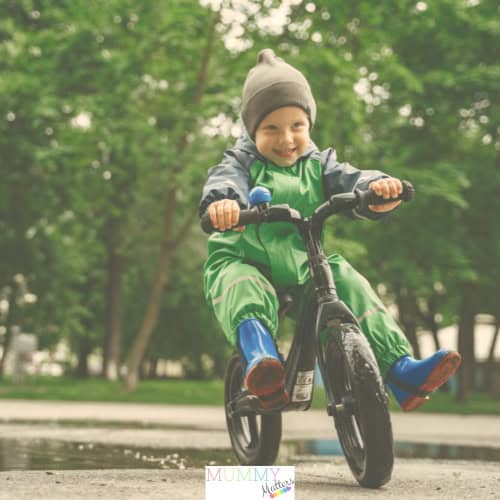
Balance bikes have become increasingly popular as a child’s first stepping stone into independent cycling. They have incredible benefits for a child’s development and coordination, and would make a beautiful Christmas gift for 2025.
This guide covers the key benefits of balance bikes, how they compare to tricycles and stabilisers, the best ages to use them, and how to help your child smoothly transition onto a pedal bike.
The benefits of balance bikes
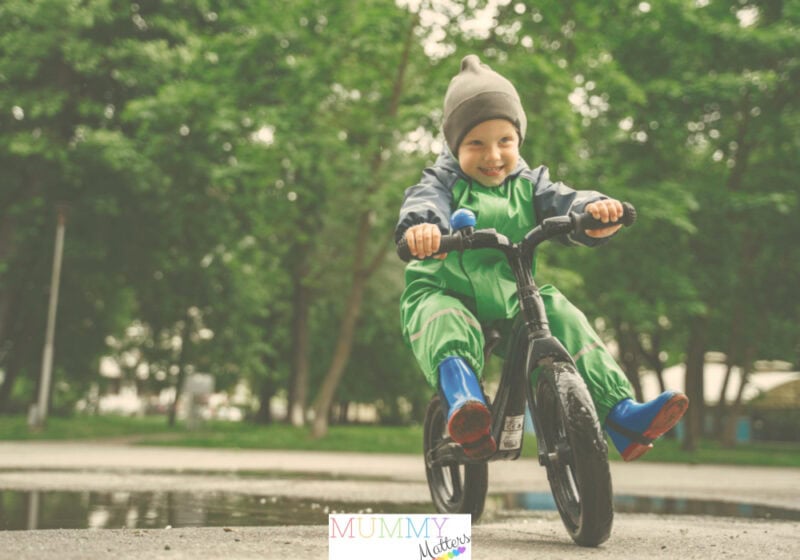
Balance bikes help children develop essential skills necessary for confident riding. Because they have no pedals, children focus purely on balance, learning to glide, steer, and stop using their feet. This promotes:
- Efficient development of balance and core strength
- Enhanced gross motor skills and coordination
- Improved spatial awareness and steering judgment
- Greater confidence and independence, as kids propel and control the bike on their own
- Increased time spent outdoors and in active play
Mastering balancing skills at an early age may even improve focus and academic capabilities by supporting brain-body connections.
Balance bikes vs. tricycles and stabilisers
When comparing balance bikes to tricycles and bikes with stabilisers (training wheels), notable differences emerge:
| Balance Bike | Tricycle / Stabilisers | |
|---|---|---|
| Balance Skills | Develops true balance early | Delays balancing, child relies on device |
| Confidence | Builds through independent control | Can become dependent on stabilisers |
| Steering | Natural, responsive | Limited, especially with stabilisers |
| Pedal Skills | Not yet required, learned after balancing | Pedalling learned, but not balancing |
| Transition to Pedals | Quicker, often skip stabilisers | Slower, may struggle when stabilisers removed |
| Portability | Lighter, easy to carry | Heavier, bulkier |
Children using stabilisers tend to lean outwards on turns (counter-intuitive to real bike riding) and can become attached to the extra support, making the eventual transition to two wheels harder. In contrast, balance bike riders typically go straight from balance to pedals, often skipping stabilisers entirely.
Best ages for balance bikes
Most children are ready for a balance bike once they can confidently walk and climb on by themselves; usually around 18 months to two years. Balance bikes are suitable for ages four to five, or until the child is ready for a pedal bike.
Larger balance bikes are available for taller preschoolers, but most will transition to a pedal bike between ages three and six.
Transitioning from balance bike to pedal bike
When a child has mastered striding and gliding on their balance bike, they’re usually ready to try pedals. Signs of readiness include:
- Comfortably gliding with feet off the ground
- Making controlled stops and turns
- Outgrowing their balance bike in height or skill
To encourage a smooth transition:
- Choose a pedal bike with a lightweight frame and the right wheel size (often 14–16” after a 12” balance bike).
- Teach your child to start by pushing off with both feet and finding their balance before pedalling.
- Practice in a safe, open area. Children may need reminders on coordinating pedals, but rarely need training wheels if they’ve mastered a balance bike.
- Support and cheer, but let them find their rhythm; avoid holding the seat if possible.
A patient, step-by-step approach helps most children make huge strides in a single session—often walking away with a huge boost of pride and independence.
Balance bikes set children up for cycling confidence, rapid skill progression, and a lifelong love of riding, making them a top choice for busy, active families.