
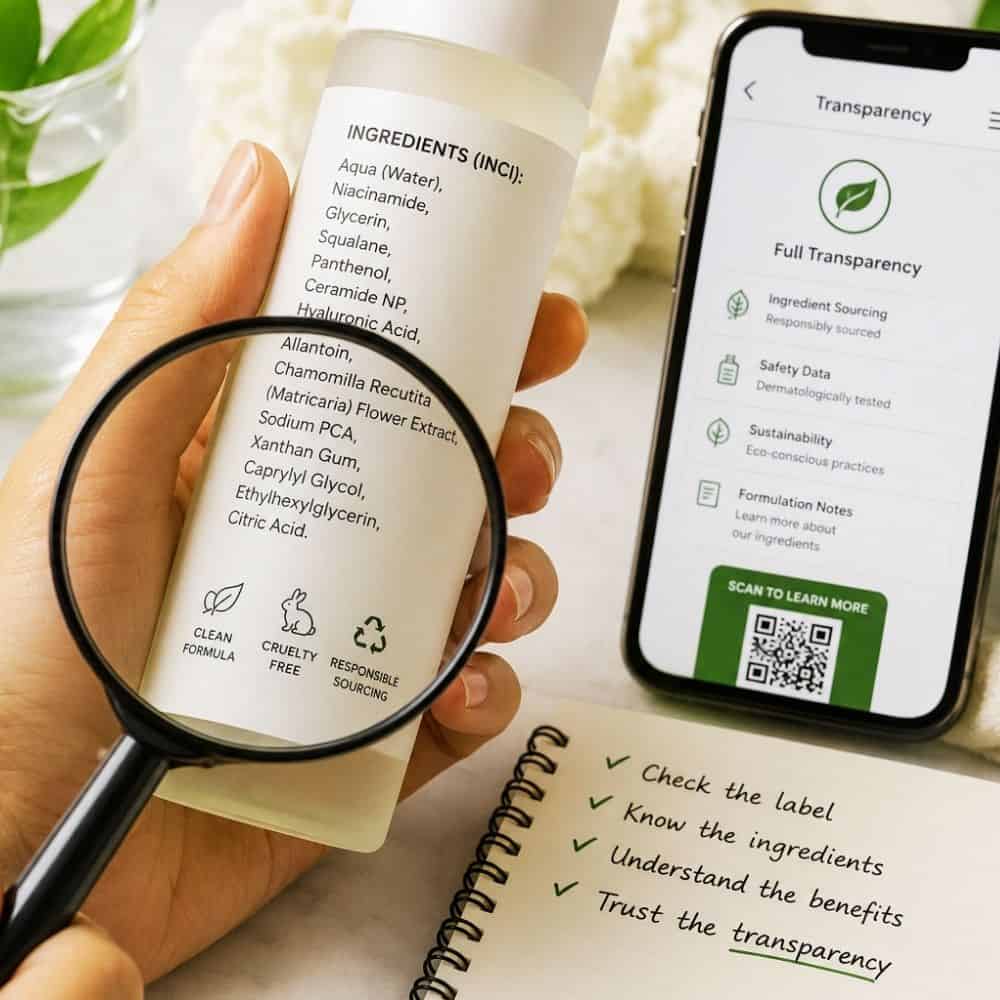
There was a time when a beauty label needed only two things to sell a product: a pretty bottle and a promise. That era is ending. Today’s shoppers flip the bottle over before they flip it open, and what they find there, or don’t find there, often determines whether the product goes into the cart or back on the shelf.
This shift has a name: ingredient transparency. It’s no longer a niche concern for people with sensitive skin or ingredient allergies. Instead, consumers are paying closer attention to skincare ingredients, wanting to understand what each ingredient does, why it’s included, and whether it aligns with their skin’s needs. As a result, ingredient transparency has become one of the biggest forces shaping how skincare products are formulated, labeled, marketed, and trusted. Here’s how it’s changing the industry, and what it means for anyone building a skincare routine in 2026.
Why Are Consumers No Longer Trusting Vague Beauty Claims?
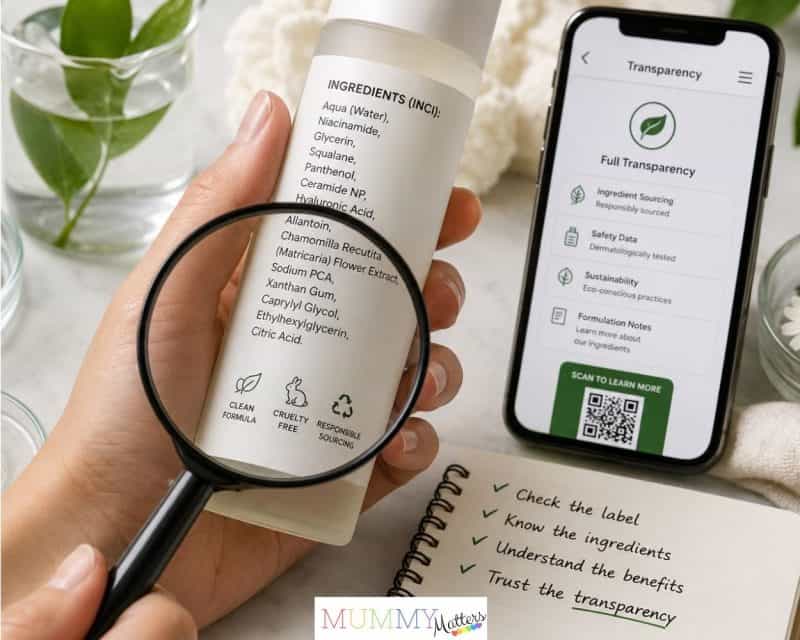
“Natural.” “Clean.” “Gentle.” For years, these words did all the selling. Not anymore. Shoppers have grown fluent in reading skincare ingredients the way they once read nutrition labels, scanning for names they recognize, percentages they can trust, and proof that a formula actually does what it claims.
This is the maturing of clean beauty into something more rigorous: evidence-based skincare. Instead of chasing vague promises, people now look for familiar, well-studied actives- niacinamide, peptides, ceramides and expect the brand to back up performance with real data, not adjectives. Market research on U.S. facial skincare confirms this directly: shoppers are actively seeking recognizable ingredient names and proof of efficacy before they’ll commit to a product, and brands that can’t produce that proof are losing ground to ones that can.
The takeaway is simple. A pretty story no longer closes the sale. A transparent ingredient list does.
How Far Does Ingredient Transparency Really Go?
Knowing what’s in the bottle is only half the picture. Increasingly, consumers want to know where it came from before it ever reached the bottle. Was that plant extract wild-harvested responsibly? Was that mineral sourced without exploiting the land or the people who worked it?
This is where transparency around skincare ingredients extends beyond the label and into the supply chain. Brands are being asked to show farm-to-formula traceability, proof that sourcing is ethical, sustainable, and environmentally sound, not just that an ingredient sounds exotic on a product page. It’s a meaningful shift from “what’s inside” to “how did it get here,” and it’s pushing formulators to document a part of the process that used to stay hidden entirely.
Can Full Disclosure Make Skincare Safer for Sensitive Skin?
For a large segment of shoppers, transparency isn’t about curiosity; it’s about safety. Fragrance remains one of the most common triggers of allergic skin reactions, and a comprehensive dermatology review published on behalf of the American Academy of Dermatology notes that fragrance mixes and preservatives like formaldehyde-releasers rank among the most frequent causes of allergic contact dermatitis tied to personal care products.
A full, honest ingredient list including proper INCI naming rather than vague catch-all terms gives people with sensitivities a real chance to avoid what harms them. It also matters clinically: dermatologists and aestheticians rely on accurate labeling to make sure a product won’t interfere with treatments like chemical peels or laser therapy. When it comes to skincare ingredients, transparency isn’t a marketing nicety here. It’s a safety tool.
Is Technology Making Transparency Easier to Verify?
Reading a dense ingredient panel is one thing. Verifying it is another. That gap is closing fast. QR codes on packaging, digital product pages, and searchable ingredient databases now let shoppers scan a product and instantly pull up sourcing details, safety data, and formulation notes that would never fit on a physical label.
This digital layer matters because it turns a static list into something a shopper can actually investigate. Instead of trusting a brand’s word, people can check it — in seconds, from their phone, in the store aisle.
How Are Regulations Forcing Brands to Be Honest?
Consumer pressure is only part of the story. In the United States, the Modernization of Cosmetics Regulation Act (MoCRA) has significantly expanded the FDA’s oversight of cosmetic products, requiring brands to register facilities, list every marketed product with the agency, and maintain records that substantiate their safety claims with real evidence, not assumption.
At the same time, third-party research from the public health organization NSF has found that consumer trust in unverified, self-declared “clean” or “organic” claims is eroding, with independent certification increasingly seen as the only way to prove a claim is real. Between regulatory pressure and consumer skepticism, greenwashing is getting harder to hide behind.
The Bottom Line
Ingredient transparency isn’t a passing trend; it’s becoming the baseline expectation for how skincare is made, sold, and trusted. Brands that treat their skincare ingredients list as a source of proof, not just a legal requirement, are the ones earning long-term loyalty in a market that’s done taking claims at face value.
If you’re building or refining your own routine, start where the real answers live: the ingredient list itself. Take a closer look at the skincare ingredients behind the products you already use, and see how many of them actually hold up to scrutiny.