
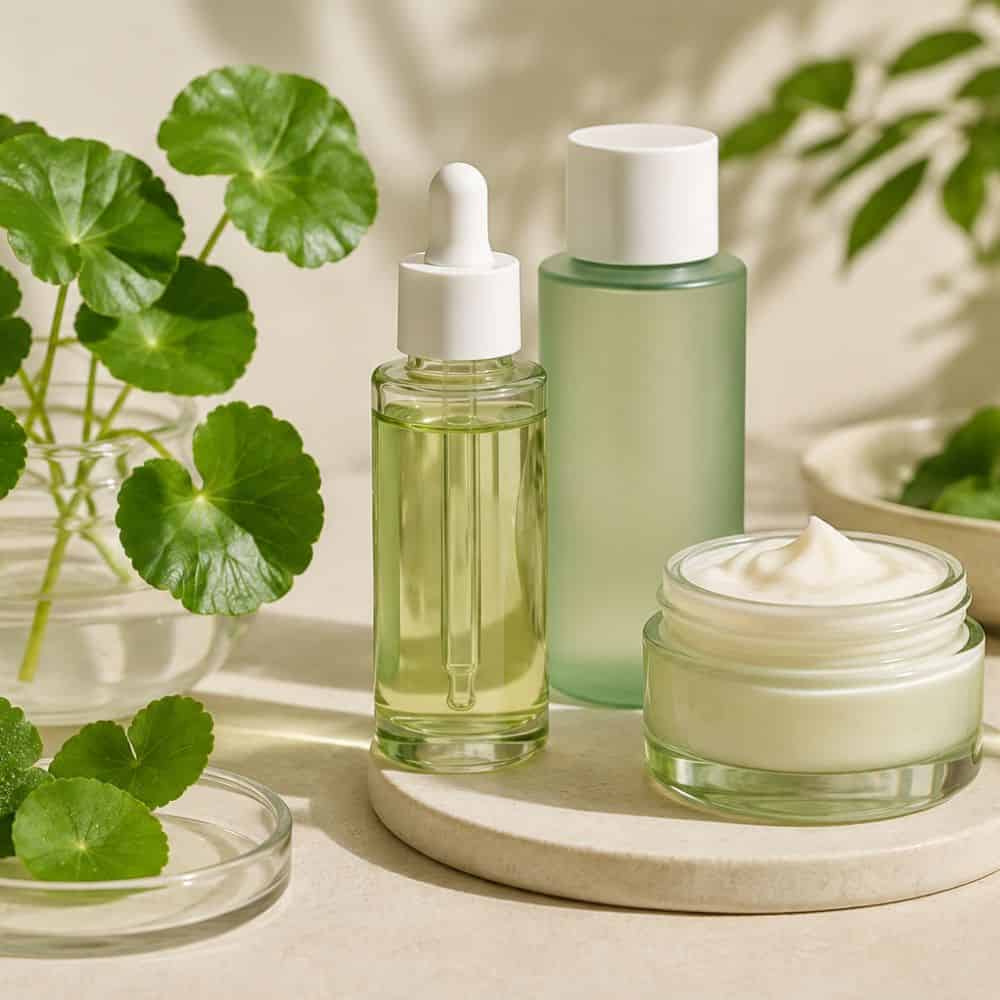
If you browse Korean beauty products, you will quickly come across Centella asiatica. Sometimes it is highlighted on the front of the packaging; elsewhere it appears as cica, tiger grass or through related ingredients such as madecassoside.
Its popularity has grown alongside K-beauty, but Centella is not a newly invented skincare trend. The plant has a long history of traditional use in parts of Asia, while modern cosmetic formulations now include Centella extracts in everything from lightweight toners to rich creams.
So what exactly is cica skincare, and why has Centella become such a recognisable ingredient?
What Is Centella Asiatica?
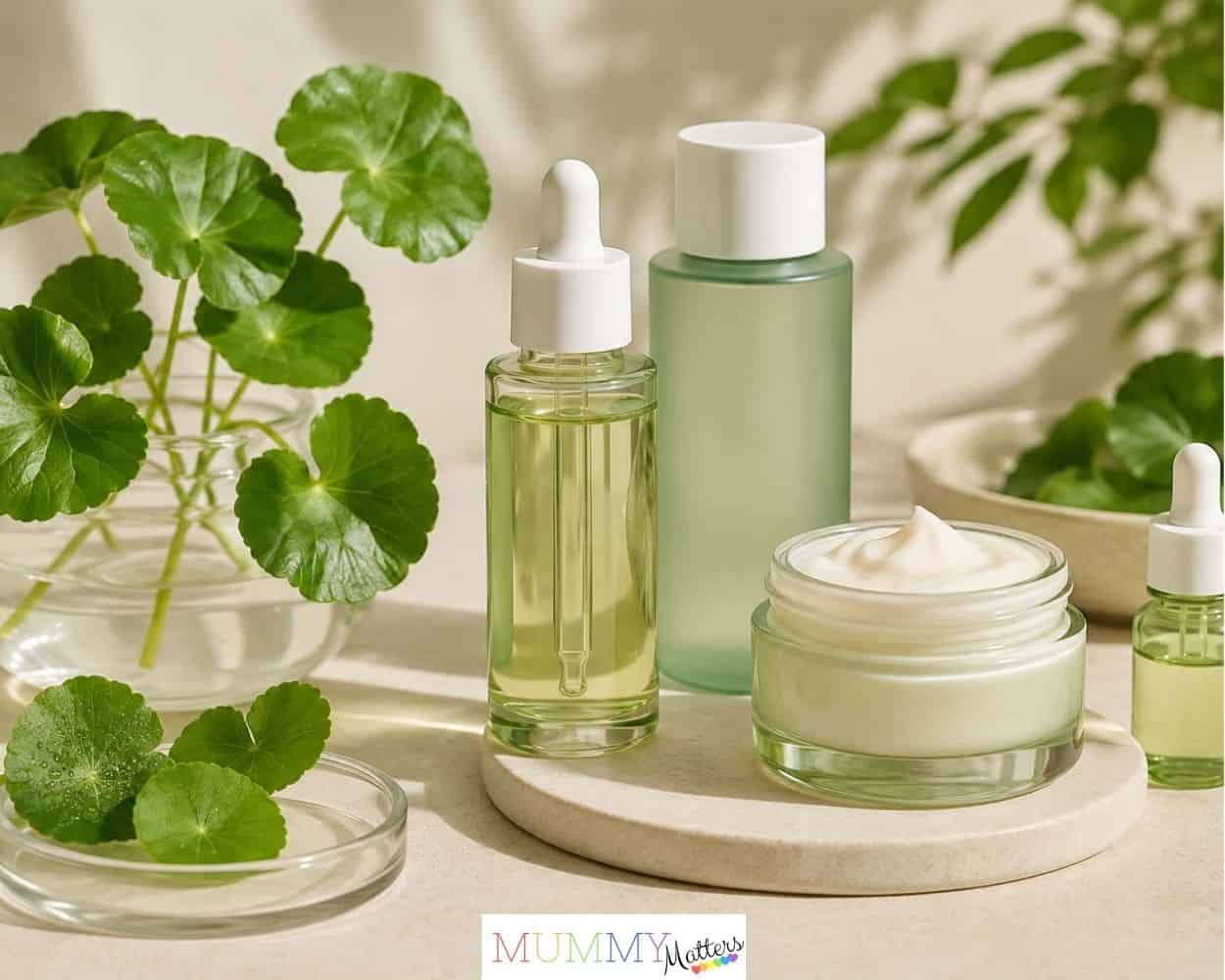
Centella asiatica is a herb found naturally in parts of Asia and other tropical regions. You may also hear it called gotu kola or tiger grass.
In skincare, manufacturers use extracts from the plant and compounds associated with it in topical formulations. Its use in moisturisers and other skincare products has helped move Centella from traditional botanical use into mainstream beauty.
For anyone exploring UK K-beauty, Centella is particularly difficult to miss because Korean brands use it across a wide range of formulations.
The important point is that Centella describes an ingredient family, not one particular type of product. A toner containing Centella can serve a very different purpose from a cream or ampoule built around the same botanical.
Why Is Centella Also Called Cica?
One source of confusion is the terminology.
Centella asiatica is the botanical name of the plant, while cica has become the shorter beauty-industry term commonly used for Centella-based skincare. Tiger grass and gotu kola can also refer to the same plant.
Ingredient lists may introduce several additional names, including:
- Madecassoside
- Asiaticoside
- Madecassic acid
- Asiatic acid
These are compounds associated with Centella asiatica rather than completely separate skincare trends.
This is why checking the ingredient list is more useful than relying only on the wording on the front of the bottle. Two products described as cica skincare may contain very different combinations of ingredients.
Why Has Cica Become So Popular in Korean Skincare?
Centella fits neatly into many of the product formats associated with Korean skincare, including lightweight toners, essences, ampoules and hydrating creams.
It also works well as a recognisable ingredient within more complex formulas. Some products put Centella at the centre of the formulation, while others combine it with humectants, ceramides or other botanical extracts.
Another reason for its popularity is the way people now shop for skincare. Consumers increasingly search for individual ingredients rather than simply choosing between a serum, toner or moisturiser. Terms such as niacinamide, peptides, ceramides and cica have become part of everyday beauty vocabulary.
Centella has benefited from that shift, especially as Korean skincare has become more widely available outside South Korea.
What Types of Centella Skincare Can You Buy?
Centella appears across several common product categories:
- Toners and essences: Lightweight formulas usually applied after cleansing.
- Ampoules and serums: Leave-on products where Centella may feature more prominently.
- Creams and moisturisers: Richer formulas that combine Centella with hydrating or emollient ingredients.
- Masks and cleansers: Products that incorporate Centella into either an occasional or wash-off step.
Browsing Centella skincare by product type can be more useful than simply choosing whichever formula promotes the ingredient most heavily.
Consider what you actually want to add or change. If you already have a moisturiser you enjoy, for example, a toner or serum may make more sense than replacing a product that is already working well for you.
Does More Centella Mean a Better Product?
Not necessarily.
Skincare products need to be judged as complete formulations. The amount and form of Centella matter, but so do the supporting ingredients, texture, product type and how the finished formula interacts with your skin.
Two products can both be marketed around cica while offering very different experiences.
When comparing them, it is more useful to ask:
- What type of product is it?
- What other ingredients does it contain?
- Does the texture suit your preferences?
- Where would it sit within your existing routine?
This gives you a better basis for choosing between products than concentrating on one headline ingredient alone.
Is Centella Skincare Worth Trying?
Centella has become one of the most recognisable ingredients in modern K-beauty, but that does not mean every skincare routine needs it.
Its appeal lies in the variety of ways it can be formulated, from watery toners to richer moisturisers and concentrated ampoules. That gives people plenty of choice in how they encounter the ingredient.
Expectations should still stay realistic. Centella skincare should not be presented as a cure for acne, eczema, rosacea or persistent sensitivity, and no single ingredient can guarantee the same result for every person.
Understanding what Centella means on an ingredient list, and how it is used within different formulations, makes it much easier to decide whether a cica product is genuinely relevant to your skin.