
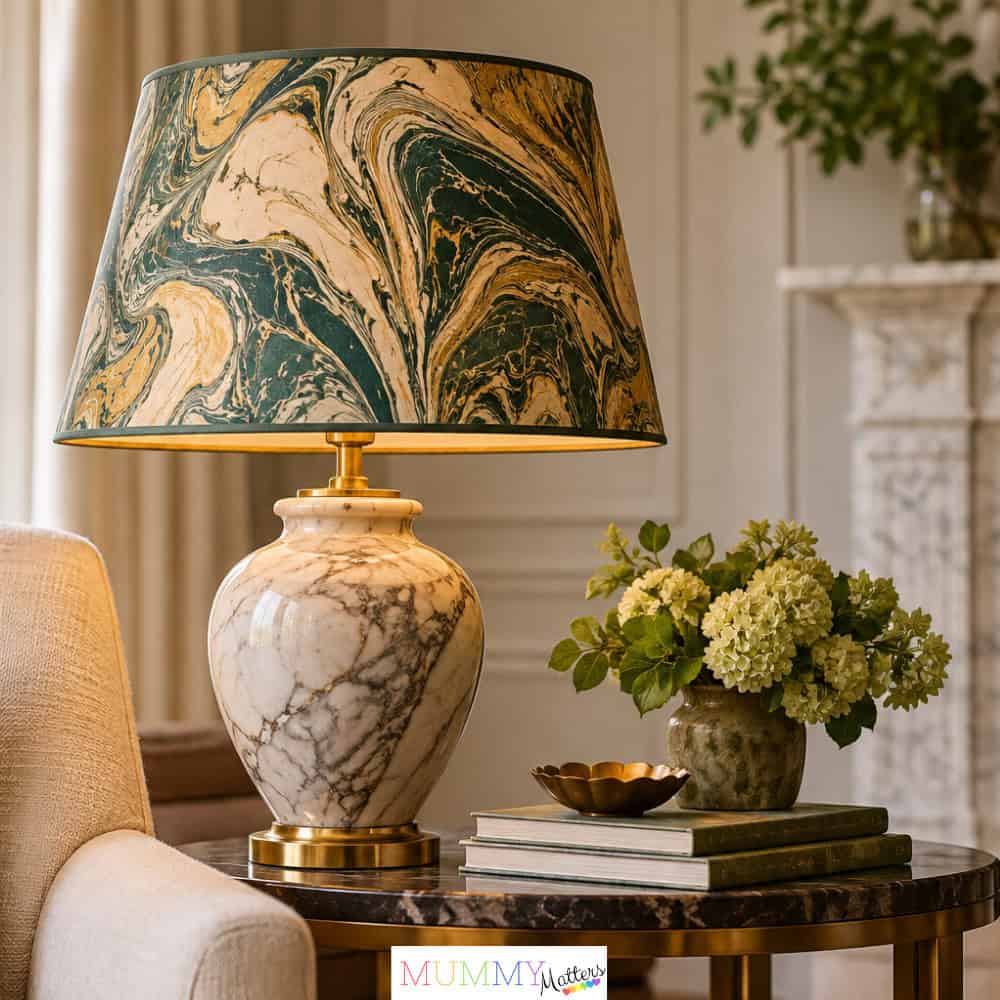
Marble accents are returning to home interiors because they add pattern, texture, and visual weight without overwhelming a room. When utilized sparingly in accents rather than covering every surface, the material works well in classic, contemporary, and curated interiors.
Marbled finishes bring movement to neutral rooms, while natural stone creates a grounded look. This renewed interest becomes easier to understand when color, scale, and placement guide each decorating decision.
Lighting provides a practical way to introduce a marble accent because it combines surface pattern with useful height. A marbled finish adorns a console, nightstand, or reading chair, while a lamp shade modifies the light’s distribution.
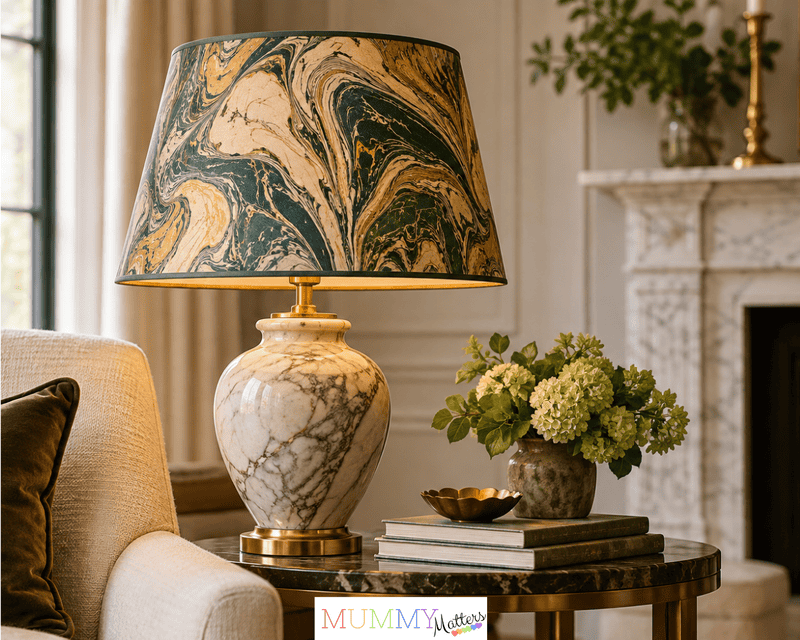
Carefully proportioned large table lampshades balance a broad base without making the arrangement feel heavy.
Why Marble Feels Fresh Again
After years of flat finishes and plain neutral rooms, homeowners are choosing surfaces with visible movement. Marble creates that movement through veining, swirls, mottled color, or a softly polished grain.
Its appeal also comes from its flexibility. While warm brown, red, gold, or indigo tones complement wood furniture and traditional upholstery, a black-and-white pattern is more suited to a modern room. A single accent creates focus without requiring a full room redesign.
Marbled paper provides a lighter option than stone. It brings the visual character associated with marble to lampshades, wall details, boxes, and smaller decorative pieces.
Use Color With Restraint
Marble accents work best when their colors connect with existing furnishings. A lampshade with gold and red details can echo a brass lamp base or a warm wood table. Indigo patterns pair neatly with cream upholstery and dark-painted furniture.
A neutral room does not need several colorful objects. One patterned lamp, tray, or tabletop piece often provides enough contrast. Repeating one shade from the accent elsewhere, such as in a book cover or cushion, creates a deliberate connection.
Before choosing a finish, homeowners should identify the room’s dominant tones. Matching every color creates a busy effect, while ignoring the existing palette makes the accent look separate from the furniture.
Match the Finish to the Room
Natural marble works well where a solid, cool surface adds structure. It suits fireplace surrounds, side tables, and small sculptural objects. Stone needs careful placement because its weight and veining draw attention quickly.
Marbled paper creates a different impression. Its surface feels more decorative and works well on lighting, stationery, storage pieces, and wall accents. Shades made from marbled paper, grass cloth, fabric, vintage wallpaper, or silk bring varied texture into a room.
A glossy finish reflects more light and creates a sharper appearance. A matte or textured finish looks quieter beside painted wood, linen, or woven upholstery. The surrounding materials should determine which surface feels appropriate.
Let Scale Do the Work
Large accents need enough surrounding space to remain readable. A broad lampshade belongs on a table with sufficient depth, while a smaller shade suits a narrow console or compact nightstand.
Height matters as much as width. A tall lamp beside a low chair fills vertical space, but a large shade beside an already tall cabinet creates visual congestion. Measuring the table, base, and surrounding furniture prevents awkward proportions.
The shade should also support the lamp base. A heavy ceramic or wood base needs a shade with enough width to maintain balance. A slender metal base usually suits a lighter profile and a less crowded pattern.
Build a Balanced Arrangement
Marble accents gain impact when nearby objects have simpler shapes. A rounded lamp can sit beside a rectangular book stack, while a patterned shade works above a plain tabletop. This contrast keeps the arrangement easy to read.
Texture provides another point of balance. Smooth stone pairs well with linen, woven fabric, or unfinished wood. Marbled paper looks especially effective beside materials with a restrained surface because busy textures compete with its pattern.
Placement should follow the room’s daily use. A lamp beside a reading chair needs comfortable light and clear access to its switch. Decorative appeal matters, but the arrangement must leave space for books, drinks, or other practical items.
Conclusion
Marble accents are returning because they give familiar rooms a distinct surface without requiring permanent construction. The best results come from choosing one focal point, linking its colors to nearby furnishings, and checking its scale against the lamp or furniture beneath it.
A marbled lampshade is a practical starting point because it adds pattern at eye level while improving a room’s lighting. Measuring the intended table and reviewing its existing palette should come first.