
If you’re the parent of a teenager, you’ve probably heard the words “I’m bored” more times than you can count during the school holidays. It can feel as though every suggestion is met with an eye roll, while every outing seems to come with a hefty price tag.
The good news is that keeping teenagers entertained doesn’t have to mean spending lots of money. In fact, some of the activities they remember most are often the simplest ones. Whether your teenager enjoys being outdoors, getting creative, learning new skills or earning a little extra money, there are plenty of affordable ways to fill long summer days without emptying your wallet.
As a mum of three teenagers, I’ve learnt that the key isn’t trying to entertain them every minute of the day. Teenagers naturally crave more independence, and often they’re happiest when they’re given ideas they can adapt for themselves rather than being told exactly what to do. A little inspiration can go a long way.
In this guide, you’ll find practical, budget-friendly ideas to help teenagers stay active, beat boredom, develop useful life skills and even make some money during the holidays. Many of these activities are completely free, while others cost very little, making them perfect for families who want to enjoy the summer without overspending.
| If your teenager has… | Try… |
|---|
| 15 minutes | Photography challenge, drawing prompt, Duolingo lesson |
| 1 hour | Bike ride, baking, geocaching |
| Half a day | Volunteer, country park walk, learn a new recipe |
| All day | Summer bucket list challenge, day hike, community project |
Why Teenagers Get Bored So Easily During the School Holidays

If it feels as though your teenager loses interest in everything within minutes, you’re certainly not alone. While it can be frustrating to hear “There’s nothing to do!” after you’ve spent time suggesting ideas, there are genuine reasons why teenagers often struggle with boredom during the long summer break.
They Suddenly Lose Their Routine
During term time, teenagers have a predictable structure. School, homework, clubs and socialising naturally fill much of their day. Once the holidays begin, that routine disappears overnight.
Without some structure, even teenagers who were desperate for a break can quickly find themselves feeling restless and unsure how to fill the hours.
Screens Make Everything Else Feel Less Exciting
Phones, gaming consoles and social media provide a constant stream of entertainment and instant rewards. After spending hours scrolling or watching videos, slower-paced activities such as reading, crafting or going for a walk can seem far less appealing at first.
That doesn’t mean screens are the enemy. Rather than banning them altogether, it often works better to encourage a healthy balance between screen time and other activities.
They Want More Independence
As children grow into teenagers, they naturally want more control over how they spend their time. Activities they once loved may suddenly feel “too childish”, while spending every day with parents isn’t always top of their wish list either.
Offering suggestions instead of making plans for them can help. Giving teenagers the freedom to choose how they spend their day often leads to greater enthusiasm and fewer arguments.
Boredom Isn’t Always a Bad Thing
It can be tempting to fill every spare moment with organised activities, but a little boredom can actually be beneficial. When teenagers aren’t constantly entertained, they’re more likely to use their imagination, develop new interests and become better at entertaining themselves.
Sometimes the best ideas appear only after they’ve had time to sit with that feeling of boredom for a while.
The aim isn’t to create a packed timetable every day. Instead, think of this list as a menu of ideas that your teenager can dip into whenever they need a little inspiration. Having a variety of low-cost options ready means you’re less likely to feel pressured into expensive days out just to keep everyone happy.
Outdoor Adventures That Cost Very Little

Fresh air, a change of scenery and a little freedom can work wonders for a bored teenager. Best of all, many outdoor activities are completely free or cost very little, making them ideal for long summer days when you don’t want to spend a fortune.
1. Go Geocaching
Turn an ordinary walk into a real-life treasure hunt by trying geocaching. Using a free app and GPS on their phone, teenagers can search for hidden containers (called geocaches) in parks, woodlands and towns across the UK. It’s a brilliant way to explore somewhere new while adding a sense of adventure.
2. Create a Photography Challenge
Challenge your teenager to capture interesting photos based on a theme such as nature, reflections, architecture or wildlife. If they’re already glued to their phone, why not encourage them to use the camera creatively instead of endlessly scrolling social media?
3. Explore a New Walking Trail
You don’t have to travel far to discover somewhere different. Nature reserves, canal paths, woodland trails and local country parks often provide hours of entertainment, especially if your teenager enjoys photography, birdwatching or simply getting away from busy places.
4. Cycle Somewhere New
Instead of riding around the same streets, help your teenager plan a cycling route to a nearby village, café, country park or picnic spot. Planning the journey themselves builds confidence and makes the ride feel more like an adventure.
5. Watch the Sunrise or Sunset
Challenge them to wake up early for a sunrise walk or head out together one evening to watch the sunset from a local hill, beach or beauty spot. These simple moments often become some of the most memorable parts of the summer holidays.
6. Try an Outdoor Gym
Many parks now have free outdoor fitness equipment. Teenagers who enjoy keeping active can create their own workout, race siblings or combine it with a walk or bike ride.
7. Learn a New Outdoor Skill
Why not spend an afternoon learning something different? Skimming stones, using a compass, identifying wildflowers, spotting birds or practising basic bushcraft skills can all make time outdoors feel more interesting.
8. Plan a Picnic With Friends
Instead of paying for lunch out, pack sandwiches, fruit and snacks from home and arrange to meet friends at a local park. It’s a simple, affordable way to enjoy good company without spending much money.
9. Complete a Nature Challenge
Create a checklist of things to find, such as a butterfly, a feather, an oak tree, a ladybird or five different bird species. Teenagers may roll their eyes at first, but adding a competitive element can make it surprisingly addictive.
10. Volunteer at a Community Event
Many local festivals, fun runs, charity events and community projects welcome teenage volunteers. It’s a great way to gain experience, meet new people and build confidence while giving something back to the local community.
Make It Their Adventure
One thing I’ve learnt with my own teenagers is that they’re far more enthusiastic when they feel they’ve chosen the activity themselves. Rather than announcing, “We’re going for a walk,” I might ask them to choose somewhere we’ve never explored before or challenge them to find the best picnic spot or the perfect photo along the way. Giving them ownership often makes all the difference.
Creative Challenges at Home

Not every summer day brings sunshine, and sometimes teenagers simply don’t feel like going out. The good news is that home doesn’t have to mean hours of scrolling through social media or saying, “There’s nothing to do.” With a little inspiration, home can become the perfect place to discover a new hobby, develop a skill or simply have some fun.
11. Learn to Cook a New Meal
Cooking is one of the most valuable life skills a teenager can learn. Challenge them to choose a recipe, write the shopping list, prepare the meal and even serve it to the family. By the end of the summer, they could have a collection of signature dishes they’ll still use as adults.
12. Give Their Bedroom a Makeover
A bedroom refresh doesn’t have to involve buying new furniture. Rearranging the layout, decluttering, creating a gallery wall from favourite photos or adding homemade decorations can make the space feel completely different at little or no cost.
13. Start a 30-Day Drawing Challenge
Whether they’re already artistic or complete beginners, daily drawing prompts can help improve creativity and confidence. There are plenty of free challenge lists available online to keep them motivated.
14. Learn Crochet, Knitting or Embroidery
Traditional crafts are becoming increasingly popular with teenagers thanks to social media. A few inexpensive supplies can keep them occupied for hours while creating something they can actually use or gift to someone else.
15. Build Something
Encourage your teenager to tackle a practical project. They could build flat-pack furniture, create a bird box, make shelves for their room or even design something from recycled materials. Problem-solving and hands-on projects can be incredibly satisfying.
16. Create a Short Film
Using nothing more than a smartphone, teenagers can write a script, film scenes and edit their own mini movie. Whether it’s a comedy sketch, travel-style vlog or stop-motion animation, it’s a fantastic way to develop creative and technical skills.
17. Try a Baking Challenge
Choose a recipe they’ve never attempted before and see if they can master it. Brownies, cookies, homemade pizza, cupcakes or bread all provide plenty of opportunities to learn new techniques—and the family gets to enjoy the results.
18. Design Their Own Clothing or Accessories
Old T-shirts, denim jackets, tote bags and trainers can all be given a new lease of life with fabric paint, embroidery, tie-dye or iron-on patches. Upcycling clothing is an affordable way to express their personality while reducing waste.
19. Start a Journal or Scrapbook
A journal doesn’t have to be pages of writing. They could document their summer through photographs, ticket stubs, pressed flowers, sketches, favourite quotes or daily highlights. It’s something they’ll enjoy looking back on in years to come.
20. Learn a Musical Instrument
If there’s a guitar gathering dust in the corner or a keyboard tucked away in the loft, summer is the ideal time to start learning. Free tutorials on YouTube make it easier than ever to pick up the basics without paying for lessons.
Let Them Follow Their Interests
One thing that’s become clear with my own teenagers is that they’re much more likely to stick with an activity if they’ve chosen it themselves. Rather than suggesting hobbies you think they should enjoy, pay attention to what they’re already interested in. A teenager who loves gaming might enjoy learning video editing, while one who spends hours watching baking videos may surprise you by making dinner for the family. Sometimes all they need is a little encouragement to turn an interest into a new skill.
Make Money Instead of Spending It

One of the best ways to keep teenagers motivated during the school holidays is to help them earn their own money. Not only does it keep them busy, but it also teaches responsibility, builds confidence and helps them appreciate the value of what they buy.
Depending on your teenager’s age and local opportunities, there are plenty of safe and practical ways they can start earning. Older teenagers who are considering part-time work should also familiarise themselves with the UK’s employment rules for young workers.
21. Offer Dog Walking Services
If they enjoy spending time with animals, walking dogs for neighbours, friends or family members can be a great way to earn extra money while getting plenty of exercise.
22. Wash Cars
A bucket, sponge and a bit of elbow grease are often all that’s needed to start a small car washing service. Many neighbours are happy to support a polite, hardworking teenager.
23. Help With Gardening
From mowing lawns and weeding flower beds to watering plants while people are away on holiday, there are lots of simple gardening jobs that busy neighbours may be happy to pay for.
24. Babysit for Friends or Family
Older, responsible teenagers may be able to babysit younger children for trusted family friends or relatives. It’s an excellent way to gain experience while earning money, particularly if they’re considering a future career in childcare.
25. Sell Unwanted Clothes
Summer is the perfect opportunity to sort through wardrobes. Good-quality clothes, shoes and accessories can often be sold on platforms such as Vinted, giving them extra spending money while clearing some space.
26. Declutter and Sell Old Books, Games or Toys
Many teenagers have books, board games, consoles or collectibles they’ve outgrown. Selling unwanted items online or at a local car boot sale can provide a useful cash boost while helping them stay organised.
27. Tutor Younger Children
If your teenager enjoys maths, English, music or another subject, they may be able to help younger pupils with homework or revision. Even informal tutoring for friends or relatives can build confidence and communication skills.
28. Become a Pet Sitter
Many families need someone to feed cats, check on rabbits or care for other small pets while they’re away. It’s a flexible way for animal-loving teenagers to earn money close to home.
29. Help Older Neighbours With Simple Jobs
Small tasks such as carrying shopping, tidying sheds, cleaning patios or helping with basic technology can make a real difference to older neighbours while giving teenagers valuable experience in customer service and responsibility.
30. Turn a Hobby Into a Small Business
Does your teenager enjoy baking, photography, art, jewellery making or creating digital designs? The school holidays can be a great time to explore whether a hobby could earn a little extra income. Even designing birthday invitations or personalised cards for friends and family can help develop entrepreneurial skills.
It’s About More Than the Money
I’ve found that teenagers often value the things they’ve worked for far more than those simply handed to them. Earning enough to buy a new game, save towards driving lessons or pay for a day out with friends gives them a real sense of achievement. It also creates natural opportunities to talk about budgeting, saving and making thoughtful spending decisions—skills they’ll use long after the summer holidays are over.
Top tip: Before your teenager starts offering services locally, talk through safety expectations together. Younger teens should always let an adult know where they’ll be, avoid entering strangers’ homes unless appropriate and supervised, and keep you updated on their plans. A little preparation helps them build confidence while staying safe.
Learn Skills They’ll Thank You For Later

The summer holidays are the perfect opportunity for teenagers to learn skills that often get overlooked during the busy school term. These practical life skills can boost confidence, encourage independence and prepare them for adulthood—all while keeping boredom at bay.
31. Learn Basic First Aid
Knowing what to do in an emergency is a skill every teenager should have. They can learn how to treat minor injuries, recognise the signs of someone needing urgent help and understand basic CPR through reputable online resources or local first aid courses.
32. Master a Few Family Meals
Challenge your teenager to become responsible for cooking one family meal each week during the holidays. By the end of the summer, they’ll have built confidence in the kitchen and gained a valuable life skill.
33. Learn Basic Car Maintenance
Older teenagers can start learning simple tasks such as checking tyre pressures, topping up screen wash, checking oil levels and understanding dashboard warning lights. These are practical skills that will come in handy once they begin driving.
34. Create Their First CV
Even if they aren’t ready for a part-time job yet, putting together a CV encourages teenagers to think about their strengths, achievements, volunteering experience and future ambitions.
35. Learn How to Budget
Give your teenager a small weekly budget and let them plan how they’ll spend or save it. It’s a great way to introduce concepts such as saving towards a goal, avoiding impulse purchases and making informed financial decisions.
36. Improve Their Photography Skills
If they love taking photos, encourage them to learn about composition, lighting and editing. These skills can be useful for social media, school projects or even future career opportunities.
37. Learn Basic DIY
Teaching teenagers how to safely use simple tools, hang a picture, assemble furniture or paint a wall helps build confidence and self-reliance. Many enjoy the satisfaction of seeing a finished project.
38. Develop Public Speaking Skills
Whether it’s recording short videos, presenting a hobby to the family or joining a local youth group, practising communication skills can increase confidence and prepare teenagers for interviews, presentations and future careers.
39. Try Coding or Graphic Design
Free websites and online tutorials make it easy to learn the basics of coding, website design or graphic design. Even a beginner’s understanding can open doors to future study or employment opportunities.
40. Learn to Plan Their Time
Managing time is a skill many adults are still developing. Encourage your teenager to set a few personal goals for the summer and create a simple weekly plan. Whether they want to read more books, improve their fitness or earn some money, learning to organise their time will benefit them long after the holidays end.
Focus on Progress, Not Perfection
One thing I’ve learnt as a parent is that teenagers don’t need to become experts overnight. Trying something new, making mistakes and gradually improving is all part of the learning process. The confidence they gain from mastering even one new skill over the summer can have a lasting impact when they return to school, apply for jobs or begin thinking about their future.
Make Screen Time More Meaningful

Let’s be realistic—most teenagers are going to spend some of their summer holidays on their phones, tablets or computers. Rather than seeing screen time as the enemy, it can help to encourage activities that entertain while also teaching something new.
The goal isn’t to eliminate screens altogether but to help teenagers use technology more intentionally.
41. Learn a New Language
Apps and free online courses make learning a language more accessible than ever. Whether they’re planning future travel or simply enjoy a challenge, spending just 10–15 minutes a day can add up over the summer.
42. Follow Educational YouTube Channels
YouTube isn’t just for gaming videos and influencers. There are thousands of high-quality channels covering everything from science and history to cooking, photography, music and DIY projects. Encourage your teenager to explore topics they’re genuinely curious about.
43. Take a Free Online Course
Many organisations offer free beginner courses in subjects such as coding, creative writing, business, psychology and graphic design. Completing a course can boost confidence and may even spark an interest in a future career.
44. Learn Video Editing
Many teenagers already enjoy filming short videos. Learning how to edit footage, add music, create transitions and tell a story is a valuable creative skill that could be useful for school, hobbies or future work.
45. Design Graphics or Digital Art
Free design tools allow teenagers to create posters, invitations, social media graphics or digital artwork. It’s a fun way to develop creativity while learning skills that are increasingly useful in education and the workplace.
46. Research a Topic They’re Passionate About
Whether it’s Formula 1, marine life, fashion, astronomy or ancient history, encourage your teenager to spend an afternoon becoming an expert on something they genuinely enjoy. Following their curiosity often leads to deeper learning than studying a subject they feel they have to do.
47. Start a Passion Project
Summer is the perfect time to begin something that’s entirely their own. They could start a blog, launch a YouTube channel, record a podcast, build a simple website or create an online portfolio of their artwork or photography. Even if it never becomes more than a hobby, they’ll develop valuable skills along the way.
48. Learn Keyboard Shortcuts and Digital Skills
Typing faster, organising files, using spreadsheets, creating presentations or understanding online safety may not sound exciting, but these are practical skills that will benefit teenagers throughout school, university and their future careers.
Screens Can Be Part of a Balanced Summer
I’ve found that trying to ban screens completely usually leads to frustration for everyone. Instead, we aim for balance. Some days my teenagers spend longer gaming or chatting with friends online, especially if the weather is poor, but mixing that with time outdoors, family activities and opportunities to learn something new creates a much healthier routine. The aim isn’t perfect balance every day—it’s helping teenagers enjoy a varied and fulfilling summer.
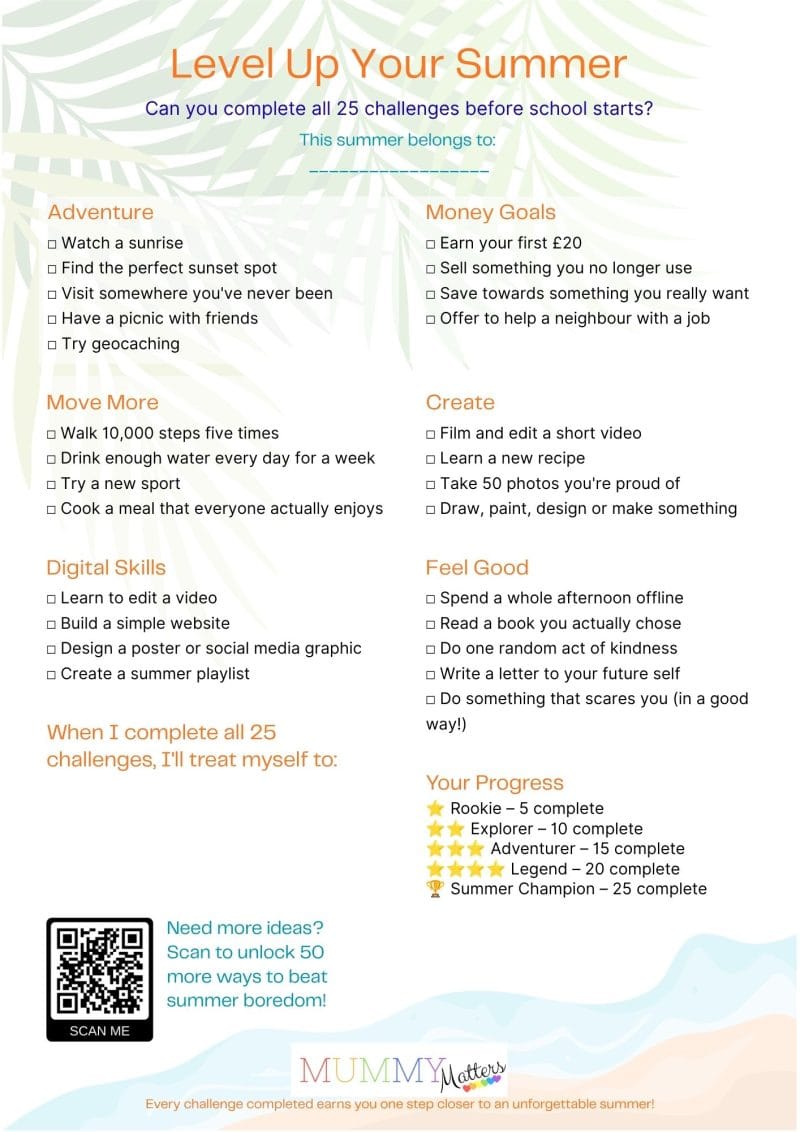
Free Download: Level Up Your Summer Challenge
If your teenager enjoys ticking off goals and completing challenges, don’t miss our FREE Level Up Your Summer Challenge. Packed with 25 fun, budget-friendly activities, it’s designed to help teens beat boredom, try something new and make the most of the school holidays.
You’ll find the free printable to download at the end of this article. Print it out, pop it on the fridge or bedroom wall, and see how many challenges they can complete before school starts!
Create a Summer Bucket List Together

With so many ideas to choose from, it can be difficult for teenagers to know where to start. Instead of trying to do everything, encourage them to create their own summer bucket list.
The key is to make it personal. A teenager who loves sport will have a very different list from one who enjoys reading, photography or music. Giving them ownership of their goals makes them far more likely to stick with them.
Here are a few ideas to get them started:
- Read three books they’ve been meaning to try.
- Walk or cycle 100 miles over the summer.
- Learn to cook five new meals.
- Save towards something they really want to buy.
- Visit five places they’ve never explored before.
- Complete a charity challenge or fundraiser.
- Volunteer in the local community.
- Learn 50 words in a new language.
- Spend one day each week completely screen-free.
- Watch the sunrise or sunset somewhere beautiful.
- Create a scrapbook or photo journal of the summer.
- Grow vegetables, herbs or flowers from seed.
- Learn a new card game or board game to play with friends and family.
- Camp in the garden for a night.
- Write a letter to their future self to open next summer.
You could even print the list and stick it on the fridge, adding ticks as each challenge is completed. Seeing their progress can be surprisingly motivating and often encourages them to keep trying new things.
Every Teenager Is Different
As a mum of three teenagers, I’ve learnt that what excites one child can leave another completely uninterested. One might happily spend hours outdoors, another prefers learning a new skill at home, while another simply wants to spend more time with friends.
That’s perfectly normal.
The aim isn’t to keep every minute of every day filled. In fact, allowing teenagers some downtime gives them the chance to recharge, become more independent and discover what genuinely interests them.
By having a collection of free and low-cost ideas ready, you’ll be able to respond to the inevitable “I’m bored” with plenty of inspiration—without feeling pressured to spend lots of money on expensive attractions or shopping trips.
After all, some of the best summer memories don’t come from how much you spend. They come from the time you spend together, the new experiences you share and the confidence your teenager gains by trying something different.
Frequently Asked Questions
How can I keep my teenager busy without spending money?
The best free activities for teenagers are often the simplest. Walking or cycling somewhere new, visiting a local nature reserve, geocaching, playing sport, volunteering, learning a new skill, reading, cooking or taking part in photography challenges all provide entertainment without costing anything. Giving teenagers a choice of activities rather than planning every minute for them can also help reduce complaints of boredom.
What can bored teenagers do at home?
Teenagers can use time at home to learn a new recipe, rearrange their bedroom, start a creative hobby, practise a musical instrument, improve their photography, write stories, learn graphic design, complete an online course or start a passion project. The key is encouraging activities that match their interests rather than expecting every teenager to enjoy the same things.
How much screen time should teenagers have during the school holidays?
There isn’t a one-size-fits-all answer. Many families find it more helpful to focus on balance rather than setting strict limits. If teenagers are also getting enough sleep, staying active, spending time with friends and family, and taking part in offline activities, screen time can be a healthy part of their summer rather than something to avoid completely.
How do I stop my teenager constantly saying they’re bored?
Instead of trying to entertain your teenager all day, encourage them to take ownership of their time. Creating a list of free and affordable activities together before boredom strikes gives them ideas to choose from. Remember that boredom isn’t always a bad thing—it often encourages creativity, independence and problem-solving.
Why is my teenager always bored during the holidays?
The long summer break removes the routine that school provides, leaving teenagers with more unstructured time. At the same time, social media and online entertainment offer constant stimulation, making quieter activities seem less exciting at first. A balance of independence, new experiences and opportunities to learn can help make the holidays feel more rewarding.
Final Thoughts
Keeping teenagers busy during the school holidays doesn’t have to mean spending a small fortune. With a little planning, plenty of encouragement and a willingness to let them take the lead, it’s possible to create a summer filled with memorable experiences that don’t stretch the family budget.
Whether your teenager spends the holidays exploring the outdoors, learning a new skill, earning their first bit of spending money or simply enjoying more quality time with friends and family, the experiences they gain can be just as valuable as any expensive day out.
Ready to Level Up Your Summer? Download your FREE Level Up Your Summer Challenge printable and see if you can complete all 25 challenges before school starts. It’s packed with fun, affordable ideas to keep teenagers active, creative and inspired throughout the holidays.