
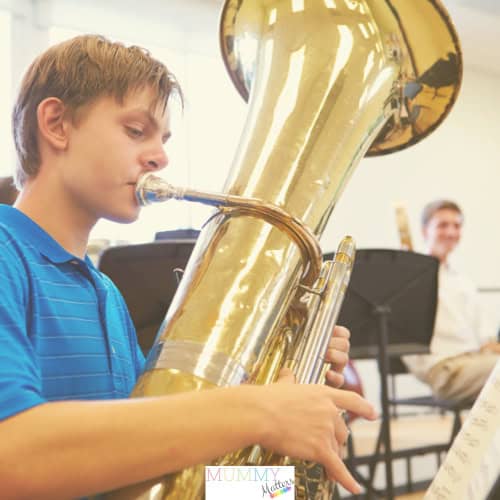
Every school band has one, but almost no student asks for it by name. The tuba sits at the back of the ensemble, doing some of the heaviest musical lifting of any instrument on stage, and still manages to be the last thing most people think about when they picture a music program.
That’s a shame, because from a music education standpoint, the tuba brings things to a program that no other instrument quite replicates. It anchors the sound, develops serious musicianship, and fills a role that every ensemble director knows is critical and hard to fill. In countries with strong brass traditions like Ireland, the tuba has always had a respected place in concert bands and community ensembles. That same respect is worth building into music programs everywhere.
Here is a closer look at five reasons the tuba is one of the most valuable instruments a music program can invest in.
1. It Holds the Entire Ensemble Together

There’s a reason ensemble directors get anxious when they don’t have a tuba player. The instrument sits at the harmonic foundation of the group, playing the bass line that every other instrument builds on top of. When the tuba is strong, the whole ensemble sounds more grounded and confident. When it’s missing or weak, even a group of talented players can sound unsteady without quite knowing why.
This role is unique. Most instruments in a band or orchestra contribute to the texture of the music, but the tuba defines its foundation. Learning to play that role teaches a musician something that melody instruments rarely have to think about, which is how to support others without drawing attention to yourself. That’s a musical and personal lesson that stays with a student long after they leave the program.
2. A Rare Instrument With Real Ensemble Value
Music programs thrive when their players are genuinely needed, and tuba players are needed in a way that most instrumentalists simply aren’t. Directors who have researched where to source quality tubas for their programs often find that the demand for committed players consistently outpaces supply, making each student who takes up the instrument immediately valuable to their ensemble.
Instrument retailers like O’Malley Musical Instruments stock tubas across different sizes and levels specifically to support programs that are building their low brass sections from the ground up. For a program trying to field a complete and balanced ensemble, having even one strong tuba player changes what repertoire becomes possible.
The scarcity of tuba players also means that students who commit to the instrument tend to get more performance opportunities earlier than their peers on more popular instruments. That early stage experience builds confidence and musicianship faster than waiting years for a spot in a crowded section.
3. The Physical Demands Build Real Musical Discipline
Playing the tuba requires more air than any other instrument in the brass family. That’s not an exaggeration. Producing a full, resonant tone on a large bore tuba takes significant lung capacity and breath control, and developing those skills takes consistent, focused practice over time. For music programs, that physical demand is actually an asset rather than a drawback.
The American Lung Association notes in their blog Inhale Air, Exhale Music that breathing technique is one of the most critical skills for wind instrument players, and that the demands of playing regularly can strengthen how musicians use and control their breath over time. For students learning the tuba specifically, that benefit is amplified because the instrument requires more air than any other brass instrument in the ensemble.
4. It Strengthens the Whole Program’s Sound
A music program is only as strong as its weakest section, and low brass is often where that weakness shows up first. A program with strong woodwinds and trumpets but no reliable tuba will always sound incomplete, no matter how well the rest of the ensemble plays. Investing in tuba players, through quality instruments, dedicated instruction, and genuine encouragement, raises the ceiling for the entire program.
In practice, directors who prioritise their low brass sections tend to see improvements in ensemble cohesion that they didn’t anticipate. The rhythm section locks in better, intonation across the group improves, and the overall sound becomes more confident and full. None of that happens without a tuba that’s working well and a player who understands their role.
5. Long-Term Opportunities for Dedicated Players
Students who stick with the tuba tend to find that doors open for them in ways that players of more common instruments don’t always experience. University music programs actively recruit low brass players. Scholarship opportunities exist specifically because programs need them. Military bands, professional ensembles, and community orchestras are consistently looking for qualified tuba players at every level.
For tuba players specifically, that long-term engagement is supported by real demand that keeps them playing well beyond their school years. A student who commits to the tuba isn’t just learning an instrument. They’re positioning themselves for a lifetime of musical participation.
The Bottom Line
Music programs that take the tuba seriously tend to be stronger across the board. The instrument builds discipline, anchors the ensemble, and creates opportunities for students that more popular instruments simply can’t match. For directors building or improving a program, and for students willing to take the road less travelled, the tuba is one of the most rewarding choices in music education. It’s not the flashiest option. It’s just one of the best.