A fresh and magical children’s television series has taken root in the UK – and it’s unlike anything you’ve seen before. Treehouse, a new live-action preschool show, made its debut on Channel 5’s Milkshake! on 31st May and continues to air every Saturday and Sunday morning at 7:10am. But beyond its charming woodland characters and whimsical storytelling, Treehouse is setting new standards for sustainable production and meaningful, inclusive content for young audiences.
Filmed at RD Studios – one of the UK’s top three sustainable studios – Treehouse is a pioneering show, being the first of its kind in children’s television to feature a 100% recyclable set. Every element, from production through to the final on-screen experience, has been created with the environment in mind. RD Studios’ commitment to sustainability is backed by impressive figures: 595 MWh of lifetime energy generated, 115,233 kg of CO₂ emissions saved, the equivalent of 6,971 trees planted, and 331,006 litres of water recycled.
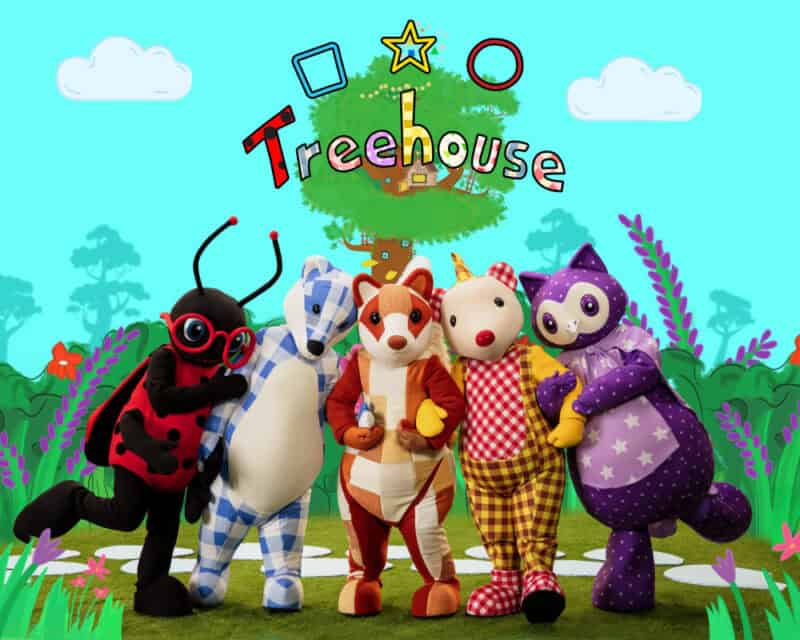
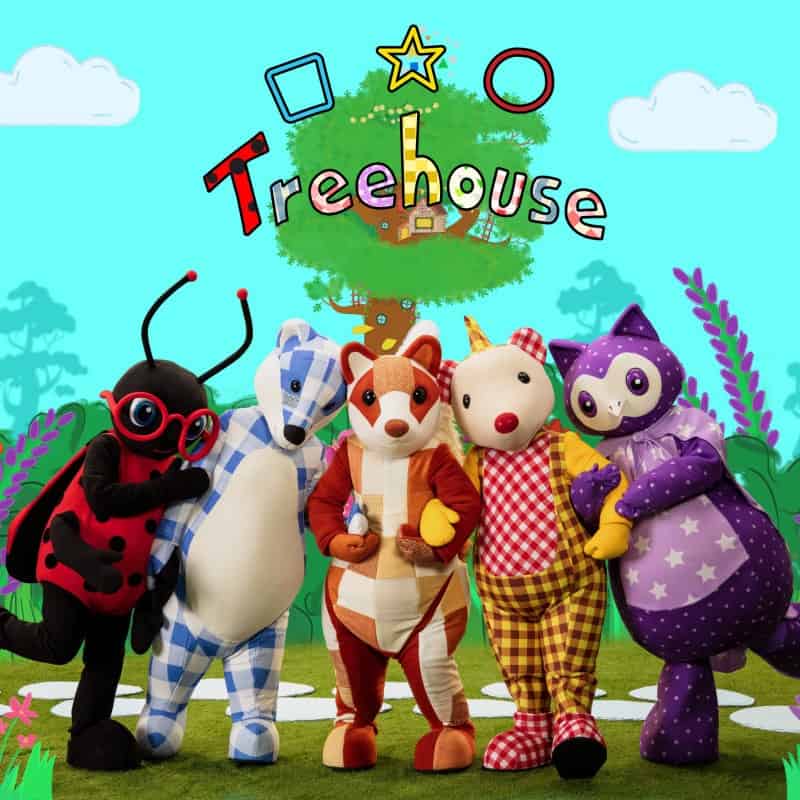
Treehouse has been crafted to inspire the next generation to celebrate and protect nature. Set in a magical woodland world, it seamlessly blends live-action, puppetry, costumed characters, and 2D animation, all tied together with a warm, friendly narrator. Each seven-minute episode (there are 30 in total) invites young viewers into Squiggle’s world — a curious squirrel who lives in a treehouse in the countryside with his best friends, Fluff the mischievous mouse and Nok Nok the inquisitive woodpecker.
Through the magical wall of windows, Squiggle visits his woodland neighbours: Magnus the energetic owl, duo Badger and Scratch, and Dotty the dancing ladybird. These encounters lead to new discoveries, skills, and life lessons – from learning to dance ballet to celebrating Diwali. The goal? To nurture emotional intelligence, empathy, and cultural understanding in preschoolers through gentle storytelling and joyful adventure.
We caught up with Treehouse’s creator, Ryan Dean, to find out more about the inspiration behind the series, the revolutionary production practices, and why sustainability and inclusion should be at the heart of modern kids’ programming.
About the Show
1. What inspired you to create Treehouse, and why now?
Treehouse was created to bring back a kind of children’s television that’s been missing: live-action, costume-character storytelling rooted in imagination and heart. In a time when kids are growing up surrounded by fast, often overstimulating content, we wanted to create something magical, purposeful, and full of nostalgia. It’s a love letter to the shows many parents grew up with – warm, whimsical, and full of wonder – so it’s a show both children and their parents can truly connect with.
2. How did you ensure Treehouse would be both entertaining and meaningful for young audiences?
We approached the show from multiple creative angles, blending live-action, puppetry, costumes, and 2D animation, to ensure every episode feels vibrant and engaging. But beyond visuals, the stories support early speech development, motor skills, and emotional intelligence through expressive movement and a gentle narrator. Importantly, Treehouse also combines refreshed versions of well-known nursery rhymes with lots of original songs and dances, making the experience highly interactive and memorable for little ones.
3. What’s the message you hope children (and parents!) take away from the show?
For parents, we want to rekindle the feeling they had watching shows in their own childhood, that warm, imaginative space where stories lived and breathed. For children, the show offers an alternative to mind-numbing, fast-paced content. Treehouse is designed to engage young minds, giving them the space to imagine, move, and connect, not just be distracted.
Sustainability Focus
4. Treehouse is being praised for its 100% recyclable set — can you walk us through how that was achieved?
We worked with Vectar Sets to design fully recyclable, paper-based sets that were flat-packed, custom-printed, and assembled on site. They held up under the rigours of filming with full-costume performers and puppetry, and left virtually zero waste. It was a perfect blend of creativity and conscious production.
5. What are some of the challenges and wins of producing a net-zero kids’ show?
The main challenge is switching the way you think. But once you make that shift, you realise it’s actually quite easy. Bring in sustainable partners and shoot on sustainable premises. We shot at RD Studios, which are fully electric and packed with green features like solar panels and rainwater harvesting. And the win? A visually rich, joyful show that proves sustainability and quality can go hand-in-hand.
6. Do you think this could become the standard in future children’s TV productions?
It should be. People in this industry should be producing responsibly and making intentional choices, from set materials to energy sources. And you’ll find that broadcasters will be more eager to take on projects that embody their values and it could be the difference between obtaining a commission or not.
Inclusion and Values
7. How do you weave lessons about empathy, diversity, and inclusion into the storylines without it feeling forced?
Show, don’t tell. Everything is built around those values, the characters, their interactions, and the worlds they explore. Rather than telling children what to think, we show it through relatable adventures, expressive communication, and a bunch of woodland creatures with different personalities.
8. Can you share an example of an episode that especially embodies the values of Treehouse?
Honestly, every single episode was written with our core values in mind, that’s baked into the DNA of the show. A standout is our Diwali episode, which celebrates an important festival for many of our young viewers of Indian origin. For others, it’s an introduction to a new culture. It’s a joyful way to normalise cultural presence and appreciation from an early age.
Industry Insight
9. How important is it to focus on owned IP and sustainable practices in today’s production landscape, particularly in the UK?
It’s incredibly important. By owning the IP, we had complete control over the creative process and the values we wanted to instill, and that allowed us to lead with sustainability from the start. It also proves independent production can still be big, bold, original, and responsible.
10. What advice would you give to other creators who want to make meaningful, environmentally responsible children’s content?
Think differently from the beginning. Sustainability isn’t a limitation, it’s a creative opportunity. Partner with companies that share those values. You don’t need to follow the trends; you can set new ones by leading with purpose.
Personal Touch
11. Do you have children yourself, or young people in your life who helped influence the direction of the show?
Ryan, the show’s co-creator and founder of Treehouse Productions, has three children and noticed they were watching a lot of animation. Wanting something different, something physical, magical, and meaningful, he began telling them bedtime stories inspired by classic British woodland characters, drawing on the charm of Beatrix Potter’s Peter Rabbit and similar tales. That love of nature, storytelling, and imagination became the seed for Treehouse.
Lowri, the co-creator, grew up watching late 90s and early 2000s shows like The Teletubbies and The Fimbles and always cherished the wonder of live-action storytelling. As a child, she moved to France and didn’t speak the language, but she learned it through songs, play, and movement. That formative experience inspired how she writes the scripts for Treehouse, leaning into physicality and music as powerful tools for connection beyond words.
12. What’s been the most rewarding moment for you in bringing Treehouse to life?
When you fully fund a show and complete the majority of it in-house, you have complete creative control, and that allows your values to shine from day one with no distraction from your vision. We didn’t have to follow trends; we created something we truly believed in. From sustainability to inclusion, and the magic of the shows we grew up with in the ’80s, ’90s, and early 2000s, Treehouse proves that those values are still powerful and very much wanted.
Future Plans
13. Can we expect more eco-friendly shows from RD Studios in the future?
Yes, absolutely. Treehouse is just the beginning. We’re committed to continuing this path and funding & making more shows in sustainable, thoughtful ways.
14. Are there plans for merchandise or books to accompany the Treehouse series — and if so, will these also follow sustainable practices?
We’re really excited to bring Treehouse into children’s lives even more in tangible ways, through toys, books, and other products. And just like the show, these will reflect our core values of sustainability, creativity, and connection, resonating not only with children, but with their parents too.
For more about Treehouse, check out Channel 5’s Milkshake! every weekend at 7:10am. Treehouse is a series that proves heartwarming storytelling and environmentally responsible production can go hand in hand — and delight young minds in the process.