

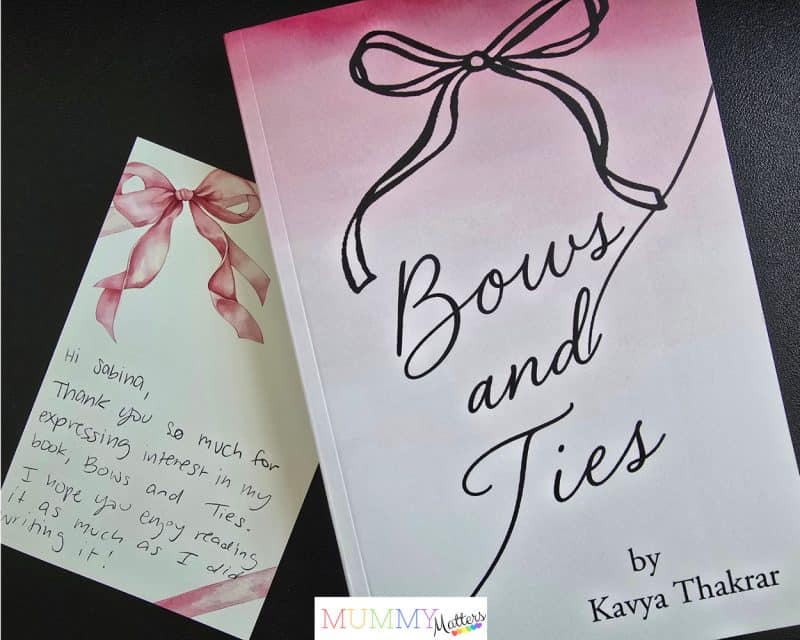
When I first heard about Bows and Ties, it wasn’t just the book that caught my attention – it was the story behind it. At just 16 years old, Kavya Thakrar has achieved something many adults only dream about: writing and publishing her debut book while bringing together the voices of 19 inspiring women from a wide range of backgrounds.
Rather than offering a traditional self-help guide, Bows and Ties explores the power of conversation. Through a series of thoughtful interviews, Kavya uncovers how women from different careers and walks of life define success, overcome setbacks and discover purpose. Each interview naturally leads into the next, creating a chain of stories that celebrates the connections we share, despite our different journeys.
As a mum, I love shining a light on young people who pursue their passions with courage and determination. It’s easy to underestimate what teenagers are capable of, yet Kavya’s journey is proof that age doesn’t have to limit ambition. With the encouragement to ask questions, stay curious and believe in her ideas, she has created something that not only celebrates female empowerment but also encourages readers to reflect on their own path.
I was delighted to chat with Kavya about the inspiration behind Bows and Ties, what she learned from interviewing successful women, the role her parents played in supporting her dream, and the advice she would give to other young people who want to turn a big idea into reality.
What inspired you to write Bows and Ties at such a young age?
“I don’t think it was confidence as much as curiosity. I’ve always loved listening to people’s stories, especially the women in my own family. The more I interviewed people, the more I realized that everyone carries wisdom that’s never written down.
“I kept thinking, ‘What if these stories could all exist in one place?’ Once I had that idea, I became extremely excited and confident to share my own stories.”
Did you ever feel the project was too ambitious?
“Absolutely. There were moments when I questioned whether people would even respond to my emails or whether I was capable of writing an entire book.”
“But I learned pretty quickly that projects don’t get finished all at once. Instead, they get finished one interview, one page and one chapter at a time. Breaking it into smaller steps made it feel possible.”
I think that’s advice many of us could apply to our own goals, whether we’re writing a book, changing careers or simply tackling a long list of jobs.
“How many conversations happened because of the book.”
“I expected to spend most of my time writing, but afterwards I found myself speaking at schools, meeting readers and connecting with people who saw parts of themselves in the stories.”
“A book isn’t really finished when it’s published — that’s when it begins creating conversations.”
How did you choose the women you interviewed?
“I wasn’t looking for people with the most impressive job titles. I wanted women whose stories reflected different definitions of success.”
“Some were entrepreneurs, others worked in social media, astrology, henna artistry and interior design. I mainly tried to capture unconventional careers.”
“I wanted readers to see that there’s no single path to building a meaningful life.”
Was it intimidating approaching successful women?
“Definitely. I was 15–16 emailing people with decades of experience, so it was intimidating at first.”
“But I found that people are often much more willing to help than we expect. Once they understood the purpose of the project, many were incredibly generous with both their time and their stories.”
How did you deal with rejection?
“Yes, some people said no, and I had to learn that it’s completely okay.”
“Some people were too busy, while others simply weren’t available. I learned not to take it personally. Rejection wasn’t a reflection of the project; it was just part of the process.”
“Every ‘no’ brought me closer to someone who was the right fit.”
That resilience is something so many teenagers (and adults!) can benefit from hearing.
Was there one interview that stayed with you?
“Honestly, every interview influenced me in a different way, so it’s difficult to choose just one.”
“But if I had to share one, I’d say Rose-Beth Johnson Brown’s. She’s a director who grew up in the entertainment industry, and the advice she gave was to approach the world with softness and sensitivity.”
“That struck me, and I think about it daily.”
“Each woman shared experiences that challenged how I thought about resilience, success and failure. Rather than one conversation standing out, it was the collection of all their stories that left the biggest impact on me.”
What advice would you give another teenager with a big dream?
“Start before you feel ready.”
“I think a lot of people wait until they have the perfect plan or enough experience, but you learn so much by simply beginning.”
“Your first attempt doesn’t have to be perfect. I cannot emphasise that enough.”
What’s one lesson you wish every teenage girl knew?
“Comparison is truly the thief of joy.”
“You are beautiful, inside and out, just the way you are. Carve out your own path because there is only one you.”
How did your parents help give you the confidence to write a book?
“My parents always treated my ideas like they mattered, even when they seemed ambitious.”
“If I wanted to try something, they encouraged me to give it a chance instead of focusing on whether I’d succeed.”
“That gave me the confidence to believe that my age didn’t have to limit what I could do.”
As a parent myself, I found this particularly powerful. Sometimes the greatest gift we can give our children isn’t providing all the answers—it’s simply believing in them.
What advice would you give parents wanting to encourage creativity?
“I think the biggest thing is listening.”
“When young people feel like their ideas are taken seriously, they’re much more likely to pursue them.”
“Encouragement doesn’t always mean having all the answers; it can also mean saying, ‘Let’s see where this goes.'”
Has writing changed how you see yourself?
“Definitely.”
“Before writing Bows and Ties, I mostly saw myself as someone who loved stories.”
“Now I see myself as someone who can help preserve them.”
“Writing also taught me to become a much better listener. I realised that asking thoughtful questions can be just as important as having something to say.”
What’s next?
“Right now I’m continuing to write while pursuing journalism, communications and research.”
“I’m also working on interviewing more people and telling stories through different mediums, whether that’s articles, research or future books.”
“My goal has always been the same: to preserve stories that might otherwise go untold.”
There Isn’t a Deadline for Success
One thing Kavya said particularly resonated with me. In one of the conversations featured in Bows and Ties, she reflects on sometimes feeling that if she wasn’t already “making it”, she might be missing out. It’s a feeling I imagine many teenagers—and plenty of adults—can relate to.
It immediately took me back to a conversation I had with my own boss before I went on maternity leave with my first child, Lillie. I was incredibly proud of the career I’d built. I was a Senior Sales Administrator for a major motor dealership, a role I genuinely enjoyed and had worked hard to achieve. At the same time, all I’d ever really wanted was to become a mum.
As my maternity leave approached, I remember worrying that stepping away from my career meant I was going backwards. I was convinced that if I stayed home with my children while they were young, I’d never return to the workplace at the same level or have the opportunities I’d worked so hard for.
My boss asked me a simple question.
“How old are you?”
I told him I was about to turn 30.
He smiled and said, “Even if you have a couple of children and stay at home with them until they start school, you’ll still have decades left to build a career. Go away and look at the people you admire in business. You’ll find many of them didn’t achieve their greatest success until much later in life.”
At the time, I wasn’t entirely convinced, but his words stayed with me.
Looking back now, I realise just how right he was.
What I couldn’t possibly have imagined then was that those years at home with my children would eventually lead me to creating and running my own business. More than 20 years later, I’m still building Mummy Matters, learning new skills, embracing new opportunities and discovering paths I never even knew existed.
Life rarely follows the timeline we imagine when we’re teenagers—or even when we’re 30. Success isn’t something we either achieve by a certain age or miss forever. It evolves as we do.
That’s one of the things I love most about Kavya’s story. At just 16, she’s already achieved something remarkable, but she’s also wise enough to recognise that this is just one chapter of a much bigger journey. Whether you’re 16 and wondering where life will take you, or 50 and contemplating your next step, there’s always time to grow, change direction and create something meaningful.
Sometimes the best opportunities are the ones we never saw coming.
Final Thoughts
Reading Bows and Ties reminded me that success isn’t a finish line we all have to cross at the same age. Whether you’re a teenager wondering what comes next, a parent supporting your child’s dreams, or someone contemplating a new chapter later in life, there’s no single timeline for achieving something meaningful.
Kavya has made an extraordinary start at just 16, but perhaps the biggest lesson from both her story and my own is that life has a wonderful habit of surprising us. We don’t need to have everything figured out today. We simply need to stay curious, keep learning and be brave enough to take the next step when the opportunity comes.
Whether your own child dreams of writing a book, starting a business, becoming an artist or following a completely different path, Kavya’s story is a reminder that every big achievement begins with a single step—and with someone believing that your ideas matter.
If you’re looking for an inspiring read that celebrates the power of storytelling, connection and female mentorship, Bows and Ties is certainly a book worth discovering.
About Kavya Thakrar
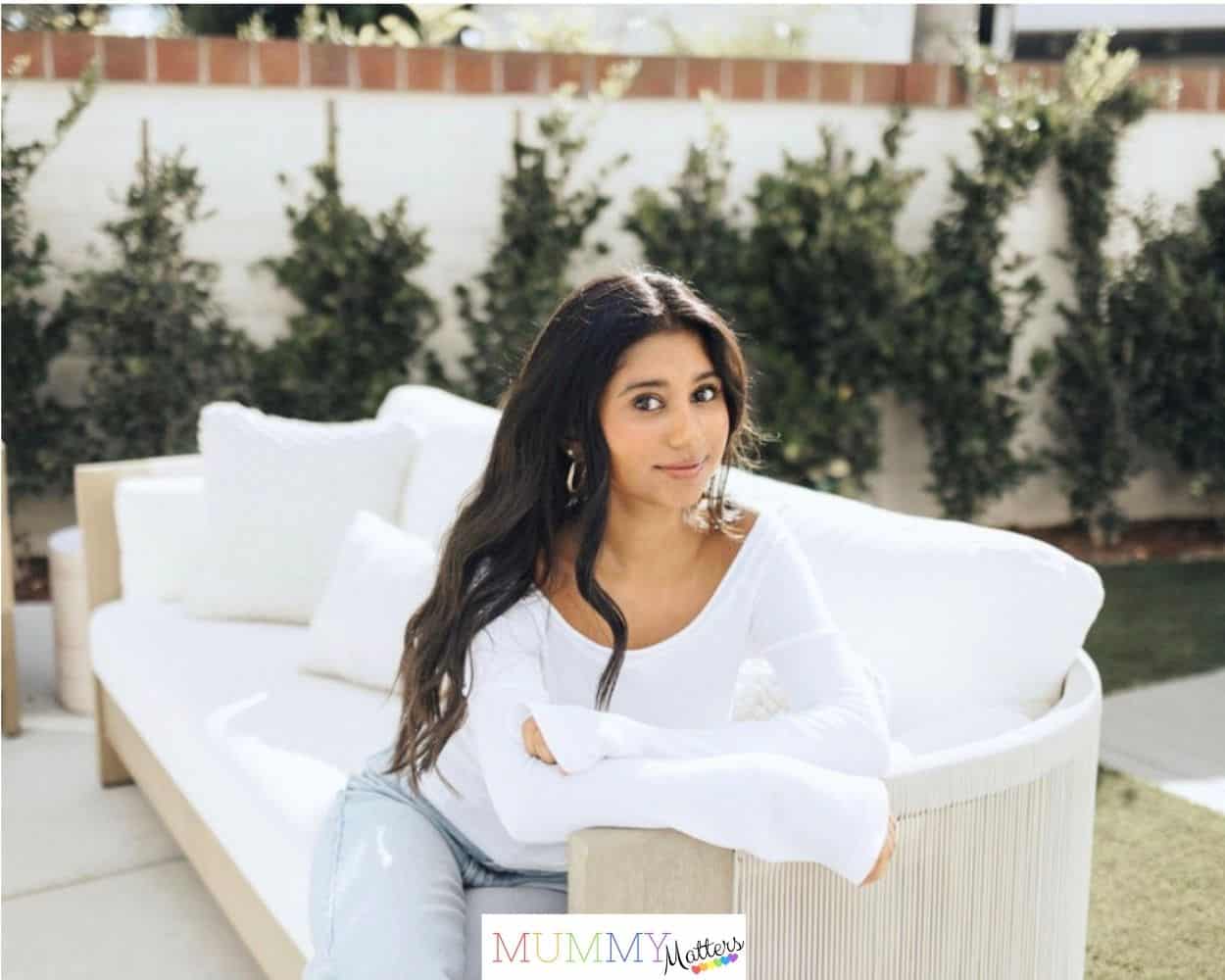
Kavya Thakrar is a 16-year-old author from Orange County, California. Passionate about storytelling and journalism, she wrote Bows and Ties to celebrate the power of women’s stories and the connections that inspire confidence, resilience and personal growth. You can watch her video on Youtube here when she is being interviewed.
Bows and Ties
Bows and Ties is available in paperback and Kindle editions.