
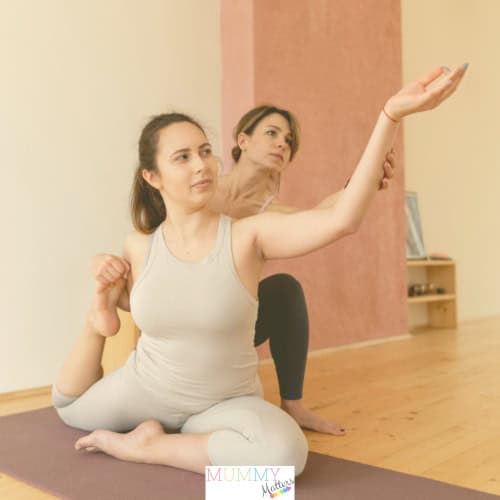
For many yoga lovers, there comes a point where the familiar sessions feel just that: regular. Moving past this point takes assistance in a structured manner. Advanced online yoga classes offer a beneficial solution for purposeful practice to fine-tune your skills, to further develop your knowledge, and to keep you inspired. This structured system allows practitioners to reach new levels, at their own pace and from the comfort of their homes, in their advanced classes.
Expanding Knowledge with Advanced Instruction

In beginner classes, the emphasis is on basic poses and breathing exercises. As you get better, you may want to learn more about advanced techniques and theories. More advanced studies offer challenging sequences, specialized breathing techniques, and studies of philosophies. Having that new opportunity to learn maintains interest and continuously assists with growth. Dedicated practitioners often choose a 500 hour online yoga teacher training to deepen their knowledge and refine advanced teaching skills
Personalization and Flexibility
Such a content-driven, online program enables people to choose content most appropriate to their objectives. We have flexible timing, so the sessions can go on around your daily commitments. The students can retake challenging modules, stop to digest complex explanations, and come back to the most liked sessions. Practitioners having such an amount of control enables them to control their own outcome, but not in a hasty fashion.
Access to Experienced Teachers
Experienced instructors often teach more advanced courses. These teachers are direct and they tell students how they can improve. They prevent novice mistakes and assist students in safely tackling challenging postures. Having access to that knowledge online means that anyone can learn from world-class tutors, without the need to be in the same place.
Deeper Understanding of Philosophy
Yoga is not merely a physical practice. It is only in more advanced courses that one encounters philosophical positions, which challenge them to rethink not only their assumptions but, in some cases, the entirety of their lives. Understanding the principles behind yoga movements provides a purpose for each action. By focusing on both the mental and emotional aspects, practitioners will be able to create a more balanced lifestyle in the long run.
Cultivating Discipline and Consistency
Advancement in yoga does not happen overnight and takes a lot of consistency. Many are offered with a set schedule, reminders, goal-setting, and tracking, etc. This draws participants to the app, encouraging them to show up each day, even when life gets busy. Being consistent over the years creates discipline that translates into our practice. We slowly start getting stronger and more flexible and feel more confident on the mat.

Some others have forums or group classes in the advanced online programs. They allow students a space to celebrate wins and ask for guidance around milestones. Positive peer and instructor feedback can provide morale support, which can be especially helpful during rough patches. Part of the beauty of this is the connected feeling of practicing at home.
Feedback and Progress Tracking
Usually, online platforms offer tools to help you track your progress. Features like video submissions and progress dashboards enable building feedback loops for practitioners. Explicit benchmarks to identify growth, as well as goals for yourself going forward. Frequent evaluation helps track progress and keep one motivated in the long run.
Integrating Mindfulness and Meditation
Higher-level courses, of course, aren’t just about physical challenges. Most programs integrate mindfulness and meditation practices. The teachings guide those who join to reduce stress and maintain focus by experiencing relaxation. The balance of movement and stillness builds lasting awareness and it is the gift that keeps on giving.
Adapting Practice to Individual Needs
As you know, we all progress at different speeds. In fact, many advanced online courses utilize this concept by providing alternative learning options for various skills. Practitioners can choose their comfort level with intensity, so they can experience a safe and fulfilling practice. This flexibility reinforces a respect for their bodies, keeping injuries at bay.
Conclusion
If you are ready to go deeper, a higher-level online yoga course gives you a framework, guidance, and connection in which to build those next layers. Together, flexible scheduling, individualized learning, and a large pool of qualified teachers all contribute to making progress from everywhere an accessible reality. These things, when combined, provide deepening knowledge and sharpening what the practice becomes. And paying close attention to the philosophy of finally living directly with yourself can be transformative.