
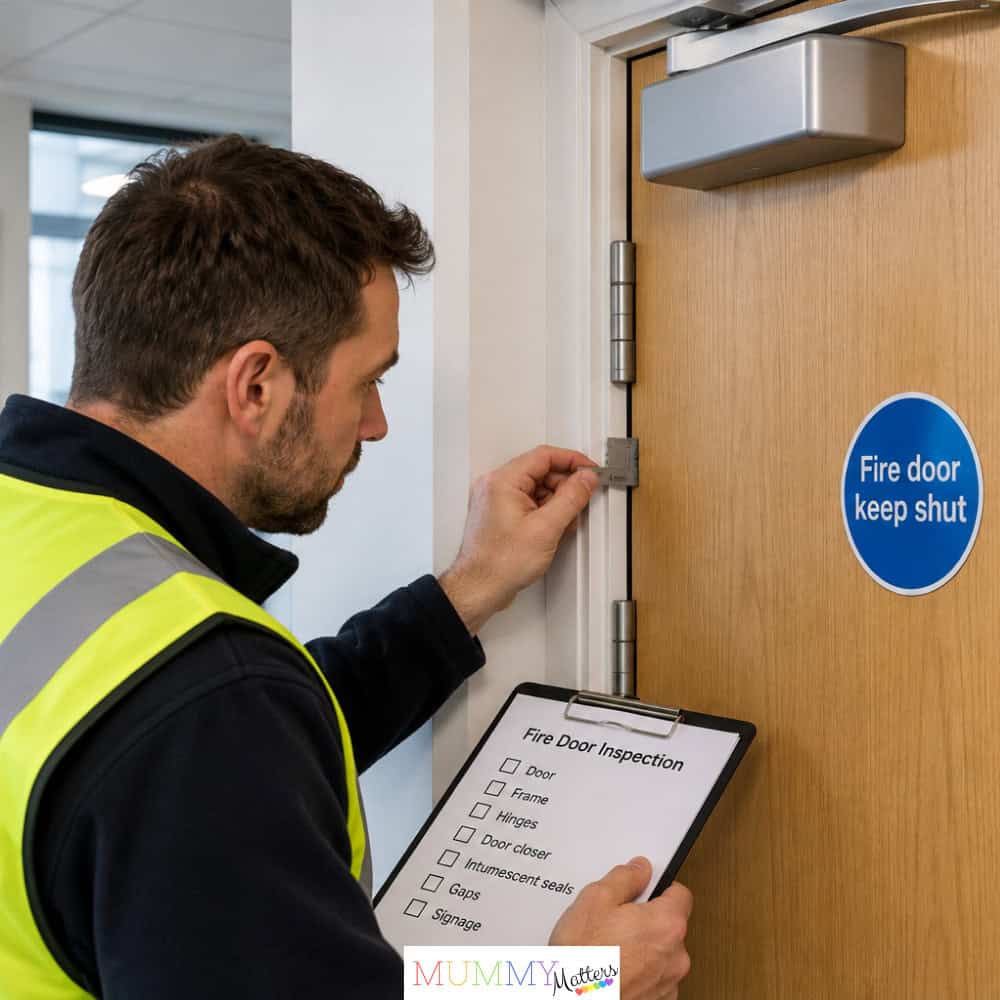
Fire doors are an important part of a building’s fire safety measures, helping to slow the spread of fire and smoke and giving occupants more time to escape. However, a fire door can only provide the intended protection when it is correctly installed, kept in good condition and able to close properly.
Routine fire door inspections can identify problems such as damaged doors and frames, excessive gaps, faulty self-closing devices, worn components and other issues that could affect how the door performs during a fire. Finding these problems early gives responsible persons and building managers an opportunity to arrange appropriate repairs or replacement before they become a more serious safety concern.
Fire door checks are also an important part of meeting fire safety responsibilities. In England, requirements vary according to the type and use of a building, with additional fire door checking requirements applying to certain multi-occupied residential buildings under the Fire Safety (England) Regulations 2022.
Fire doors are only one part of a wider approach to fire safety, alongside precautions such as working smoke alarms and reducing common fire risks around the property. Our guide to fire-proofing your family home covers some of the everyday measures households can take.
In this guide, we look at why routine fire door inspections matter, some of the common problems to watch for and how regular checks and maintenance can contribute to a safer building.
Key Takeaways
- Fire doors help restrict the spread of fire and smoke when they are correctly installed and maintained.
- Regular checks can identify damaged doors, excessive gaps, faulty closers and other problems that may affect performance.
- Fire door responsibilities and inspection requirements depend on the type and use of the building.
- Routine maintenance can help ensure fire doors continue to operate as intended.
- In England, specific fire door checking requirements apply to certain multi-occupied residential buildings.
The Role of Fire Doors in Building Safety
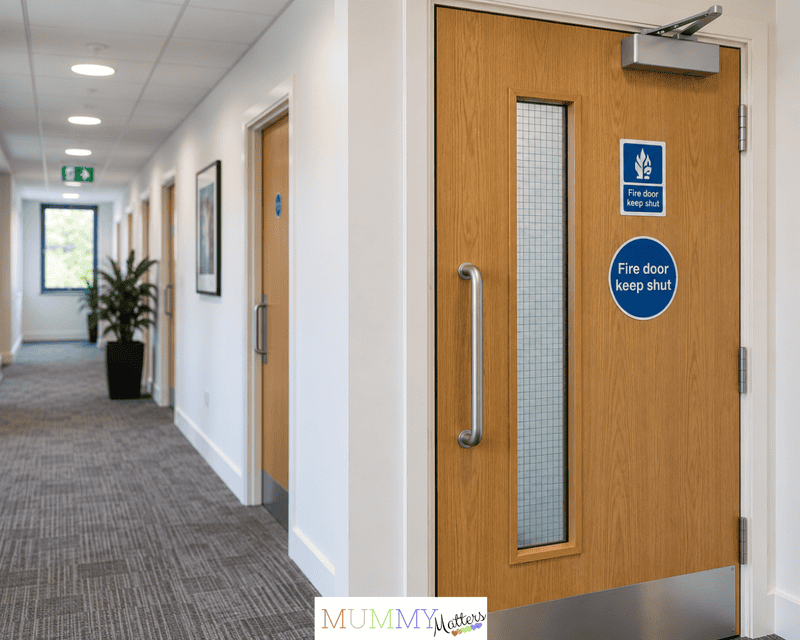
Fire doors form an important part of a building’s passive fire protection. Their purpose is to help resist the spread of fire and smoke between different areas of a building, protecting escape routes and giving occupants more time to reach a place of safety.
For a fire door to perform effectively, however, the complete doorset needs to work as intended. The door, frame, hinges, closing mechanism and any seals fitted as part of the specification all have a role to play. Damage, excessive gaps or a door that fails to close fully into its frame can reduce the protection it provides.
This is why fire doors should never be wedged or propped open unless an appropriate automatic hold-open system is in place. Self-closing fire doors should be capable of closing fully into their frames without assistance, helping them provide an effective barrier if a fire occurs.
Understanding Fire Door Regulations
Fire door responsibilities in England depend on the type and use of the building, so there is not a single inspection requirement that applies to every property. Under the Regulatory Reform (Fire Safety) Order 2005, the person responsible for certain premises must ensure appropriate fire precautions are in place, with the measures required informed by a suitable and sufficient fire risk assessment.
There are additional requirements for some residential buildings under the Fire Safety (England) Regulations 2022. In multi-occupied residential buildings where the top storey is more than 11 metres above ground level, the Responsible Person must use their best endeavours to check flat entrance fire doors at least once every 12 months. Fire doors in communal areas must be checked at least every three months. These checks include making sure that self-closing devices are working correctly.
The requirements are intended to ensure that existing fire doors remain in good working order and continue to provide appropriate protection. Importantly, an older fire door does not automatically need replacing simply because it does not meet the standards that would apply to a newly installed door today. Its suitability should be considered as part of the building’s fire risk assessment, with defects repaired and replacement arranged where necessary.
Building owners, managers and Responsible Persons should therefore understand which fire safety requirements apply to their particular premises and ensure that appropriate checks, maintenance and fire risk assessments are carried out.
Benefits of Regular Fire Door Inspections
Regular fire door inspections help identify defects before they compromise the protection a fire door is intended to provide. Problems such as damaged components, excessive gaps, faulty self-closing devices or doors that do not close fully can develop over time through everyday use, accidental damage or alterations to a building.
Finding these issues early allows repairs or further assessment to be arranged before they become more serious. Regular checks can also form part of an effective fire safety management programme, helping Responsible Persons demonstrate that fire precautions are being monitored and maintained rather than only considered following an incident.
Most importantly, maintaining fire doors helps preserve the compartmentation of a building. By restricting the movement of fire and smoke, properly functioning fire doors can help protect escape routes and give occupants valuable time to reach a place of safety.
Components of a Comprehensive Fire Door Inspection
Visual Examination
A visual check can identify many of the common problems that may affect a fire door’s performance. This should include looking for obvious damage to the door leaf and frame, checking hinges and other hardware, and looking for signs of warping, cracking or alterations that could affect the integrity of the door.
The gaps between the door and frame should also be considered. Government guidance states that the industry standard is for gaps around a fire door to be no more than 4mm, except at the bottom of the door, where the gap should be as small as practicable while still allowing the door to operate correctly.
Where seals are fitted, these should also be checked for damage or deterioration. However, the absence of intumescent strips or smoke seals on an existing fire door does not necessarily mean that the door is unsuitable; this should be considered in the context of the building’s fire risk assessment.
Operational Tests
A fire door also needs to operate correctly. Where a self-closing device is fitted, the door should close fully into its frame without assistance. Government guidance recommends checking this from different opening positions, including from around 75mm from the closed position, to make sure the closer is capable of shutting the door completely.
Hinges, latches, handles and closing mechanisms should be secure and operate correctly, and nothing should obstruct the door or prevent it from closing. Fire doors should not be wedged open, as this prevents them from performing their intended role in restricting the spread of fire and smoke.
If a check identifies significant damage or there is uncertainty about whether a fire door remains suitable, professional advice may be needed as part of the building’s wider fire safety assessment.
Common Issues Found During Inspections
Regular fire door checks can uncover a range of problems that may affect how well a door performs. Common issues include excessive gaps between the door and frame, damaged or loose hinges, faulty self-closing devices, worn or damaged seals and doors that no longer close fully into their frames.
Everyday use can also cause problems over time. Fire doors may become damaged by impacts, frames can become misaligned and alterations to flooring or other parts of the building can affect how freely a door closes. Even seemingly minor changes should not be ignored if they prevent the door from operating as intended.
When a fire door is damaged beyond effective repair, replacement may be necessary to maintain the required level of fire protection. New fire doors need to be correctly specified and installed so that the door, frame, hardware and seals work together as intended. Keeping gaps within appropriate tolerances is particularly important because excessive gaps can allow fire and smoke to pass around the door. Where required as part of the fire door specification, correctly fitted smoke seals can provide additional smoke protection because they are designed to restrict the passage of smoke around the door edges. Intumescent strips perform a different function, expanding when exposed to heat to help seal gaps during a fire.
Where significant defects are identified, the appropriate solution will depend on the condition and specification of the existing door and the findings of the building’s fire risk assessment. Repairs should be suitable for the particular fire door, while replacement doors should be correctly specified and installed for their intended location.
Steps to Prepare for a Fire Door Inspection
Pre-Inspection Checklist
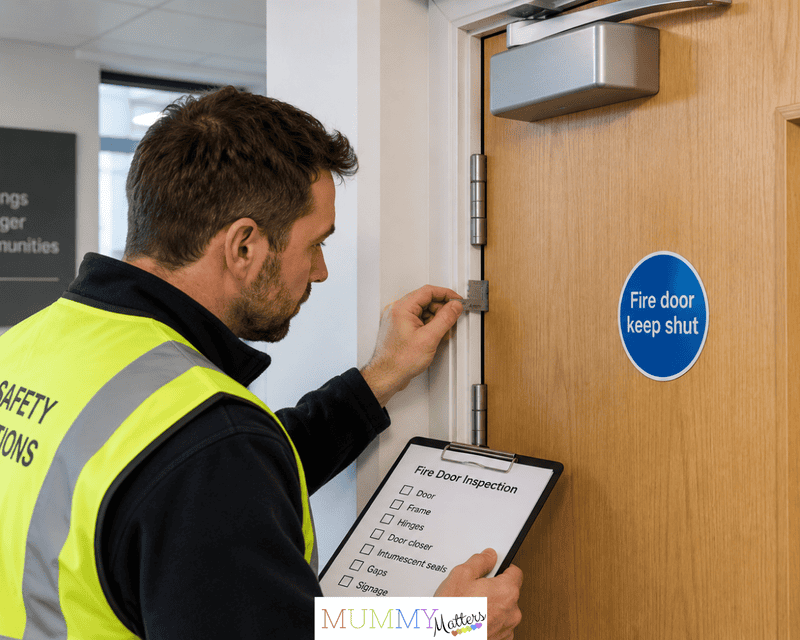
Before a formal fire door inspection, there are several straightforward checks that building managers or Responsible Persons can make to identify obvious problems. These checks do not replace a professional inspection or fire risk assessment where one is required, but they can help highlight defects that need attention.
A simple pre-inspection check could include:
- Looking for visible damage to the door leaf and frame.
- Checking that the door opens and closes freely without obstruction.
- Making sure a self-closing door closes fully into its frame.
- Looking for excessive or uneven gaps around the door.
- Checking hinges, handles, latches and other visible hardware for damage or looseness.
- Inspecting any fitted seals for obvious damage or deterioration.
- Making sure the door has not been wedged or propped open.
- Checking that no unauthorised alterations, such as new holes or unsuitable fittings, have been made to the door.
I prefer this to the existing three-point checklist because it gives somebody reading the article a genuinely useful reason to stay on the page.
Regular Maintenance Tips
Regular maintenance can help prevent minor defects from developing into more serious fire safety issues. Fire doors are used frequently in many buildings, so hinges, closers, latches and other components can loosen, wear or become damaged over time.
Any maintenance should preserve the fire door’s intended performance. Components should not simply be replaced with whatever hardware is available, as fire doors are designed and tested as systems and may require compatible components. Damaged seals, faulty closers, loose hinges or other defects should therefore be assessed and repaired appropriately.
It is also useful to keep records of inspections, maintenance and repairs. This creates a clear history of the checks carried out and makes it easier to identify recurring problems or demonstrate how fire safety measures are being managed.
Fire safety can also form part of a broader routine of seasonal property maintenance. Our home safety checks guide looks at some of the other areas worth checking regularly around the home.
When Should a Fire Door Be Repaired or Replaced?
Finding a defect during an inspection does not necessarily mean that the entire fire door needs to be replaced. Minor issues may be capable of appropriate repair or adjustment, while more significant damage may require specialist assessment or replacement of the doorset.
The condition of the door, frame, hardware and closing mechanism should all be considered, along with the requirements identified through the building’s fire risk assessment. An existing fire door should not automatically be considered unsuitable simply because it does not meet every specification that would apply to a newly installed fire door today.
However, damage that compromises the integrity of the door should not be ignored. A door that cannot close properly, has significant damage to the door or frame, or has unsuitable alterations may require remedial work. Where there is uncertainty, advice should be sought from a competent fire safety professional rather than relying on visual appearance alone.
Taking a proportionate approach helps ensure genuine safety issues are addressed while avoiding unnecessary replacement of fire doors that remain suitable for their intended purpose.
Conclusion: Prioritising Fire Door Safety
Fire doors are an important part of a building’s fire protection, but their effectiveness depends on them remaining in good condition and operating as intended. Regular checks can identify problems such as damaged components, excessive gaps and faulty self-closing mechanisms before they have the opportunity to compromise safety.
Fire door responsibilities vary according to the type and use of a building, which makes it important for Responsible Persons and building managers to understand the requirements that apply to their premises. Inspections, appropriate maintenance and a suitable fire risk assessment should work together as part of a wider approach to fire safety.
Where defects are discovered, they should be addressed appropriately rather than ignored or automatically assumed to require complete replacement. Keeping clear records of checks, repairs and maintenance can also help demonstrate that fire safety is being actively managed.
For further information about fire door responsibilities in England, the UK Government provides detailed guidance covering fire door checks and the requirements introduced by the Fire Safety (England) Regulations 2022.