
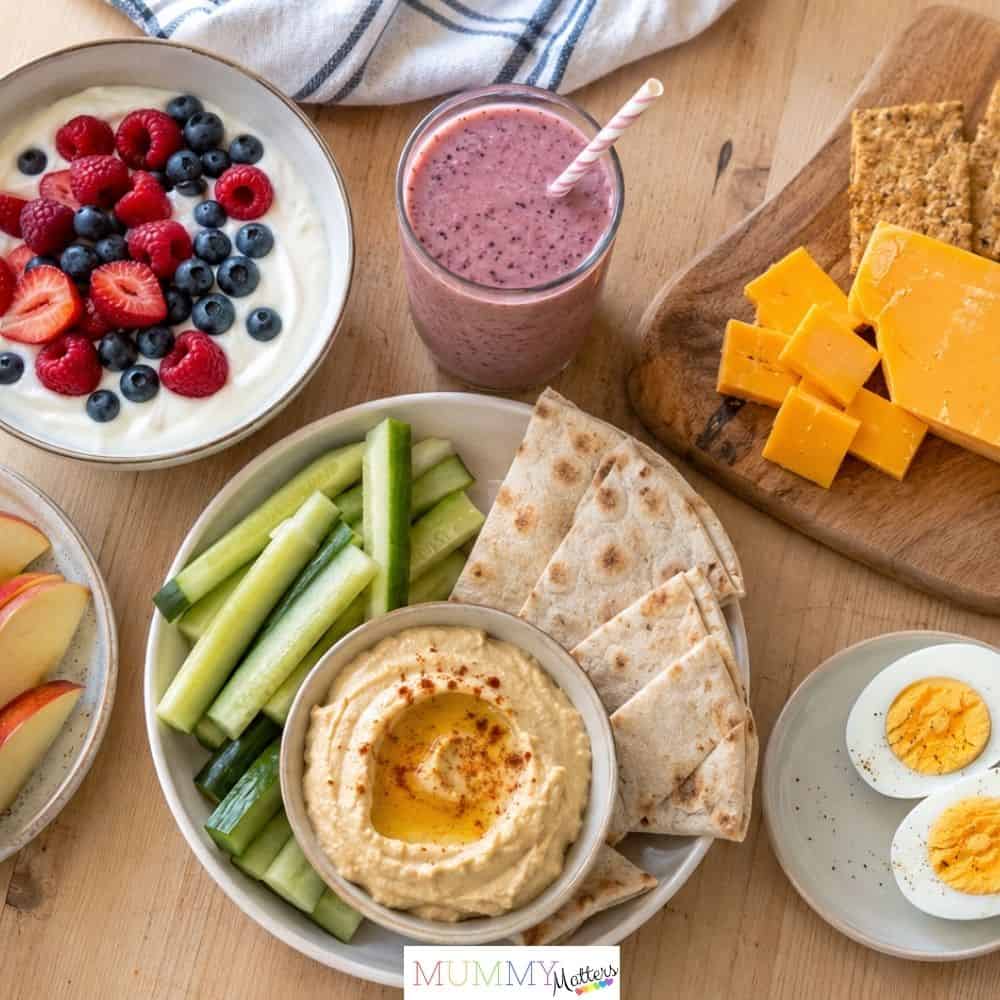
Teenagers always seem to be hungry. With three teenagers in our house, I know how quickly they can finish a meal and then reappear in the kitchen shortly afterwards, searching the cupboards for something else to eat. During the school holidays, when they are at home for longer, keeping enough quick and filling snacks available can feel like a full-time job.
High-protein snacks don’t need to involve expensive protein bars, powders or carefully counting grams. Everyday foods such as eggs, yoghurt, cheese, beans, hummus, nuts and lean meat can all provide protein as part of a balanced diet. Protein is particularly important during the teenage years because it supports normal growth and development, while protein-rich foods may also help teenagers feel satisfied between meals.
The ideas below are simple, affordable and realistic for family life. Some can be prepared ahead, while others are easy enough for teenagers to make themselves. I’ve also included choices for picky eaters because a nutritionally perfect snack is no use if your teenager refuses to touch it.
The nutritional framing follows guidance from the NHS Eatwell Guide and the British Dietetic Association’s advice on healthy snacks.
If it feels as though your teenager is hungry again five minutes after eating, you may also find it helpful to read why children keep asking for snacks, which explains how routine, boredom and the composition of a snack can all influence hunger.
What Are Good High-Protein Snacks for Teenagers?

Good high-protein snacks for teenagers include Greek yoghurt, eggs, cheese, milk, nuts, nut butter, hummus, beans, tuna and cooked chicken. Pairing these foods with fruit, vegetables or wholegrain carbohydrates can create a more balanced and satisfying snack.
For example, rather than offering cheese by itself, serve it with apple slices or wholegrain crackers. Greek yoghurt can be combined with fruit, while hummus works well with pitta bread or crunchy vegetables. This provides a mixture of protein, carbohydrates, fibre, vitamins and minerals rather than focusing on a single nutrient.
Most teenagers who eat a varied diet can obtain the protein they need from ordinary food. Unless a qualified health professional has advised otherwise, there is generally no need to use protein powders or supplements. The aim of these snacks isn’t to pursue a high-protein diet—it is simply to offer teenagers practical, nourishing choices when they are hungry between meals.
Quick High-Protein Snacks Requiring No Cooking
These are useful when teenagers want something immediately and don’t have the patience to prepare a recipe.
With three teenagers at home, I have learnt that convenience matters almost as much as flavour. A snack containing perfectly good ingredients is no help if it requires so much preparation that nobody can be bothered to make it.
1. Greek Yoghurt with Fruit
Add berries, sliced banana, apple or whatever fruit your teenager enjoys to a bowl of plain Greek yoghurt. A small drizzle of honey or sprinkle of granola can make plain yoghurt more appealing to teenagers who prefer something sweeter.
Greek yoghurt generally contains more protein than standard yoghurt, although it is worth checking the label because products vary considerably.
2. Apple Slices with Peanut Butter
Slice an apple and serve it with peanut butter for dipping or spreading. The combination of crisp, sweet apple and creamy peanut butter makes this feel more substantial than eating a piece of fruit alone.
Choose a nut butter your teenager already likes, and always consider allergies when serving this at home or packing it for somewhere else.
3. Cheese and Wholegrain Crackers
Cheese and crackers require virtually no preparation and can be easily adjusted to suit different appetites. Add grapes, apple slices, cucumber or cherry tomatoes to turn them into a simple snack plate.
Cheddar, Babybel, cheese strings and sliced cheese can all work, so there is no need to buy anything unusual or expensive.
4. Hummus with Pitta Bread or Vegetable Sticks
Serve hummus with sliced pitta bread, breadsticks, cucumber, pepper or carrot sticks. Teenagers who are reluctant to eat raw vegetables may be more willing to try them when they have something familiar to dip them into.
Individual hummus pots can be convenient for packed lunches and days out, while a larger tub will usually be more economical at home.
5. Cottage Cheese on Toast or Crackers
Cottage cheese can be spooned onto toast, oatcakes or crackers and topped with sliced tomato, cucumber or black pepper. It also works with pineapple or peach for teenagers who prefer a sweeter flavour.
The texture won’t appeal to every picky eater, so this is one to offer without pressure rather than presenting it as a replacement for a familiar favourite.
Easy Hot Snacks Teenagers Can Make

Older teenagers can prepare many of these themselves, although younger or less confident teenagers may still need supervision when using the hob, oven or grill.
6. Scrambled Egg on Toast
Scrambled egg on toast is quick, inexpensive and filling. Teenagers can keep it plain or add grated cheese, chopped tomato or spinach if they enjoy them.
It also works well as an after-school snack for teenagers who eat an early lunch and need something more substantial before dinner.
7. Beans on Toast
Baked beans on wholemeal toast provide protein and fibre using ingredients many families already keep in the cupboard. A little grated cheese can be added on top for extra flavour.
If possible, compare labels and choose baked beans that are lower in salt and sugar—but familiar food that your teenager will actually eat remains a perfectly reasonable starting point.
8. Cheese and Bean Quesadilla
Spread a spoonful of baked beans over one half of a tortilla, sprinkle with grated cheese and fold it in half. Heat it in a dry frying pan until the cheese has melted, then cut it into triangles.
This can be adapted with chicken, sweetcorn or finely chopped peppers, but there is nothing wrong with keeping it simple for a picky eater.
9. Mini Chicken Wrap
Fill a small tortilla with slices of cooked chicken and your teenager’s preferred additions. Lettuce, cucumber, grated cheese, avocado or a little mayonnaise can all work.
Leftover roast chicken is ideal, but ready-cooked chicken can make this a convenient option when time is limited. Store and use cooked meat according to the instructions on the packaging.
10. Tuna Melt on Toast
Mix drained tinned tuna with a small amount of mayonnaise, spread it over toast and finish with grated cheese. Place it under the grill until the cheese is melted and bubbling.
Tuna is a convenient source of protein, but it shouldn’t be the only fish a teenager eats. UK guidance recommends including a variety of fish rather than relying repeatedly on one type.
High-Protein Snacks to Prepare in Advance

Making a few snacks ahead of time can reduce the chances of teenagers reaching automatically for biscuits or crisps simply because they are the easiest things available.
11. Boiled Egg Snack Box
Place a peeled boiled egg in a reusable container with crackers, cucumber, cherry tomatoes or fruit. Preparing several eggs at once means there is an easy option waiting in the fridge when hunger strikes.
Hard-boiled eggs should be cooled and refrigerated promptly. The Food Standards Agency advises keeping chilled food out of the fridge for the shortest possible time.
12. Homemade Egg Muffins
Whisk eggs and pour them into a greased muffin tin, adding ingredients such as grated cheese, sweetcorn, spinach, peppers or small pieces of cooked chicken. Bake until the egg is completely set.
Once cooled, egg muffins can be stored in the fridge and reheated for a quick snack. Keeping some plain or using only cheese can make them more acceptable to picky teenagers.
13. Overnight Oats with Greek Yoghurt
Combine oats, milk and Greek yoghurt in a jar or container, then leave the mixture in the fridge overnight. Add fruit, cinnamon, nut butter or a small amount of honey before eating.
Although overnight oats are often treated as breakfast, a smaller portion can make a filling afternoon snack—particularly for teenagers who have been exercising or playing sport.
14. Roasted Chickpeas
Drain and rinse a tin of chickpeas, dry them thoroughly and roast them with a little oil until crisp. Season them with paprika, garlic powder or another flavour your teenager enjoys.
Roasted chickpeas provide protein and fibre and offer a crunchy alternative to crisps. However, their texture and flavour may be unfamiliar, so begin with a small serving for cautious eaters.
15. Frozen Yoghurt Bark
Spread Greek yoghurt over a lined baking tray and top it with chopped fruit. A few chocolate chips or a swirl of nut butter can make it feel more like a treat. Freeze it until firm and break it into pieces.
Store the pieces in the freezer and take out only what is needed, as yoghurt bark melts quickly. This is particularly refreshing during the summer holidays.
Portable High-Protein Snacks for Busy Teenagers

These options work well before activities, after the gym or when teenagers need something they can take with them. Use an insulated lunch bag and ice pack for anything that must remain chilled.
These are particularly useful in our house on days when everyone seems to be heading in a different direction. Having something that can be picked up quickly makes it easier for teenagers to eat before an activity rather than waiting until they are ravenous afterwards.
16. Fruit and Yoghurt Smoothie
Blend milk and Greek yoghurt with banana, berries, mango or another favourite fruit. Nut butter can also be added if it is safe and your teenager likes the flavour.
Smoothies are helpful for teenagers who struggle with certain food textures, although whole fruit should still be included in their diet because blending changes how quickly it can be consumed.
17. Homemade Nut and Seed Mix
Combine unsalted nuts and seeds with a small amount of dried fruit or a few chocolate chips. Divide the mixture into reusable containers so that it is ready to grab.
Nuts and seeds provide protein, fibre and unsaturated fats, but this snack is unsuitable for anyone with an allergy. Nut products may also be prohibited at schools, clubs and activity settings.
18. Yoghurt Pot or Yoghurt Drink
An individual yoghurt pot, pouch or yoghurt drink is one of the easiest options when there is no time to prepare anything. Check the label when comparing products, as their protein and added-sugar content can differ considerably.
Serve it with fruit or oatcakes if your teenager needs something more substantial. Keep yoghurt chilled until it is ready to be eaten.
19. Mini Falafel Pitta
Fill half a wholemeal pitta with ready-made falafel, hummus and any salad your teenager enjoys. It can be assembled in a few minutes and provides a useful meat-free option.
For teenagers who dislike mixed textures, serve the falafel, pitta and hummus separately as a snack box and let them put it together themselves.
20. Milk and a Banana
Sometimes the simplest snacks are the most useful. A glass or small bottle of milk with a banana provides protein, carbohydrates and several important nutrients without requiring any preparation.
Dairy-free alternatives vary nutritionally. If your teenager doesn’t drink cow’s milk, choose an unsweetened alternative fortified with calcium and other nutrients, and compare labels because not all plant-based drinks contain much protein.
Making High-Protein Snacks Work for Picky Teenagers
A teenager who is selective about food may not immediately welcome a plate of roasted chickpeas or cottage cheese. Introducing unfamiliar foods gradually and without pressure is usually more helpful than suddenly replacing all their favourite snacks.
If selective eating affects more than snack time, our healthy meal plan for picky teenagers provides a week of realistic meal ideas without hiding food or placing teenagers under pressure.
Start with foods your teenager already accepts. If they like toast, try adding scrambled egg, beans or cheese. If they eat yoghurt, experiment with Greek yoghurt or serve the two alongside each other first. Familiar presentation can also make a difference: a deconstructed snack plate may feel safer than a wrap containing several mixed ingredients.
It can also help to:
- Let teenagers choose two or three snacks when you are shopping.
- Keep reliable options visible and easy to reach.
- Serve a new food beside something familiar.
- Offer small portions so the food doesn’t feel overwhelming.
- Avoid describing foods as “good”, “bad” or “fattening”.
- Accept that trying, smelling or touching a new food can still be progress.
- Allow teenagers to prepare or assemble their own snacks.
One lesson I have learnt from feeding my own children is that repeatedly pushing a food rarely makes it more appealing. Giving teenagers some control, while continuing to offer a varied selection, can make snack time feel less like another family battle.
How Much Protein Does a Teenager Need?
The amount of protein a teenager needs depends on their age, sex, body size, health and activity level. UK government reference values provide the following general daily figures:
| Age | Boys | Girls |
|---|---|---|
| 11–14 years | 42.1g | 41.2g |
| 15–18 years | 55.2g | 45.4g |
These figures are intended as population guidelines rather than targets parents need to measure precisely at every meal. Most teenagers eating a varied, balanced diet will obtain enough protein from their usual meals and snacks.
It is also important not to become so focused on protein that other parts of a balanced diet are forgotten. Teenagers still need carbohydrates for energy, fruit and vegetables, healthy fats, fibre and sources of important nutrients such as calcium and iron.
Teenagers who train intensively, follow a vegan diet, have a very restricted range of accepted foods or have a medical condition may need individual guidance. In those circumstances, speak to a GP or a registered dietitian rather than relying on advice from fitness influencers or supplement companies.
Source: UK Government Dietary Recommendations.
Keeping High-Protein Snacks Affordable
Foods promoted as “high protein” often cost more than ordinary versions, but teenagers don’t need specialist products to obtain protein. Some of the most useful options are inexpensive basics that can be used across several meals.
Budget-friendly choices include:
- Eggs
- Baked beans and other tinned beans
- Chickpeas and lentils
- Milk
- Larger tubs of Greek yoghurt
- Cheddar cheese cut into portions at home
- Tinned fish
- Peanut butter
- Leftover cooked chicken
- Supermarket-own hummus
- Frozen edamame beans
Buying larger packs and dividing them into smaller containers is often cheaper than purchasing individually packaged snacks. Boiling several eggs, portioning yoghurt or cheese, and preparing a tub of chopped fruit or vegetables can also make these options almost as convenient as grabbing a packet from the cupboard.
Planning snacks alongside your main meals can also reduce waste and last-minute spending. My budget-friendly family meal plan includes practical ideas for planning seven days of family food, while these ways to cut your family food bill can help make the weekly shop more manageable.
It is worth checking the price per 100g rather than relying on the price displayed most prominently. Supermarket-own products may provide a similar amount of protein to branded alternatives for considerably less money.
Try to avoid buying too many unfamiliar foods at once, particularly for a picky eater. Testing one new option in a small quantity is less wasteful than filling the fridge with snacks your teenager may not accept.
Frequently Asked Questions
Are protein bars suitable for teenagers?
An occasional protein bar is unlikely to be necessary for most healthy teenagers, and many are expensive or contain substantial amounts of sugar, sweeteners or other added ingredients. Ordinary snacks such as yoghurt, eggs, cheese, nuts or hummus usually provide protein alongside a wider variety of nutrients. Check the packaging carefully because some protein products are marketed specifically for adults.
Do teenagers need protein shakes?
Most teenagers can obtain enough protein from a varied diet and do not need shakes or powders. Supplements should not replace regular meals, and parents should be cautious about products promoted by fitness influencers. If you are concerned that your teenager isn’t meeting their nutritional needs, speak to a GP or registered dietitian.
What are the best vegetarian high-protein snacks?
Greek yoghurt, cheese, eggs, hummus, roasted chickpeas, beans, lentils, nuts, seeds, tofu and edamame beans are all useful vegetarian options. Vegan teenagers can choose pulses, nut and seed butters, tofu, soya yoghurt and fortified soya milk.
What can I give my teenager after sport?
A snack containing both protein and carbohydrates can help replace energy after physical activity. Options include yoghurt with fruit, milk and a banana, egg on toast, a chicken wrap or peanut butter on wholemeal toast. Water is suitable for rehydrating after most everyday activities, although needs may differ during prolonged or intensive exercise.
What high-protein snacks can teenagers take to school?
Cheese and crackers, yoghurt, hummus with pitta, a mini chicken wrap or a falafel pitta can work well if kept chilled. Nut-based snacks should only be included if the school permits them. Always use an insulated lunch bag and ice pack for foods that need refrigeration.
A note about individual needs: This article provides general food ideas and is not a substitute for personalised medical or dietary advice. Speak to a GP or registered dietitian if your teenager has food allergies, a medical condition, significant food restriction, unexplained weight changes or concerns about growth and nutrition.
Looking for ideas for younger members of the family? These healthy snacks for kids include more lunchbox and primary-school-friendly choices.
Final Thoughts
Providing high-protein snacks for teenagers doesn’t need to involve expensive supplements, complicated recipes or turning every snack into a lesson about nutrition. Often, the simplest options—such as egg on toast, yoghurt with fruit, cheese and crackers or milk with a banana—are the ones teenagers are most likely to prepare and eat.
Keeping a few familiar choices available and allowing teenagers to select or assemble their own snacks can encourage greater independence. For picky eaters, begin with accepted foods and introduce alternatives gradually rather than trying to overhaul their diet overnight.
Above all, food should remain enjoyable. The aim isn’t to make teenagers count protein or worry about every snack they choose. It is simply to keep a selection of realistic, nourishing foods available so that they have more satisfying options when hunger strikes—and hopefully feel confident enough to prepare some of them without calling for Mum.