

Product disclosure: I was gifted Nutravita Creatine Plus with Magnesium to try. All opinions and experiences shared are my own.
Until fairly recently, if you’d mentioned creatine to me, I’d probably have associated it with bodybuilders and serious gym-goers. It certainly wasn’t something I’d ever considered adding to my own daily routine.
That changed after I listened to an episode of The Diary of a CEO featuring Dr Rhonda Patrick. Among a much wider conversation about ageing, exercise, nutrition and brain health, they started talking about creatine — and not just in relation to building muscle.
That caught my attention.
Having turned 50 this year, I’m increasingly interested in what I can do now to stay strong, active and mentally sharp as I get older. I already go to the gym and drink a protein shake in the morning, so when I was given the opportunity to try Nutravita Creatine Plus with Magnesium, it felt like a good opportunity to find out what adding creatine to my routine would actually be like.
I’ve now been taking it every day since around the end of July/beginning of August, simply adding it to my morning protein shake.
And, somewhat unexpectedly, I’ve noticed a difference.
I’m lifting heavier weights in the gym and finding that I can sometimes push myself to complete those extra few reps when previously I might have stopped. But the thing that has surprised me most isn’t actually physical. I’ve also felt sharper and more productive mentally — during the school summer holidays, of all times, which is normally one of the trickiest periods of the year for me when it comes to juggling family life and running my business.
Can I prove that’s all because of creatine? Absolutely not. But it has made me even more curious about something I once thought was simply a supplement for people who wanted bigger muscles.
So, after a couple of months of taking it consistently, here’s what I’ve learned about creatine for women over 50, what the research actually says, and whether I’ll continue taking it.
Why I Became Interested in Creatine at 50
My interest in creatine actually started before I began taking it. I was listening to an episode of The Diary of a CEO featuring Dr Rhonda Patrick, where the conversation covered everything from healthy ageing and exercise to cognitive decline, nutrition and longevity.
At around 1 hour 41 minutes, the conversation turned to creatine and its potential role in cognitive function. Until then, I’d mainly thought of creatine as something people took to help them build muscle or improve their performance in the gym. Hearing it discussed in relation to the brain as well as physical performance immediately made me pay attention.
One of the things I found particularly interesting was the discussion around how creatine is stored and used by the body. Our muscles hold the majority of the body’s creatine stores, which helps provide readily available energy during short bursts of high-intensity activity. But the brain also relies on creatine as part of its energy system, and researchers are increasingly looking at whether supplementation could have benefits beyond the gym.
That was the point at which I started wondering whether creatine might actually be relevant to me.
Turning 50 has definitely made me think differently about exercise. I’m no longer going to the gym simply because I want to look better in my clothes. I want to maintain my muscle, stay strong and mobile as I get older and do what I can now to support my health in the decades ahead.
The possibility that creatine might support my training while potentially having benefits for the brain made me want to find out more.
The Podcast That Sparked My Interest
I’ve embedded the episode below if you’d like to listen to the conversation yourself. It’s a long episode covering lots of different aspects of health and longevity, but if you’re particularly interested in the creatine discussion, skip forward to around 1:41:28.
What Does Creatine Actually Do?
Creatine is a substance that our bodies naturally produce and store mainly in our muscles, although it is also found in the brain. We also get small amounts through foods such as meat and fish.
Its main job is connected to energy. During short bursts of high-intensity exercise — lifting weights, for example — our muscles need energy quickly. Creatine helps the body regenerate ATP (adenosine triphosphate), which is essentially the energy our cells use to perform work.
This is why creatine has been popular in the fitness world for such a long time. Creatine monohydrate is one of the most extensively researched sports supplements, and there is good evidence that regular supplementation can improve physical performance during repeated bursts of short, high-intensity exercise.
What interested me, though, was learning that creatine isn’t only relevant to muscles.
The brain has high energy demands too, and it also uses the creatine energy system. Research into creatine supplementation and cognitive function is still developing, but this is an area attracting increasing attention — particularly in situations where the brain’s energy demands may be higher or creatine availability could be lower.
That doesn’t mean taking creatine automatically makes you more intelligent or guarantees better concentration. But it helped me understand why researchers such as Dr Rhonda Patrick are interested in creatine for reasons that go beyond building muscle.
For me, that was an important distinction. I’m not trying to become a bodybuilder. At 50, I’m interested in maintaining strength, supporting my training and doing what I reasonably can to look after both my body and my brain as I get older.
What Are the Benefits of Creatine for Women Over 50?
There isn’t anything magical that happens on your 50th birthday that suddenly means you need creatine. However, midlife is a time when maintaining muscle, strength and overall physical function becomes increasingly important, particularly as we move through menopause and beyond.
This is one of the reasons I’ve become much more interested in strength training since turning 50. I don’t just want to exercise to burn calories; I want to build and maintain a strong body that will serve me well as I get older.
Supporting Strength and Resistance Training
This is where the evidence for creatine is particularly interesting.
Research suggests that creatine supplementation may offer additional benefits when combined with regular resistance training, particularly for women after menopause.
A 2026 systematic review and meta-analysis examined seven randomised controlled trials involving 608 postmenopausal women. Researchers found modest improvements in lean muscle mass and strength, with the clearest benefits occurring when creatine was taken at doses of at least 5g per day alongside resistance training.
That’s encouraging, although it’s important to recognise that my Nutravita supplement provides 3g of creatine per serving, and the research doesn’t establish that I’ll experience the same results at that dose.
What I find particularly interesting is that creatine may complement the strength training I’m already doing, rather than replacing the need to exercise consistently.
This resonates with my own experience. Since taking creatine consistently, I’ve been able to increase some of the weights I use in the gym and I’ve noticed that I can push myself for those extra few repetitions towards the end of a set.
I can’t say that creatine alone has caused that improvement — I’ve been training too, which is obviously a huge part of becoming stronger — but it is one of the most noticeable changes I’ve experienced since adding it to my routine.
Maintaining Muscle as We Get Older
For me, this is probably more important than simply being able to lift a heavier dumbbell.
Maintaining muscle as we age matters for everyday life, mobility and remaining independent later on. Resistance training itself is extremely valuable, and creatine isn’t a replacement for doing the work in the gym.
Instead, I think it’s more helpful to look at creatine as something that may complement resistance training.
A recent systematic review focusing on postmenopausal women found small improvements in lean mass and strength, with the clearest benefits occurring when creatine was combined with resistance training. The research around bone density was less convincing, so I wouldn’t take creatine expecting it to protect my bones on its own.
Could Creatine Support the Brain Too?
This was the part that originally made me sit up and listen during Dr Rhonda Patrick’s podcast conversation.
The brain requires a considerable amount of energy, and creatine plays a role in helping cells meet those energy demands. This has led researchers to investigate whether creatine supplementation could support aspects of cognitive function, including memory, attention and mental fatigue.
Some studies have reported promising findings, but the results are mixed. In 2024, the European Food Safety Authority (EFSA) concluded that the available evidence was insufficient to establish a cause-and-effect relationship between creatine supplementation and improved cognitive function.
Research specifically involving women during perimenopause and menopause remains limited, so it’s too early to suggest that creatine is a proven solution for menopausal brain fog.
The evidence isn’t strong enough for me to say that taking creatine will prevent brain fog or make women over 50 mentally sharper. Research specifically involving women during perimenopause is still surprisingly limited.
But this is where my personal experience has been interesting.
Since taking creatine, I have felt sharper and more productive. I started taking it during the school summer holidays, which is normally a difficult period for me when I’m trying to keep my business moving while having everyone at home and our normal routines turned upside down.
This summer, I felt as though my brain was simply working better.
That’s completely subjective, and there are plenty of other things that could have contributed to it, so I’m not going to credit creatine with something I can’t prove. But having experienced it and then looked more closely at the developing research around creatine and the brain, it’s certainly something I’m interested in following.
What About Menopause and Perimenopause?
This is an area where I think we need to be particularly careful about some of the claims appearing online.
There’s growing interest in creatine for women during perimenopause and after menopause, but research specifically involving perimenopausal women remains limited. Studies involving postmenopausal women give us more information, particularly around resistance training, strength and lean mass.
That means I don’t see creatine as a menopause miracle supplement.
For me, it’s one small part of a much bigger picture that includes resistance training, eating enough protein, staying active, getting enough sleep and generally looking after myself.
What makes creatine particularly interesting is that it may complement some of those things I’m already doing — and, so far, I’ve found it incredibly easy to incorporate into my daily routine.
Will Creatine Make Me Gain Weight?
This was something I was particularly conscious of when I started taking creatine. Like many women in midlife, I’ve noticed changes in my body shape and body composition, and the last thing I wanted was to take something that was going to make me feel bigger or uncomfortable in my clothes.
Creatine can cause the number on the scales to increase for some people, particularly when they first start taking it, but that isn’t the same thing as gaining body fat.
Creatine helps increase the amount of water held within muscle cells. As muscle creatine stores increase, this can mean an increase in body water and therefore body weight. It’s one of the reasons relying purely on the scales can be misleading when you’re strength training.
Personally, I haven’t felt as though taking creatine has made me look or feel bulky. My aim isn’t to make myself smaller at any cost either. At 50, I’m much more interested in improving my body composition — maintaining or building muscle while reducing excess body fat — than chasing the lowest possible number on the scales.
Does Creatine Cause Bloating?
Water retention and bloating aren’t quite the same thing.
The water associated with creatine is primarily drawn into muscle cells, so it shouldn’t automatically be thought of as the uncomfortable abdominal bloating we might associate with digestive problems.
Some people can experience digestive discomfort when taking creatine, particularly with larger doses, but this hasn’t been an issue for me. I simply add my daily serving to my morning protein shake and haven’t noticed any unpleasant bloating or stomach problems from taking it.
Will Creatine Make Women Bulky?
This is another concern I think is worth addressing because it’s one I would probably have had myself a few years ago.
Creatine doesn’t suddenly create large muscles. Building significant muscle requires resistance training, progressive overload, appropriate nutrition and time.
What I’m looking for is quite different. I want to be strong, toned and capable. If creatine helps me get a little more from my strength training — perhaps allowing me to lift slightly heavier or complete those last few repetitions — that’s a benefit I’m very happy to have.
For me, becoming stronger at 50 feels considerably more important than worrying about whether gaining some muscle might make the number on my bathroom scales slightly higher.
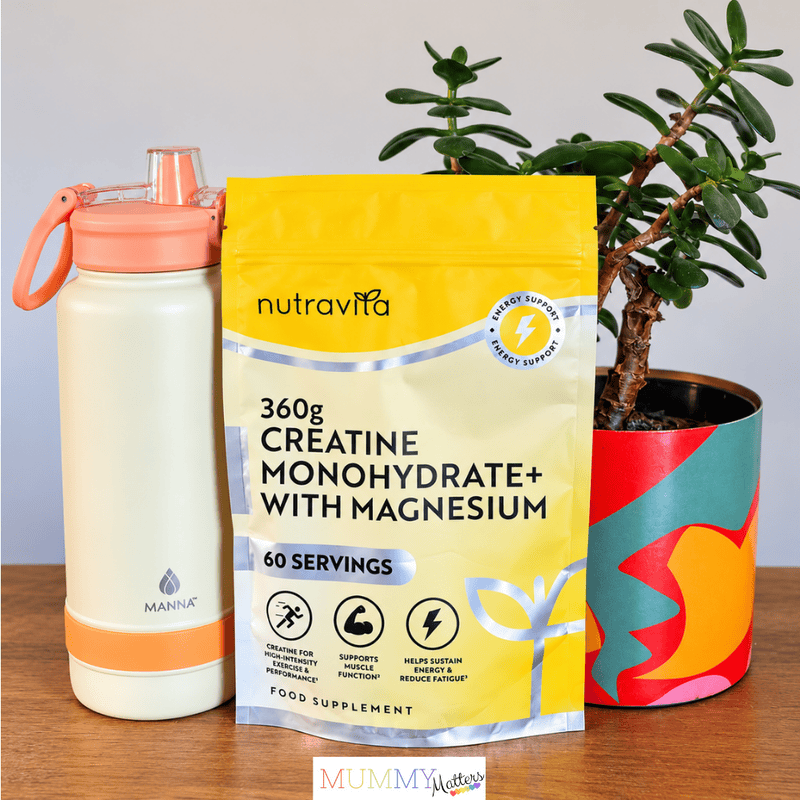
The Creatine I’ve Been Taking: Nutravita Creatine Plus with Magnesium
The product I’ve been using is Nutravita Creatine Plus with Magnesium, which was kindly gifted to me to try. I’ve been taking it consistently since around the end of July/beginning of August, so I’ve had plenty of time to incorporate it properly into my routine rather than trying it for a few days and calling that a review.
Each daily 6g serving contains 3g of creatine monohydrate and 360mg of magnesium. There are 60 servings in a pouch, and the instructions are simply to take one scoop per day.
Why Creatine Plus Magnesium?
I like the fact that this isn’t an overly complicated formula with a huge list of ingredients. It contains creatine monohydrate alongside magnesium salts of citric acid.
Creatine monohydrate is the form of creatine most commonly used in research. The added magnesium appealed to me too because magnesium contributes to normal muscle function, normal energy-yielding metabolism and the reduction of tiredness and fatigue.
At this stage of my life, those are all things I’m interested in supporting alongside my training.
How I Take It
This has probably been one of the easiest supplements I’ve ever added to my routine because I haven’t needed to create a new habit around it.
Every morning I already make myself a protein shake, so I simply add one scoop of the Creatine Plus at the same time.
It’s unflavoured, which I really appreciate. I can’t taste it in my shake, so there isn’t that feeling of having to force down another supplement every morning. For me, anything I’m going to take consistently needs to fit easily into my existing routine, and this does.
I’ve also found it easy on my stomach and haven’t experienced any noticeable digestive discomfort or unpleasant bloating from taking it.
Do You Need to Take Creatine Before a Workout?
One of the things I like about creatine is that I don’t have to remember to take it at a particular time before going to the gym.
Nutravita recommends taking one scoop daily and says that, although creatine is commonly used before or after training, consistency is more important than precise timing.
That suits me perfectly. I take mine in my morning shake whether I’m training that day or not, which means I don’t have to think about it again.
Is It Good Value?
At the time of writing, a 60-serving pouch costs £14.99 when purchased individually, which works out at roughly 25p per daily serving.
Obviously, I was gifted my pouch, so I haven’t had to pay for the one I’ve been testing. However, having used it consistently and experienced how easily it fits into my routine, I would be happy to purchase it myself when I need more.
And perhaps that’s the most useful thing I can say in a review: I’m not continuing with it because I need to write about it. I’m continuing because I genuinely want to.
What I’ve Actually Noticed After Nearly Three Months of Taking Creatine

I’ve now been taking Nutravita Creatine Plus with Magnesium every day since around the end of July or beginning of August, and I’m genuinely pleased with how things are going.
When I first started taking it, I noticed that I seemed to have more stamina during my gym sessions and felt mentally sharper. Now, nearly three months later, I’m beginning to notice something else that I haven’t experienced for years: visible changes in my body.
I’m Getting Stronger and Lifting Heavier Weights
One of the biggest differences I’ve noticed is how much harder I can work during my gym sessions.
I’ve been steadily increasing the weights I’m lifting, and I’m finding that I can push myself further than I could before. Those extra repetitions that once felt out of reach are becoming more achievable.
I’ve also noticed that I seem to recover more quickly after exercising, which is encouraging because it means I’m feeling more ready for my next workout.
Of course, I can’t say that creatine is entirely responsible for these improvements. I’ve been putting in the work at the gym, and consistent resistance training plays a huge part in building strength.
However, I’m really pleased with the progress I’m making.
I’m Finally Seeing Some Muscle Definition Again
This is probably one of the most exciting changes for me.
For the first time in years, I’m starting to notice visible changes in my body. Some muscle tone is returning to my arms and legs, and it’s lovely to see that the effort I’m putting into my workouts is beginning to show.
As I’ve got older, I’ve found that changes in my body haven’t always been easy to navigate. Turning 50 has made me think much more about maintaining muscle and staying strong, rather than simply focusing on what the scales say.
Seeing some definition returning is incredibly motivating.
I’m still waiting for my abdominal muscles to make an appearance, but I’m keeping my fingers crossed that they’ll follow soon!
More importantly, I’m enjoying feeling stronger and seeing what my body is capable of.
I’ve Been Feeling Mentally Sharper
Something I noticed quite early on was a difference in how focused and productive I felt.
I started taking creatine during the school summer holidays, which is usually one of the most challenging times of year for me when it comes to balancing running my business with family life.
This year, I felt more mentally switched on and better able to concentrate on my work.
I can’t prove that creatine was responsible, and I wouldn’t want to suggest that everyone will experience the same thing. However, it remains one of the interesting things I’ve noticed since adding it to my routine.
I’ve Been Finding It Easier to Fall Asleep
Another welcome change has been my sleep.
The Nutravita product I’m taking contains magnesium alongside creatine, and I’ve noticed that I’ve been finding it easier to fall asleep since adding it to my daily routine.
Magnesium plays an important role in normal muscle and nervous system function, although the evidence that magnesium supplements improve sleep is still limited.
I can’t be certain that the magnesium is responsible for the difference I’ve noticed, but I’m certainly not complaining about finding it easier to drift off at bedtime.
I’ve Been Finding It Easier to Switch Off at Night
One of the other changes I’ve noticed since taking Nutravita Creatine Plus with Magnesium is that I’ve been finding it easier to fall asleep.
I’ve always had a very busy mind. Even when I’m physically tired, I can find it difficult to switch off at bedtime. My thoughts seem to keep going, whether I’m thinking about work, family life or everything I need to do the following day.
Since adding the supplement to my daily routine, I’ve noticed that settling down to sleep seems to come a little more easily.
The product contains magnesium, which contributes to normal nervous system function. Although magnesium is sometimes promoted as a sleep supplement, the scientific evidence that taking it improves sleep is still limited.
I can’t say for certain whether the magnesium is responsible for the improvement I’ve noticed, particularly as other factors can affect sleep. However, as someone who has often struggled to quieten a busy mind at bedtime, finding it easier to drift off has been a welcome change.
Will I Continue Taking Creatine?
Absolutely.
Nearly three months in, I’m enjoying my gym sessions, lifting heavier weights, recovering more comfortably and finally seeing some muscle definition returning.
I’m also finding it easy to maintain the habit. I simply add my daily serving to my morning protein shake, and that’s it.
I know that supplements aren’t a shortcut to getting fitter or stronger, and I wouldn’t suggest that creatine alone has produced these changes.
But alongside regular strength training and looking after myself, I’m happy with how things are progressing.
For me, that’s more than enough reason to keep going.
I Haven’t Experienced Any Obvious Downsides
Just as importantly, I haven’t noticed any significant negative effects from taking it.
I haven’t experienced digestive problems or uncomfortable bloating, and because I simply add it to my morning protein shake, taking it hasn’t made my routine more complicated.
That matters to me because I know myself well enough to know that if something is unpleasant to take or requires too much thought every day, I’m unlikely to stick with it indefinitely.
Creatine has been remarkably easy.
Would I Continue Taking Creatine?
Absolutely.
In fact, that’s probably the clearest conclusion I can give after using it consistently for the past couple of months.
I’m enjoying my progress in the gym, I like how I’ve felt mentally, I’ve experienced no obvious downsides and taking it requires virtually no effort because it’s already part of my morning routine.
I can’t tell you that every woman over 50 will experience the same things I have, and I certainly wouldn’t suggest that creatine is some kind of miracle supplement.
What I can say is that my experience has been positive enough that I fully intend to continue taking creatine after this review is finished — and I’ll be buying the next pouch myself.
Is Creatine Safe for Women Over 50?
Safety was obviously something I wanted to understand before deciding that creatine was something I was happy to continue taking long term.
Creatine monohydrate has been extensively studied, and research generally suggests that it is well tolerated when used appropriately by healthy adults. Recent reviews looking specifically at kidney function have also been reassuring, finding no convincing evidence of kidney damage from creatine supplementation at the doses and durations studied.
There is, however, an interesting point about creatine and kidney blood tests.
Taking creatine can increase the amount of creatinine in your blood. Creatinine is one of the markers commonly used when assessing kidney function, so this can potentially make results look different even when the kidneys themselves haven’t been damaged.
For that reason, if you’re taking creatine and having blood tests, I think it’s sensible to tell your GP or healthcare professional that you’re using it so they can take that into account when interpreting your results.
Who Should Get Medical Advice Before Taking Creatine?
Being over 50 doesn’t automatically mean creatine is unsuitable for you, but supplements aren’t appropriate for everyone.
If you have kidney disease, impaired kidney function or another medical condition that could affect whether creatine is suitable for you, I’d speak to your GP, pharmacist or another appropriately qualified healthcare professional before taking it. The same applies if you’re taking medication and aren’t sure whether adding a supplement is appropriate.
It’s also worth checking the magnesium content of combination supplements. The Nutravita product I’m taking contains 360mg of magnesium per daily serving. According to the NHS guidance on vitamins and minerals, taking 400mg or less of magnesium from supplements daily is unlikely to cause harm for most people, although higher amounts can cause digestive problems. It’s important to consider any magnesium you might already be getting from other supplements and to seek professional advice if you have kidney problems, take regular medication or are unsure whether the product is suitable for you.
It’s also worth remembering that supplements shouldn’t be treated as a substitute for the things we already know are important for healthy ageing.
For me, creatine sits alongside strength training, eating enough protein, staying active and looking after my overall health. It isn’t there to replace any of them.
And although my personal experience has been very positive, this article is about what I’ve experienced and what I’ve learned while researching creatine — it isn’t a suggestion that every woman over 50 needs to start taking it.
Creatine for Women Over 50: FAQs
Should women over 50 take creatine?
Creatine can be useful for women over 50, particularly alongside resistance training, but I wouldn’t go as far as saying every woman over 50 should take it. Research suggests creatine may support improvements in strength and lean mass when combined with resistance exercise, while research into some of its other potential benefits is still developing.
For me personally, the experience has been positive enough that I intend to continue taking it.
How much creatine should a woman over 50 take?
There isn’t a specific creatine dose simply because you’ve turned 50.
A commonly studied daily amount of creatine monohydrate is around 3–5g per day, although research protocols vary. The Nutravita Creatine Plus I’ve been taking provides 3g of creatine monohydrate in its recommended daily serving.
I follow the instructions for the product I’m using rather than increasing the amount myself.
Do you need to load creatine when you first start?
You may have heard about a creatine ‘loading phase’, where larger amounts are taken for several days to increase muscle creatine stores more quickly.
Loading isn’t essential. Taking a smaller daily amount consistently can also gradually increase muscle creatine stores; it simply takes longer.
I didn’t do a separate loading phase. I’ve just taken my daily serving consistently.
When is the best time to take creatine?
For me, the best time is the time I’m most likely to remember it.
I add mine to my morning protein shake every day, regardless of whether I’m going to the gym. Creatine works through consistent supplementation rather than acting like a stimulant that needs to be taken immediately before a workout.
Can I put creatine in a protein shake?
Yes, and that’s exactly how I take mine.
My Nutravita Creatine Plus is unflavoured, so I simply add a scoop to my morning protein shake. I can’t taste it, and it means I don’t need to remember another supplement separately.
Does creatine make you gain weight?
Some people may see their body weight increase when taking creatine because creatine can increase water held within the muscles. That isn’t the same as gaining body fat.
Personally, I haven’t experienced uncomfortable bloating or felt that creatine has made me look bulky.
How long does creatine take to work?
This depends partly on how much you’re taking and whether you use a loading phase.
Muscle creatine stores can be increased relatively quickly with a loading protocol, whereas taking a smaller amount each day increases stores more gradually over several weeks.
I didn’t notice one particular day when I suddenly thought, the creatine is working. My experience has been much more gradual. Looking back over the couple of months I’ve been taking it, I’ve noticed progress in my strength and ability to push for extra reps in the gym.
Does creatine help with brain fog?
This is one of the most interesting areas of creatine research for me, but I think we need to be careful with the claims.
Creatine plays a role in brain energy metabolism, and researchers are investigating its effects on memory and cognitive performance. However, that doesn’t mean we can say taking creatine will cure brain fog, and research specifically involving women around menopause is still developing.
I have personally felt sharper and more productive since taking creatine, but that’s my experience rather than proof that creatine was responsible.
Final Thoughts: Is Creatine Worth Taking After 50?
Turning 50 has changed the way I think about fitness. I’m no longer exercising simply to look better in my clothes. I want to stay strong, active and healthy for as long as possible.
Nearly three months after adding Nutravita Creatine Plus with Magnesium to my daily routine, I’m genuinely pleased with my progress. I’m lifting heavier weights, recovering more comfortably between workouts and finally starting to see some muscle definition returning to my arms and legs.
I’ve also noticed improvements in my concentration and how easily I fall asleep, although I can’t say for certain whether these changes are connected to the supplement.
What I do know is that regular strength training, eating well and looking after myself are making a positive difference to how I feel at 50.
Creatine isn’t a miracle supplement, and it won’t replace the effort I’m putting into my fitness. But it’s been easy to incorporate into my routine, and my experience has been positive enough that I intend to continue taking it.
The fact that Nutravita gifted me my first pouch doesn’t change that decision. I’ll happily purchase the next one myself.
For me, this isn’t about turning back the clock. It’s about feeling stronger, looking after my body and making the most of the years ahead.