
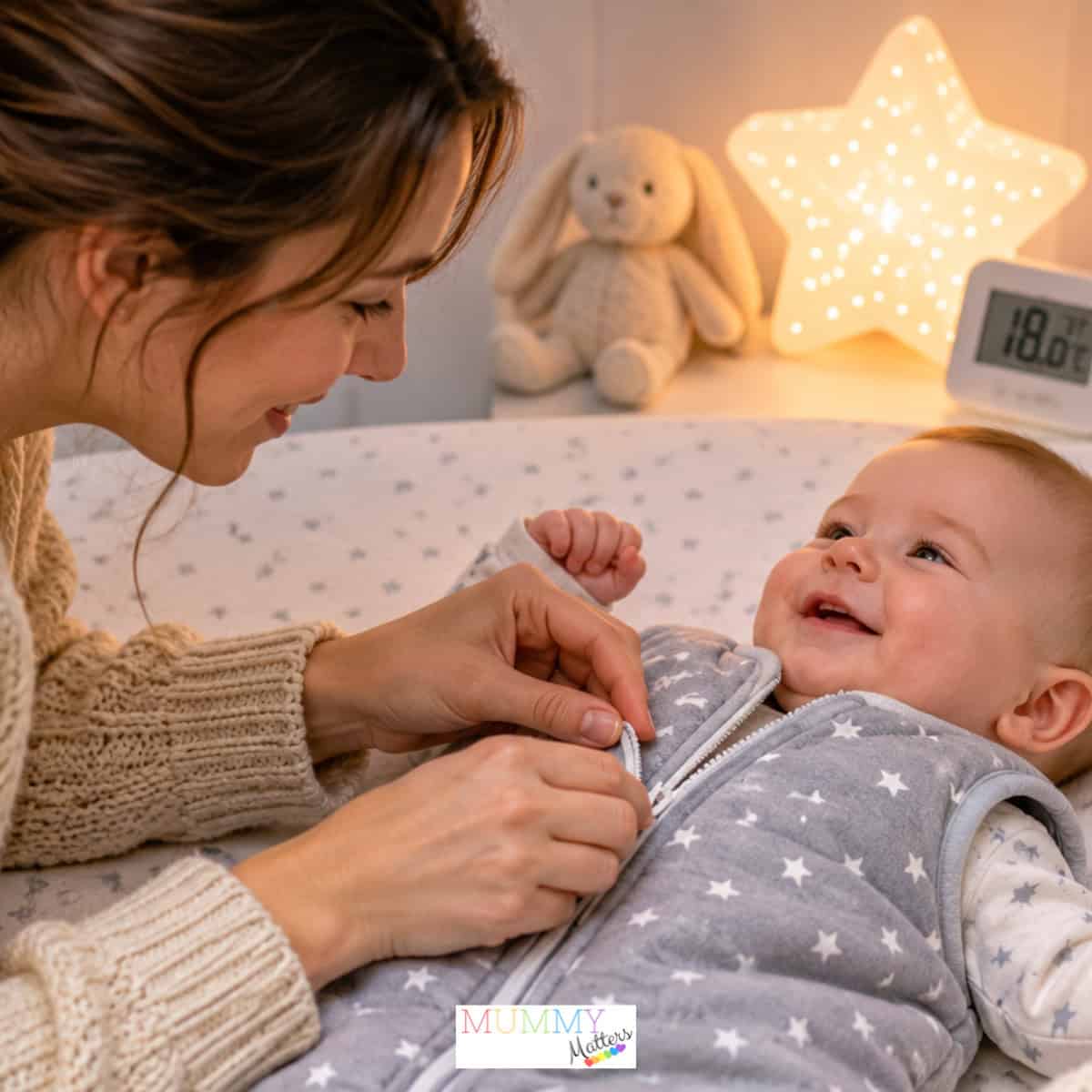
Knowing how to dress a baby for sleep in winter can be challenging when the heating goes off overnight, particularly in colder British homes.
In our house, the heating goes off at 11pm. It has done for years, long before we had a baby, because that is when the timer says so and because the energy bill says so even louder. It never bothered us. We had a duvet and a hot water bottle and each other’s cold feet to complain about.
Then our son arrived in November, and suddenly the temperature of the back bedroom at 4am became the most important number in our lives.
Why babies wake when the house cools down
Adults tend to wake up a little when they get cold, pull the duvet up and drift off again. Babies can’t do that. They can’t add a layer, and they shouldn’t be under a loose duvet or blanket in the cot at all. So when the house cools in the early hours, a baby who was perfectly comfortable at bedtime can end up chilly, unsettled and very awake.
For us this showed up as the 4am wake-up. Every night, like clockwork, our son would stir just as the house hit its coldest point. We blamed hunger, then teething, then the bin lorry. It took a room thermometer and a lot of bleary-eyed checking to realise it was the cold.
Switching to a sleeping bag
The midwife had mentioned sleeping bags in passing, and we had one somewhere in a pile of gifts. When we finally tried it, it changed our nights.
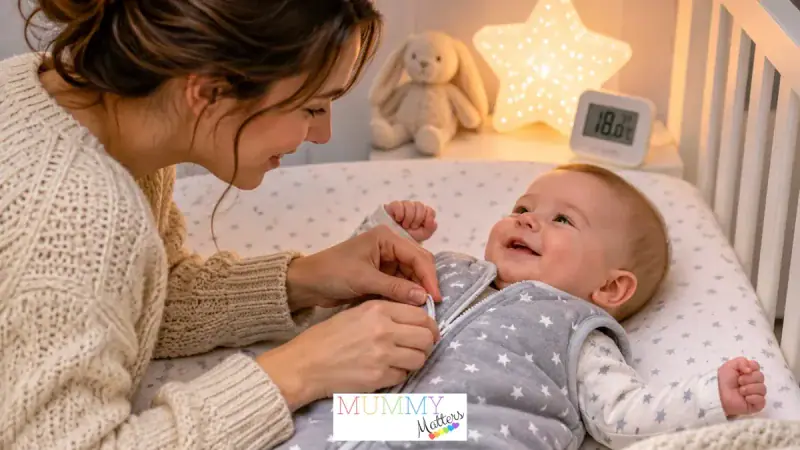
A newborn sleep bag works like a wearable duvet. It zips around your baby, keeps them covered all night and can’t be kicked off or pulled over their face. That last part was what sold it to me. With a loose blanket, I was checking on him constantly. With a sleeping bag, I could close my eyes.
When deciding how to dress a baby for sleep in winter, it is important to consider both the room temperature and the warmth of their sleeping bag. The trick is the tog. Tog is simply a measure of how warm the fabric is. A lower tog suits a warm room; a higher tog suits a cooler one. Most brands give you a little chart that matches tog ratings to room temperatures, and it is worth sticking that chart inside a wardrobe door so you are not trying to remember it at midnight.
How to Dress a Baby for Sleep in Winter: Choosing the Right Tog
Because our house drops so much overnight, we dress for the coldest part of the night, not the warmest. In the depths of winter, that means a 3.5 tog sleeping bag over a long-sleeved sleepsuit. On milder nights, or once we started leaving the heating on a little later, we dropped down a tog and swapped the long sleeves for short.
Love to Dream do theirs in a range of togs, and having two weights in rotation made it easy to switch depending on the forecast. If you only buy one, buy for the room you have in January, not the one you have in October.
A few things we learned along the way:
- Check your baby’s chest or the back of their neck, not their hands or feet. Little hands are often cool even when the rest of them is toasty.
- No hats indoors. Babies lose heat through their heads, which helps them stay cool.
- Keep the cot clear. No duvets, pillows or bumpers. The sleeping bag does the job.
- If they feel sweaty or flushed, they are too warm. Take a layer off.
The rest of our winter bedtime
Getting the sleeping bag right was the biggest change, but we tweaked a few other things too.
We moved the cot away from the window, where a draught was sneaking in around the frame. We bought a cheap thermometer for the nursery so we could check the temperature without guessing. And we started warming the room for half an hour before bedtime, so it was not a shock going from a warm bath to a cold bedroom.
We also changed the order of the routine. Bath, then pyjamas and sleeping bag straight away in the warm bathroom, then the bedroom. Fewer minutes in a nappy on a cold changing mat meant far fewer protests.
Night feeds in a cold house
The other thing nobody mentions is how cold you get during night feeds. Sitting still in a dark bedroom at 3am, with the heating long since off, is a special kind of chilly.
We kept a dressing gown and thick socks on the chair in the nursery, so whoever was on duty could put them on without waking anyone. A flask of hot water and a mug sat on the side for a cup of tea afterwards. And we kept the lights low, using a small lamp instead of the big light, so neither of us woke up fully.
For our son, the sleeping bag made night feeds easier too. We could feed him without undressing him, and because the zip opened from the bottom, a nappy change did not mean exposing his whole body to the cold air. He stayed sleepy, we stayed sane, and he went back down far more easily than he had in the blanket days.
What changed
Within a week, the 4am wake-ups stopped. Not overnight, and not every single night, but enough that we noticed. Our son started sleeping through to a more civilised hour, and we started remembering what it felt like to be human.
Knowing how to dress a baby for sleep in winter becomes more challenging when temperatures fluctuate overnight. The recommended room temperature for a sleeping baby is between 16°C and 20°C, and clothing and sleeping bag tog ratings should be appropriate for the actual room temperature. It is worth checking the obvious thing first. Before you rewrite your whole routine, feel the room at 4am. It might just be cold.
And if your heating goes off at 11pm too, you are in good company. Half of Britain is quietly freezing in the small hours. At least the baby doesn’t have to.