

Every family has a cupboard that tells the truth about gift-giving. It holds the presents that were opened with real delight, played with for a fortnight, and then quietly retired behind the board games. Nobody intends to buy those. They happen because the gift was chosen for the occasion rather than for the child.
Choosing well is less about budget than it is about paying attention. The present used in March is usually the one that fits how a child already likes to spend their time, rather than the one that tries to nudge them toward something new.
Here are seven things worth considering before you buy.
1. Start with how they already play
Spend an afternoon watching, and the answer tends to appear on its own. Some children build. Some narrate constantly, giving voices to everything within reach. Some need to be moving, and others will settle happily with one project for an hour learning through imaginative play.
Buying against that grain rarely works, no matter how well reviewed the toy is. Matching the gift to the child’s natural temperament makes far more difference than matching it to a trend.
2. Look for things that grow with them
The strongest presents have more than one setting. Sensory toys are great for toddlers, a construction set can be a simple build at five and something far more ambitious at eight. Art materials stretch across ages. Anything with an open ending tends to outlast anything with a single correct outcome.
This is where single-trick toys fall down. The child works out the trick, enjoys it for a few days, and then there is nowhere left to go. Price offers no protection here, and some of the shortest-lived gifts are the most expensive ones in the house.
3. Consider whether a complete set suits them better
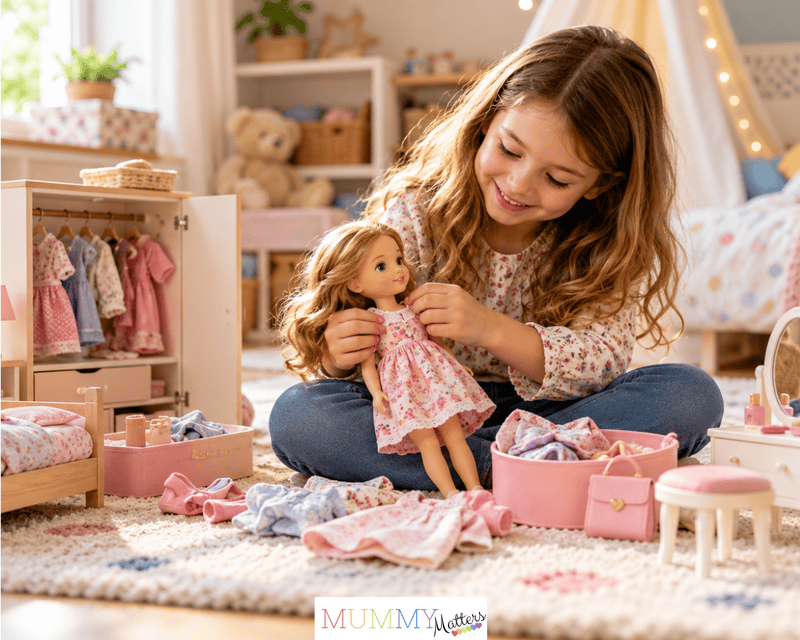
For younger children in particular, a boxed set with everything included is often the stronger choice. Looking at kids dolls as an example, a doll set that arrives with furniture, outfits and accessories gives a child a world to step straight into, so play begins within minutes rather than stalling while they hunt for something to stand in for a bed.
The same logic applies across categories, whether that is a play kitchen with food, a garage with vehicles or a doctor’s kit with the full range of tools. What you are really buying is the removal of friction.
One word of caution. Check what the accessories actually do. A set padded out with a dozen single-purpose plastic props is worth less than a smaller one with pieces that work in several ways. A good test is whether those accessories would still get used alongside toys your child already owns.
4. Think about where it will live
Larger gifts are wonderful when the household can genuinely accommodate them, and frustrating when it cannot. A bike needs somewhere safe to ride and somewhere dry to store it. A play tent needs floor space that is not already spoken for.
Do a quick mental walk-through of the house before buying anything substantial. If you cannot picture where it goes, it will probably end up in the way, and things that are in the way get put away.
5. Buy for the child they are now
This is the mistake most of us make at least once. A gift chosen for the stage a child is about to reach usually sits untouched until they have already moved past it.
Children’s interests shift quickly, particularly between four and eight, and a year is a long time at that age. Buying for who they are today is nearly always the better bet.
6. For a child who has plenty, choose the add-on
When the toy box is already full, an extension is often more welcome than another standalone item. Extra outfits, additional track pieces, a new set of figures or replacement accessories all build on something your child has already committed to, which makes them far more likely to be used.
Experiences work well here too. A membership, a class, tickets to something they have been talking about. They take up no space at all, they create a memory rather than an object, and they neatly sidestep the storage problem.
7. Check the practical details
A few small things save a good deal of disappointment later.
Read the age marking rather than judging from the picture on the box, as it reflects small parts and safety testing rather than difficulty alone. Consider whether anything battery-powered will still be welcome in a month, as toys that supply all the noise tend to leave the child with less to do. Check that anything a young child handles constantly can be wiped clean. And if assembly is involved, find out before the birthday morning, not during it.
A final thought
The gift that gets remembered is rarely the most elaborate one. It is usually the one that fit, that was easy to start playing with, and that had somewhere to go after the first week.
Get those three things right, and the rest tends to take care of itself.