

September always feels like one of those months that disappears before I’ve really had a chance to catch up with it. After a busy summer, the return to school and work routines takes a few weeks to settle, and suddenly October is here and we’re heading towards half term, darker evenings and, dare I say it, Christmas.
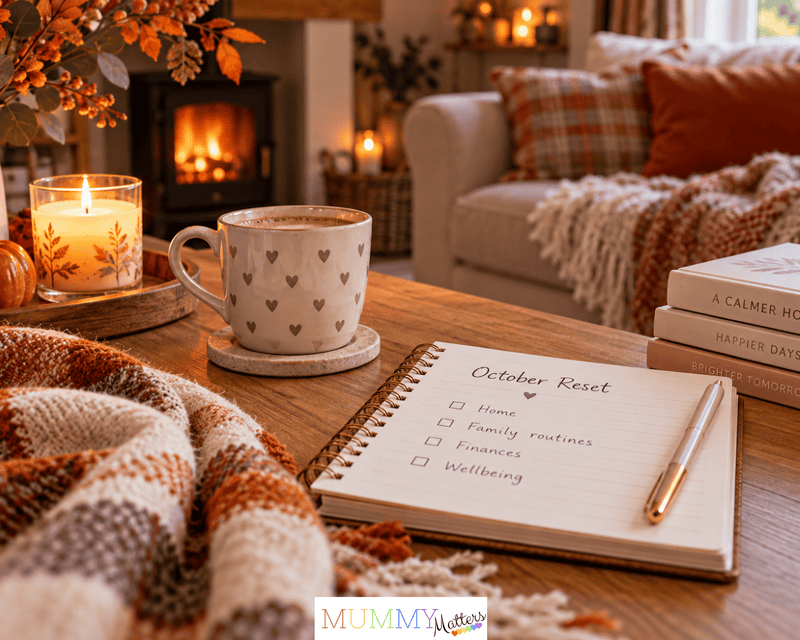
For me, the beginning of October feels like the perfect time for an October reset. September is still slightly chaotic. There are new timetables to remember, routines to get used to and that strange adjustment from summer freedom back to normal family life. By October, things have usually settled enough to see what is working, what isn’t and what needs a little attention.
An October reset doesn’t need to mean reorganising your entire house or creating an impossibly perfect routine. It’s simply a chance to look at your home, family life, finances and your own wellbeing before the busiest few months of the year arrive.
If you’re feeling as though autumn has crept up on you, these are 15 things worth doing this October to help the next few months feel calmer, cosier and a little more organised.
Reset Your Home for Autumn
1. Switch Over the Wardrobes
By October, I’m usually ready to admit that the summer clothes aren’t going to get much more wear. Rather than fighting through dresses, shorts and lightweight clothes every morning to find something warm, this is a good time to have a quick wardrobe switch-over.
You don’t necessarily need to pack everything away. Move the clothes you’re unlikely to wear to a less accessible part of the wardrobe and bring jumpers, jeans, warmer pyjamas and layers to the front.
It’s also worth checking what everyone has actually outgrown before the first genuinely cold morning arrives. Children’s coats, school jumpers and boots have an annoying habit of fitting perfectly when they’re put away and somehow becoming two sizes too small by the time they’re needed again.
2. Sort Out the Coat and Shoe Chaos
One of the first signs that autumn has properly arrived in our house is the sudden increase in stuff by the door. Summer shoes are joined by trainers, boots and wellies, while lightweight jackets are replaced by coats, waterproofs and hoodies. Add school and work bags into the mix and it doesn’t take long for the hallway to feel cluttered.
October is a good time to pull everything out and work out what actually needs to be there. Put away anything that won’t be worn again until next year, check that coats and waterproofs still fit and get rid of shoes that are worn out or have been outgrown.
It can also help to give everyone a designated place for the things they use most often. It doesn’t need to be an elaborate storage system; a basket, hook or shoe rack can make mornings much easier when you’re not hunting around the house for the coat or bag someone needs five minutes before leaving.
While you’re doing it, check the less obvious autumn essentials too. Umbrellas, hats, gloves and reflective accessories are much easier to find now than on the first freezing or ridiculously wet school morning of the year.
3. Give One Clutter Hotspot a Proper Reset
You don’t need to declutter the whole house as part of an October reset. In fact, setting yourself a huge task like that is often the quickest way to put it off altogether. Instead, choose the one area that is irritating you most and concentrate on getting that under control.
Most homes have at least one clutter hotspot where things seem to gather without anyone quite knowing why. It might be the kitchen worktop, dining table, hallway, a chair that has become a dumping ground or that drawer where everything gets shoved when you don’t know where else to put it.
Set aside half an hour, take everything out and decide what genuinely belongs there. Put misplaced items back where they should live, throw away anything you no longer need and think about whether a simple basket, drawer organiser or storage box would prevent the same pile from appearing again next week.
I’ve found that tackling one small area properly can make the whole house feel more organised without spending an entire weekend decluttering. If you’re feeling inspired to go a little further, I’ve also shared more practical decluttering tips for creating a calmer home which can help you work through other areas without trying to do everything at once.
4. Get the House Ready for Colder Weather
October is usually the point when I start noticing the temperature dropping properly, particularly first thing in the morning and once the sun goes down. Before we reach the stage where the heating is running regularly, it’s worth spending a little time making sure the house is ready for colder weather.
Start with the simple things. Check that radiators are heating properly, move furniture or anything else that might be blocking them and look for obvious draughts around windows and doors. If you haven’t used the heating for several months, turning it on before you desperately need it also gives you time to spot any problems.
This is also a good opportunity to check gutters and outside drains for leaves, make sure outdoor furniture is protected or stored away and put anything in the garden that could be damaged by strong winds somewhere secure.
Inside, I like to bring out the heavier throws and blankets and make the rooms where we spend the most time feel a little warmer and more inviting. Preparing for autumn doesn’t have to mean spending money on new seasonal decorations. Sometimes simply swapping lightweight textiles for warmer ones and getting the house ready for evenings spent indoors is enough to make it feel much cosier.
5. Make Your Main Living Spaces Feel Cosier

As the evenings get darker, we naturally start spending more time at home, so October is when I like our main living spaces to feel somewhere we actually want to settle down for the evening.
You don’t need to completely redecorate or buy lots of new accessories to make a room feel cosier. I’ve found that creating a calmer home rhythm often comes down to small changes rather than completely redecorating a room. Bring out the blankets, add a few cushions, use warmer lighting instead of relying on the main ceiling light and clear away some of the everyday clutter that can make a room feel busy rather than relaxing.
Scent can change the atmosphere of a room too. Whether you prefer candles, wax melts or a diffuser, autumn is the perfect excuse to bring back warmer fragrances. I tend to gravitate towards comforting scents at this time of year that make the house feel inviting when it’s cold and dark outside.
It’s also worth thinking about how you actually use your home during autumn and winter. A basket of blankets beside the sofa, somewhere convenient to keep books or magazines, or creating a cosy corner for reading can all make the house work better for the way your family lives during the colder months.
For me, that’s really what an autumn home reset is about. It isn’t about making the house look perfect for a photograph; it’s about making it feel comfortable, welcoming and easy to live in.
Reset Family Life
6. Look at What Is (and Isn’t) Working With the School Routine
By the beginning of October, we’ve usually had enough time to see whether the routines we started September with are actually working. Over the years, I’ve learnt that there is a big difference between a routine that looks good on paper and one that works for your family in real life.
Take a few minutes to think about the parts of the week that regularly feel rushed or stressful. Are mornings becoming a battle? Is homework being left until too late? Are PE kits, letters or school equipment constantly being forgotten? Is everyone exhausted because evenings have become too busy?
Rather than trying to overhaul everything, concentrate on the one or two things causing the most friction. That might mean getting bags ready the night before, moving homework to a different time, adding school dates straight to the family calendar or simply recognising that somebody needs more downtime after school before they’re ready to do anything else.
This is particularly important when you have children who don’t necessarily cope well with busy schedules or transitions. What works brilliantly for one child may be completely wrong for another, so I’ve stopped expecting every member of the family to follow exactly the same routine.
October gives us a useful opportunity to adjust things before the darker mornings, half term and Christmas activities add even more to the calendar. A family routine should make life easier; if it’s consistently making everybody more stressed, it’s perfectly fine to change it.
7. Get Ahead of October Half Term
October half term always seems to arrive much faster than I expect it to. One minute everyone has only just gone back to school and the next you’re looking at a whole week that needs fitting around work, family commitments and keeping everyone entertained.
You don’t need to plan every day in advance, but having a rough idea of what you might do can make the week much easier. Check your local school dates, look at everyone’s work commitments and decide whether there are any days when you want to arrange something special.
If you’re thinking about a family day out, it’s worth looking early. Popular Halloween events and seasonal attractions can book up, particularly during half term, and booking ahead can sometimes save money too. I usually prefer having a mixture of plans rather than filling every day: perhaps one bigger day out, a couple of inexpensive local activities and some completely unscheduled days at home.
It’s also worth having a few wet-weather ideas ready. October can give us beautiful crisp autumn days, but it can just as easily give us a week of rain, so having a backup plan saves that last-minute scramble to find something everyone wants to do.
As the children have grown older, I’ve also learnt that half term doesn’t have to mean organising entertainment from morning until night. Sometimes what they need most after the first few weeks back at school is the chance to slow down, sleep a little longer and enjoy having nowhere they need to be.
One of our favourite autumn traditions is heading out to choose pumpkins, so I’ve also updated my guide to the best pumpkin picking near Peterborough for 2026.
8. Sort Out the Darker-Evening Routine
One of the biggest changes in October is how quickly the evenings begin to feel shorter. It can still be reasonably light when everyone gets home at the beginning of the month, but by the time the clocks change at the end of October, darkness seems to arrive ridiculously early.
That shift can affect family routines more than we realise. After-school activities, dog walks, exercise and time outdoors can suddenly become harder to fit in, while darker evenings can make it very tempting to come home, get comfortable and stay there.
Have a look at the things your family normally does after school or work and think about whether anything needs moving around. If you want to keep getting outside, could you go for a walk earlier? Do outdoor jobs need doing at weekends instead? Would exercising before work be more realistic than hoping you’ll feel motivated once it’s dark?
It’s also a good time to think about visibility and safety. Check that bike lights still work, keep reflective accessories somewhere easy to grab and make sure anyone walking or cycling home later in the day can be easily seen.
At home, I actually quite like
9. Check the Family Calendar Through to Christmas
I know it feels far too early to start talking about Christmas when October has only just begun, but this isn’t about putting the tree up or starting the festive celebrations. It’s about avoiding that horrible moment in December when you realise three things are happening on the same weekend and you’ve forgotten something important.
Sit down with your calendar and look at the next three months as a whole. Add school and college dates, parents’ evenings, appointments, clubs, work commitments, birthdays, planned weekends away and anything else you already know about.
Then start adding the seasonal dates as they appear. Schools, clubs and workplaces often begin announcing Christmas performances, parties and events during October and November, and they can quickly fill what looked like an empty diary.
This is also a good opportunity to protect some blank space. I used to look at an empty weekend and automatically think it meant we were free to make plans. These days, I appreciate that sometimes an empty weekend is exactly what we need.
Having everything in one place makes it much easier to see the busy periods coming and plan around them. It also gives you a head start on practical things such as booking tickets, arranging lifts, requesting time off work or simply saying no to something because the family calendar is already full.
A calmer run-up to Christmas often has less to do with being incredibly organised in December and much more to do with spotting the pressure points before you get there.
10. Create a Few Easy Things to Look Forward To

Once summer holidays and days out are behind us, it can sometimes feel as though we’re simply getting through the weeks until Christmas. That’s why I like having a few smaller things in the diary to look forward to during autumn.
They don’t have to be expensive or elaborate. It could be a woodland walk when the leaves have changed colour, a family film night, meeting a friend for coffee, going out for breakfast, visiting somewhere local you’ve been meaning to explore or simply planning an afternoon at home when nobody has to be anywhere else.
As our children have grown older, I’ve realised that family time changes too. We don’t necessarily spend our weekends doing the same things we did when they were little, and getting everyone together can take more planning. Sometimes it’s easier to make the most of smaller pockets of time rather than waiting for the perfect day when everybody is free.
I also think it’s important to have things in the calendar that are just for you. That might be a night away with your partner, meeting a friend, booking something with your mum or simply giving yourself a few hours to do something you enjoy. Family life can become very focused on what everyone else needs, particularly as the end of the year gets busier.
Having a handful of enjoyable things dotted through October and November makes the darker months feel much less like something to endure. They don’t need to be big occasions; sometimes knowing there’s a cosy evening, a walk somewhere beautiful or a coffee date waiting at the end of a busy week is enough.
Reset Your Finances
11. Check Subscriptions and Regular Household Spending
October is a useful time to have a quick look at what is leaving your bank account every month, particularly before Christmas spending begins. I’m not talking about creating a complicated household budget or cutting out every small pleasure, but simply checking that you’re still happy with what you’re paying for.
Go through your regular payments and subscriptions and look for anything you no longer use. Streaming services, apps, memberships, software subscriptions and free trials that quietly became paid subscriptions can all add up.
It’s also worth checking the bigger household expenses that may be coming up for renewal. Car and home insurance, broadband, mobile contracts and energy tariffs are all worth keeping an eye on rather than automatically allowing them to renew without checking your options.
One thing I’ve become much more conscious of is the number of annual payments that can creep up unexpectedly. A bill you only pay once a year is very easy to forget about until the renewal email arrives, so adding those dates to your calendar can make them much easier to plan for.
You don’t necessarily need to cancel everything or switch providers. The aim is simply to know where your money is going and make sure you’re still getting value from it. Even finding one or two unnecessary payments can free up a little extra breathing room before the most expensive part of the year arrives.
12. Start Planning the Christmas Budget Now
I don’t particularly want to spend October feeling as though Christmas has already started, but there is a big difference between starting the celebrations early and quietly getting organised behind the scenes.
Christmas spending is rarely just about presents. There is food, decorations, Christmas parties, school or work events, days out, travel and all those little extras that don’t seem particularly expensive individually but soon add up.
Start by thinking about what Christmas normally costs your family rather than setting an unrealistic budget based on what you think you should spend. Make a rough list of the people you buy for and the other expenses you know are likely to come up, then decide what you can comfortably afford.
If you’re planning to buy gifts over the next couple of months, keeping a simple list of what you’ve bought and how much you’ve spent can also prevent that December problem of forgetting what is hidden in cupboards and accidentally buying more.
October is also early enough to have conversations about changing traditions that have become too expensive or stressful. Perhaps adults in the family could do Secret Santa instead of buying for everyone, you could agree spending limits or decide that you’d rather put money towards spending time together.
Getting organised now isn’t about taking the spontaneity out of Christmas. For me, it’s the opposite. If the practical side is under control, there’s much more chance of actually enjoying December instead of spending it worrying about how much everything is costing.
13. Check the Car and Other Seasonal Expenses Before Winter
Autumn has a habit of bringing expenses that are easy to forget about during summer. Heating costs begin to rise, Christmas is approaching and, depending on when your policies renew, you might also have insurance, servicing or other annual bills landing at the same time.
If you rely on your car for work, school runs or family life, October is a good time to give it a basic winter check. Look at the tyre tread and pressures, top up screenwash, check your lights and wipers and make sure you have everything you need for colder, darker journeys.
It’s worth checking when your MOT, service, breakdown cover and car insurance are due too. If any are coming up over the next few months, adding them to the budget now means they are less likely to arrive as an unwelcome surprise.
The same principle applies around the house. Think about the costs that tend to increase at this time of year, from heating and electricity to replacing winter clothes or paying for seasonal activities. You don’t need to predict every expense, but having a little money set aside for the things you know are coming can make a big difference.
I find it much easier to deal with these costs when I can see them coming. An October financial reset isn’t about restricting everything you spend; it’s about heading into the final few months of the year knowing what you’re likely to need and giving yourself time to plan for it.
Reset Yourself
14. Bring Back One Healthy Habit That Disappeared Over Summer

Summer always knocks some of my usual routines off track. There are holidays, days out, weekends away and generally less structure, and although I wouldn’t change that, by autumn I usually reach the point where I’m ready to start doing a little more for myself again.
For me this year, that’s getting back into the gym. I’ve finally started to feel motivated again after summer, and I’m enjoying having that time to focus on myself and feel stronger. I’m not trying to suddenly overhaul everything I eat, exercise every day or create an unrealistic routine that I’ll abandon within a fortnight. I just want regular exercise to become part of my week again.
Your October reset might look completely different. Perhaps you want to start walking more, get outside during daylight hours, drink more water, improve your sleep routine or simply go to bed a little earlier.
Choose one thing rather than trying to change everything at once. Small habits are much easier to fit into an already busy life, and once something starts to feel normal again, you can always build on it.
I also think there’s something quite motivating about doing this now rather than waiting until January. We don’t have to write off the final three months of the year and promise ourselves we’ll look after ourselves better in the New Year. There is still plenty of time to make changes that help us feel better before then.
15. Decide How You Want the Rest of the Year to Feel
We tend to save the big reflection questions for January, but October gives us three whole months before the year ends. That’s a significant amount of time, and I don’t want to spend it simply racing from one thing to the next until Christmas is over.
Instead of writing another list of goals, think about how you actually want the rest of this year to feel.
For me, I want to feel more organised and less reactive. I want to keep making time for the gym and looking after myself, enjoy cosy evenings at home without feeling guilty that I should be doing something productive, spend proper time with my family and still have plenty to look forward to outside of work.
Your priorities might be completely different. You might want more rest, more time outdoors, fewer commitments, better routines, more time with friends or simply a calmer home.
Once you’ve decided what matters, it becomes much easier to work out what deserves space in your calendar and what doesn’t. If you want a calmer few months, for example, filling every free weekend probably isn’t going to help. If you want more family time, you might need to deliberately protect it rather than hoping it happens.
There will always be things we can’t control, particularly in family life, and no amount of planning will make October, November and December run perfectly. But having a sense of how you want those months to feel can help you make better choices about the things you can control.
Your October Reset Doesn’t Have to Happen in One Day
Looking at a list of 15 things might make an October reset sound like another enormous job to add to your to-do list, but that’s really not the idea.
Pick the things that would make the biggest difference to your life right now and start there. You might sort the hallway this weekend, look at the family calendar one evening and check your finances another day. Some of the ideas on this list might not be relevant to your family at all, and that’s fine too.
For me, an October reset is simply about taking stock after the whirlwind of summer and September and making a few adjustments before we head into the busiest part of the year.
I want our home to feel cosy, our calendar to have some breathing space and our finances to have fewer surprises. I also want to make sure that somewhere amongst looking after the house, keeping family life moving and working, I’m making time to look after myself too.
If October has crept up on you this year, don’t feel as though you need to catch up with everything at once. Choose one thing from this list, get that sorted and go from there. Sometimes a few small changes are all it takes to make the months ahead feel much more manageable.