
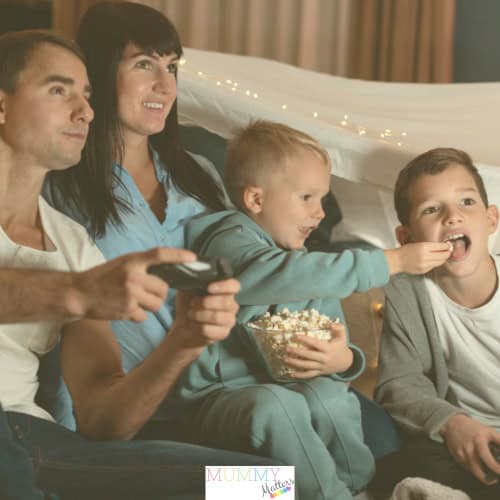
A family movie night works best when the room supports comfort and attention. Seating distance, lighting, sound, and movement all affect the experience.
Screen size should match viewing distance. A screen that is too small strains attention. One that is too large can feel overwhelming in a smaller room. Keep the main seating area directly facing the screen whenever possible.
Movie watching is still a major family activity. Nielsen reported that streaming accounted for 38.7% of total TV viewing time in the United States in July 2024.
Use Lighting to Create Atmosphere

Lighting changes how relaxing the room feels. Overhead ceiling lights are often too harsh for films. Layered lighting works better.
Use dimmable lamps, wall lights, LED strips, or low-level table lighting around the room edges. Warm colour temperatures help reduce glare and create a calmer atmosphere.
Accent lighting can also make the space feel more personal. Some families use themed decor like a neon Netflix sign near the snack area or media wall to give the room a cinema-inspired feel without changing the whole design.
Improve Seating Without Buying New Furniture
A cozy room does not require a home theatre renovation. Most spaces improve with softer layering and better seating arrangement.
Focus on:
- Cushions with different firmness levels
- Washable throws
- Floor pillows for children
- Footstools for leg support
- Side tables for drinks and snacks
- Rugs to reduce echo
- Clear walking paths
Avoid pushing all furniture against the walls. Pull seating slightly inward to create a more connected viewing area.
Control Sound Inside the Room
Hard surfaces create echo. This makes dialogue harder to hear, especially during quieter scenes.
Soft materials improve sound absorption. Curtains, rugs, fabric sofas, cushions, and upholstered chairs reduce harsh reflections. Bookshelves also help break up sound bounce.
Volume should stay balanced. If adults constantly raise the volume to hear dialogue, the room may need better acoustic control rather than louder speakers.
Organise Snacks and Break Areas
Families move around during movie nights. A snack station helps reduce interruptions and keeps the room tidy.
Keep snacks simple and easy to carry. Use trays, small bowls, reusable cups, and covered containers to reduce spills. Place napkins and bins nearby so children can clean up easily.
Good movie-night snack setups often include:
- Refillable popcorn bowls
- Water bottles instead of sugary drinks
- Shared snack trays
- Covered containers for leftovers
- Easy-clean serving surfaces
- Low-light snack access near seating
Simple systems make the evening feel calmer.
Add Personal Family Details
The most memorable movie rooms feel personal. They reflect family routines and shared memories instead of looking like a showroom.
Display items that connect to family experiences. This might include framed cinema tickets, favourite film posters, handmade art, or themed shelves with books and games.
Some families also use photo books to keep holiday pictures, birthday memories, family trips, or movie-themed scrapbook collections together in one place. These details make the room feel lived in rather than staged.
Keep Technology Easy to Use
Complicated setups interrupt the evening. Remote controls, streaming logins, speakers, and cables should be organised before movie night starts.
Label remotes if multiple devices are used. Keep chargers nearby. Hide visible cables where possible using clips or cable sleeves. This improves safety and reduces visual clutter.
Internet stability also matters. Buffering problems quickly break attention during family viewing.
Create Flexible Spaces for Different Ages
Young children, teenagers, and adults use the room differently. Flexible seating helps everyone stay comfortable.
Floor cushions work well for younger children. Teens may prefer beanbags or lower seating. Adults often need better back support for longer films.
The room should also adapt beyond movie night. Reading, gaming, homework, and family conversations may happen in the same space.
Manage Screen Fatigue
Long viewing sessions can become tiring without breaks. Encourage short pauses during longer films. Keep lighting low but not completely dark to reduce eye strain.
Blue light settings on televisions and tablets may also help during evening viewing. Softer screen settings usually feel more comfortable in dark rooms.
Conclusion
A cozy family movie night space depends on comfort, lighting, sound, and personal details. The best rooms are practical, flexible, and easy to use.
Families do not need expensive renovations to create a memorable setup. Small changes in seating, lighting, organisation, and atmosphere can turn an ordinary living room into a space people genuinely look forward to using together.