

Preparing for your GCSE exams can feel overwhelming, but an organised revision timetable will help you stay on top of your subjects, manage your time, and boost your confidence. A well-structured plan ensures you revise effectively without burnout and helps you achieve your revision goals. This guide will walk you through how to make a GCSE revision timetable, along with revision timetable tips and a free GCSE revision timetable template to get you started.
Why a Revision Timetable Matters for GCSE Success

A GCSE revision timetable is one of the most powerful tools you can use while preparing for your exams. By creating a timetable, you break down different subjects and topics into manageable chunks, making sure you cover everything without last-minute panic.
Benefits of using a revision timetable:
- Keeps your study time organised and balanced across all your GCSE subjects.
- Helps you prioritise areas where you feel less confident.
- Ensures you allocate enough hours of revision to each subject or topic.
- Reduces stress by giving you a clear revision plan.
How to Make a GCSE Revision Timetable
If you want to make a GCSE revision timetable that actually works, follow these steps:
- Know Your Exam Dates
Start with your official exam timetable. List your GCSE exam dates so you can plan your revision periods accordingly. Check exam timetables from AQA here or OCR’s timetable page. - List Your GCSE Subjects
Write down all your GCSE subjects and divide them into smaller subjects and topics. This ensures you know all the topics that need revising. - Prioritise Weak Areas
Identify the areas you find most challenging and allocate extra study and revision time for these. - Plan Study Sessions
Break your revision into study sessions of around 30–50 minutes, with short breaks in between to avoid fatigue. - Use a Revision Template
A revision timetable template or study planner can help you stay consistent. You can either draw one up or use an app to personalise it. - Mix Subjects Daily
To avoid feeling overwhelmed, revise more than one subject each day. This variation keeps your brain active and engaged. - Add Flexibility
Include some unassigned revision slots in case you fall behind or need to revisit gaps in your knowledge.
Using a Revision Timetable Effectively
A personalised timetable is only useful if you stick to it. Here are some revision timetable tips:
- Set realistic revision goals each week.
- Include revision periods for past papers to test your knowledge.
- Break topics into a topic each day instead of cramming.
- Use effective revision techniques such as flashcards, mind maps, and self-testing.
- Always schedule short breaks to stay refreshed.
By using a revision timetable consistently, you’ll not only manage your time better but also gain a sense of achievement as you tick off completed topics.
Free GCSE Revision Timetable Template
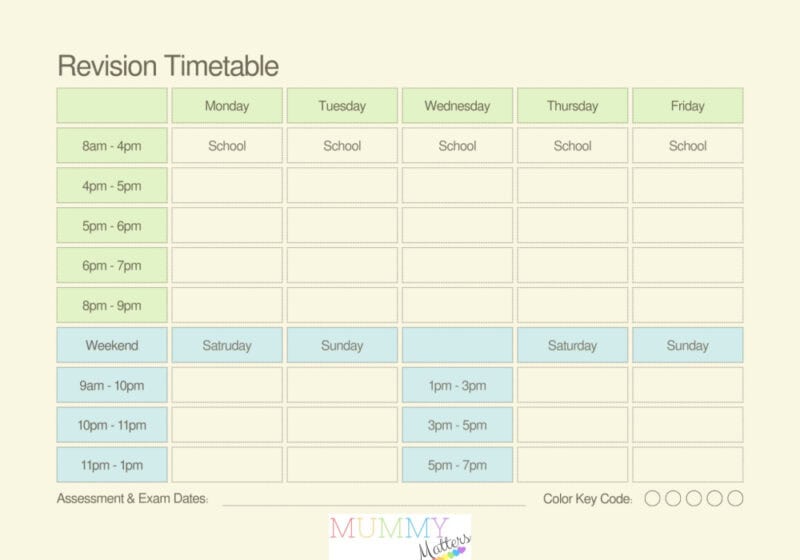
To help you get started, here’s a free GCSE revision timetable template you can adapt to your own needs. Simply fill in your revision sessions, match them to your exam dates, and personalise according to your revision plan.
Final Tips to Ace Your Exams
- Start early to spread out your revision time and avoid last-minute stress.
- Include at least one study session daily for the GCSE subjects you struggle with most.
- Balance revision with rest to avoid feeling overwhelmed.
- Regularly review your revision timetable and adapt it as needed.
An effective GCSE revision timetable is your best tool to ace your exams. With a clear revision plan, dedicated study sessions, and consistent effort, you’ll enter your exams confident and prepared.
Helpful Resources
In summary: A well-structured GCSE revision timetable ensures you know all the topics, stay consistent, and avoid last-minute stress. By creating a balanced plan, setting clear revision goals, and using proven revision techniques, you’ll be ready to tackle your GCSE exams with confidence.