
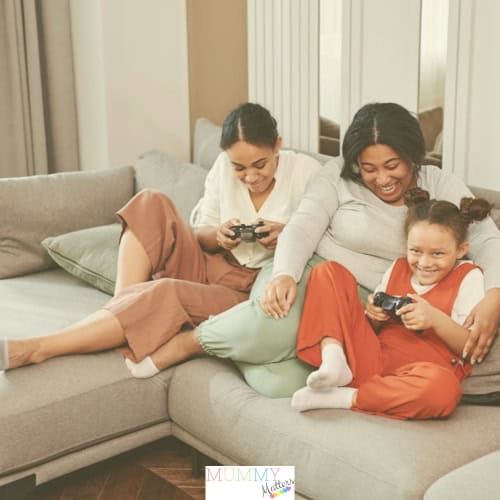
If you’ve ever found yourself calling upstairs for the fifth time because your child is “just finishing this level”, you’re certainly not alone. Gaming has become a huge part of family life, and for many of us parents it can feel like our children are speaking a completely different language.
Quick takeaway: Gaming isn’t about replacing outdoor play or family time. When balanced with exercise, sleep and other hobbies, it can become another enjoyable way for families to relax, laugh and spend time together.
I’ll be honest – for years I saw gaming as something my children enjoyed while I stood on the sidelines. Like many parents, I worried about screen time and wondered if they were spending too many hours indoors instead of outside riding bikes or kicking a football around.
But over time I’ve realised that, like most hobbies, gaming isn’t simply good or bad. It’s all about balance. More importantly, taking an interest in something your children genuinely love can open up conversations and create moments together that you might otherwise miss.
If you’ve ever wondered whether gaming could become a hobby you enjoy too, here’s why it might be worth giving it a chance.
Start by thinking about what you don’t want from a game
This might sound a little backwards, but I actually think it’s easier than deciding what you do want.
Perhaps you don’t enjoy violence.
Maybe you don’t want anything that takes hundreds of hours to complete.
Or perhaps fast-moving games make you feel overwhelmed.
That’s absolutely fine.
Knowing what you don’t enjoy helps narrow down the thousands of games available today.
For example:
- Prefer relaxing evenings? Look for games tagged with ‘cosy‘
- Like solving problems? Puzzle games could be ideal.
- Love decorating or gardening? Simulation games may surprise you.
- Enjoy storytelling? Adventure games often feel like interactive books.
There really is something for almost everyone.
Learn the language of gaming
When my children started talking about FPS games, co-op mode, RPGs and sandbox games, I had absolutely no idea what they meant!
Once you understand a few basic gaming terms, choosing a game becomes much less intimidating.
Some common genres include:
- Cozy games – relaxing, low-pressure games designed to help you unwind.
- Simulation games – build farms, towns, homes or businesses.
- Puzzle games – perfect if you enjoy crosswords or Sudoku.
- Adventure games – story-led experiences with exploration and problem-solving.
- Multiplayer games – designed to play together with family or friends.
Don’t worry about learning everything at once. Your children will probably love teaching you.
What I learned from letting my children teach me
One of the nicest surprises was discovering how patient children can become when they’re the expert.
Instead of me showing them how something worked for once, the roles were reversed.
They explained the controls.
They celebrated when I finally worked something out.
They laughed when I accidentally walked into walls or pressed completely the wrong button.
Those moments weren’t really about gaming at all.
They were about spending time together.
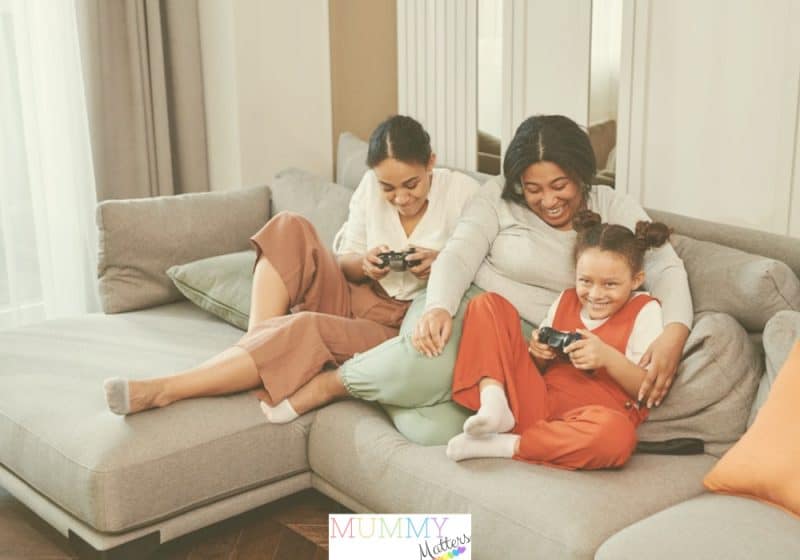
Sometimes we become so focused on encouraging our children to enjoy our hobbies that we forget how powerful it can be to step into theirs instead.
Choose games the whole family can enjoy
If you’re just getting started, don’t jump straight into complicated online games.
Family-friendly games are much more welcoming and often create the best memories.
Some fantastic beginner-friendly games include:
- Mario Kart
- Mario Party
- Nintendo Switch Sports
- Animal Crossing: New Horizons
- Stardew Valley
- Minecraft (Creative Mode)
- Overcooked
These games are easy to learn, encourage teamwork and usually involve plenty of laughter rather than frustration.
If your family already enjoys football, remember that gaming doesn’t always have to involve a console either. Board games and quiz games can be just as much fun, especially if you’re looking for a screen-free way to spend time together. If you’re after a fun challenge for football fans, football tenable is an entertaining quiz game that tests your football knowledge and encourages a bit of friendly family competition.
Can gaming actually benefit children?
As parents, it’s completely natural to worry about how much time our children spend on screens.
The key isn’t necessarily avoiding gaming altogether—it’s helping children build healthy habits around it.
When enjoyed in moderation alongside school, exercise, sleep and family life, gaming may help develop:
- problem-solving skills
- communication
- teamwork
- strategic thinking
- creativity
- perseverance after failure
- hand-eye coordination
For more practical advice on helping children enjoy gaming safely and responsibly, Internet Matters offers excellent guidance for parents on screen time, online gaming and digital wellbeing.
If gaming is becoming a source of conflict at home, Family Lives offers practical advice on setting healthy boundaries, managing screen time and having positive conversations about online gaming without every discussion turning into a battle.
Don’t force yourself to like every game
One mistake many new gamers make is sticking with a game simply because they’ve already bought it.
I’ve done exactly the same with books. Sometimes you reach chapter six and realise you’re just not enjoying it.
Gaming is no different.
If something isn’t fun, move on.
There are thousands of games available, and the right one for you is out there.
Finding it may simply take a little experimenting.
You don’t have to be “a gamer”
One thing I’ve realised is that labels really don’t matter.
You don’t need expensive equipment.
You don’t need lightning-fast reactions.
You don’t need to spend every evening online.
If you occasionally enjoy harvesting crops in Stardew Valley after the children have gone to bed, that’s gaming.
If you race your family around Mario Kart once a month, that’s gaming too.
You don’t have to fit anyone else’s idea of what a gamer looks like.
Frequently Asked Questions
Is gaming suitable for parents?
Absolutely. Many games are specifically designed for adults or families, and they can be a brilliant way to relax or spend quality time together.
What are the best games for beginners?
Mario Kart, Animal Crossing, Stardew Valley, Nintendo Switch Sports and Minecraft Creative Mode are all excellent starting points because they’re easy to learn and don’t require fast reactions.
Can gaming bring families closer together?
It certainly can. Playing together encourages teamwork, conversation and plenty of laughter. It also gives parents a better understanding of something many children genuinely enjoy.
How much gaming is healthy for children?
There’s no one-size-fits-all answer. Healthy gaming is about balance—making sure children still get enough sleep, exercise, schoolwork, family time and opportunities to socialise offline.
The NHS also recommends encouraging a healthy balance between screen-based activities, physical activity, sleep and time spent with family and friends.
Final thoughts
Could you become a gamer too?
I genuinely think you could.
You don’t have to love every game, spend hours online or suddenly become an expert overnight.
Sometimes simply sitting down and asking your child to teach you their favourite game is enough to create a memory they’ll remember for years.
And who knows? You might even discover a new hobby of your own along the way.