
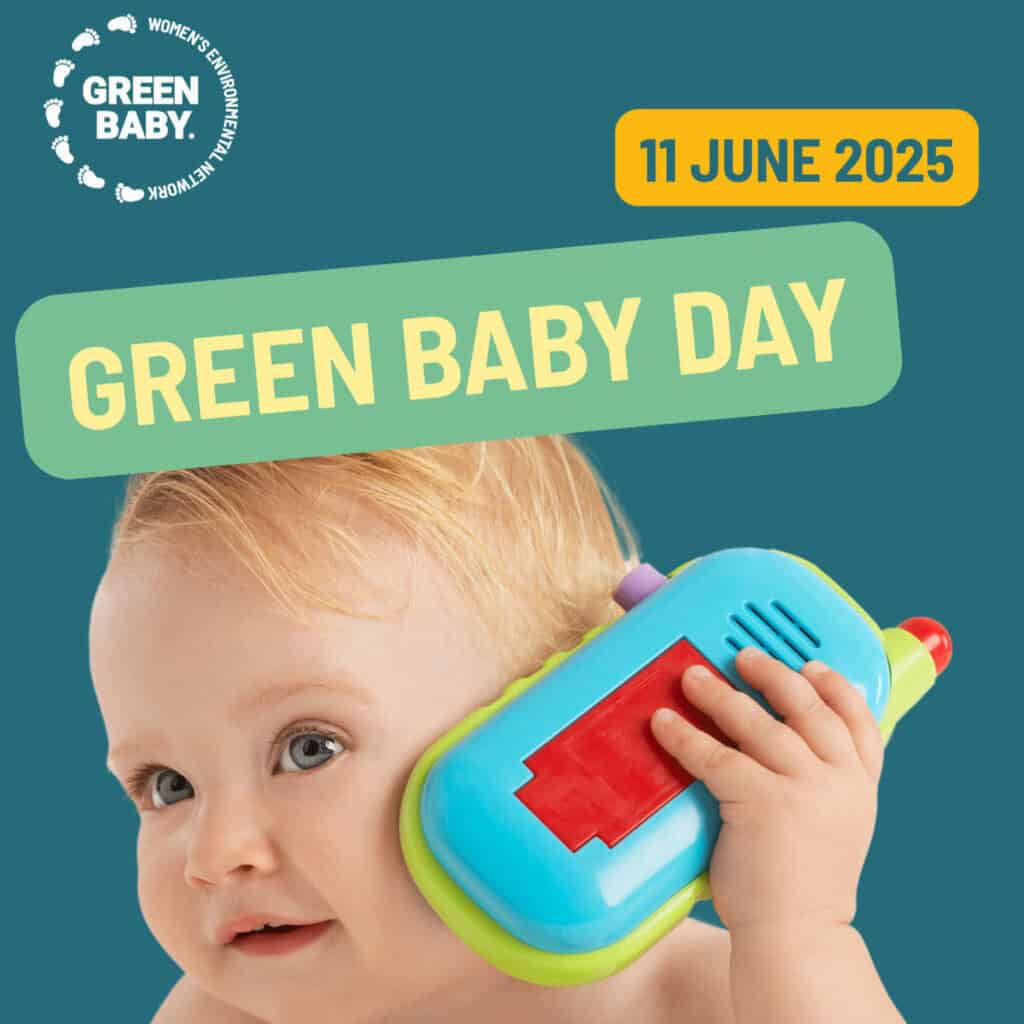
We’re increasingly hearing about toxic chemicals in household items from period products to cookware. But did you know they are in many toys too? Here’s what you need to know to limit exposure to potentially harmful chemicals in toxic toys.
Green Baby Day – a call to action for families

Environmental charity Wen (Women’s Environmental Network) is launching a powerful call to action for UK families this Green Baby Day (11 June) warning that children in the UK are increasingly exposed to toxic chemicals in toys, just as European regulations are being toughened.
The campaign, now in its third year, coincides with new EU rules that will ban EDCs (Endocrine Disrupting Chemicals), PFAS and Bisphenols in toys, while demanding accountability from the online marketplaces that sell them. In contrast, the UK risks becoming a regulatory backwater, with toy safety standards falling behind post-Brexit.
Every child deserves safe play no matter where they are born
“Toxic chemicals including EDCs (Endocrine Disrupting Chemicals), PFAS and Bisphenols are still ending up in our children’s hands – and mouths. The UK urgently needs to catch up with the EU’s stronger stance on toy safety,” says Ivie Itoje, Wen’s Green Baby Programme Manager.
“Right now, our children are growing up with weaker protections, especially when it comes to cheap, imported toys sold through under-regulated marketplaces. This isn’t just a regulatory failure – it’s a question of environmental justice. Every child deserves safe play, no matter where they’re born or how much their parents can afford to spend,” Ivie continues.
When toys go bad
Over 500 toy recalls have been issued in the UK since 2021 – more than half classed as serious – with repeated safety breaches involving toxic plasticisers.
Wen’s new briefing, ‘Playing Safe’, outlines how 80 percent of cheaply made toys sold through major third-party platforms often fail to meet basic health and safety standards. Children are particularly vulnerable to chemical exposure due to their physiology and play – including hand-to-mouth contact and systems that are still developing, making early-life exposure a critical public health issue.
Early-life exposure can shape long-term health
“As a consultant working with mothers and babies every day, I see firsthand how early-life exposures can shape long-term health. Many parents assume the toys we buy for our children are safe – but in reality, toxic chemicals are still finding their way into our homes,” says Dr Karen Joash, Consultant in Obstetrics and Gynaecology, who supports the campaign.
“These substances can interfere with hormones, affect development, and increase the risk of chronic illness – and it’s often families on the lowest incomes who are most exposed. We urgently need UK regulation to catch up with the EU’s new toy safety standards, but this is about more than policy. It’s about the right for every child to grow up safe from harm.”
Poorer households and marginalised families often rely on low-cost or second-hand toys, which are more likely to contain toxic chemicals. Limited access to clear product information makes it even harder for parents to make informed choices.
Wen is calling for more transparency and better regulation
But it doesn’t have to be this way, due to a lack of action from the government Wen is calling for UK laws that match a ban on EDCs (Endocrine Disrupting Chemicals), PFAS and Bisphenols in children’s toys, just like the new EU regulations. Wen is also demanding stronger enforcement for online marketplaces.
Find out more: Wen’s ‘Playing Safe’ briefing and ‘Toxic-Free Toy Guide’, developed by WECF, are available at: www.wen.org.uk/greenbaby
BOX OUTS:
Why toxic toys are a problem
The developing foetus and young children are particularly vulnerable to even small exposures to harmful chemicals and substances at specific times during their growth and development, exposures that can have lifetime health impacts.
Toys can leach potentially harmful chemicals from wear and tear, toxic coatings and paint, or other harmful plastic type materials. Children can be exposed in a variety of ways via mouthing, sucking or chewing toys.
Common harmful chemicals found in toys
Toys may look harmless, but many contain hidden chemicals that can pose serious health risks to children.
- Phthalates – used to soften plastics and are found in teething rings and dolls. These can cause Hormone disruption and reproductive issues
- Bisphenols (BPA, BPS) – are chemicals used in plastics such as baby bottles and toy castings. They can affect our hormones and are linked with obesity
- Lead and cadmium – are heavy metals found in paints used on plastic dolls, metal toys, jewellery, and button batteries. They can cause brain damage, learning difficulties and choking
- Flame retardants – are used to prevent fire and are used on foam toys and play mats. They are linked with an increased risk of cancer and developmental disorders
- Volatile Organic Compounds (VOCs) – are emitted from plastic, paint and wood, and can cause respiratory issues.
- Formaldehyde – found in wood based toys and adhesives and is a carcinogen.
Real-World examples of toxic toys
- 2018: An online retailer was fined for selling children’s slime with toxic boron levels
- 2019: The European Commission reported that 127 out of 248 toy models blocked from sale across the EU contained illegal levels of phthalates – a group of chemicals used to soften plastics. While specific UK recalls were not detailed,
- 2021: Testing of imported toys in the UK found unsafe levels of lead in painted toys
- 2022: Levels of lead and formaldehyde found in bamboo baby plates
- 2024: Black plastic used for toys found to contain banned flame retardants.
- 2025: Plastic PVC toys bought in Kenya contained high levels of toxic chemicals
Play it safe – what can parents do today
How to choose safer toys:
- Look for materials like FSC-certified wood and GOTS-certified organic cotton
- Check labels for UKCA, OEKO-TEX®, and GOTS certifications
- Avoid toys with strong chemical smells, cheap plastic, or peeling paint
- Limit second-hand plastic toys from before 2013 especially if damaged
Take action:
- Sign Wen’s call for a ban on EDCs (Endocrine Disrupting Chemicals), PFAS and Bisphenols in line with EU toy safety laws
- Report unsafe toys to your local Trading Standards – https://www.tradingstandards.uk/consumer-help/
- Read Wen’s new briefing ‘Playing Safe’
- Share the Wen/ WECF Toys Guide with your parenting network
- Support ethical, inclusive toy brands that don’t reinforce gender or racial stereotypes
Green Baby Day webinar event

Playing Safe: Why toys shouldn’t cost our children’s health
Wednesday 11 June 2025 12:00PM – 1:15PM
Wen is hosting a free webinar event on Green Baby Day to explore the hidden dangers in children’s toys, and what we can do to protect all children. Discussions will also explore the intersections of toxic toys, health, race, class and environmental justice.
Speakers:
- Dr Karen Joash, Consultant Obstetrician
- Dr Anna Watson, Director of Policy and Advocacy, CHEM Trust
- Africa (Vitamin D Project), author, parent and conscious content creator
- Moderated by: Ivie Itoje, Wen’s Green Baby Programme Manager
For more information and to book your free place: https://www.tickettailor.com/events/womensenvironmentalnetwork/1706107