
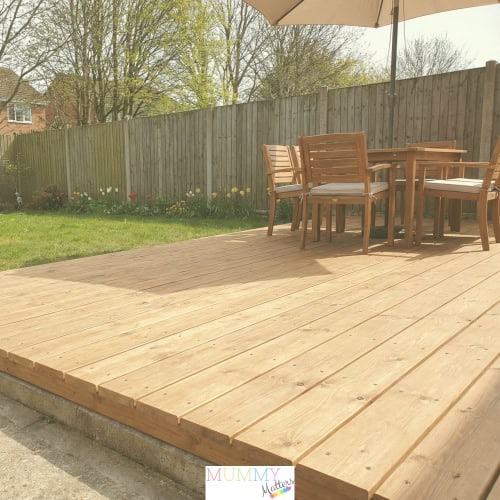
Timber decking is a great way to upgrade a garden, especially where you already have a concrete base such as a patio or yard. Fixing decking to concrete isn’t difficult, but it does need the right approach and the right fixings to make sure the deck is solid, level, and long-lasting.
Here’s a clear, practical guide to doing it properly.
Why fix decking to concrete?
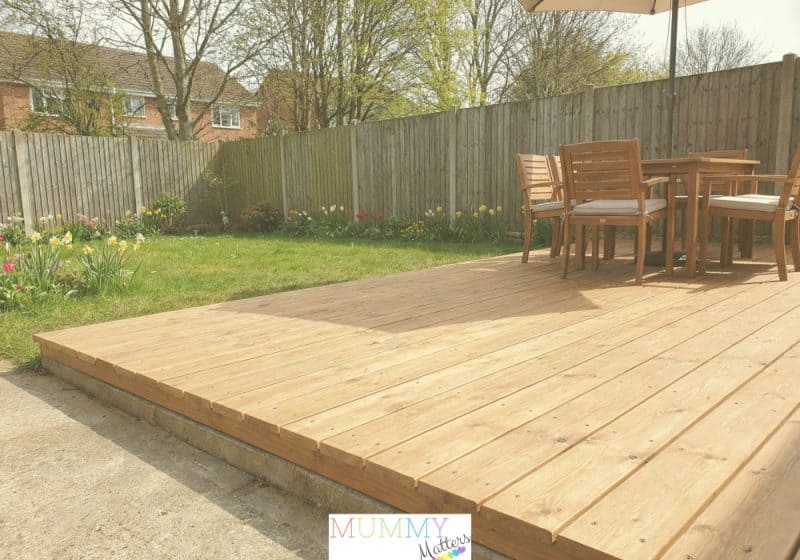
Concrete bases are often structurally sound but not particularly attractive. Adding timber decking on top improves the look of the space without the cost and disruption of removing the concrete. When fixed correctly, decking over concrete is stable, well-drained, and suitable for everyday use.
Step 1: Check and prepare the concrete
Start by inspecting the concrete base. It should be:
- Flat and level
- Free from major cracks or loose areas
- Sloped slightly away from buildings for drainage
Sweep the surface clean and remove any moss or debris. If water pools on the concrete, deal with this first, as standing water will shorten the life of your decking.
Step 2: Install timber battens
Decking boards should never be fixed directly to concrete. Instead, use treated timber battens to create a framework.
Lay the battens flat on the concrete, spacing them around 400mm apart. To fix them securely:
- Drill through the batten and into the concrete
- Use concrete screws or masonry fixings to anchor the battens firmly in place
This is where quality fixings matter. Using reliable concrete fixings supplied by Speedy Fixings ensures the battens won’t work loose over time.
Step 3: Allow for drainage and airflow
Leave small gaps between the battens and avoid trapping moisture. Good airflow underneath the decking helps prevent rot and keeps the structure in good condition for longer.
If the concrete is very flat, you can use packers or spacers to slightly raise the battens and improve drainage.
Step 4: Fix the decking boards
Once the battens are secure, you can lay your decking boards at right angles to them.
When fixing boards:
- Use exterior-grade decking screws
- Pre-drill near board ends to prevent splitting
- Leave a small gap (around 5–7mm) between boards for expansion and water runoff
All fixings should be corrosion-resistant, especially in exposed outdoor areas. Speedy Fixings supplied everything needed for this stage, from structural concrete fixings to high-quality decking screws.
Step 5: Finish and protect
After fitting, check that all boards are secure and level. Finish the deck with an appropriate oil or treatment to protect the timber from moisture and UV damage.
Final tips
- Never rely on adhesives alone when fixing decking to concrete
- Always use pressure-treated timber for battens
- Choose fixings designed specifically for outdoor and masonry use
- Handyman Ben recommends calling in the experts when you’re dealing with large timber frames, sloped ground, or drainage work.
With the right preparation and fixings, timber decking over concrete is a straightforward DIY project that delivers a big visual upgrade and years of reliable use.