

When you’re pregnant, it’s natural to wonder whether there’s anything you can do to help your baby’s brain develop. Should you be eating certain foods, taking particular vitamins or playing classical music to your bump? And what happens if you’re feeling stressed, struggling with morning sickness or simply not having the pregnancy you imagined?
The reassuring thing is that supporting your baby’s development doesn’t have to involve expensive supplements, complicated routines or getting everything right every single day.
There are some important things we know can help, including getting the right nutrients, attending antenatal appointments and avoiding substances known to be harmful during pregnancy. There are also plenty of claims about boosting a baby’s intelligence that aren’t backed up by convincing evidence.
Having been through three pregnancies myself, as well as experiencing pregnancy loss, I know how easily the desire to do everything possible for your baby can turn into worry.
So, let’s look at what the research actually tells us about baby brain development during pregnancy, what you can realistically do to support it and why you don’t need to put yourself under unnecessary pressure.
When Does Your Baby’s Brain Start Developing During Pregnancy?

Your baby’s brain begins developing remarkably early, often before you’ve even realised you’re pregnant.
In the first few weeks, a structure called the neural tube forms. This eventually develops into your baby’s brain and spinal cord.
It’s one of the reasons folic acid is so important before conception and during early pregnancy.
But brain development doesn’t stop once those early structures have formed. It continues throughout pregnancy, with nerve cells developing, moving into position and beginning to form connections.
The first trimester: Building the foundations
During the first 12 weeks, the early structures of the brain and nervous system begin to form.
The neural tube normally closes around four weeks after conception, which is approximately six weeks into pregnancy when calculated from the first day of your last period.
This happens before many women have their first antenatal appointment.
It’s also why health professionals recommend taking folic acid before becoming pregnant, whenever possible, rather than waiting for a positive pregnancy test.
The second trimester: Developing connections and senses
As pregnancy progresses, your baby’s brain continues to grow and become more complex.
Nerve cells develop connections that allow different parts of the body and nervous system to communicate.
Your baby’s hearing also begins developing, and sounds from both inside and outside your body gradually become part of their environment.
This is when talking or singing to your bump can start to feel like a lovely way of connecting with your baby.
The third trimester: Rapid growth and development
During the final trimester, the brain continues growing rapidly, and its structure becomes increasingly complex.
Connections between nerve cells continue to develop, helping prepare your baby for life outside the womb.
Of course, brain development doesn’t finish at birth. Your baby’s brain will continue changing and developing throughout childhood and beyond.
It’s also worth remembering that every baby’s development is influenced by a combination of genetics, biology, health and environmental factors. There isn’t a particular food, activity or supplement that can determine how intelligent your child will be.
Which Nutrients Are Important for Your Baby’s Brain Development?
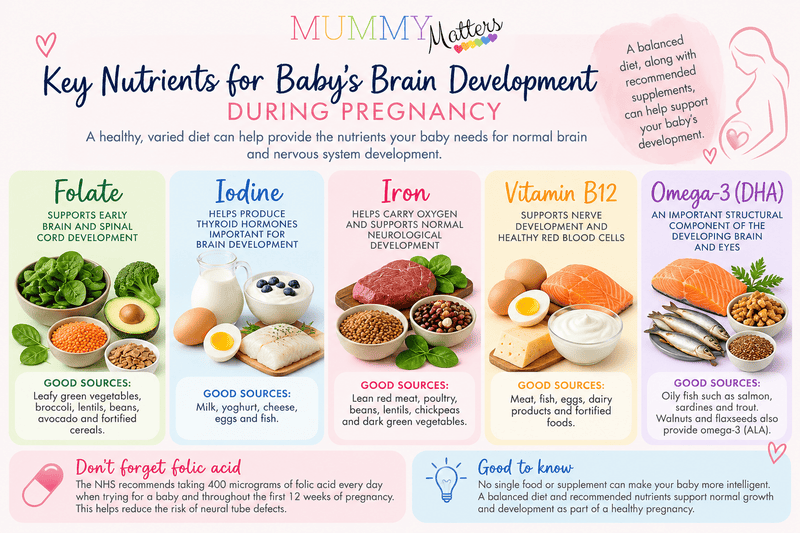
A healthy, varied diet helps provide many of the nutrients needed for your baby’s growth and development.
Some nutrients have particularly important roles in the developing brain and nervous system.
However, there’s a difference between ensuring you have enough of an essential nutrient and taking extra supplements in the hope of improving your baby’s intelligence.
Folic acid: Supporting early brain and spinal cord development
Folic acid is one of the most important supplements recommended during early pregnancy.
It helps reduce the risk of neural tube defects, including spina bifida, which affect the development of the brain, spinal cord or both.
The NHS recommends taking 400 micrograms of folic acid every day when trying for a baby and throughout the first 12 weeks of pregnancy.
Some women need a higher prescribed dose of 5 milligrams, depending on their medical history, existing conditions or medication.
Because the neural tube develops so early, taking folic acid before pregnancy offers the greatest opportunity for protection.
If you didn’t take it before discovering you were pregnant, don’t panic. Start taking the recommended supplement as soon as you find out and speak to your midwife or GP if you have concerns.
I’ve covered supplements in more detail in my earlier article, What Vitamins Should You Take Before Pregnancy?, including why preparing before conception can be helpful.
Iodine: Important for thyroid hormones and brain development
Iodine doesn’t always receive as much attention as folic acid, but it’s another important nutrient during pregnancy.
Your body needs iodine to produce thyroid hormones, which play a vital role in normal fetal brain and nervous system development.
The Royal College of Obstetricians and Gynaecologists recommends a total iodine intake of approximately 200–250 micrograms daily during pregnancy.
Foods that can provide iodine include milk, yoghurt, cheese, fish and eggs, although the amounts vary.
If you follow a vegan diet, avoid dairy or have a restricted diet, it’s worth discussing your iodine intake with your midwife or another qualified healthcare professional.
Taking additional iodine isn’t automatically better. Too much can interfere with thyroid function, so it’s important not to combine several supplements containing iodine without professional advice.
Iron and vitamin B12: Supporting healthy neurological development
Iron helps your body produce red blood cells, which carry oxygen around your body and to your developing baby.
Adequate iron is also important for normal neurological development.
During pregnancy, your iron requirements increase, and some women develop iron-deficiency anaemia.
Good dietary sources include meat, beans, lentils, fortified breakfast cereals and dark green vegetables.
Your iron levels will usually be checked during routine antenatal blood tests. If you need an iron supplement, your midwife or GP can advise you.
Vitamin B12 is another nutrient involved in normal nervous system development and the formation of healthy red blood cells.
It’s naturally found in foods such as meat, fish, eggs and dairy products.
If you’re vegan or eat very few animal products, it’s particularly important to make sure you’re getting enough B12 through appropriate fortified foods or supplements.
You don’t need to guess whether you’re deficient or start taking large doses of different vitamins. Your midwife or GP can help assess your individual needs.
Omega-3 fatty acids: What about DHA?
Omega-3 fatty acids are often mentioned in discussions about baby brain development, particularly DHA.
DHA is an important structural component of the brain and retina, and your baby needs it during development.
Oily fish such as salmon, sardines and trout can provide DHA.
The NHS recommends eating two portions of fish a week, including one portion of oily fish, while limiting oily fish to no more than two portions weekly during pregnancy.
But does taking an additional DHA supplement make your baby more intelligent?
This is where the evidence becomes less straightforward.
Although DHA is important for normal development, studies haven’t consistently shown that taking extra omega-3 supplements during pregnancy improves children’s intelligence, language or cognitive development.
A major Cochrane review found few clear differences in children’s developmental outcomes between those whose mothers received additional omega-3 supplements and those who did not.
That doesn’t mean omega-3 is unimportant. It means we shouldn’t confuse the need for an essential nutrient with claims that taking more will produce a smarter baby.
If you don’t eat fish, ask your midwife or a dietitian whether a pregnancy-appropriate algae-based DHA supplement might be suitable.
Avoid cod liver oil during pregnancy because of its vitamin A content.
What about vitamin D?
Vitamin D is important during pregnancy, particularly for healthy bone and muscle development.
The NHS recommends 10 micrograms of vitamin D daily during the autumn and winter months, with year-round supplementation advised for some women depending on their circumstances.
Vitamin D is sometimes included in discussions about neurological development, but there isn’t convincing evidence that taking more than the recommended amount will improve a baby’s intelligence.
I took Pregnacare throughout my pregnancies because I wanted to make sure I was getting the recommended pregnancy nutrients alongside my diet.
That was a personal choice, and it certainly doesn’t mean everyone needs to buy the same brand. What’s important is choosing appropriate supplements and checking their ingredients rather than assuming more vitamins must be better.
What Foods Can Help Support Your Baby’s Developing Brain?
You don’t need a special pregnancy superfood shopping list to support your baby’s development.
The NHS recommends eating a balanced, varied diet during pregnancy to help provide the nutrients needed for your baby’s growth and development.
Some useful choices include:
- Eggs: Provide protein, vitamin B12, iodine and choline, a nutrient involved in normal brain and nervous system function.
- Oily fish: Provides DHA and other nutrients, provided you follow pregnancy-specific advice about portions and fish safety.
- Milk, yoghurt and cheese: Can provide protein, calcium, iodine and vitamin B12. Choose pasteurised products and follow NHS food safety advice.
- Beans, lentils and chickpeas: Affordable sources of protein, iron and folate.
- Leafy green vegetables: Provide folate and other important nutrients.
- Wholegrain and fortified cereals: Can contribute fibre, iron and other vitamins and minerals.
The key is variety rather than eating particular foods every day.
I found that my eating habits varied between pregnancies. What appealed to me during one pregnancy wasn’t necessarily what I fancied during another.
And that’s something I think we sometimes forget when reading pregnancy nutrition advice. Your appetite, energy levels and food preferences can change considerably.
If you’re dealing with nausea, food aversions or exhaustion, preparing perfectly balanced meals might be the last thing you feel capable of doing.
Do what you can, when you can.
If sickness is making it difficult to keep food or fluids down, speak to your midwife or GP. Severe pregnancy sickness may need treatment, and you shouldn’t feel that you simply have to put up with it.
For readers still preparing for pregnancy, I’ve also written about What to Eat Before Pregnancy: A Preconception Diet for Women and Men, which explains how nutrition can support both partners before conception.
Everyday Habits That Support a Healthy Pregnancy
Nutrition is important, but it’s only one part of looking after yourself and your developing baby.
A few everyday habits can make a meaningful difference to your overall pregnancy health.
Keep moving in ways that feel comfortable
For most women with uncomplicated pregnancies, regular physical activity is safe and beneficial.
Walking, swimming, pregnancy yoga and other suitable activities can help maintain fitness, improve sleep and support mental wellbeing.
The NHS recommends aiming for around 150 minutes of moderate physical activity each week during pregnancy, where appropriate.
However, this isn’t a target you need to push yourself to achieve regardless of how you’re feeling.
If you’re experiencing pregnancy complications, pain or have been advised to limit particular activities, follow your maternity team’s guidance.
Exercise has established benefits for maternal health, but it shouldn’t be presented as a proven way to increase your baby’s intelligence.
Prioritise rest and sleep where possible
Pregnancy can be exhausting, particularly during the first and third trimesters.
Resting when you need to isn’t laziness. Your body is doing an enormous amount of work.
Getting sufficient sleep supports your own physical and emotional wellbeing, although research doesn’t establish that achieving a particular number of hours will directly improve your baby’s brain development.
If you’re struggling with persistent insomnia or sleep problems, mention them to your midwife.
Avoid alcohol, smoking and recreational drugs
Some of the clearest pregnancy recommendations concern substances known to increase risks to a developing baby.
The safest approach is not to drink alcohol during pregnancy.
Alcohol can cross the placenta and interfere with fetal development, including development of the brain and nervous system.
Smoking is associated with several pregnancy complications, including restricted fetal growth and premature birth.
Recreational drugs can also present serious risks.
If you’ve been drinking, smoking or using substances before discovering you’re pregnant, try not to jump to conclusions about what this means for your baby. Speak to your midwife or GP for individual advice and support.
And if you’re finding it difficult to stop, asking for help is a positive step.
Attend antenatal appointments and manage existing health conditions
Following the recommended antenatal care schedule helps your maternity team monitor your health, check your baby’s development and identify concerns.
These appointments allow your maternity team to monitor your health, check your baby’s growth and identify potential concerns.
Conditions such as diabetes, thyroid disorders and high blood pressure may need additional monitoring or treatment.
If you take prescribed medication, don’t stop it simply because you’ve discovered you’re pregnant. Speak to your GP or specialist about the safest approach.
Good antenatal care isn’t about guaranteeing that nothing will go wrong. It’s about giving you and your baby appropriate support throughout pregnancy.
Can Stress and Anxiety Affect Your Baby’s Brain Development?
This is a subject I feel particularly strongly about because pregnancy isn’t always the carefree, exciting experience we’re led to expect.
There’s a lot of discussion about stress hormones and fetal brain development, and it’s easy to come away feeling that every anxious thought could somehow affect your baby.
But the science is much more complicated than that.
Some observational studies have found associations between significant or prolonged maternal stress and later developmental outcomes in children.
However, these studies cannot necessarily establish cause and effect. Genetics, health conditions, socioeconomic circumstances and many other influences can also play a part.
Most importantly, this research doesn’t mean that ordinary worries, occasional arguments, difficult days or feeling anxious about your pregnancy will cause your baby developmental problems.
Pregnancy after loss: When it’s difficult not to worry
After having our daughter, Lillie, Simon and I experienced the heartbreak of an ectopic pregnancy followed by a missed miscarriage.
By the time I became pregnant with Ollie, we desperately wanted everything to be OK, but our previous experiences had changed how we felt about pregnancy.
We were both extremely anxious.
Every little bit of spotting, every unfamiliar pain and every day when Ollie didn’t seem to move quite as much as usual could send us into a panic.
Instead of simply assuming everything was progressing normally, I found myself constantly alert to anything that might be a sign of a problem.
It’s difficult to explain that feeling unless you’ve experienced pregnancy loss. You want to enjoy being pregnant and look forward to meeting your baby, but there’s also a part of you that’s frightened to believe everything will turn out well.
I remember the overwhelming relief when Ollie was finally born safely. There were tears of joy, of course, but also the release of so much worry that we’d been carrying throughout the pregnancy.
Looking back, I wish I’d understood more clearly that being anxious didn’t mean I was failing my baby.
I was doing my best while navigating a pregnancy that felt emotionally very different from the one I’d experienced before.
That’s why I think we need to be particularly careful about telling pregnant women they must stay calm for the sake of their baby’s brain development.
Sometimes anxiety is a completely understandable response to what someone has been through.
And telling a worried mother that her stress might harm her baby can simply give her something else to worry about.
Looking after your emotional wellbeing
If you’re feeling anxious during pregnancy, you deserve support for your own sake, not simply because you’re growing a baby.
It might help to talk openly with your partner, a trusted friend or your midwife about how you’re feeling.
Gentle exercise, relaxation techniques and making time for activities you enjoy can also be helpful.
If anxiety is persistent, overwhelming or interfering with everyday life, your GP or midwife can discuss additional support, including talking therapies.
You don’t need to wait until you’re struggling to cope before asking for help.
An important safety note: Anxiety and genuine pregnancy concerns can occur together. If you experience bleeding, significant pain or another worrying symptom, seek advice from your maternity team. If your baby’s movements are reduced, stop or change from their usual pattern, contact your midwife or maternity unit immediately, even during the night. Never assume a change in movements is simply anxiety.
Does Talking, Singing or Playing Music to Your Bump Really Help?
This is one of the lovelier parts of pregnancy, and something I remember doing regularly with all three of my babies.
I used to talk to them, sing and play music while they were still in my tummy.
It felt like a natural way to connect with them before they were born.
But does it actually help their brains develop?
We know that babies begin responding to sounds during pregnancy and can become familiar with voices and sounds they hear repeatedly.
Research suggests that newborn babies can show recognition of familiar sounds experienced before birth.
However, this is different from proving that playing particular music, reading educational books aloud or speaking several languages to your bump will increase your child’s intelligence.
There’s no convincing evidence that playing Mozart to your baby in the womb will make them cleverer.
If you enjoy singing, talking or playing music, there’s no reason not to make it part of your pregnancy.
It can be a lovely bonding experience, and it may help you feel more connected to your baby.
Just don’t feel you need to turn it into another daily task.
Your baby doesn’t need an educational playlist, and you certainly don’t need to buy special equipment to stimulate their developing brain.
What If Your Pregnancy Hasn’t Gone According to Plan?
Perhaps you didn’t realise you were pregnant until several weeks in.
Maybe you weren’t taking folic acid before conception, you’ve struggled with severe sickness or your pregnancy has involved complications you couldn’t have anticipated.
It’s understandable to look back and wonder whether you should have done something differently.
But pregnancy isn’t an exam, and there isn’t a perfect set of actions that guarantees a particular outcome.
Healthy development is influenced by many factors, including genetics and circumstances outside anyone’s control.
Following pregnancy recommendations can help reduce certain risks, but it cannot prevent every complication, disability or developmental difference.
And if your child later receives a diagnosis of autism, ADHD or another neurodevelopmental condition, that isn’t evidence that you failed to eat the right foods, take enough supplements or remain sufficiently relaxed during pregnancy.
If you’re worried about something you’ve eaten, taken or experienced, speak to your midwife or GP rather than relying on alarming information online.
There may be practical steps you can take now, and individual advice is much more useful than trying to interpret general research as a prediction about your own baby.
Frequently Asked Questions About Baby Brain Development During Pregnancy
Can eating certain foods make my baby more intelligent?
There’s no convincing evidence that eating a particular food during pregnancy will make your baby more intelligent.
A balanced diet helps provide the nutrients needed for normal growth and development, but intelligence and cognitive development are influenced by many different factors.
Should I take an omega-3 supplement for my baby’s brain development?
DHA is important for normal brain and eye development, but evidence that additional omega-3 supplements improve children’s intelligence is inconsistent.
If you don’t eat fish or are concerned about your intake, ask your midwife or a qualified dietitian whether a pregnancy-appropriate supplement would be helpful.
When can my baby start recognising my voice in the womb?
Your baby’s hearing develops gradually during pregnancy, and they become increasingly responsive to sounds as the pregnancy progresses.
Research suggests that babies can become familiar with repeatedly heard voices and sounds before birth.
Talking or singing to your bump can be an enjoyable way to bond, but there’s no need to follow a special programme.
Giving Your Baby the Best Start Without Expecting Perfection
If there’s one thing I’ve learnt from pregnancy and parenting, it’s that we can do our very best and still have to accept that some things are outside our control.
Taking recommended supplements, eating a varied diet where possible, attending antenatal appointments and looking after your own health are all worthwhile steps.
But you don’t have to spend nine months worrying about every meal, every sleepless night or every moment of stress.
Your wellbeing matters too.
And sometimes giving your baby the best possible start begins with recognising that you deserve care, understanding and support throughout pregnancy.
Medical disclaimer: This article is based on UK public health guidance and scientific research and is intended for general information only. It is not a substitute for individual medical advice. Every pregnancy is different, so speak to your midwife, GP or maternity team about supplements, medication, health conditions or concerns about your baby’s wellbeing.