
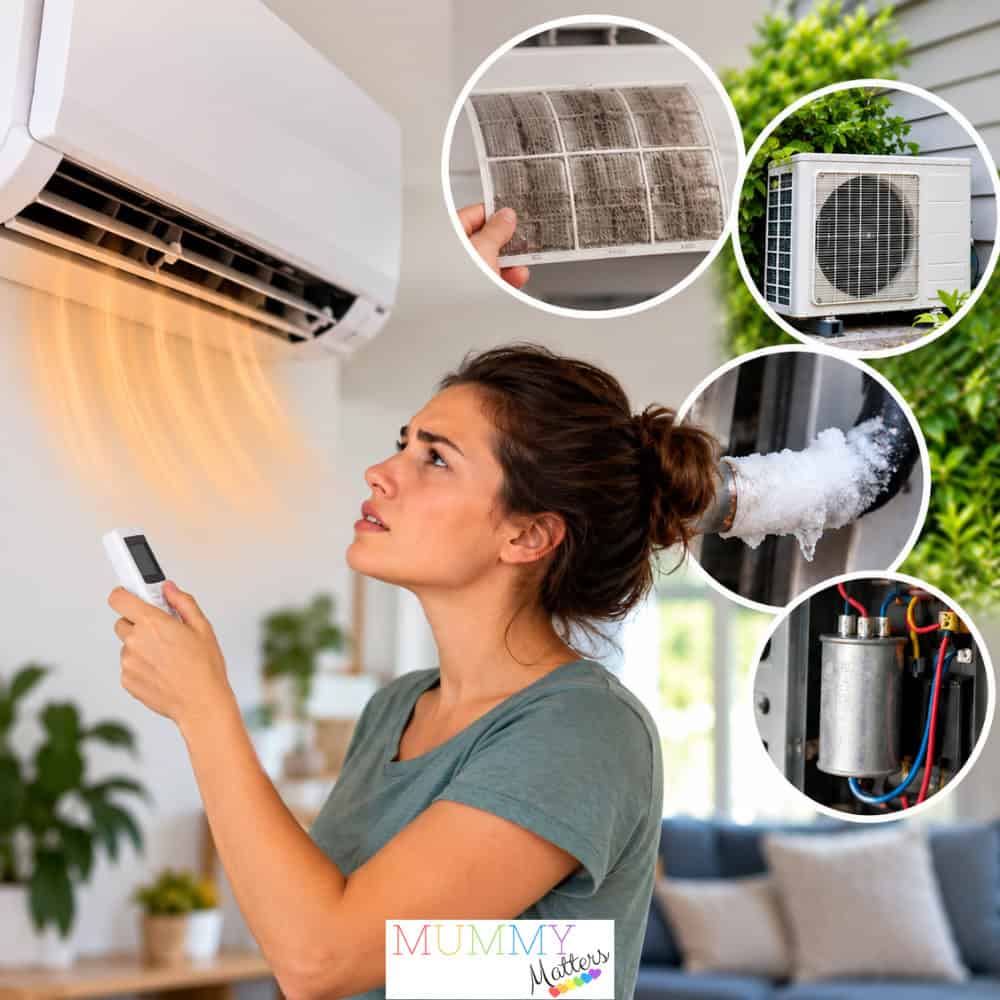
An air conditioner blowing warm air can make a comfortable room unpleasant within minutes, especially during a humid Auckland summer. The cause may be a simple setting, restricted airflow, or a fault inside the refrigeration system. Before booking a repair, check the controls and outdoor unit, then note when the problem started and whether unusual sounds or smells appeared. These checks point to the first faults a technician will investigate.
1. Incorrect Mode or Thermostat Setting
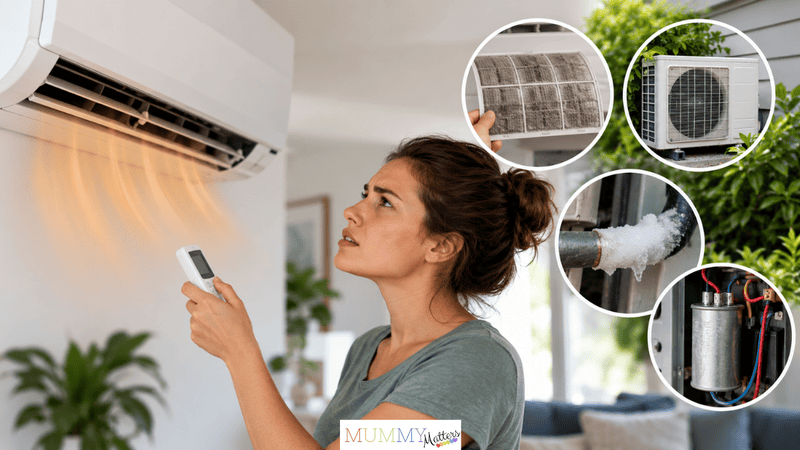
A technician will first confirm the system is set to cooling mode rather than fan, dry, heat, or automatic. A fan setting circulates room-temperature air without lowering it, while an incorrect temperature setting can prevent the compressor from starting.
Check that the remote control has fresh batteries and that the selected temperature is below the current room temperature. If the display shows an error code, record it before switching the system off. Before arranging air conditioner repair in Howick, note whether the unit starts normally and whether the problem began suddenly or developed gradually.
If the settings are correct but the unit still blows warm air, avoid repeatedly changing modes. That won’t fix an electrical or refrigeration problem and can make the symptoms harder to assess.
2. Blocked Filter or Restricted Airflow
A dirty indoor filter reduces the amount of air passing across the evaporator coil. The system then struggles to absorb heat, and the coil can become cold enough for ice to form. Once ice further restricts airflow, the room receives little cooling even though the indoor fan keeps running.
Remove and clean the filter according to the manufacturer’s instructions, then let it dry fully before reinstalling it. Do not run the unit without the filter, because dust can reach the coil and fan.
If airflow remains weak, a technician will inspect the coil, fan, drain pan, and duct path for dirt or an obstruction. A blocked return grille also reduces performance, so keep furniture and curtains away from the intake.
3. Refrigerant Leak or Low Refrigerant Charge
A low refrigerant charge prevents the system from moving heat efficiently between the indoor and outdoor coils. The indoor unit may blow air that feels slightly cool at first, then become warmer as performance drops. Ice on the pipework or indoor coil is another warning sign.
A technician will check operating pressures, pipe joints, coils, and signs of oil residue. Refrigerant does not disappear through normal use, so a low charge points to a leak or an earlier service issue.
Do not attempt to release, top up, or handle refrigerant yourself. A qualified technician needs to locate the leak, repair it, and confirm that the system operates correctly after charging.
4. Outdoor Unit Fault
The outdoor unit releases the heat removed from the room. If its fan isn’t turning, the coil is heavily clogged, or the compressor isn’t running, the indoor unit cannot keep delivering cold air.
Check whether the outdoor unit has power and whether its circuit breaker has tripped. Keep leaves, plants, and stored items away from the grille, but do not remove panels or touch electrical components.
A technician will inspect the fan motor, capacitor, compressor, wiring, and outdoor coil. The repair depends on the failed part, the condition of the system, and whether the fault has caused further damage.
5. Electrical or Control Component Failure
A cooling system relies on several electrical components working together. A failed capacitor, sensor, relay, circuit board, or communication cable can stop the compressor while leaving the indoor fan running. That combination often feels like warm air rather than a complete shutdown.
Write down whether the unit starts normally, stops after a short period, displays a code, or trips the breaker. These details help a technician reproduce the fault without repeated testing.
Switch the system off if you notice burning smells, buzzing, sparking, or repeated breaker trips. Do not reset the breaker several times, as continued operation can worsen an electrical fault or create a safety risk.
Conclusion
If you have an air conditioner blowing warm air, start by checking the mode, thermostat, filter and visible outdoor obstructions. These simple checks can help identify the cause without opening the equipment. Stop using the system if it shows electrical warning signs, leaks water, or develops ice that returns after cleaning. If the warm air continues, give the technician the fault history and any error code so they can start the repair with useful evidence.