
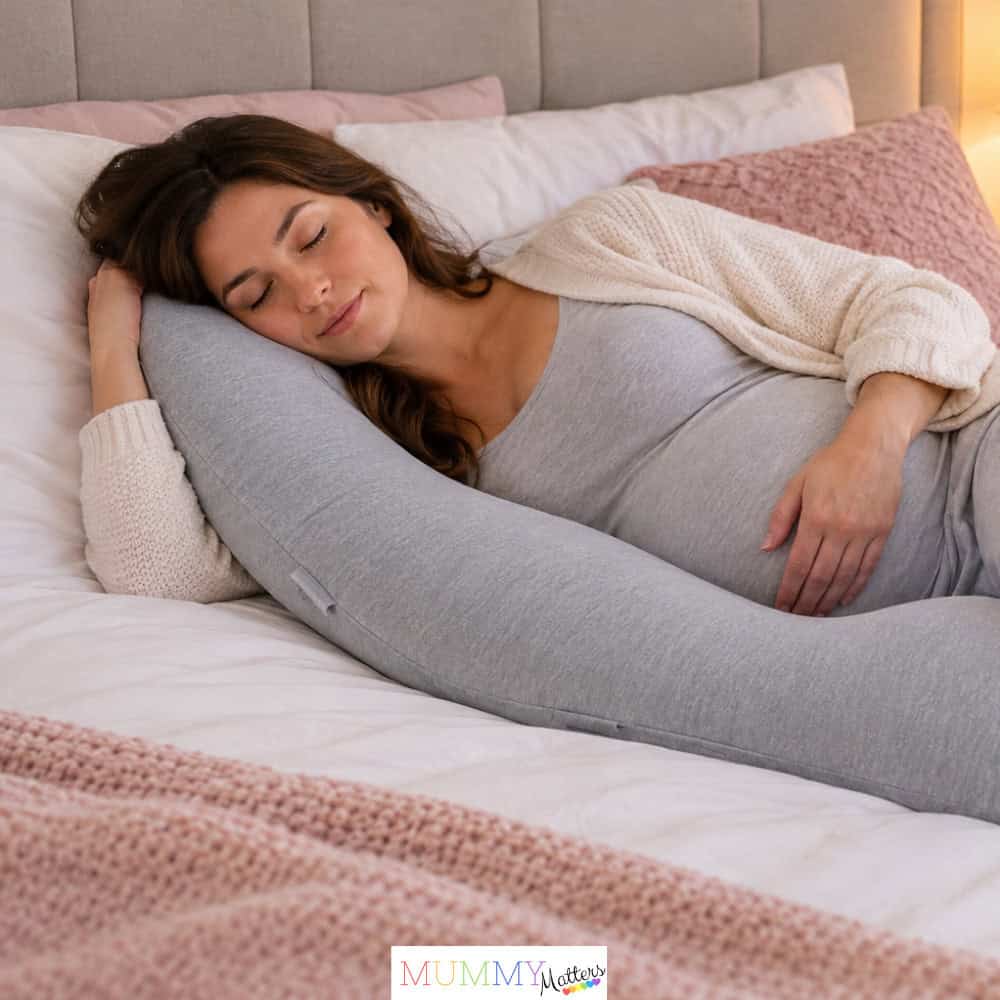
This article contains a gifted product mention. Momcozy kindly provided a pregnancy pillow for me to experience. All opinions and observations are my own.
Pregnancy is such an exciting time, but if there’s one thing I remember from carrying my three children, it’s how difficult getting a good night’s sleep could become. You spend so much time looking forward to meeting your baby, yet some nights it feels as though your body has completely forgotten how to get comfortable.
During the early weeks, tiredness can hit you out of nowhere. Later on, just as your bump starts getting bigger, you might find yourself tossing and turning, rearranging pillows and making yet another trip to the bathroom.
I remember those nights well. By the final stages of pregnancy, I seemed to spend more time trying to get comfortable than actually sleeping!
The good news is that there are some simple things you can try to make bedtime more comfortable. From finding a supportive sleeping position to keeping your bedroom cool, small changes can sometimes make a noticeable difference.
Why Is It So Difficult to Sleep During Pregnancy?
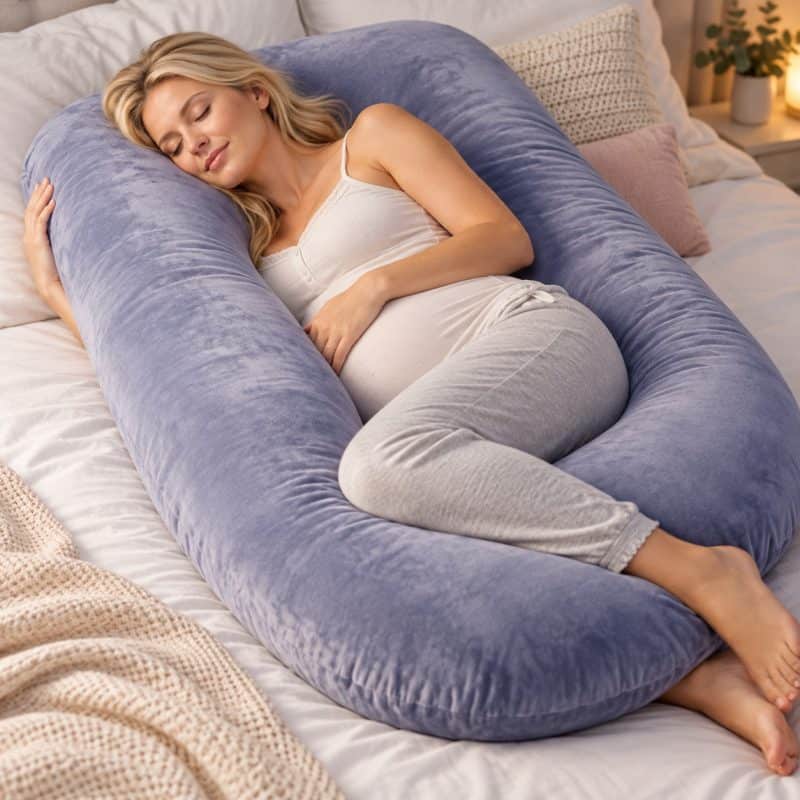
One of the things I discovered during my pregnancies was that the reasons for struggling to sleep seemed to change as the weeks went by.
In the first trimester, hormonal changes can leave you feeling completely exhausted, even when you’ve done very little. Nausea, tender breasts and needing the toilet more frequently can also interrupt your sleep.
The second trimester can bring some relief, although this isn’t everyone’s experience. As your bump grows, you might start noticing that your usual sleeping position doesn’t feel quite as comfortable.
By the third trimester, several things can make a peaceful night more challenging:
- Backache and pelvic discomfort: Your growing bump changes how your body carries its weight, and finding a comfortable position can become difficult.
- Frequent bathroom trips: Pressure on your bladder can mean waking several times during the night.
- Heartburn: Hormonal changes and pressure from your growing baby can make indigestion more troublesome.
- Feeling too warm: Pregnancy can make you feel hotter than usual, particularly at night.
- Anxiety and an active mind: It’s natural to have lots of thoughts about your baby’s arrival, especially as your due date approaches.
According to the NHS guidance on tiredness and sleep problems during pregnancy, tiredness is particularly common during the first 12 weeks, while physical discomfort can make sleep more difficult later in pregnancy.
Understanding what’s disturbing your sleep can help you work out which changes might make the biggest difference.
Find a Comfortable and Safe Sleeping Position
If you’re used to sleeping on your front or back, pregnancy can mean adjusting the way you settle down at night.
As my pregnancies progressed, I found that sleeping on my front was no longer practical, but lying on my side wasn’t always comfortable either. It sometimes felt as though I needed a completely different arrangement of pillows every night.
Is it better to sleep on your left or right side?
The NHS recommends going to sleep on your side, either left or right, from 28 weeks of pregnancy.
Research suggests that going to sleep on your back after 28 weeks is associated with an increased risk of stillbirth, so side sleeping is the safest option during the third trimester.
This advice applies to daytime naps as well as sleeping at night.
Importantly, if you wake up and discover you’ve rolled onto your back, there’s no need to panic. Simply turn onto your side before going back to sleep.
You can read more in the NHS guidance on preventing stillbirth.
Try supporting your bump and legs
One of the simplest ways to make side sleeping more comfortable is to use pillows to support different parts of your body.
You could try:
- Placing a pillow between your knees to support your legs.
- Tucking a small pillow beneath your bump.
- Using a pillow behind your back for additional comfort.
- Supporting your upper leg with a pillow if you experience discomfort around your hips.
You don’t necessarily need to buy anything special to try these positions. Ordinary bed pillows can work perfectly well, particularly during the earlier stages of pregnancy.
However, if you find yourself constantly rearranging several pillows throughout the night, a maternity pillow might be worth considering.
Could a Pregnancy Pillow Help You Sleep More Comfortably?
A pregnancy pillow is designed to provide additional support while you’re resting or sleeping. Depending on its shape, it may help you find a more comfortable position by supporting your bump, back or legs.
I first discovered how useful a maternity pillow could be during my own pregnancies.
At the time, I used a Theraline maternity and nursing pillow, and it became one of those things I genuinely appreciated having.
Rather than trying to balance several ordinary cushions around me, I could arrange the longer pillow to support the areas that needed it most.
It didn’t magically stop every night-time interruption. I still needed the bathroom, and there were plenty of occasions when sleep was disturbed for other reasons. But I found it much easier to settle back into a comfortable position.
In fact, I found my Theraline pillow so useful that I returned to it during a later pregnancy.
Choosing the right pregnancy pillow shape
Pregnancy pillows come in several shapes, and there’s no single design that will suit everyone.
U-shaped pregnancy pillows wrap around both sides of your body, offering support in front and behind you. They can be useful if you regularly change sides, although they may take up quite a lot of room in bed.
C-shaped pregnancy pillows curve around your body and can be positioned to support different areas, depending on how you prefer to sleep.
J-shaped pregnancy pillows have a long section with a curved end. They may appeal to people who want a more streamlined pillow rather than something that surrounds their entire body.
Wedge pillows are smaller and can be tucked beneath your bump or used for targeted support. They’re also worth considering if space is limited.
Before choosing a pillow, think about your preferred sleeping position, where you tend to experience discomfort and how much space you have in bed.
A removable, washable cover is another practical feature worth looking for, particularly if you’re feeling warmer than usual during pregnancy.
A comfortable option with a cooling cover
I’ve recently been using the Momcozy J-Shaped Pregnancy Pillow, which Momcozy kindly gifted to me.
Although I’m no longer pregnant, I’ve spent three nights sleeping with the pillow and have found it very comfortable. What has particularly impressed me is the cooling fabric cover.
I tend to notice the temperature of bedding quite quickly, so having a cover that feels pleasantly cool against my skin is something I appreciate.
The pillow has a J-shaped design, offering a different arrangement from the longer, more flexible Theraline pillow I used during my pregnancies.
Of course, I can’t comment on how the Momcozy pillow performs with a growing pregnancy bump because I haven’t used it while pregnant. However, my experience has reminded me how much difference the feel and arrangement of a pillow can make to personal comfort.
For expectant mums considering a pregnancy pillow, the Momcozy J-Shaped Pregnancy Pillow is one option to explore, particularly if the feel of the fabric is important to you.
You can find more information about the pillow through Momcozy.
Keep Your Bedroom Cool and Comfortable
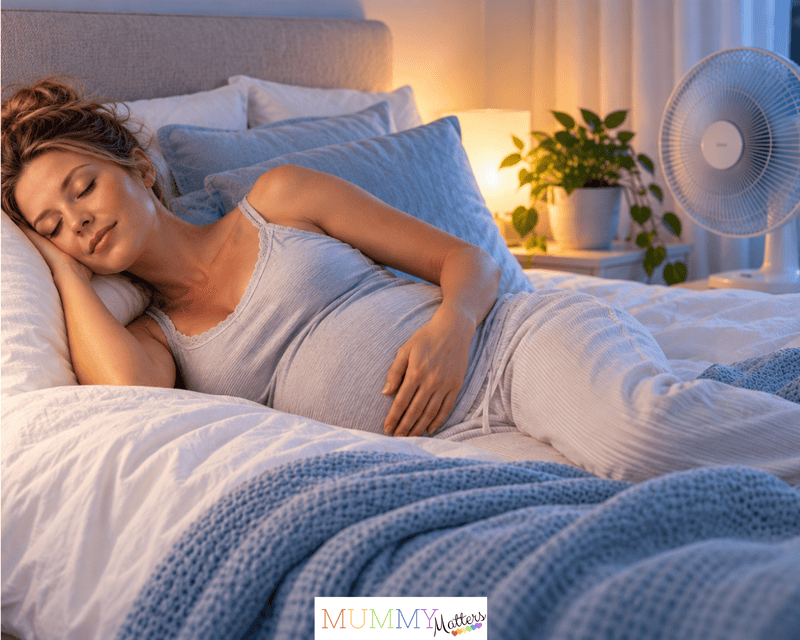
One thing that doesn’t always get mentioned when discussing pregnancy sleep is just how warm you can feel.
The NHS explains that hormonal changes and increased blood supply to the skin can make pregnant women feel warmer than usual.
If you’re already struggling to find a comfortable position, feeling too hot can make settling down even more frustrating.
A few simple adjustments might help:
- Choose lightweight, breathable nightwear.
- Consider using lighter bedding if your usual duvet feels too warm.
- Keep your bedroom comfortably cool and well ventilated.
- Use a fan if it helps you feel more comfortable.
- Choose bedding that feels pleasant against your skin.
You might also find it helpful to keep a spare pillowcase nearby if you frequently wake up feeling hot.
There’s no need to completely change your bedroom or invest in expensive bedding. Sometimes, swapping a heavy duvet for something lighter can make bedtime feel more inviting.
Establish a Gentle Bedtime Routine
When you’re expecting a baby, your mind can become surprisingly busy at bedtime.
There’s so much to think about, from preparing the nursery and choosing baby equipment to wondering how life will change once your little one arrives.
And, of course, it’s often when you finally lie down that you remember something else you meant to organise!
Creating a gentle bedtime routine can help you move away from the busyness of the day.
You might enjoy reading a book, having a warm bath, listening to relaxing music or practising a few simple breathing exercises.
I have always appreciated those quieter moments at the end of the day, particularly during the years when family life was especially busy.
The important thing is to choose something that genuinely helps you relax rather than turning bedtime into another list of things you feel you ought to do.
Be mindful of caffeine and late naps
If you’re finding it difficult to fall asleep, consider when you’re drinking caffeinated drinks.
The NHS recommends avoiding tea, coffee and cola in the evening because caffeine can make it harder to sleep.
Long naps late in the afternoon or evening may also leave you feeling less sleepy at bedtime.
That doesn’t mean you should push yourself through exhaustion. Pregnancy is demanding, and rest is important. It’s simply worth noticing whether the timing of your naps affects your night-time sleep.
Managing Pregnancy Heartburn at Night
Heartburn is another common reason why sleep becomes uncomfortable during pregnancy.
It can cause a burning feeling in your chest or throat, particularly after eating or when lying down.
The NHS recommends several changes that may help, including eating smaller meals more frequently and avoiding meals within three hours of bedtime.
You may also find that certain foods trigger your symptoms, particularly rich, fatty or spicy meals.
If heartburn is disturbing your sleep, raising your head and shoulders while resting may help. Sleeping on your left side can also be useful.
You can find further advice in the NHS guide to indigestion and heartburn during pregnancy.
If your symptoms continue, speak to your midwife, GP or pharmacist about suitable treatment during pregnancy rather than taking medication without checking.
What If Your Hips or Back Hurt at Night?
Pregnancy can place additional demands on your back and pelvis, and for some women, discomfort becomes particularly noticeable when trying to sleep.
If you’ve ever spent half the night moving from one side to the other because your hips ache, you’ll know how frustrating it can be.
Supporting your legs with a pillow may help you find a more comfortable position.
You could also try moving carefully when turning over rather than twisting suddenly.
Some women experience pregnancy-related pelvic girdle pain, sometimes known as PGP. This can cause discomfort around the pelvis, hips, lower back or pubic bone, and turning over in bed may be painful.
The NHS guidance on pelvic pain in pregnancy recommends seeking advice from your midwife or GP if pelvic pain makes everyday movement difficult or causes pain when turning over in bed.
You don’t have to simply put up with significant pain because you’re pregnant. A healthcare professional may be able to suggest suitable treatment or refer you to a specialist physiotherapist.
Don’t Put Too Much Pressure on Yourself to Sleep Perfectly
Something I’ve come to appreciate more as I’ve got older is that worrying about sleep can sometimes make bedtime feel even more stressful.
During pregnancy, it’s easy to become frustrated when you wake up repeatedly or struggle to settle.
You know that rest is important, but the harder you try to force yourself to sleep, the more elusive it can feel.
If you’re having a difficult night, try not to judge yourself for it.
Make yourself comfortable, use whatever gentle relaxation techniques work for you and allow yourself opportunities to rest during the day when possible.
It’s also worth remembering that every pregnancy is different. What helped you sleep comfortably during one pregnancy might not work quite as well during another.
If you’re regularly struggling with insomnia, feeling overwhelmed by tiredness or finding that poor sleep is affecting your mood, speak to your midwife or GP.
Persistent sleep difficulties deserve attention, and support is available.
Frequently Asked Questions About Sleeping During Pregnancy
When should I start using a pregnancy pillow?
There’s no particular week when you need to start using one. Some women find additional support helpful relatively early in pregnancy, while others don’t feel they need it until their bump becomes larger.
You can also experiment with ordinary pillows before deciding whether a dedicated maternity pillow would be useful.
Is it safe to sleep on my right side during pregnancy?
Yes. The NHS recommends going to sleep on either your left or right side from 28 weeks of pregnancy.
You don’t need to force yourself to remain on your left side all night.
What should I do if I wake up on my back?
Don’t panic. Simply turn onto your side before settling back to sleep.
The NHS advice focuses on the position you go to sleep in, including when returning to sleep after waking during the night.
Do I need a pregnancy pillow?
Not necessarily. Many women find ordinary pillows provide enough support.
A dedicated pregnancy pillow may be worth considering if you’re struggling to keep several cushions in place or want something that can support more than one area of your body.
Can a pregnancy pillow help with hip pain?
A pillow between your knees or legs may help you find a more comfortable side-lying position, but it won’t necessarily address the underlying cause of hip or pelvic pain.
If you’re experiencing persistent or significant discomfort, speak to your midwife or GP.
Final Thoughts: Finding What Works for You
Looking back on my pregnancies, I remember the excitement, anticipation and those lovely moments when I could feel my babies moving. But I also remember the uncomfortable nights, the endless pillow rearranging and the frustration of feeling exhausted while struggling to sleep.
If I could offer one piece of advice, it would be to listen to your body and make comfort a priority.
You don’t need an elaborate bedtime routine or a bedroom full of expensive pregnancy products. Sometimes, a supportive pillow, lighter bedding and a little time to unwind are enough to make the night feel more manageable.
For me, discovering how useful a maternity pillow could be was one of those small things that made pregnancy more comfortable. And even now, years after my own pregnancies, I can still appreciate a comfortable pillow and a lovely cool fabric cover.
Every pregnancy is different, and there isn’t one perfect solution for everyone. But with a little experimentation and the right support, you may find it easier to settle down and enjoy some much-needed rest before your baby arrives.
This article shares personal experience and general information. It is not a substitute for individual medical advice. If you have concerns about your sleep, pain or wellbeing during pregnancy, speak to your midwife or GP.