
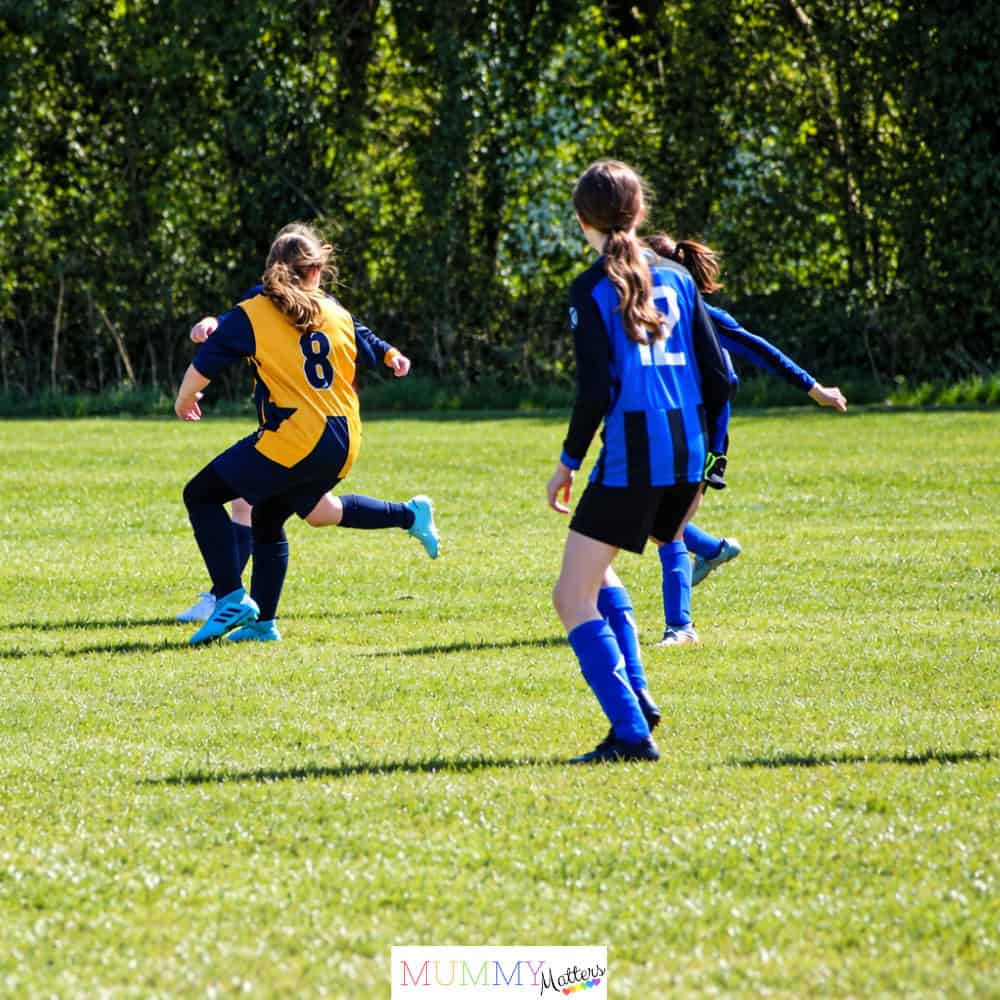
When you sign your child up for a football team, you imagine the Saturday morning matches, muddy boots by the back door, cheering from the sidelines and the friendships they’ll make along the way. What you don’t necessarily think about is what happens when there aren’t enough players left to keep the team going.
Grassroots football for girls is about so much more than learning to kick a ball. It offers opportunities to build confidence, develop friendships and feel part of a team, something I’ve seen first-hand through my daughter’s football journey.
Unfortunately, that’s exactly what happened to my daughter.
She played grassroots football when she was younger, but eventually her age group had to close because there simply weren’t enough girls to continue. It was such a shame, not just because it meant the end of her football team, but because it took away an opportunity for girls who wanted to play.
Now, a few years later, she’s getting ready to start playing football again with a new team, and it’s made me reflect on just how important grassroots football is for girls.
We hear so much about the growth of women’s football, particularly with the success of the Lionesses and the increasing visibility of the Women’s Super League. But behind all those big moments are the local clubs, volunteer coaches, parents and young players who make the sport possible in the first place.
And sometimes, keeping those opportunities available is harder than it looks.
When There Aren’t Enough Girls to Keep a Football Team Going

One of the things that struck me about our experience was how easily a football team could disappear.
When my daughter first started playing, we weren’t thinking about the wider challenges facing girls’ grassroots football. We were simply pleased that she had somewhere to play, develop her skills and enjoy being part of a team just as her younger brother had done from the age of 7. We assumed it would be just as easy for her.
But as time went on, there weren’t enough girls in her age group to keep it going.
I think it’s easy to underestimate what that means until it happens to your own child.
For boys, there can often be several local teams or different age groups to choose from, although this obviously depends on where you live. For girls, particularly in smaller communities, the options can be much more limited.
When a team closes, finding another one isn’t necessarily as straightforward as travelling to the next village. There might not be a suitable team nearby, training times might clash with other commitments, or the next available club might simply be too far away for a family to manage.
And that’s before you consider how daunting it can feel for a young girl to join an established team where everyone already knows one another.
What happened to my daughter’s team made me realise that encouraging girls to start playing football is only part of the picture. We also need to make sure they have opportunities to continue.
Why Grassroots Football for Girls Is So Important
I love seeing children getting involved in sport, but I’ve never believed that every child needs to be the best player on the pitch to benefit from it.
For me, grassroots football is about so much more than winning matches.
Building confidence and self-belief
There is something lovely about watching children gradually become more confident in their abilities.
Whether it’s learning a new skill, making a successful tackle, taking a shot at goal or simply having the courage to join in, football gives girls opportunities to challenge themselves.
Not every training session will go brilliantly. They’ll make mistakes, miss chances and occasionally have disappointing matches.
But learning to pick themselves up and try again is a valuable experience in itself.
I think this is particularly important as girls get older and become more conscious of what other people think of them.
Having somewhere they can be active, make mistakes and develop at their own pace can make a real difference.
Making friendships outside school
One of the things I’ve always valued about children’s activities is the opportunity to make friends beyond their usual school circle.
Football brings together children who might not otherwise meet.
They learn to communicate, work together, encourage one another and celebrate each other’s achievements.
Those friendships can become just as important as the football itself.
For some children, being part of a team also provides a welcome sense of belonging, particularly if they’re finding friendships or school life challenging.
Keeping girls physically active
As children move into their teenage years, there can be more competition for their time.
Schoolwork, friendships, social media and other interests all become part of the picture.
Having a sport they genuinely enjoy can provide a reason to get outside and stay active without exercise feeling like another chore.
Football involves running, coordination, balance and teamwork, but it can also offer a welcome break from the pressures of everyday life.
Sport England’s This Girl Can campaign highlights some of the practical and emotional barriers that can prevent women and girls from being active, including confidence and fear of judgement.
It’s a reminder that making sport welcoming and enjoyable matters just as much as making it available.
Why Girls Need Opportunities to Keep Playing

The growth of women’s football in recent years has been wonderful to watch.
Girls now have far more visible female footballers to look up to, and the success of the England women’s team has helped bring the sport into family conversations and living rooms across the country.
But I do wonder how many girls have wanted to play football and struggled to find somewhere suitable.
Our experience certainly showed me that enthusiasm alone isn’t always enough to keep a local team running.
Grassroots clubs depend on so many things coming together: enough players, committed volunteers, coaches, suitable facilities and parents who can get their children to training and matches.
If even one of those things becomes difficult, it can affect the whole team.
And when a team disappears, it isn’t necessarily because the girls have stopped loving football.
Sometimes the opportunities simply aren’t there.
That’s why I think it’s so important that we continue supporting girls’ football at every level, from those first tentative training sessions right through to adult women’s teams.
The Importance of Seeing Women Play Football
When I was growing up, women’s football didn’t have anything like the visibility it enjoys today.
Now, girls can watch professional female footballers competing at the highest level, follow their favourite players and see women being celebrated for their sporting achievements.
That representation matters.
It helps reinforce the message that football isn’t just something girls can try when they’re younger. It’s something they can continue enjoying throughout their lives.
And they don’t have to become professional footballers for that to be worthwhile.
There are opportunities to play recreationally, join local leagues, take part in five-a-side football or simply enjoy a kickabout with friends.
For families interested in following the sport beyond their local club, websites covering the women’s game, including women’s team news and developments, can help maintain that connection and interest.
The more visible women’s football becomes, the more normal it feels for girls to see themselves as footballers too.
Returning to Football After Time Away
One of the reasons this subject feels particularly personal at the moment is that my daughter is preparing to start playing again.
After seeing her original team close, it’s lovely to know that football is becoming part of her life once more.
I think returning to a sport after a break can sometimes feel more daunting than starting it for the first time.
You might worry that everyone else will be more experienced, that you’ve forgotten some of your skills or that you’ll struggle to fit into a new group.
But one of the things I hope my daughter takes from this experience is that you don’t have to follow a perfectly straight path through sport.
It’s OK to take a break.
It’s OK to try something different.
And it’s absolutely OK to return to something you enjoyed, even if you’ve been away from it for years.
You don’t have to be the best player on the team. You just have to want to give it another go.
As her mum, I’m pleased that she’s found another opportunity to play, and I’m looking forward to seeing where this next chapter takes her.
How Parents Can Encourage Girls to Get Involved in Football
If your daughter is interested in playing football, there are several ways you can help her get started or support her in returning after a break.
Look for local opportunities. The Football Association’s women’s and girls’ football pages provide information about different ways to get involved, from introductory sessions to competitive teams.
Focus on enjoyment rather than performance. Not every child wants to play competitively, and that’s absolutely fine. Finding a welcoming environment where your daughter feels comfortable is far more important than how many goals she scores.
Encourage friendships within the team. Sometimes having a friend to train with can make all the difference, particularly when joining a new club.
Support local clubs where possible. Grassroots football relies heavily on volunteers. Helping with fundraising, supporting club events or simply spreading the word about opportunities can all make a difference.
Watch women’s football together. Whether it’s attending a local women’s match or watching the Lionesses on television, seeing female players enjoying the sport can be inspiring.
Keep the door open. If your daughter stops playing for a while, it doesn’t have to mean she’s finished with football forever. Interests change as children grow, and sometimes the right opportunity comes along later.
Most importantly, listen to what your daughter wants from the experience. For some girls, that might mean competitive matches and improving their skills. For others, it’s about having fun, staying active and spending time with friends.
Both are equally valid reasons to play.
Finding the Right Football Team for Your Daughter

If there’s one thing our experience has taught me, it’s that finding the right team can make a real difference.
Before committing to a club, it can help to ask a few questions.
- Does the club welcome beginners or players returning after a break?
- Is the team focused on competitive football, development or recreational participation?
- Can your daughter attend a trial or introductory session?
- Are the training times, travel and costs manageable for your family?
- Does the club have appropriate safeguarding arrangements and qualified coaches?
- Most importantly, does your daughter feel comfortable and welcome?
It’s also worth remembering that the first team you try might not be the right fit.
That doesn’t mean football isn’t for your daughter. Sometimes it simply means finding a different environment where she feels more at home.
Why Grassroots Girls’ Football Deserves Our Support
When I think back to my daughter’s first football team, I still feel it’s a shame that it couldn’t continue.
Those girls deserved the opportunity to keep playing together, but sometimes the practical realities of running a grassroots team get in the way.
It’s made me appreciate just how much work goes on behind the scenes to keep local children’s sport running.
The coaches who give up their evenings and weekends, the parents organising lifts, the volunteers sorting out fixtures and the people working hard to encourage new players all deserve recognition.
Without them, so many children would miss out.
I’m excited that my daughter is returning to football, and I hope she enjoys being part of a team again.
But more than anything, I hope that as women’s football continues to grow, we don’t forget the importance of making sure girls have somewhere to play in the first place.
Because every successful women’s footballer started somewhere.
And for most girls, the real value of grassroots football won’t be measured in trophies or goals.
It will be found in the friendships they make, the confidence they build, the challenges they overcome and the simple enjoyment of being part of something.
Sometimes, all a girl needs is a team that gives her the chance to play.