
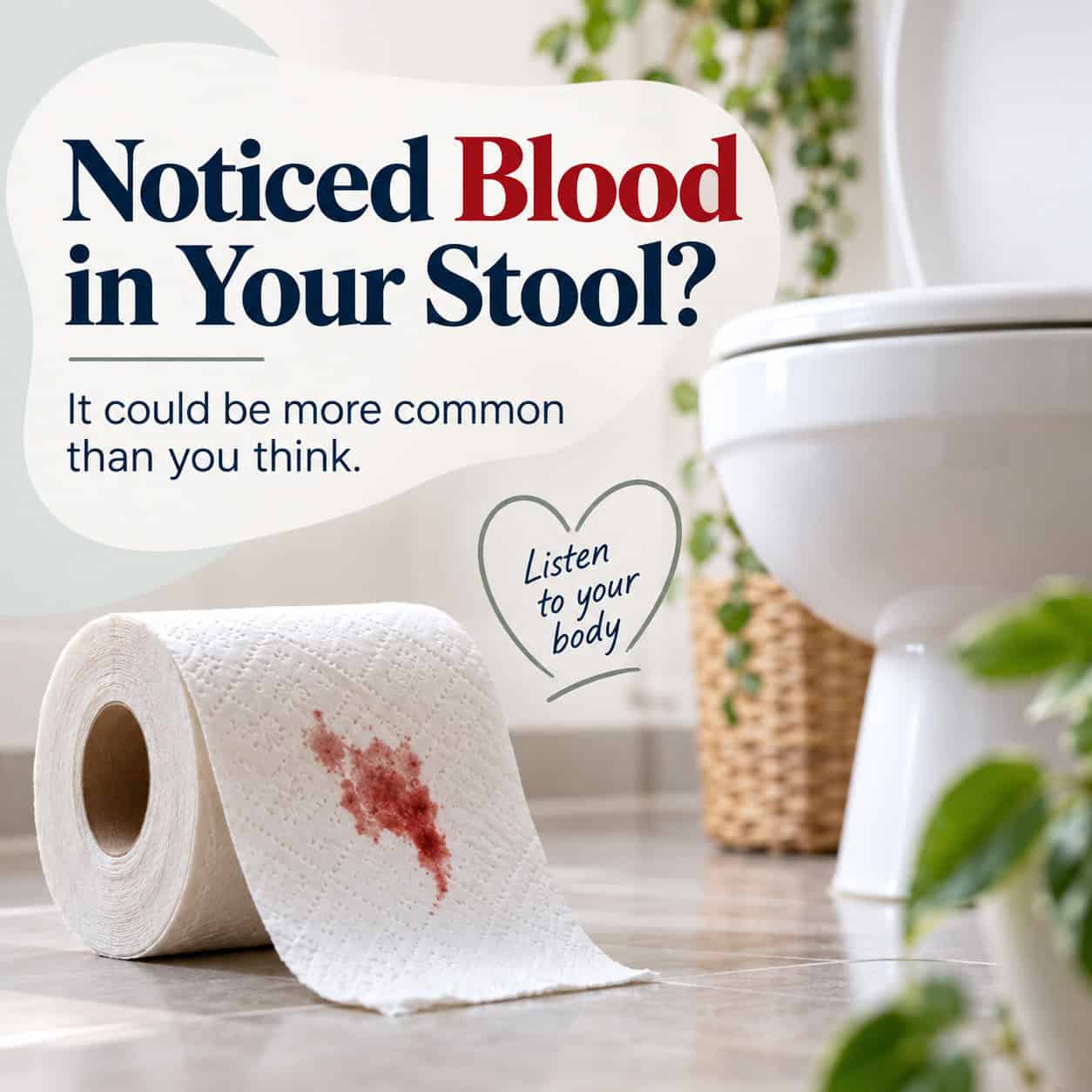
Have you ever noticed blood in your stool and wondered what it meant? Blood in the stool is more common than most people realise, and the causes range from harmless to serious. Some cases show up as light spotting after wiping, while others present as bloody diarrhea that signals inflammation deeper in the gut. The colour and pattern of the bleeding may offer clues, but only a proper evaluation can turn them into a conclusive answer.
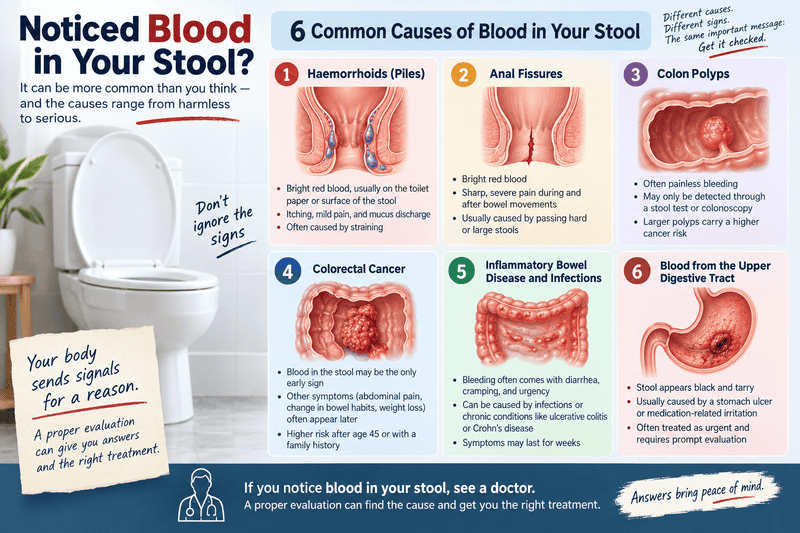
To that end, here are six conditions that commonly explain blood in your stool, each with its own warning signs.
1. Haemorrhoids (Piles)
Swollen veins around the anus sit close enough to the surface that ordinary straining is enough to draw blood, which is why haemorrhoids account for more cases than any other cause on this list. The blood comes out bright red, and itching, mild pain, and a mucus discharge tend to follow close behind.
A warm bath, a bit more fibre, and an over-the-counter cream can address most cases within days. If the bleeding won’t quit, ligation is the next step; surgery is reserved for cases that keep coming back. A proctoscopy or colonoscopy should still confirm piles as the cause rather than leave it to guesswork.
2. Anal Fissures
Sharp, severe pain during and after a bowel movement is the first sign of an anal fissure—a small tear in the anal lining, usually from passing something too hard or too large. That pain sets it apart immediately from the milder ache caused by haemorrhoids.
Stool softeners ease the strain of future bowel movements, while a topical medication helps the tissue heal and calms the muscle spasm around it. Extra water and fibre in daily meals cut the odds of the tear coming back. If pain and bleeding continue, the fissure may need a minor procedure to close for good.
3. Colon Polyps
Polyps on the colon lining often bleed without pain, and many people only learn about them from a stool test. Size raises the stakes: bigger polyps bleed more and carry a higher cancer risk, particularly the adenomatous type, which accounts for most polyps that eventually turn cancerous.
A colonoscopy handles both problems at once, letting a doctor find polyps and remove them on the spot through a procedure called polypectomy. Early removal substantially lowers the cancer risk, since most colorectal cancers develop from polyps left unchecked for years. A follow-up colonoscopy a few years out also checks for new growths or other developments.
4. Colorectal Cancer
Blood in the stool is sometimes the only warning sign of colorectal cancer, showing up years before any other symptom does. Abdominal pain, a change in bowel habits, and weight loss tend to arrive only once the disease has progressed, which is exactly why the earlier symptom shouldn’t be dismissed.
Past 45, a family history of colon cancer, diabetes, obesity, and a diet heavy in red or processed meat all push the risk higher. A colonoscopy confirms the diagnosis for anyone in that group and determines what step comes next, whether that means surgery, chemotherapy, or radiotherapy. An early diagnosis still makes the biggest difference to the outcome.
5. Inflammatory Bowel Disease and Infections
Inflammation is often behind cases where bleeding comes with diarrhea, cramping, and urgency rather than showing up on its own, whether the trigger is an infection or a chronic condition like inflammatory bowel disease. Flare-ups can drag on for weeks before settling, which often delays a diagnosis.
A colonoscopy, sometimes with a biopsy, can confirm the cause. Treatment then follows the trigger: medication clears an infection, while chronic conditions such as ulcerative colitis or Crohn’s disease call for a longer-term plan. Once diagnosed, regular follow-up keeps flare-ups under control.
6. Blood from the Upper Digestive Tract
Not all blood in the stool comes from the lower gut. Bleeding from higher up, most commonly the stomach, turns the stool black and tarry, accompanied by an odour that lower GI bleeding doesn’t produce. A stomach ulcer or medication-related irritation is behind most cases like this.
Doctors skip the wait-and-see approach here and move straight to evaluation, since this type of bleeding is treated as more urgent. An endoscopy alongside a colonoscopy pinpoints the source, and treatment then targets the cause directly. Usually, doctors will prescribe medication that reduces stomach acid or treats the ulcer itself.
Blood in the stool rarely comes from a single, predictable cause; it can trace back to something as minor as a strained bowel movement or as serious as a colon growth that needs immediate attention. That range is exactly why guessing at the source never replaces a proper look. A visit to a doctor turns uncertainty into an answer, and an answer into the right treatment. The body sends this signal for a reason, and that reason is always worth uncovering.