
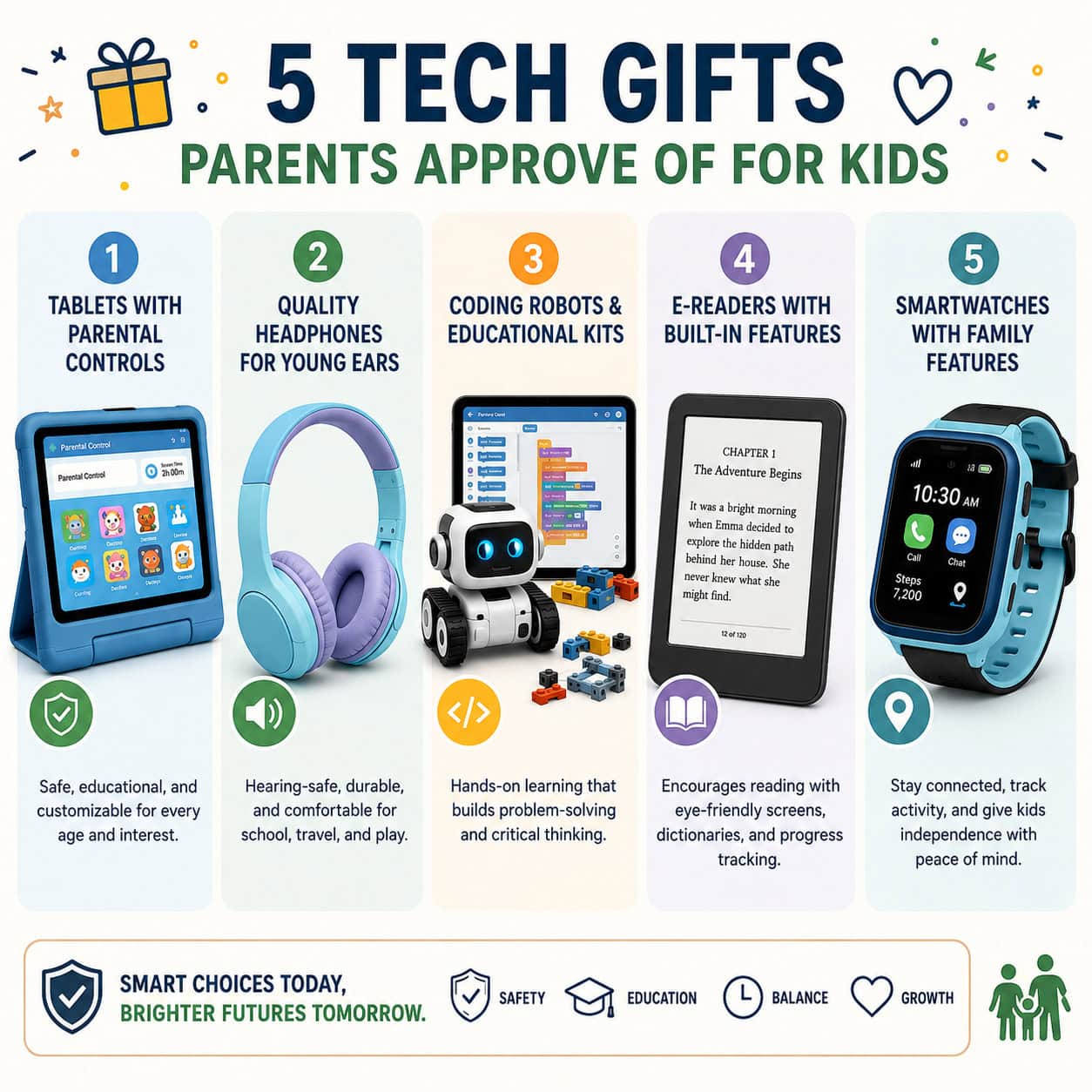
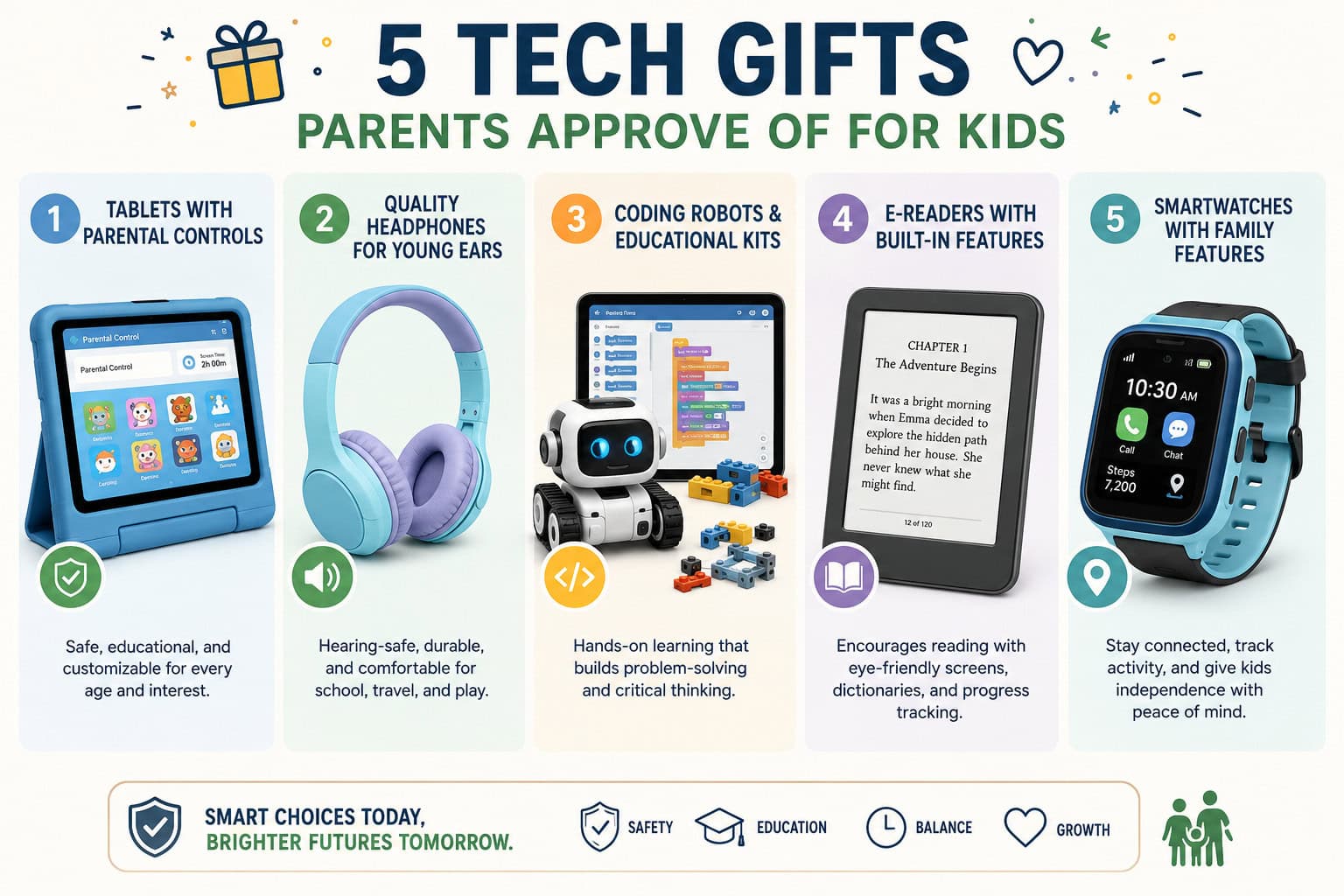
What makes a tech gift truly worthwhile for children? The answer involves more than flashy features or the latest trending gadget. Parents look for devices that balance entertainment, educational value, safety, and durability. Finding the right technological gift requires understanding not just what kids want, but what actually serves their development and daily lives. This guide breaks down five technology categories that parents consistently approve of across different age groups.
1. Tablets with Parental Controls
Tablets remain one of the most versatile gifts for children because they adapt to multiple age ranges and interests. A quality tablet with strong parental control features allows parents to manage screen time, restrict content, and monitor app usage directly from their own devices. For younger children, tablets enable access to educational apps covering math, reading, and language skills in interactive formats. Older kids benefit from tablets for schoolwork, creative projects like digital art, and research tasks.
The key consideration parents emphasize is the durability of the device paired with reliable parental management tools. Many tablets designed specifically for families include reinforced cases and screens that withstand drops and rough handling. Parents appreciate the ability to set usage limits by the hour and block access to inappropriate content before any issues arise. Furthermore, tablets with established educational app ecosystems allow families to customize learning without purchasing separate devices for different educational needs.
2. Quality Headphones Designed for Young Ears
Children’s headphones that prioritize hearing safety have become increasingly important as parents recognize the risks of volume-related hearing damage. Headphones specifically engineered for kids typically feature volume-limiting technology that caps output at safe levels, usually around 85 decibels. This design choice protects developing ears while still providing adequate sound quality for music, videos, and educational content. Parents approve of these headphones because they combine protection with practical functionality.
Beyond safety features, durable kids’ headphones come with adjustable headbands and comfortable padding that accommodate growing heads without constant replacement. Many models include detachable cables or wireless options, reducing tangling and making them easier to pack for travel or school. The aesthetic appeal matters to younger users as well, and kids are more likely to actually use headphones they find visually engaging, which is why manufacturers now offer designs in various colors and patterns. Additionally, several brands offer affordable options that do not require parents to invest significantly in an item that may be outgrown or lost.
3. Beginner Coding Robots and Educational Kits
Coding robots introduce computational thinking in a hands-on, engaging format that appeals to kids from about age five through early teens. These devices combine physical play with programming basics, allowing children to control robotic movements by inputting simple commands or dragging visual blocks in coding apps. Parents appreciate coding robots because they teach problem-solving skills and logical thinking without requiring reading proficiency or prior technology experience. The playful nature of seeing a physical object respond to code makes abstract concepts concrete and understandable.
Educational robotics kits vary widely in complexity, making them suitable for different developmental stages. Younger children benefit from simple robots that respond to basic commands, while older kids can progress to more complex kits that involve building components and writing actual code. Many of these kits include curriculum guides or online resources that parents can use to enhance learning at home. The combination of entertainment value and genuine skill development makes coding robots among the most approved tech gifts for families seeking educational alternatives to purely entertainment-focused devices.
4. E-readers with Built-in Reading Features
E-readers designed for children offer advantages beyond simply displaying digital books. These devices use e-ink technology that reduces eye strain, provide built-in dictionaries, and include reading progress tracking that helps both children and parents monitor engagement. Kids who resist traditional reading sometimes engage more readily with e-readers, finding the experience more interactive and less intimidating than physical books. Parents value this technology because it can genuinely encourage reading habits while providing access to thousands of titles without requiring shelf space.
Many children’s e-readers include adjustable font sizes and dyslexia-friendly fonts, making them particularly valuable for kids with reading differences or learning challenges. The battery life on quality e-readers often stretches to weeks, making them ideal for travel and reducing the need for constant charging. Parents also appreciate that e-readers isolate reading from other potential distractions, since these devices typically lack web browsers, games, and notification systems. The ability to set reading goals and track progress gives children a sense of accomplishment while parents monitor engagement from a distance.
5. Quality Smartwatches with Family Features
Smartwatches designed for children bridge the gap between independence and parental oversight. These watches often include GPS tracking, allowing parents to know their child’s location without constant phone contact. Two-way communication features enable kids to reach parents quickly in emergencies while teaching them when and how to use technology responsibly. Beyond safety, children’s smartwatches track activity levels, send reminders about tasks and appointments, and display time, making them practical accessories rather than pure entertainment devices.
Parents consistently approve of smartwatches because they create boundaries around technology use while remaining useful. Many models exclude social media apps and games, focusing instead on communication, fitness tracking, and organizational tools. The durability of quality children’s smartwatches makes them suitable for active kids who engage in sports or outdoor play, and the same emphasis on protective design extends to other devices families bring into active settings. Portable gaming consoles, for example, benefit from purpose-built protection such as a switch 2 case, which illustrates the broader principle that durable accessories extend the life of any tech investment. Additionally, smartwatches help children develop responsibility, as they learn to charge the device, check notifications appropriately, and use it as a tool rather than a constant source of distraction.
Conclusion
Selecting technology gifts for children requires balancing multiple factors including safety, educational value, age appropriateness, and durability. The five categories outlined above represent gifts that parents repeatedly endorse because they offer genuine benefits beyond novelty. Whether the choice is tablets with robust parental controls, hearing-safe headphones, coding robots, e-readers, or smartwatches with family features, each option serves specific developmental needs while respecting family values around technology use. By focusing on devices that grow with children and adapt to different interests, families can find tech gifts they appreciate for years rather than months.